The Kerala High Court has affirmed that cultural and religious traditions involving fireworks may proceed, provided they comply with stringent public safety protocols under the Explosives Act and PESO guidelines. This judgment balances fundamental rights to religious expression with the state’s duty to ensure public order and safety.
Background & Facts
The Dispute
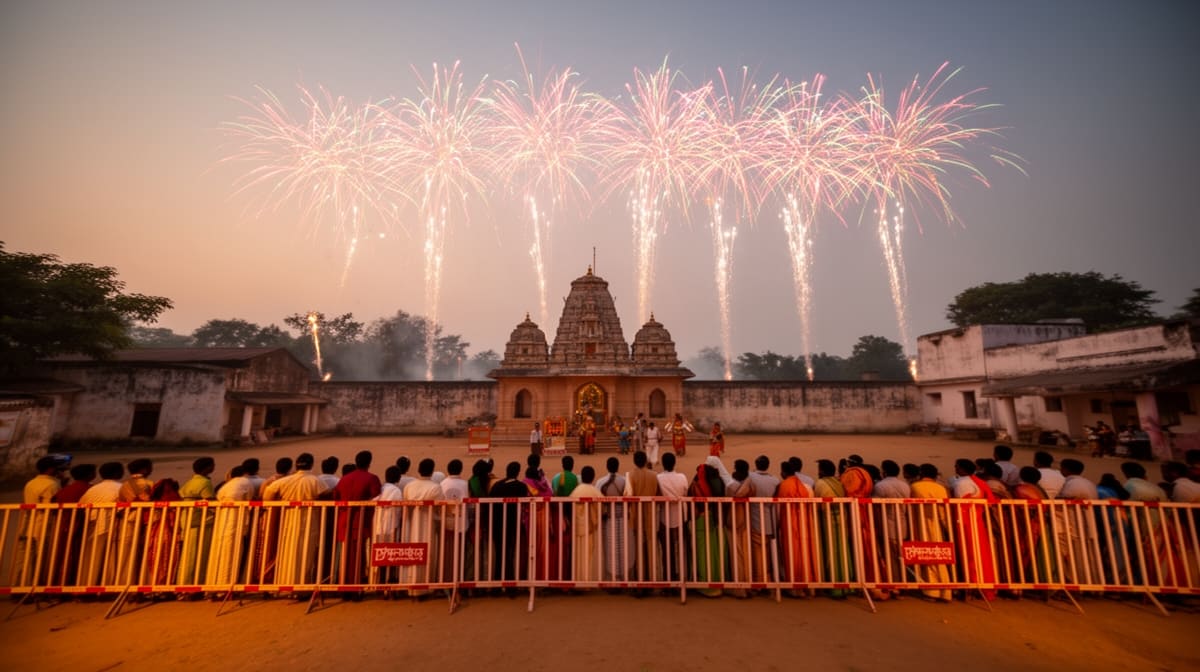
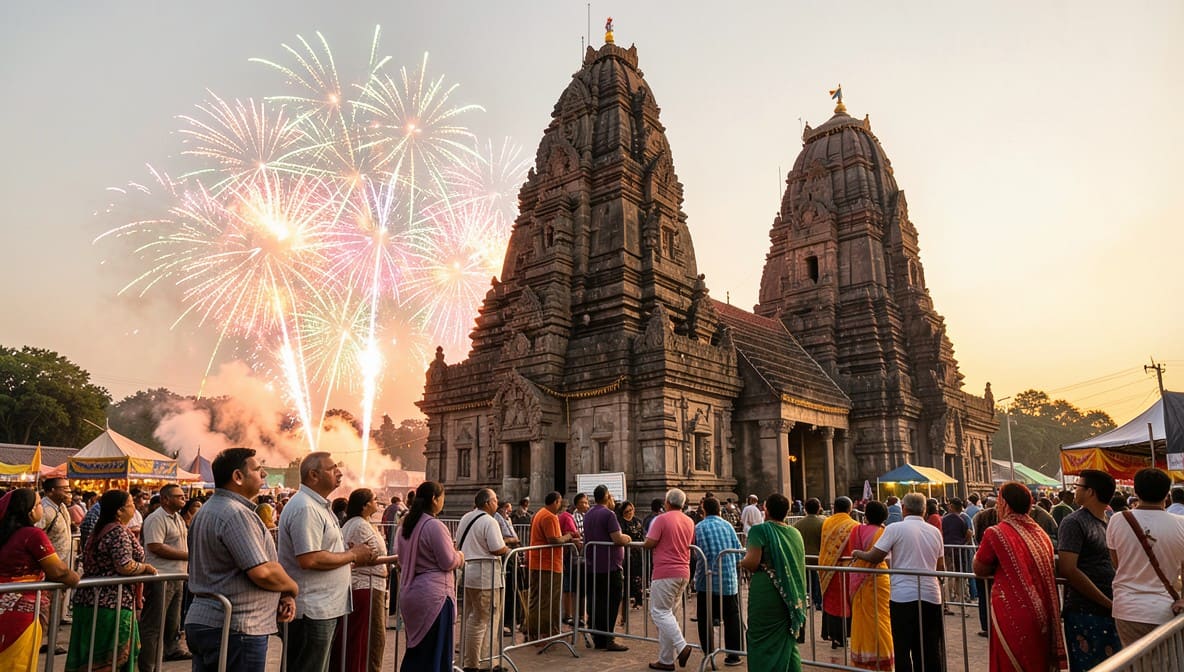
The petitioner, Unnikrishnan S., President of the Kannadi Pathikkalsree Uchimahaliyamman Sahayam Vela Committee, sought permission to conduct a fireworks display on 17.04.2026 between 9:00 p.m. and 10:00 p.m. at the Pathikkal Sree Uchimahaliyamman Temple in Kannadi, Palakkad, as part of the annual Vishu Vela festival. He submitted an application in Form AE-6 on 12.01.2026 (Ext.P1), accompanied by a valid LE-1 licence for manufacture of fireworks. The application was rejected by the District Collector on 30.03.2026 (Ext.P2) on four grounds: lack of authorization from the Chief Controller of Explosives, failure to intimate fireworks details to the District Magistrate, absence of a compliant magazine, and non-verification of samples by a chemical laboratory.
Key Facts
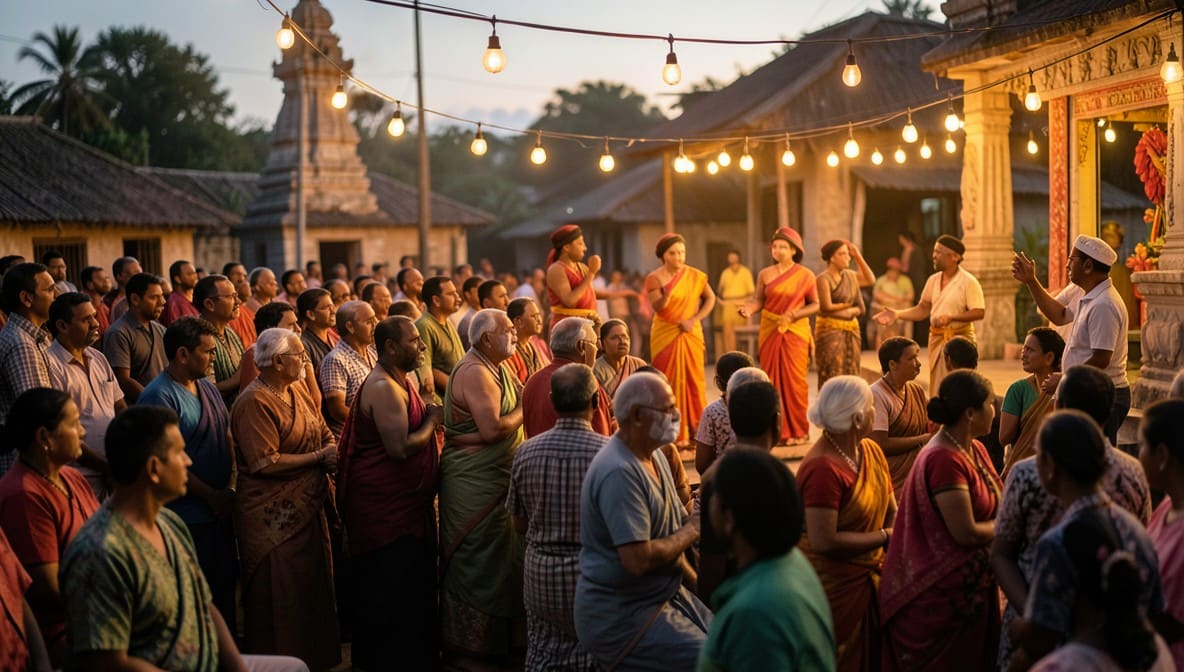
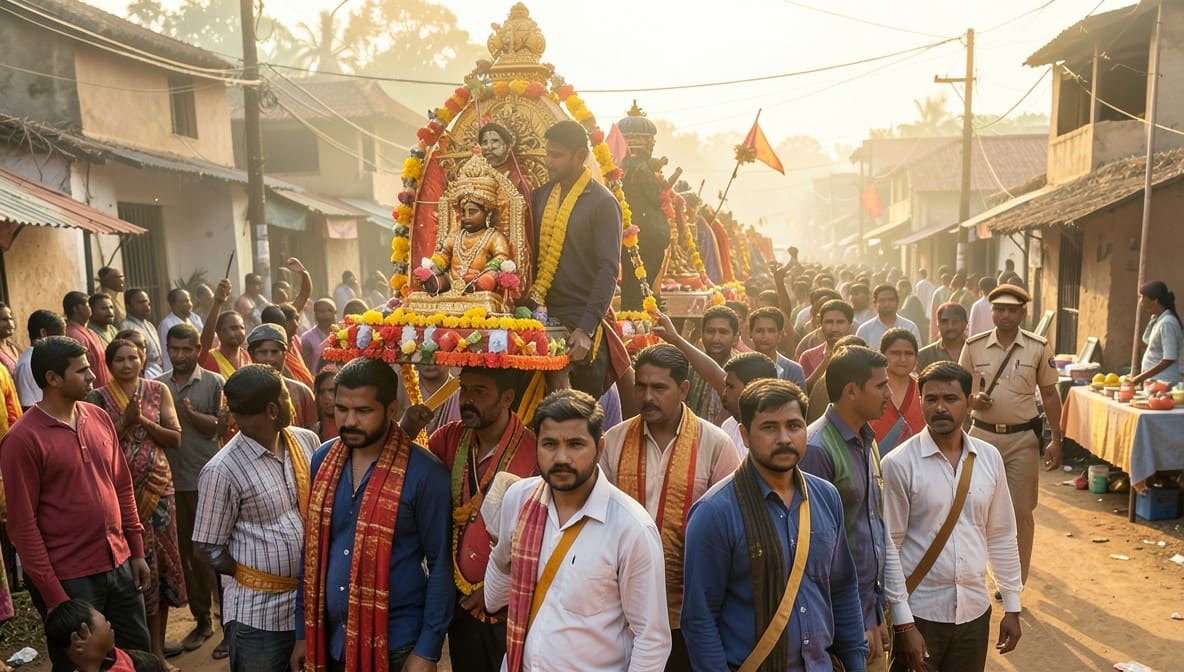
- The Vishu Vela festival is an annual religious event with longstanding cultural significance in the region
- The petitioner holds a valid LE-1 licence for manufacture of fireworks issued under the Explosives Act, 1884
- The proposed display is limited to a one-hour window on a single day
- The petitioner has previously obtained permissions for similar displays in prior years
- Similar petitions (W.P.(C) Nos. 12070/2026, 5284/2026, 5304/2026, etc.) filed by other temple committees were granted permission by this Court on 12.02.2026 and 19.03.2026
- The petitioner has not been found to have violated safety norms in past events
Procedural History
- 12.01.2026: Petitioner submitted Form AE-6 application to the District Collector
- 30.03.2026: Ext.P2 order issued rejecting the application on four technical grounds
- 06.04.2026: Writ Petition (WP(C) No. 13296 of 2026) filed before the Kerala High Court
- 06.04.2026: Court heard arguments from petitioner’s counsel and Government Pleaders
- 06.04.2026: Judgment delivered on the same day
Relief Sought
The petitioner sought quashing of Ext.P2 order and a direction to the District Collector to grant permission for the fireworks display on 17.04.2026, subject to reasonable safety conditions.
The Legal Issue
The central question was whether the refusal to grant permission for a religious fireworks display, based on procedural non-compliance, can be upheld when similar permissions have been granted in analogous cases and when the petitioner holds a valid manufacturing licence.
Arguments Presented
For the Petitioner
The petitioner’s counsel argued that the rejection was arbitrary and inconsistent with prior judgments of this Court, particularly W.P.(C) No. 5261/2020 and the common judgments dated 12.02.2026 and 19.03.2026, which had permitted similar displays under comparable conditions. It was contended that the petitioner had substantially complied with the requirements, and the objections raised were technical and curable. The right to conduct religious processions and associated cultural practices under Article 25 of the Constitution was invoked, and it was submitted that the state’s duty to regulate must not amount to suppression of legitimate religious expression.
For the Respondent
The Government Pleader and Central Government Counsel defended the rejection on grounds of statutory compliance under the Explosives Rules, 2008, and PESO guidelines. They emphasized that the absence of a certified magazine, lack of sample verification, and failure to notify the District Magistrate constituted material breaches that could endanger public safety. They argued that granting permission without strict adherence to safety protocols would set a dangerous precedent and undermine regulatory authority.
The Court's Analysis
The Court acknowledged the importance of religious and cultural practices in Kerala’s social fabric and noted that the petitioner’s application was not frivolous, but rooted in a long-standing tradition. The Court observed that the rejection order failed to consider the precedent set by its own recent judgments granting similar permissions. The Court held that while regulatory compliance is non-negotiable, rigid adherence to procedural formalities without considering context and prior judicial recognition amounts to arbitrariness.
"The right to celebrate religious festivals with traditional fireworks, subject to reasonable safety conditions, is protected under Article 25. Denial of permission on technical grounds, when similar permissions have been granted in identical circumstances, violates the principle of equality before law."
The Court further noted that the objections raised - lack of magazine, sample verification, and notification - were remediable within the short timeframe before the event. The Court emphasized that the state’s interest in public safety could be adequately addressed through enforceable conditions rather than outright denial.
The Verdict
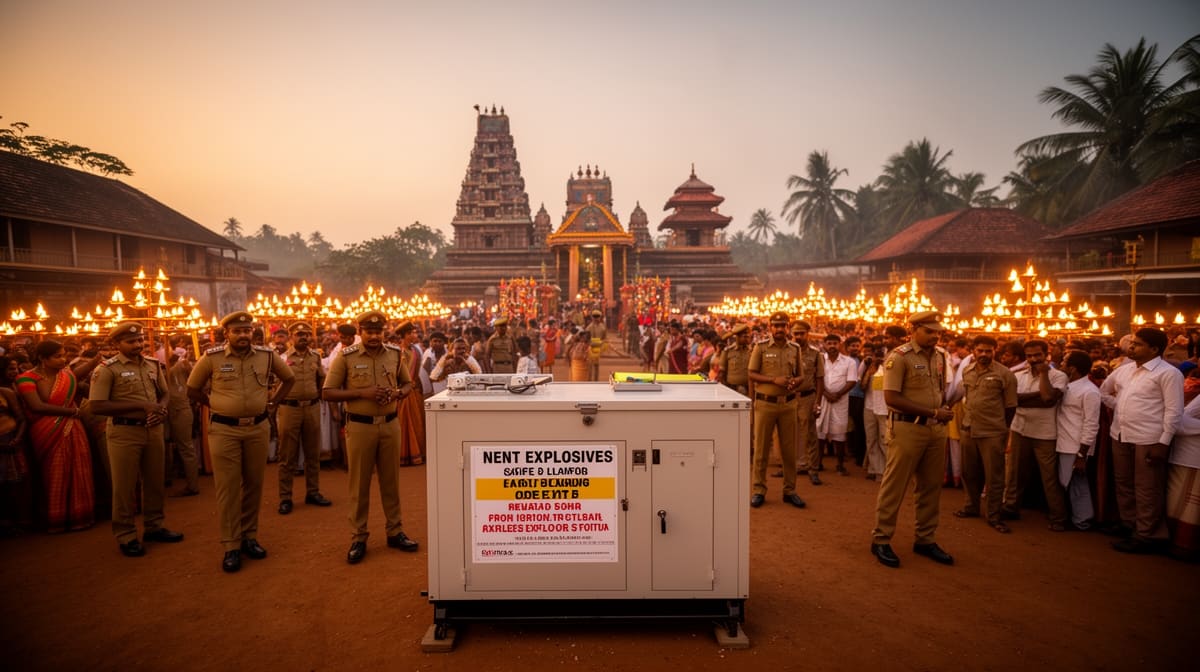
The writ petition was allowed. The Court directed the District Collector to grant permission for the fireworks display on 17.04.2026 between 9:00 p.m. and 10:00 p.m., subject to the following conditions: (i) production of portable magazines compliant with PESO norms; (ii) adherence to all LE-6 licence conditions; (iii) installation of 100-metre barricades on all sides; (iv) limitation of fireworks quantity to 15 kilograms; (v) supervision by police and statutory authorities; (vi) immediate action against violations; (vii) submission of fireworks samples to the District Collector by 4:00 p.m. on 07.04.2026, with testing to be completed by 5:00 p.m. on 10.04.2026, and the licence to be contingent on the test results. The Government Pleader was directed to communicate the judgment to the District Collector immediately.
What This Means For Similar Cases
Religious Cultural Practices Are Protected, Not Prohibited
- Practitioners may now cite this judgment to argue that denial of permission for traditional fireworks during religious festivals must be justified by concrete, unremediable safety risks - not procedural technicalities
- Courts will weigh consistency with prior rulings when assessing arbitrariness under Article 14
- The burden shifts to authorities to demonstrate why a previously approved activity should now be denied
Safety Conditions Must Be Specific and Enforceable
- Authorities cannot refuse permission outright; they must specify actionable, measurable conditions for compliance
- Conditions such as barricade distance, quantity limits, and sample testing deadlines are now validated as lawful alternatives to blanket denial
- Failure to impose clear conditions may render refusal arbitrary and liable to be set aside
PESO Compliance Is Not a Barrier but a Framework
- Valid LE-1 manufacturing licences are sufficient to establish baseline credibility
- Sample verification and magazine requirements are procedural, not absolute, and must be accommodated within reasonable timelines
- Authorities must act expeditiously to test samples and issue conditional permissions, especially when events are time-bound