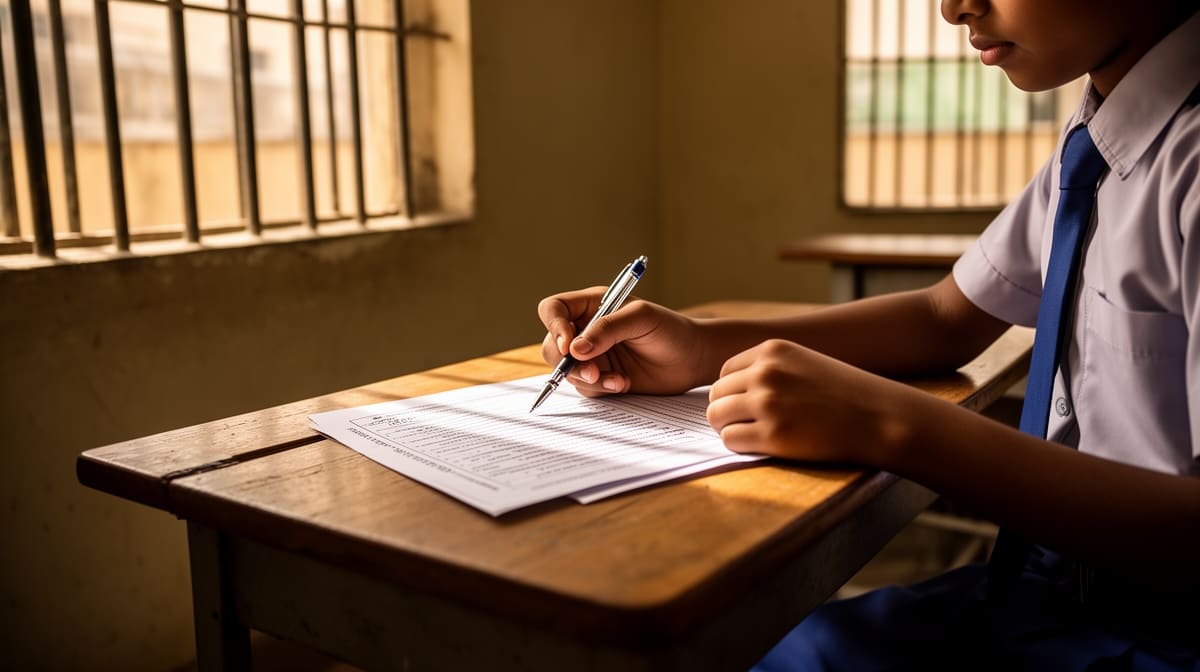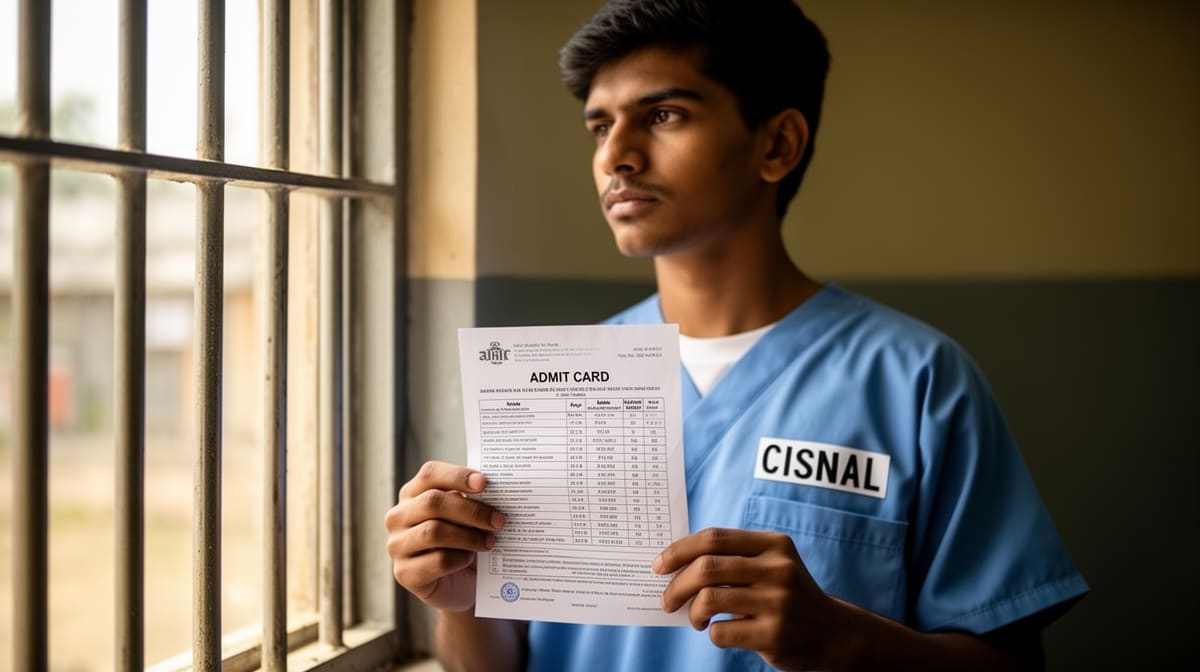
The Rajasthan High Court has recognized that the right to pursue education is an integral part of reformative justice, even for convicted prisoners. In a significant ruling, the Court granted emergent parole to a convict to appear for his undergraduate examination, setting a clear precedent that institutional barriers to academic advancement must yield to constitutional values of human dignity and rehabilitation.
Background & Facts
The Dispute
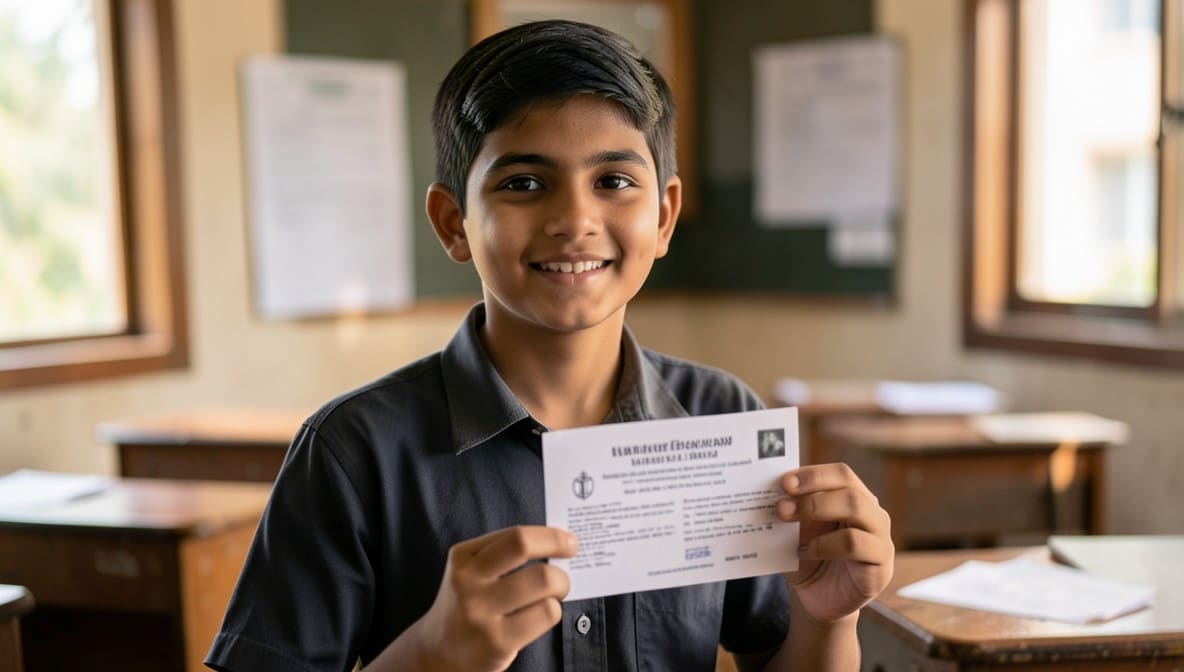
The petitioner, Ranjeet Singh, a 24-year-old convict lodged in Central Jail, Jodhpur, sought emergent parole to appear for the B.A. (First Semester) Examination conducted by Jai Narain Vyas University, Jodhpur. The examination was scheduled between 12.03.2026 and 04.04.2026, with the next session slated for 18.03.2026. The petitioner had duly registered for the examination and received an admit card, which was submitted as Annexure 1 to the writ petition.
Key Facts
- The petitioner is currently serving a sentence in Central Jail, Jodhpur
- He applied for the B.A. (First Semester) examination in accordance with university procedures
- The admit card and examination schedule were produced before the Court as documentary evidence
- The petitioner has no history of disciplinary violations while in custody
- The next opportunity to appear for the same examination would be in 2027, causing irreparable academic setback
Procedural History
- 12.03.2026: Petitioner’s counsel filed an urgent application for emergent parole before the High Court
- 17.03.2026: Writ Petition (Crl. W.P. No. 1124/2026) formally filed before the High Court of Judicature for Rajasthan at Jodhpur
- 17.03.2026: Hearing conducted before Hon’ble Mr. Justice Farjand Ali
- 17.03.2026: Court delivered oral order granting emergent parole, later formalized in writing
Relief Sought
The petitioner sought immediate release on emergent parole for the period strictly necessary to appear in the B.A. examination, with return to custody scheduled after the exam. He requested that the parole be granted subject to reasonable conditions to ensure his return.
The Legal Issue
The central question was whether a convict serving a sentence has a legally enforceable right to appear for academic examinations during incarceration, and whether such a right can be accommodated through emergent parole in the absence of any risk to public order or security.
Arguments Presented
For the Petitioner
Learned counsel for the petitioner argued that the right to education under Article 21 of the Constitution extends to prisoners, as affirmed in State of Maharashtra v. Milind and K. M. Chandrasekhar v. Union of India. Denial of the opportunity to appear for the examination would cause irreversible harm to the petitioner’s academic and professional future. The request was limited in scope, time-bound, and supported by documentary proof. No prior misconduct or threat to public safety was alleged.
For the Respondent
The Additional Government Advocate did not dispute the factual basis of the petitioner’s application. While opposing the prayer on general grounds of prison discipline, he conceded that the petitioner had been permitted to register for the examination and that no objection existed to his academic pursuit.
The Court's Analysis
The Court emphasized that the prison system must not operate as a complete severance from societal and developmental opportunities. The principle of reformative justice, as recognized in Sunil Batra v. Delhi Administration and K. D. Goyal v. State of Rajasthan, mandates that incarceration should not extinguish the possibility of rehabilitation through education.
"The right to pursue education, even during incarceration, is a facet of reformative jurisprudence and denial of such opportunity, in the absence of any overriding adverse circumstance, would result in avoidable prejudice."
The Court noted that the petitioner’s request was not for general furlough or extended liberty, but for a strictly limited, purpose-specific release. The documentary evidence was uncontested, and the State did not raise any security concerns. The Court further observed that the parole period was confined to the exact duration required for the examination, with a clear return date.
The Court also highlighted that the proposed conditions - personal bond, surety, territorial restriction, and prohibition on criminal activity - were sufficient to mitigate any risk of non-return.
The Verdict
The writ petition was allowed. The petitioner was ordered to be released forthwith on emergent parole until 10.04.2026, subject to furnishing a personal bond of Rs. 50,000 along with one surety of the same amount, to the satisfaction of the Superintendent, Central Jail, Jodhpur. The petitioner must surrender to jail authorities on 11.04.2026 in the morning. During parole, he must remain within the jurisdiction specified by the Jail Superintendent, refrain from criminal activity, and maintain good conduct. The Superintendent may impose additional reasonable conditions. Any breach of conditions shall invite immediate re-arrest and legal action.
What This Means For Similar Cases
Education Is a Non-Negotiable Right in Custody
- Practitioners may now cite this judgment to seek emergent parole for academic exams, competitive tests, or certification courses for inmates
- Documentary proof of registration and examination schedule is critical to substantiate such claims
- Courts will prioritize reformative goals over rigid institutional policies when no security risk exists
Parole Conditions Must Be Proportionate and Practical
- Personal bonds and sureties are sufficient safeguards; blanket restrictions are not required
- Territorial limits and return deadlines must be clearly defined and realistic
- Jail authorities may impose additional conditions, but they must be reasonable and not punitive
Reformative Justice Overrides Punitive Rigidity
- The judgment reinforces that incarceration is not synonymous with social death
- Educational access is not a privilege but a constitutional entitlement under Article 21
- Future applications for parole for educational purposes must be evaluated on merit, not precedent