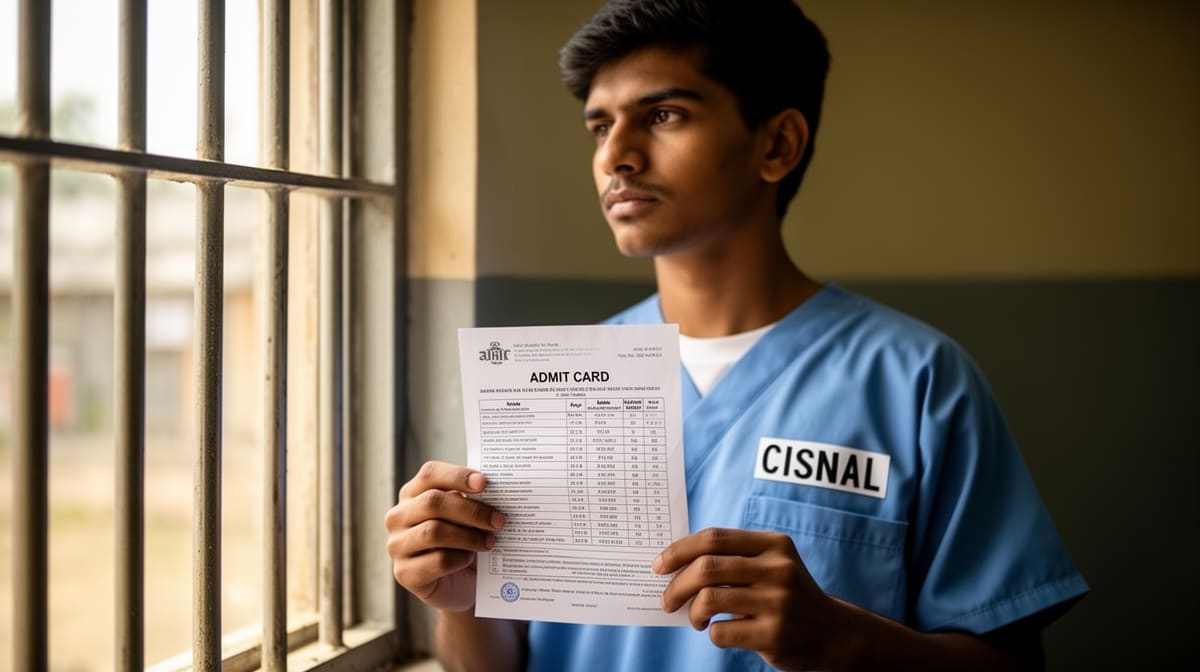
A life convict’s right to pursue legal education has been affirmed as a legitimate ground for emergency parole, marking a significant step toward rehabilitation and access to justice. The Kerala High Court’s order not only recognizes the transformative potential of education behind bars but also reinforces the principle that incarceration does not extinguish fundamental rights.
Background & Facts
The Dispute
The petitioner, Karuvangadan Mukthar @ Muthu, is a life convict serving sentence for offences under Sections 302, 149, 201, 212, and 118 of the Indian Penal Code, along with violations of the Arms Act. Despite his conviction, he has been enrolled in the LL.B. program at KMCT Law College, Kuttippuram, and is scheduled to appear for internal examinations in February-March 2026. He applied for emergency leave under Rule 400 of the Kerala Prisons and Correctional Services (Management) Rules, 2014, which permits parole for compelling personal reasons, including educational pursuits.
Procedural History
- The petitioner submitted an application for emergency leave on or before February 2026.
- The application was neither considered nor rejected by the Superintendent of Central Prison, Kannur.
- The petitioner filed a writ petition under Article 226 of the Constitution seeking immediate relief to appear for his exams.
- The petition was supported by two official communications from KMCT Law College (Exts. P1 and P2) confirming the exam dates and the petitioner’s enrollment.
Relief Sought
The petitioner sought a writ of mandamus directing the prison authorities to grant him 20 days of emergency parole from February 18 to March 9, 2026, to appear for four internal examinations and a viva voce.
The Legal Issue
The central question was whether Rule 400(4) of the Kerala Prisons and Correctional Services Rules, 2014, permits emergency parole for a life convict to pursue higher legal education, and whether denial of such leave violates the constitutional right to education under Article 21.
Arguments Presented
For the Petitioner
The petitioner’s counsel argued that Rule 400(4) explicitly allows parole for "compelling personal reasons," including education. They cited State of Maharashtra v. Chandrakant and State of Haryana v. Balbir Singh to establish that correctional systems must facilitate rehabilitation through education. The counsel emphasized that legal education enhances the convict’s capacity to understand his own rights and contributes to societal reintegration.
For the Respondent/State
The Public Prosecutor contended that life convicts are ineligible for any form of parole under the spirit of the law, citing the gravity of the offences. They argued that Rule 400 was intended for family emergencies or medical reasons, not academic pursuits, and that granting leave could set a dangerous precedent.
The Court's Analysis
The Court rejected the State’s narrow interpretation of Rule 400(4). It held that the rule’s language is broad and purposive, designed to promote reformative justice. The Court observed that education, particularly legal education, is not a privilege but a tool for dignity and self-reliance.
"The right to education does not cease upon incarceration. Denying a convict the opportunity to study law, especially when he has demonstrated commitment and institutional support, undermines the very purpose of correctional jurisprudence."
The Court distinguished the petitioner’s case from those involving violent recidivists, noting his consistent conduct in prison and the non-violent nature of the academic activity. It further noted that the law college had formally communicated with the prison authorities, validating the legitimacy of the request. The Court emphasized that Rule 400(4) must be interpreted in harmony with Article 21, which protects the right to live with dignity, including access to knowledge.
The Court also rejected the argument that life convicts are categorically ineligible for parole, pointing out that the Rules do not contain such a blanket prohibition. Instead, eligibility is determined on a case-by-case basis, considering conduct, risk assessment, and purpose of leave.
The Verdict
The petitioner won. The Court held that Rule 400(4) permits emergency parole for educational purposes, even for life convicts, provided the request is credible and supported by documentation. The Court directed the prison authorities to release the petitioner on emergency parole for 20 days, from February 18 to March 9, 2026, with mandatory surrender on March 10.
What This Means For Similar Cases
Legal Education Is a Valid Ground for Parole
- Practitioners can now cite this judgment to support parole applications for convicts enrolled in recognized legal or academic programs.
- Institutions like law colleges must be encouraged to issue formal letters confirming enrollment and exam schedules to strengthen such applications.
- Prison authorities cannot refuse parole on the sole ground that the convict is a life sentence holder.
Rehabilitation Over Retribution
- This ruling reinforces the reformative model of criminal justice over pure punishment.
- Correctional policies must be revised to include structured pathways for education, vocational training, and skill development.
- Courts may increasingly view educational progress as a mitigating factor in parole and remission applications.
Procedural Silence Is Not Denial
- Administrative inaction on parole applications is now legally untenable.
- Prison authorities must respond to applications within a reasonable time, failing which writ petitions under Article 226 are maintainable.
- Failure to consider applications may be treated as a violation of natural justice and Article 21.