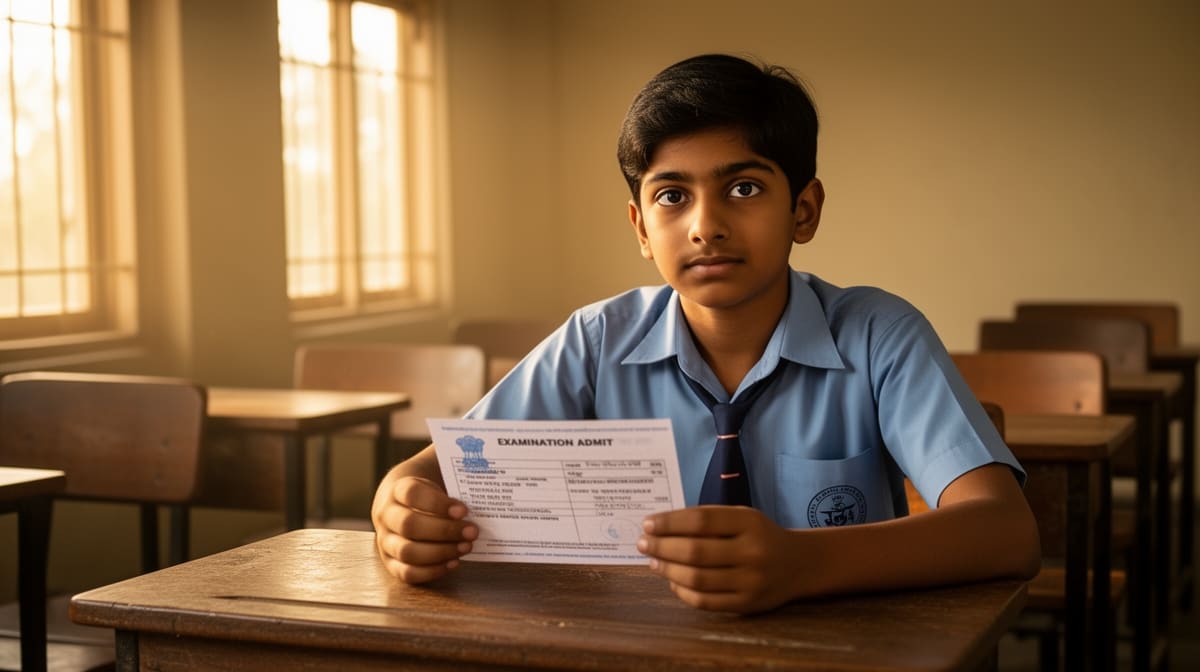
In a nuanced application of the Juvenile Justice (Care and Protection of Children) Act, 2015, the Rajasthan High Court granted interim bail to a juvenile accused of a serious offence under the NDPS Act, enabling him to appear for university examinations. The judgment underscores the court's discretion to balance the gravity of allegations with the educational rights of juveniles, even in cases involving commercial quantities of contraband.
Background & Facts
The Dispute
The petitioner, a 17-year-old juvenile represented through his natural guardian (father), was accused of an offence under the Narcotic Drugs and Psychotropic Substances Act, 1985 (NDPS Act), involving commercial quantities. The juvenile, a regular student of B.A. at Jai Narayan Vyas University (JNVU) studying at Sanskar College, Sedwa, Barmer, was lodged in the Observation Home, Juvenile Justice Board, Sirohi, following the rejection of his bail application.
Key Facts
- The juvenile was accused in a case registered under the NDPS Act, with allegations involving commercial quantities of contraband
- He was a regular student of B.A. and had been issued an admit card for upcoming university examinations
- His bail application under Section 12 of the Juvenile Justice Act, 2015 was rejected by the Juvenile Justice Board, Sirohi, on 06.03.2026
- The juvenile filed an appeal under Section 101 of the Act of 2015, which was dismissed by the Special Judge (NDPS Cases), Sirohi, on 11.03.2026
- The present criminal revision petition was filed under Section 102 of the Juvenile Justice Act, 2015 before the Rajasthan High Court
Procedural History
- 06.03.2026: Juvenile Justice Board, Sirohi, rejected the bail application under Section 12 of the Juvenile Justice Act, 2015
- 11.03.2026: Special Judge (NDPS Cases), Sirohi, dismissed the appeal under Section 101 of the Act of 2015
- 19.03.2026: Criminal Revision Petition No. 411/2026 filed before the Rajasthan High Court
- 19.03.2026: High Court heard the matter and reserved orders
The Parties' Positions
For the Petitioner
- Argued that the juvenile was a regular student and his examinations had commenced
- Submitted that interim bail should be granted to enable him to appear for examinations
- Proposed that the juvenile would surrender after the examinations to renew his bail application
For the Respondent (State)
- Opposed the bail application on the ground that the offence was grave, involving commercial quantities under the NDPS Act
- Contended that no indulgence should be granted given the seriousness of the allegations
Relief Sought
The petitioner sought interim bail till 15.04.2026 to appear for university examinations, with liberty to renew the bail application after surrendering before the concerned authority on 16.04.2026.
The Legal Issue
The central question was whether a juvenile accused of a serious offence under the NDPS Act could be granted interim bail to appear for examinations, notwithstanding the gravity of the allegations, under the Juvenile Justice Act, 2015.
Arguments Presented
For the Petitioner
- Relied on the Juvenile Justice Act, 2015, particularly Section 12, which empowers courts to grant bail to juveniles unless exceptional circumstances exist
- Emphasized the juvenile's right to education and the commencement of his examinations
- Cited the principle that bail, including interim bail, should be granted in appropriate cases to balance the rights of the accused with the interests of justice
For the Respondent
- Contended that the offence under the NDPS Act was grave, involving commercial quantities, and thus warranted strict treatment
- Argued that granting bail in such cases would undermine the deterrent effect of the law and the seriousness of the allegations
The Court's Analysis
The Court acknowledged the seriousness of the allegations but emphasized the dual objectives of the Juvenile Justice Act, 2015: protection of juveniles and their reformation. While noting that the power to grant bail includes the power to grant interim bail, the Court observed:
"Considering the fact that the petitioner is a juvenile and is stated to be a regular student, and further taking note of the examination schedule placed on record, this Court is of the view that a limited indulgence deserves to be granted to enable the petitioner to appear in the examinations."
The Court clarified that its order was without prejudice to the merits of the case and did not express any opinion on the ultimate entitlement to bail. Instead, it focused on the immediate need to balance the juvenile's educational rights with the legal process, directing that the juvenile surrender after the examinations to pursue his bail application afresh.
The Verdict
The petitioner succeeded in securing interim bail till 15.04.2026. The Court directed:
- The juvenile's natural guardian (father) to furnish a personal bond of Rs. 1,00,000 along with two sureties of Rs. 50,000 each to the satisfaction of the Juvenile Justice Board
- The juvenile to surrender before the concerned authority on 16.04.2026
- Liberty granted to the juvenile to file a fresh application for bail after surrender, which would be considered in accordance with law
- All pending applications disposed of
What This Means For Similar Cases
Interim Bail Can Be Granted for Educational Purposes
- Courts may grant interim bail to juveniles to enable them to appear for examinations, even in serious offences like those under the NDPS Act
- The Juvenile Justice Act, 2015 prioritizes the reformation and protection of juveniles, allowing courts to exercise discretion in appropriate cases
- Practitioners should highlight the educational rights of juveniles and the commencement of examinations as grounds for interim relief
Gravity of Offence Is Not an Absolute Bar
- While the gravity of the offence is a relevant factor, it does not automatically negate the possibility of interim bail
- Courts are likely to consider mitigating circumstances, such as the juvenile's age, educational status, and the absence of a prior criminal record
- The power to grant bail under Section 12 of the Juvenile Justice Act, 2015 includes the power to grant interim bail in deserving cases
Compliance with Conditions Is Critical
- Juveniles granted interim bail must strictly comply with the conditions imposed, including surrendering before the concerned authority within the stipulated timeline
- Failure to comply may result in revocation of bail and adverse inferences during subsequent bail applications
- Practitioners should ensure that sufficient sureties and bonds are furnished to avoid procedural delays or rejections