The Madurai Bench of the Madras High Court has affirmed that public interest in conservation infrastructure can justify a final extension of contractual deadlines, even after multiple prior delays. In a pragmatic exercise of its writ jurisdiction under Article 226, the Court balanced the contractor’s commitment to complete work against the State’s obligation to facilitate timely execution, setting a clear precedent for administrative responsiveness in environmental projects.
Background & Facts
The Dispute
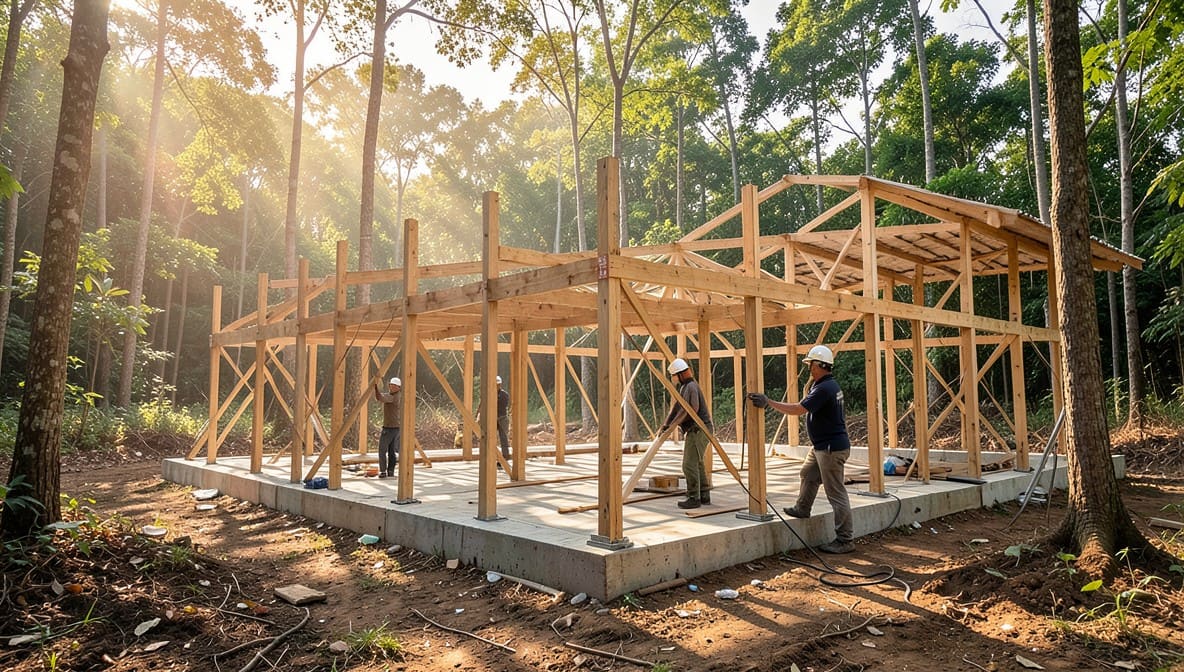
The petitioner, Kongu Construction & Contractors, was awarded a tender by the Dindigul Forest Division for the construction of a Slender Loris Conservation Center at Sukkampatty Village, Ayyalur Range, under Procurement No. 465/2024/D1 dated 26.03.2026. The project is critical for wildlife conservation and public education, with a dedicated society already formed to manage the facility upon completion.
Key Facts
- The original contract timeline expired on 13.04.2026, as per the impugned order dated 13.04.2026, which directed the petitioner to vacate the site.
- A further order dated 16.04.2026 reinforced the direction to hand over the work area.
- The petitioner claims to have completed substantial portions of the construction work.
- The petitioner alleges delays in site handover by the Forest Department.
- The Forest Department asserts that two prior extensions were granted, and the third extension, granted by Court order, had also lapsed.
- The petitioner has approached the Court for the fourth consecutive time regarding this project.
- The petitioner seeks a final extension to 30.04.2026, with assurance of no further requests.
Procedural History
- 26.03.2026: Tender awarded to petitioner under Proc.No.465/2024/D1.
- 13.04.2026: Respondent issued order directing petitioner to vacate site and terminating extension.
- 16.04.2026: Further order issued directing handover of work area.
- 16.04.2026: Writ Petition (W.P.(MD) No.10714 of 2026) filed before Madurai Bench of Madras High Court.
- 16.04.2026: Connected Miscellaneous Petitions W.M.P.(MD) Nos.8378 and 8381 of 2026 filed seeking interim relief.
Relief Sought
The petitioner sought:
- Quashing of the orders dated 13.04.2026 and 16.04.2026.
- Extension of the completion deadline to 30.04.2026.
- Direction to the respondent to complete measurement of completed work and release partial payments to enable swift completion.
The Legal Issue
The central question was whether Article 226 of the Constitution empowers the High Court to grant a final extension of a contractual deadline for a public infrastructure project, despite prior delays and expired extensions, when the contractor commits to completion within a fixed timeframe and public interest demands timely delivery.
Arguments Presented
For the Petitioner
The petitioner’s counsel argued that substantial work had been completed, and the project served a vital public purpose - wildlife conservation and environmental education. He emphasized that the petitioner undertook to complete the remaining work by 30.04.2026 with no further extension sought. He contended that withholding payments due for completed work created a cash crunch, impeding labor mobilization and progress. He also cited delays in site handover as a contributing factor to the delay.
For the Respondent
The Special Government Pleader countered that the petitioner had already received two extensions, and a third extension had been granted by Court order which had now expired. He stressed that the Forest Department had acted in good faith to complete the project and that the delay was attributable to the petitioner’s inefficiency. He argued that granting another extension would set a precedent undermining administrative discipline and contract compliance.
The Court's Analysis
The Court explicitly declined to adjudicate the merits of past delays or assign blame. Instead, it focused on the future and the overriding public interest in completing a conservation facility that already has a managing society ready for operation.
"This order is passed not on the mutual allegations of the past, but considering the future and the public interest involved in the matter."
The Court noted the petitioner’s clear undertaking to complete the work by 30.04.2026 without seeking any further extension. It recognized that the petitioner had already executed major portions of the work, indicating substantial investment and progress. The Court held that the State’s duty to facilitate public infrastructure cannot be discharged by merely enforcing deadlines while withholding funds for completed work.
"Since the fund is available, notwithstanding any moral Code of Conduct, since it is pursuant to the Court orders, the funds due shall be released at least in portions so that the petitioner also does not face funds crunch when it is expected of him to swiftly and quickly complete the work."
The Court emphasized that the release of funds must occur in parallel with the progress of work. It directed the authorities to undertake measurement and bill processing immediately and to release partial payments to ensure the petitioner can mobilize labor and materials. The Court rejected rigid adherence to procedural timelines where the outcome serves a greater public good.
The Verdict
The petitioner succeeded. The Court extended the completion deadline to 30.04.2026, quashed the impugned orders dated 13.04.2026 and 16.04.2026 directing handover of the site, and directed the respondent to:
- Complete measurement of completed work without delay;
- Release partial payments to the petitioner to enable swift progress;
- Ensure no further extension will be granted beyond 30.04.2026;
- Act on the web copy of the order immediately, without waiting for the certified copy.
No costs were awarded.
What This Means For Similar Cases
Public Interest Overrides Rigid Contractual Deadlines
- Practitioners may now invoke Article 226 to seek final extensions in public infrastructure projects where substantial work is complete and public benefit is imminent.
- Courts are likely to prioritize outcomes over procedural compliance when delays are not attributable to gross negligence.
Partial Payment Release Is a Legal Obligation
- Authorities cannot withhold payments for completed work under the pretext of pending approvals or budgetary constraints when a Court has directed progress.
- The judgment establishes that partial release of funds is not discretionary but a necessary condition for timely project completion.
No Further Extensions Are Permissible
- The Court’s explicit bar on future extensions creates a binding incentive for contractors to meet final deadlines.
- Practitioners should advise clients to secure written undertakings of finality before seeking judicial relief.