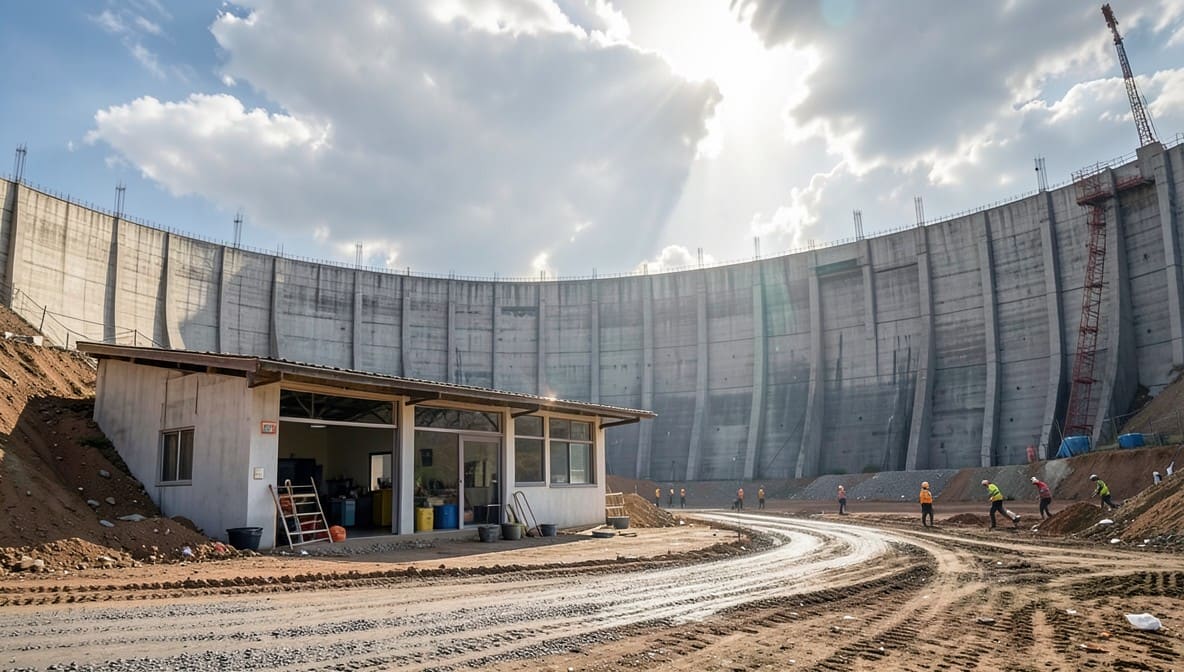
In a significant move toward judicial monitoring of public infrastructure projects, the Bombay High Court's Nagpur Bench has taken suo motu cognizance of substandard restoration work following underground cabling projects in Nagpur. The Court's intervention establishes a precedent for direct judicial oversight of contractor workmanship in public works, potentially reshaping accountability mechanisms in municipal infrastructure projects across Maharashtra.
Background & Facts
The Genesis
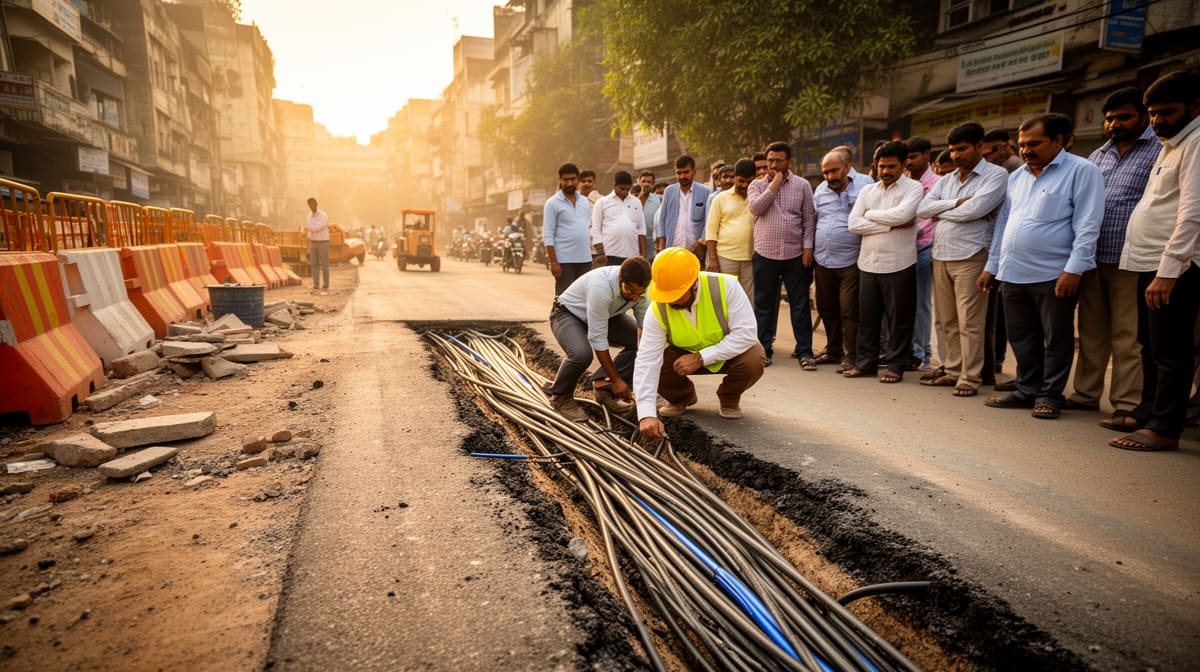
The case originated from widespread public complaints regarding poor quality restoration work following underground cabling projects undertaken by the Maharashtra State Electricity Distribution Company Limited (MSEDCL) in Nagpur. Citizens reported that:
- Restoration work often created additional public nuisances
- Inferior quality work led to repeated accidents
- Lack of proper supervision resulted in persistent defects
Procedural Initiation
The Court took suo motu cognizance of the issue, converting it into Criminal Public Interest Litigation No. 1 of 2020. Key procedural steps include:
- 11 February 2026: Initial hearing where the Court noted systemic deficiencies in work quality supervision
- Direction to MSEDCL to submit comprehensive lists of:
- Ongoing underground cabling restoration projects
- Recently completed projects
- Contractors awarded such works
- Proposal to constitute an Expert Committee to verify work quality
Public Interest Concerns
The Court observed that:
- Public funds were being wasted on substandard work requiring repeated repairs
- No effective mechanism existed for quality supervision of contractor workmanship
- Inferior restoration created ongoing public safety hazards
The Legal Issue
The central questions before the Court were:
- Whether the judiciary can exercise suo motu jurisdiction to monitor quality of public infrastructure projects
- What mechanisms can be established to ensure accountability in contractor workmanship for public works
- Whether payment to contractors can be withheld for deficient quality work identified through judicial oversight
The Court's Analysis
The Court's reasoning focused on several key principles:
-
Judicial Activism in Public Interest: The Court emphasized its role in protecting public interest, particularly when executive agencies fail to ensure quality standards. The judgment builds on the principle established in Bandhua Mukti Morcha v. Union of India that courts can intervene when fundamental rights are affected by state inaction.
-
Public Fund Accountability:
"Huge public amount is being spent on such work and if immediately after such restoration work, further repairs are required or people face inconvenience or nuisance, it is nothing but a complete wastage of amount spent on such work."
The Court applied the public trust doctrine, holding that state agencies must ensure proper utilization of public funds.
-
Contractual Accountability: The judgment establishes that contractual obligations extend beyond mere completion to include quality standards. The Court noted that MSEDCL's failure to supervise workmanship constituted a breach of its public duty.
-
Remedial Mechanisms: The Court proposed a multi-stage oversight mechanism involving:
- Expert committee verification of work quality
- Potential withholding of contractor payments for deficient work
- Judicial determination of further action based on expert reports
The Verdict
The Court issued the following directions:
- MSEDCL must submit comprehensive lists of all underground cabling restoration projects within two weeks
- An Expert Committee will be constituted to verify work quality
- The Court reserved the right to withhold contractor payments for deficient work identified by the committee
- The matter is listed for further hearing on 25 February 2026
What This Means For Similar Cases
Judicial Oversight of Public Works
This judgment establishes important precedents for judicial monitoring of public infrastructure projects:
- Courts can now proactively intervene in cases of systemic quality failures in public works
- Suo motu jurisdiction extends to monitoring implementation of public contracts
- The public trust doctrine now explicitly covers quality of infrastructure projects
Contractor Accountability Mechanisms
Practitioners should note:
- Quality standards are now judicially enforceable aspects of public contracts
- Payment withholding for deficient work is a legally permissible remedy
- Expert committees can be constituted for technical verification of work quality
Municipal Corporation Liabilities
For municipal authorities and public utilities:
- Supervision mechanisms must be established for contractor workmanship
- Documentation of all public works projects becomes crucial for judicial scrutiny
- Public complaints about infrastructure quality can trigger judicial intervention
The judgment signals a shift toward proactive judicial governance in public infrastructure, where courts may step in to ensure quality standards are maintained in projects affecting public safety and welfare.