The Bombay High Court has taken unprecedented judicial action to enforce the restoration of a historic courthouse, treating the decay of judicial infrastructure as a matter of constitutional and public importance. This ruling establishes that courts have the authority - and duty - to monitor and ensure the preservation of heritage buildings integral to the administration of justice.
Background & Facts
The Dispute
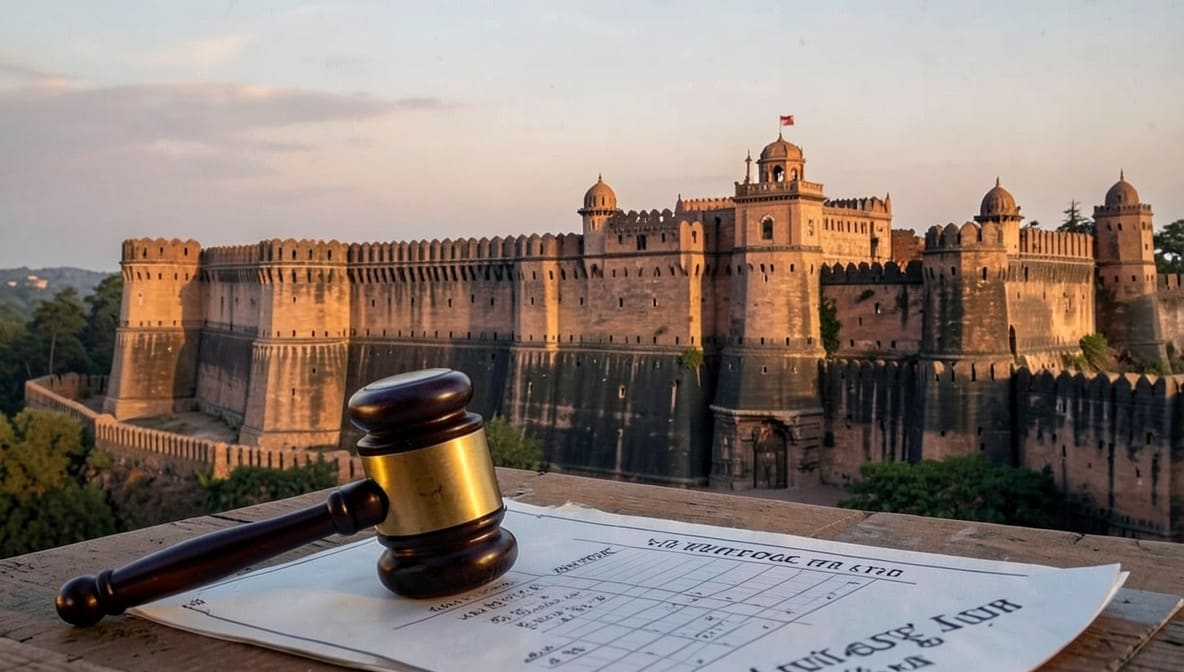
The Court initiated proceedings on its own motion concerning the severe deterioration of the old High Court building in Nagpur, a heritage structure that housed judicial proceedings for decades. Despite its historical and functional significance, no restoration work had been undertaken for approximately one year, leaving the building vulnerable to irreversible structural damage.
Procedural History
- 2010: Original PIL filed seeking preservation of heritage court buildings
- 2015: Additional PIL filed by a citizen petitioner highlighting neglect
- 2020: Second PIL consolidated with the original, focusing on institutional accountability
- March 2026: Court ordered a site inspection by the Deputy Registrar, whose report confirmed advanced decay and complete stagnation of restoration efforts
Relief Sought
The Court sought immediate, time-bound restoration of the building, institutional accountability from the Archaeological Survey of India, and a binding timeline to prevent further damage to a monument of judicial heritage.
The Legal Issue
The central question was whether a High Court, acting in its public interest litigation jurisdiction, can compel a statutory body like the Archaeological Survey of India to complete restoration of a heritage judicial building within a fixed timeframe, even in the absence of a formal complaint from a private party.
Arguments Presented
For the Petitioner
The petitioner, through amicus curiae and counsel, argued that the old High Court building is not merely a relic but an active symbol of the rule of law. They cited M.C. Mehta v. Union of India to assert that the state has a constitutional obligation under Article 21 to preserve infrastructure essential to the functioning of justice. They emphasized that neglect of judicial heritage undermines public confidence in the judiciary.
For the Respondent
The Union of India and Archaeological Survey of India contended that restoration required multi-layered approvals, funding allocations, and technical assessments, which could not be compressed into a six-month window. They argued that judicial directives could not override statutory procedures under the Ancient Monuments and Archaeological Sites and Remains Act, 1958.
The Court's Analysis
The Court rejected the argument that bureaucratic processes could justify inaction. It held that the preservation of a functioning judicial monument is not a matter of administrative convenience but of constitutional necessity. The building, where justice was delivered for generations, is part of the institutional fabric of the judiciary.
"The edifice in which justice is administered is not a mere structure of brick and mortar; it is a living testament to the dignity of the judicial process. To allow its decay is to erode the very symbolism of justice."
The Court distinguished State of U.P. v. Subhash Chandra by noting that while statutory procedures must be followed, they cannot be used as a shield for perpetual inaction when public interest and constitutional values are at stake. It affirmed that judicial oversight in PIL matters extends to ensuring the physical integrity of institutions that enable justice.
The Court further held that the Archaeological Survey’s duty under the 1958 Act is not merely protective but proactive when the structure continues to serve a public function. Delay, in this context, is not an option.
The Verdict
The Court ruled in favor of the public interest. It held that the restoration of the heritage courthouse must be completed within six months, and directed the Archaeological Survey to submit a detailed, time-bound action plan under affidavit. Failure to comply will invite contempt proceedings.
What This Means For Similar Cases
Judicial Infrastructure Is a Constitutional Concern
- Practitioners may now invoke Article 21 to challenge neglect of court buildings, especially heritage structures
- Courts may initiate suo motu proceedings when judicial infrastructure is at risk, even without a formal petitioner
- State agencies cannot invoke procedural delays as a defense when public access to justice is compromised
Statutory Compliance Must Yield to Urgent Public Interest
- The Ancient Monuments Act does not insulate agencies from judicial direction when heritage structures remain in active judicial use
- Restoration timelines can be judicially imposed where delay threatens structural integrity or public trust
- Affidavits detailing restoration plans must now include milestones, budget allocation, and contingency measures
Accountability Shifts to the State
- Government departments responsible for heritage infrastructure must now proactively report to courts on progress
- Failure to submit compliance affidavits or meet deadlines will trigger contempt jurisdiction
- Legal teams representing state entities must now treat judicial building maintenance as a high-priority compliance matter, not an administrative afterthought