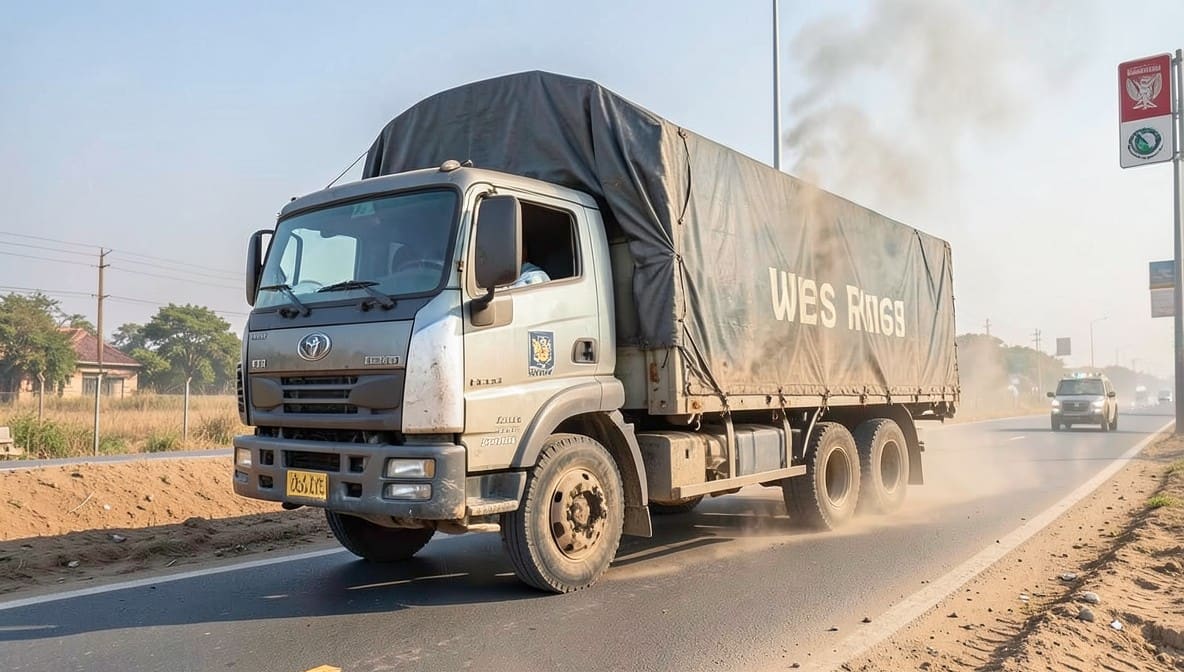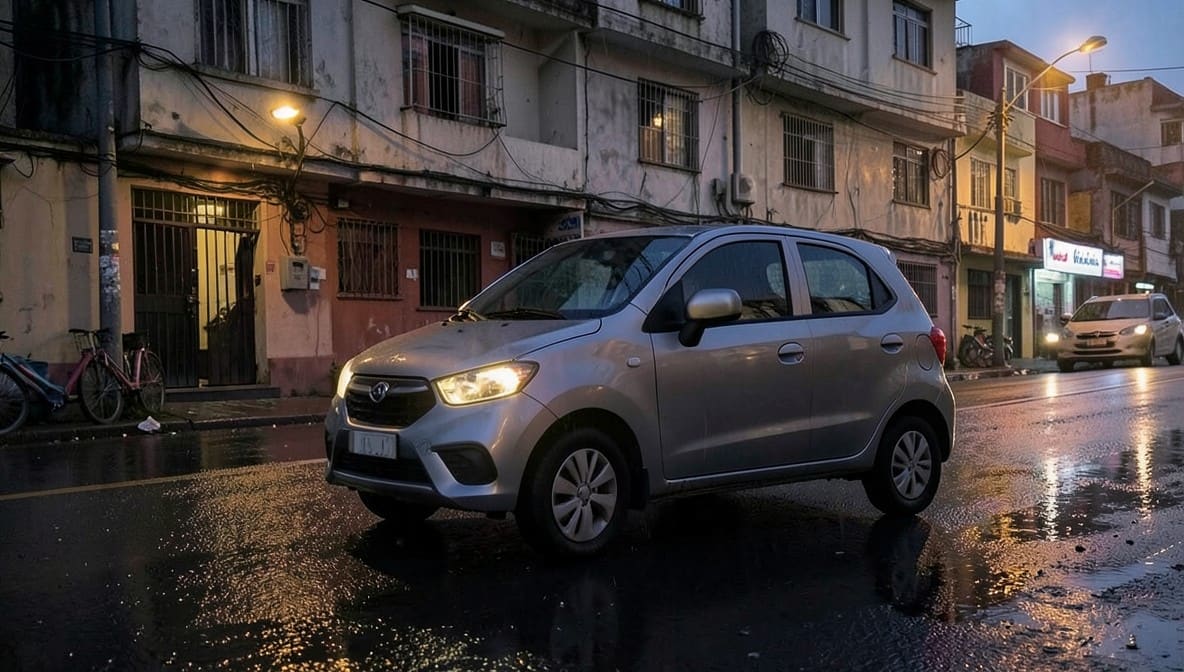
The Maharashtra State Consumer Dispute Redressal Commission held that an insured who locks a burnt-down vehicle on a highway shoulder after a night-time tyre puncture does not breach the policy condition requiring ‘proper precautions’, and that the insurer’s repudiation of the total-loss claim on that basis constitutes a deficiency in service. The Commission affirmed the Insured Declared Value of ₹70 lakh as the binding measure of compensation, awarded interest at 7% per annum from the date of repudiation, and granted additional sums for mental agony and litigation costs.
Background & Facts
The Dispute
The complainant, Mr. Ravikant S. Patil, owned a BMW car (MH-13/AF-5050) insured with the United India Insurance Co. Ltd. under Policy No. 161200/31/11/01/00004301, valid from 22/12/2011 to 21/12/2012, with an Insured Declared Value (IDV) of ₹70,00,000 and a premium of ₹1,65,996. On the night of 8th March 2012 the vehicle suffered a tyre puncture on a state highway. The driver locked the car and parked it on the roadside near a landmark (Chacha Dhaba), returned to Solapur in another vehicle, and the car was found completely burnt the next morning. The complainant intimated the insurer that a repair estimate was impossible as the authorised dealer deemed the vehicle totally damaged, and responded to subsequent requests for clarification. The insurer registered the claim as a total loss but later repudiated it, alleging breach of Condition 4 of the policy (leaving the vehicle unattended without proper precautions). The complainant filed a consumer complaint alleging deficiency in service and unfair trade practice.
Key Facts
- Policy No. 161200/31/11/01/00004301: valid 22/12/2011 - 21/12/2012; IDV ₹70,00,000; premium ₹1,65,996.
- Incident: tyre puncture late night of 8th March 2012; vehicle locked and parked on highway shoulder; found burnt morning of 9th March 2012.
- Follow-up letter to the insurer’s Managing Director in Chennai seeking expedited processing (date not specified).
- Repudiation of claim: 23/11/2012 (as inferred from interest award).
- Original Complaint No: CC/23/ 2013 filed before the Maharashtra State Consumer Dispute Redressal Commission.
- RBT No: RBT/CC/1021/2018.
- NCDRC order dated 11.10.2018 in First Appeal No. 1695 of 2017 restored the complaint, directed payment of ₹25,000 cost (which was complied with), and granted a final opportunity to present the case on merits.
- Matter taken up for final adjudication before the Maharashtra State Commission.
- Judgment pronounced: 16/09/2026.
Procedural History
- 22/12/2011 - 21/12/2012: Policy period.
- 08/03/2012 - 09/03/2012: Tyre puncture and vehicle fire.
- 23/11/2012: Date of repudiation (interest start date).
- CC/23/ 2013: Original complaint filed (year 2013).
- 11.10.2018: NCDRC restores complaint, imposes ₹25,000 cost.
- Post-11.10.2018: Complainant pays cost and proceeds to final hearing.
- 16/09/2026: Judgment of the Maharashtra State Consumer Dispute Redressal Commission.
Relief Sought
The complainant prayed for payment of ₹99,00,000 (including ₹50,000 for mental agony) along with 18% annual interest from the date of repudiation, and reimbursement of litigation costs.
The Legal Issue
The central question was whether the insured’s act of locking the vehicle on the highway shoulder after a night-time tyre puncture constituted a breach of Condition 4 of the insurance policy requiring ‘proper precautions to prevent further damage or loss’, and whether such a breach, if any, could justify repudiation of a total-loss claim so as to amount to a deficiency in service under the Consumer Protection Act, 2019.
Arguments Presented
For the Complainant
The complainant contended that locking the vehicle and moving to safety was the maximum feasible precaution given the midnight hour, absence of repair facilities, and risk to personal safety. He invoked the principle of utmost good faith (uberrimae fidei), arguing that the insurer could not rely on hidden exclusion clauses after collecting the premium without disclosing the terms. He maintained that the IDV of ₹70 lakh must be honoured and that the insurer’s attempt to depreciate the vehicle’s value to ₹59 lakh was untenable. He further sought compensation for mental agony and litigation costs.
For the Respondent/Opposite Party
The insurer argued that leaving the vehicle unattended on the highway overnight violated Condition 4, as the complainant failed to use the stepney, tow the vehicle, or remain with it. It asserted that the fire’s origin was suspicious and not attributable to nearby grass, and that delayed notice prejudiced investigation. The insurer contended that the true post-depreciation value of the vehicle was ₹59 lakh, characterised the complaint as mala fide, and submitted that the dispute should be tried in a civil court rather than a consumer forum. It sought dismissal of the complaint with costs.
The Court's Analysis
The Commission began by interpreting Condition 4, noting that the policy does not absolutely prohibit leaving a broken-down vehicle; rather, it prohibits leaving it unattended without proper precautions. It observed that what constitutes a ‘proper precaution’ is not rigidly defined and must be judged according to the facts, circumstances, and ground realities of each case. The Commission found that the driver had moved the vehicle to the side of the road near a landmark, rolled up the windows, and locked the car, demonstrating the standard of care expected of a reasonable and prudent owner under the circumstances.
“The policy does not absolutely prohibit leaving a broken-down vehicle; rather, it prohibits leaving it unattended without proper precautions. What constitutes a ‘proper precaution’ is not rigidly defined in the policy schedule and must be interpreted based on the specific facts, circumstances, and ground realities of each case.”
The Commission further held that expecting the driver to remain with the vehicle overnight on a dark highway would be unreasonable and unsafe, and that the law cannot compel an individual to jeopardise personal safety to guard a depreciating asset.
On the issue of causation, the Commission observed that the vehicle was destroyed by fire, the origin of which remained undetermined, and that leaving the vehicle locked by the roadside did not proximately cause the fire. The insurer had not placed any forensic evidence on record to prove a direct nexus between the alleged breach and the loss.
“This commission having opinion that, exclusion clauses in insurance contracts must be read down to align with the main purpose of the policy, which is to indemnify the insured against unforeseen losses.”
Regarding the IDV, the Commission reiterated the settled principle that once the IDV is agreed upon and the premium charged accordingly, it becomes the binding value for settlement of a total loss claim, and the insurer may not unilaterally depreciate it at the time of claim.
“Once the Insured Declared Value (IDV) is agreed upon and the premium is charged accordingly by the insurer, the IDV becomes the binding value for the settlement of a total loss claim. The Opposite Party cannot unilaterally depreciate the value at the time of claim settlement without a statutory basis.”
Consequently, the Commission concluded that the complainant had not breached Condition 4, that the repudiation amounted to a deficiency in service, and that the IDV of ₹70 lakh must be honoured.
The Verdict
The complainant succeeded in part. The Commission set aside the insurer’s repudiation and directed the opposite party to pay the Insured Declared Value (IDV) of the vehicle, namely ₹70,00,000, with interest at 7% per annum calculated from the date of repudiation (23/11/2012) till actual realization. Additionally, the opposite party was ordered to pay a lump sum of ₹50,000 towards mental agony and harassment suffered by the complainant, and ₹25,000 towards the costs of this litigation. Copies of the order are to be supplied to both parties free of cost.
What This Means For Similar Cases
Interpreting Exclusion Clauses in Insurance Policies
Exclusion clauses must be construed narrowly and in favour of the insured. A breach is established only if there is a direct nexus between the alleged omission and the cause of loss. Mere non-compliance with a precautionary requirement, absent such a nexus, does not justify repudiation.
- Practitioners should scrutinise whether the insurer has proved proximate cause between the alleged breach and the loss.
- Arguments based on the impossibility of taking certain precautions (e.g., using a stepney in darkness) are relevant to the reasonableness of the insured’s conduct.
The Binding Nature of Insured Declared Value
Once the IDV is agreed upon and the premium charged, it locks in the insurer’s liability for a total loss. The insurer cannot later invoke depreciation or market value to reduce its obligation.
- Ensure that the policy schedule clearly records the IDV and that the premium corresponds thereto.
- In claims, demand payment of the IDV plus applicable interest from the date of repudiation or denial.
Consumer Protection Remedies for Insurance Deficiency
A repudiation based on a misapplied exclusion clause constitutes a deficiency in service, entitling the consumer to compensation for mental agony and litigation costs in addition to the contractual entitlement.
- Plead deficiency in service when the insurer relies on an exclusion without establishing a causal link.
- Claim for mental anguish is maintainable where the insurer’s conduct causes harassment and distress.