The West Bengal State Consumer Disputes Redressal Commission has held that carriage of one person beyond the registered seating capacity of a goods vehicle does not, without more, constitute a fundamental breach justifying total repudiation of an own-damage motor insurance claim. The Commission set aside the District Commission's dismissal, restored the complaint for limited adjudication, and directed settlement at 75 percent of the admissible own-damage loss following the Supreme Court's approach in Lakhmi Chand v. Reliance General Insurance.
Background & Facts
The Dispute
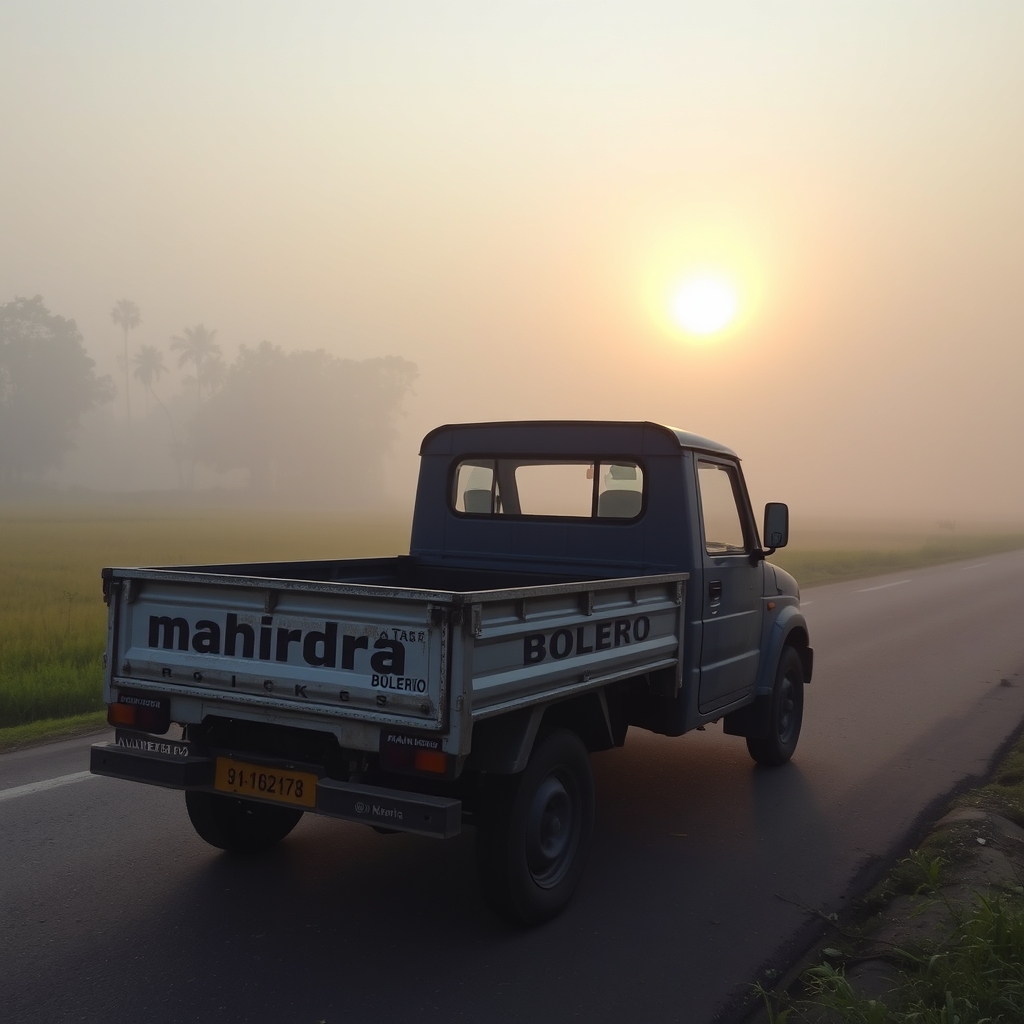
The appellant, Hasanur Zaman, is the registered owner of a Mahindra Bolero pick-up van bearing registration number WB25K 2274. The vehicle was insured with ICICI Lombard General Insurance Company Limited for the period from 28 January 2020 to 27 January 2021. The claim concerns accidental damage to the vehicle itself and not compensation payable to occupants or third parties.
Key Facts
- 28 January 2020: Insurance policy inception for one year
- 2 September 2020: Vehicle met with an accident during policy currency; FIR lodged same day under Sections 279, 338 and 427 IPC (Case No. 92/2020)
- 14 September 2020: Insurer informed of the accident (12-day interval); claim registered under No. MOT10216714
- 16 October 2020: Vehicle taken to a service centre; estimated repair cost Rs. 6,42,544/-
- 1 November 2020: Insurer repudiated the claim on the ground that the vehicle was carrying three persons including the driver against a registered seating capacity of two
- 4 December 2020: Complainant made further representation
- 18 April 2023: District Consumer Disputes Redressal Commission, Hooghly dismissed the complaint in CC/15/2021
- 28 October 2026: State Commission judgment in First Appeal No. SC/19/A/265/2023
The appellant contended that the additional occupant had no causal connection with the accident and that the insurer appointed a surveyor, Mr. Niladri Paul, but neither supplied the survey report nor produced it before the District Commission. The appellant alleged the surveyor assessed repair cost at Rs. 6,46,928/- and claimed deficiency in service and unfair trade practice. He sought payment of repair charges, compensation for loss of income at Rs. 20,000/- per month from 1 November 2020, compensation of Rs. 5,00,000/- for mental agony, and litigation costs of Rs. 50,000/-.
Procedural History
- 2 September 2020: Accident and FIR registration
- 14 September 2020: Intimation to insurer
- 1 November 2020: Repudiation by insurer
- 4 December 2020: Further representation by complainant
- Date not specified: Complaint filed before District Commission (CC/15/2021)
- 18 April 2023: District Commission dismissed the complaint
- Date not specified: First Appeal filed before State Commission (SC/19/A/265/2023)
- 28 October 2026: State Commission judgment
The Parties' Positions
Appellant: Carriage of one additional person did not constitute a fundamental breach disentitling indemnification; no causal link between excess occupancy and accident; insurer failed to produce survey report; commercial use and hypothecation do not defeat consumer status or locus standi.
Respondent: Excess occupancy admitted and constitutes violation of policy conditions; relies on FIR, charge-sheet, Section 58 Indian Evidence Act, and precedents including Oriental Insurance v. Premlata Shukla; vehicle hypothecated to ICICI Bank requiring payment to financier under IMT-7; no completed repair or actual expenditure proved; estimate not from authorised dealer; repair cost indicates total loss.
Relief Sought
The appellant sought payment of repair charges (Rs. 6,42,544/-), compensation for loss of income at Rs. 20,000/- per month from 1 November 2020, compensation of Rs. 5,00,000/- for mental agony and harassment, and litigation costs of Rs. 50,000/-.
The Legal Issue
The central questions were: (1) whether the complaint is maintainable notwithstanding commercial use of the vehicle and its hypothecation; (2) whether admitted carriage of one additional person beyond registered seating capacity justified total repudiation of the own-damage claim; (3) whether delayed intimation independently sustains repudiation when not included in the original repudiation; (4) what consequence follows from non-production of the survey report and absence of proof of completed repairs; and (5) what relief can properly be granted.
Arguments Presented
For the Appellant
The appellant submitted that the additional occupant had no causal connection with the accident and that the District Commission treated the admitted excess occupancy as sufficient by itself to defeat the claim. He relied on Om Prakash v. Reliance General Insurance (2017) 9 SCC 724 for the proposition that a genuine claim should not be rejected mechanically where delay is satisfactorily explained. He contended that hypothecation does not extinguish his right to maintain the complaint and that IMT-7 provisions concerning payment to the financier do not govern an ordinary repair claim. He further argued that the insurer appointed a surveyor but neither supplied the report nor produced it before the District Commission, constituting deficiency in service.
For the Respondent
The insurer submitted that excess occupancy is admitted and constitutes violation of policy conditions. It relied on the FIR and charge-sheet, Section 58 of the Indian Evidence Act, 1872, and Oriental Insurance Co. Ltd. v. Premlata Shukla (2007) 13 SCC 476. It cited National Commission decisions in II (2007) CPJ 97 (NC), I (2007) CPJ 23 (NC), and Revision Petition No. 3228 of 2012. The insurer contended that the vehicle was hypothecated to ICICI Bank and by reason of IMT-7 any amount payable must be paid to the financier; the bank not being impleaded, the complainant lacks locus standi. It further submitted that no completed repair or actual expenditure has been proved, the estimate was not issued by an authorised dealer, and the estimated repair cost indicates a case of total loss.
The Court's Analysis
The Commission examined five discrete points. On maintainability, it held that the character of the insured vehicle as a goods carriage does not determine whether the insurance service was obtained for a commercial purpose. Citing National Insurance Co. Ltd. v. Harsolia Motors (2023) 8 SCC 362, the Commission explained that the relevant inquiry concerns the dominant purpose of obtaining the service and its nexus with profit generation. The commercial character of the insured's underlying activity is not conclusive. The objection founded merely upon commercial use was rejected.
On hypothecation, the Commission held that it does not by itself deprive the registered owner and insured of the right to challenge repudiation. IMT-7 protects the financier's interest in specified insurance proceeds concerning loss or damage which cannot be made good by repair or replacement. It does not declare that the insured ceases to possess enforceable rights under the policy. Non-joinder of the bank does not warrant outright dismissal; if adjudication affects the bank's interest, its presence can be secured.
On the core issue of excess occupancy, the Commission found Lakhmi Chand v. Reliance General Insurance (2016) 3 SCC 100 closely applicable. That case concerned an own-damage claim for a goods vehicle carrying persons beyond permitted capacity. The Supreme Court held the insurer had not established that excess carriage caused the accident or amounted to a breach sufficiently fundamental to avoid liability, and restored the District Forum's award on a non-standard basis up to 75 percent. The Commission observed:
"On the material relied upon in the present case, the insurer establishes excess occupancy but does not identify evidence showing that the additional person obstructed the driver, affected control of the vehicle or otherwise contributed to the collision. Nor is any comparable circumstance demonstrated from which such contribution must reasonably be inferred. A bare numerical breach cannot substitute for examination of its nature and effect."
The Commission distinguished the National Commission decisions relied upon by the insurer. Oriental Insurance v. Rishi Jaiswal (II (2007) CPJ 97 NC) concerned a passenger bus carrying substantially more passengers including on its roof, which fell into a river. National Insurance v. Suresh Babu (I (2007) CPJ 23 NC) concerned gross excess carriage in a passenger vehicle with discrepancies in capacity. Delhi Assam Roadways v. United India Insurance (Revision Petition 3228/2012) involved a truck carrying 68,670 kg against 38,700 kg capacity (approximately 80 percent excess) with express finding of nexus to braking distance and steering control. None justified treating every instance of excess occupancy as an equivalent fundamental breach.
On delayed intimation, the Commission held that the repudiation dated 1 November 2020 proceeded on excess occupancy alone. Citing Saurashtra Chemicals Ltd. v. National Insurance Co. Ltd. (Civil Appeal 2059/2015, decided 13 December 2019), the Supreme Court held an insurer could not introduce delayed intimation as a new ground when it had not formed part of the repudiation. The insurer cannot sustain the repudiation by subsequently adding delay as an independent ground of forfeiture.
On quantification, the Commission held that the assertion of surveyor's assessment at Rs. 6,46,928/- cannot be accepted without the report. Absence of completed repair invoice does not establish absence of accidental damage. Total loss cannot be inferred merely because the repair estimate approximates purchase price; the relevant comparison is with policy IDV and the contractual test. Further evidence is necessary for quantification.
The Verdict
The appeal was allowed in part. The Commission set aside the District Commission's order dated 18 April 2023 in CC/15/2021 and restored the complaint for limited adjudication. The appellant is entitled to settlement on a non-standard basis at 75 percent of the otherwise admissible own-damage loss, to be quantified under the applicable policy. The District Commission shall determine the proper basis of assessment, permissible deductions and adjustments, and the person or persons entitled to receive the proceeds. The insurer shall file the complete policy schedule, terms, endorsements, IDV particulars, surveyor's appointment records, every available survey or assessment report, photographs, inspection records, and claim-processing correspondence within thirty days. The District Commission shall decide the admissible indemnity and claims for interest, compensation and costs by a reasoned order preferably within six months. The insurer shall pay the appellant Rs. 10,000/- towards costs of this appeal within thirty days. Parties shall appear before the District Commission on 25 November 2026.
What This Means For Similar Cases
Excess Occupancy Requires Causal Nexus to Defeat Claim
The judgment reaffirms that a bare numerical breach of seating capacity in a goods vehicle does not automatically constitute a fundamental breach avoiding liability. Practitioners must demonstrate or contest the causal connection between the excess occupancy and the accident. The insurer bears the burden of establishing that the additional occupant obstructed the driver, affected vehicle control, or contributed to the collision. Mere admission of excess occupancy is insufficient for total repudiation.
Non-Standard Settlement at 75 Percent as Structured Remedy
Following Lakhmi Chand, the Commission adopted a calibrated approach: the admitted breach should not be ignored but does not warrant total forfeiture. Settlement at 75 percent of the otherwise admissible own-damage loss provides a principled middle ground. This percentage applies to the loss established under the policy after permissible assessment and adjustments, not to the workshop's unverified gross estimate. Practitioners should frame pleadings and evidence to establish the admissible loss under the policy terms.
Repudiation Grounds Frozen at Communication Stage
The application of Saurashtra Chemicals prevents insurers from introducing new grounds of repudiation after the initial communication. If delayed intimation was not included in the repudiation letter, it cannot be raised subsequently to sustain forfeiture. Practitioners should scrutinise the repudiation communication carefully and object to any new grounds raised in written statements or arguments.
Survey Report Production Is Material But Not Jurisdictional
While the Commission rejected the proposition that no claim can ever be repudiated without a survey report, it held that where the insurer acknowledges appointment of a surveyor and disputes the repair assessment, the resulting report and records are plainly material. Unexplained failure to produce directed documents may justify an adverse inference. Practitioners should seek specific directions for production of survey records and claim-processing correspondence.
Hypothecation Does Not Extinguish Insured's Standing
The registered owner and insured retains the right to challenge repudiation notwithstanding hypothecation. IMT-7 operates only for losses that cannot be made good by repair or replacement. For repair claims, the insured's rights remain enforceable. If settlement proceeds on a total-loss basis, the financier's interest must be addressed before disbursement, but this does not defeat the complaint at the threshold.