The Punjab High Court has reaffirmed that the right to temporary release under prison statutes is not discretionary in the arbitrary sense, but must be governed by reasoned, evidence-based decision-making. This judgment establishes a critical safeguard against mechanical refusals of parole, reinforcing procedural fairness in the administration of custodial benefits.
Background & Facts
The Dispute
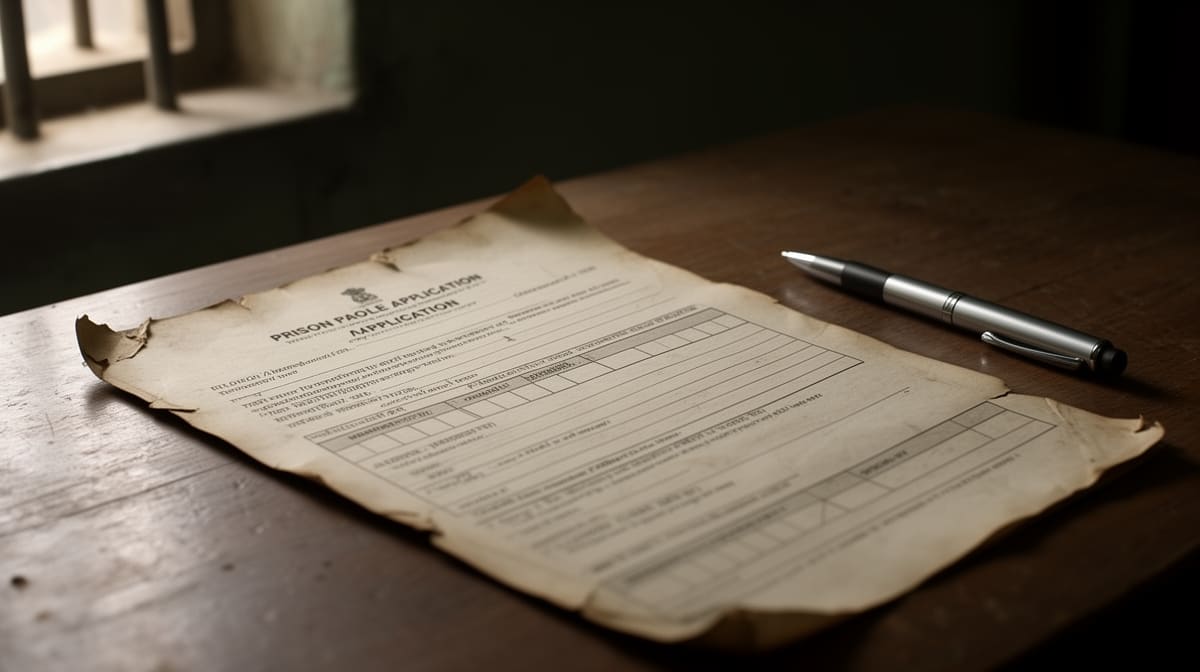
The petitioner, Lovepreet Singh @ Lavi, is an inmate serving a sentence in Central Jail, Faridkot, having undergone nearly five years of incarceration. He applied for parole for a period of eight weeks, citing his unblemished conduct during imprisonment and absence of any complaints or disciplinary actions. His request was rejected solely on the basis of a summary report from the Senior Superintendent of Police, Muktsar Sahib, without any specific factual basis or individualized assessment.
Procedural History
- The petitioner filed a writ petition under Articles 226 and 227 of the Constitution challenging the parole denial order dated 05.08.2025.
- The State filed a brief affidavit through the Superintendent, Central Jail, Faridkot, opposing the petition on vague grounds of potential threat to state security and public order.
- No detailed reasoning, evidence, or prior history of misconduct was produced to substantiate the refusal.
Relief Sought
The petitioner sought quashing of the impugned order and directed release on parole for eight weeks, subject to furnishing surety and compliance with conditions. He emphasized his good conduct and willingness to abide by all statutory safeguards.
The Legal Issue
The central question was whether the competent authority may deny parole under the Punjab Good Conduct Prisoners (Temporary Release) Act, 1962 without providing specific, material, and reasoned grounds, relying merely on unsubstantiated apprehensions of public order or state security.
Arguments Presented
For the Petitioner
Learned counsel relied on Section 3 and Section 4 of the Punjab Good Conduct Prisoners Act, 1962, arguing that parole is a statutory right contingent on eligibility and conduct, not executive discretion. He cited the petitioner’s clean record, absence of prior violations, and the statutory requirement that denial must be based on concrete risk assessment. He further invoked State of Punjab v. Baldev Singh to emphasize that administrative decisions affecting liberty must be reasoned and transparent.
For the Respondent
The State counsel contended that the authority to deny parole under Section 4 includes broad discretion to protect state security and public order. He argued that the police report, though summary, was sufficient to justify refusal, and that courts should not interfere in operational prison management absent clear illegality.
The Court's Analysis
The Court examined the statutory framework under the Punjab Good Conduct Prisoners (Temporary Release) Act, 1962, particularly Section 3 (grounds for release) and Section 4 (conditions and disqualifications). It held that while the Act permits denial on grounds of threat to state security or public order, such denial cannot be based on conclusory statements devoid of factual foundation.
"A perusal of the impugned order does not disclose any material or basis on which respondent No. 2 arrived at a conclusion that ‘if released on parole, then there is a threat to the state security and also there is a risk of disruption of public order in the State.’"
The Court distinguished between legitimate security concerns and speculative apprehensions. It emphasized that administrative discretion must be exercised reasonably and with transparency, especially when liberty interests are at stake. The absence of any record of misconduct, the petitioner’s long-term good behavior, and the lack of specific allegations rendered the refusal arbitrary and violative of Article 14 of the Constitution.
The Court further noted that the Act does not contemplate blanket denials based on generic police inputs. The authority must articulate how the individual petitioner, in his specific circumstances, poses a demonstrable risk. Mere reliance on a report without contextual analysis fails the test of audi alteram partem.
The Verdict
The petitioner succeeded. The Court held that parole cannot be denied without reasoned, material, and individualized justification under the Punjab Good Conduct Prisoners Act, 1962. The impugned order was set aside, and the petitioner was directed to be released on parole for four weeks, subject to furnishing bond and compliance with conditions.
What This Means For Similar Cases
Reasoned Orders Are Mandatory
- Practitioners must now insist on detailed, written orders explaining the factual basis for parole denial.
- Vague references to "threat to public order" or "security concerns" without supporting evidence are legally insufficient.
- Failure to provide reasons renders the order voidable under Article 14 and Article 21.
Good Conduct Is a Presumptive Entitlement
- A clean disciplinary record during incarceration creates a strong presumption in favor of parole eligibility.
- Authorities must rebut this presumption with specific, documented evidence - not generalized suspicion.
- Courts will intervene where the denial appears to be a rubber-stamp exercise.
Statutory Framework Overrides Executive Discretion
- The Punjab Good Conduct Prisoners Act, 1962 is not a blank cheque for authorities.
- Discretion must be exercised within the bounds of the statute’s purpose: rehabilitation and reintegration.
- Any denial must be proportionate, time-bound, and tied to identifiable risk factors.
Actionable Takeaways for Practitioners
- File writ petitions challenging parole denials where no individualized assessment is provided.
- Request production of the police report and any internal evaluation used to deny parole.
- Cite this judgment to argue that statutory rights to temporary release are enforceable, not merely discretionary privileges.