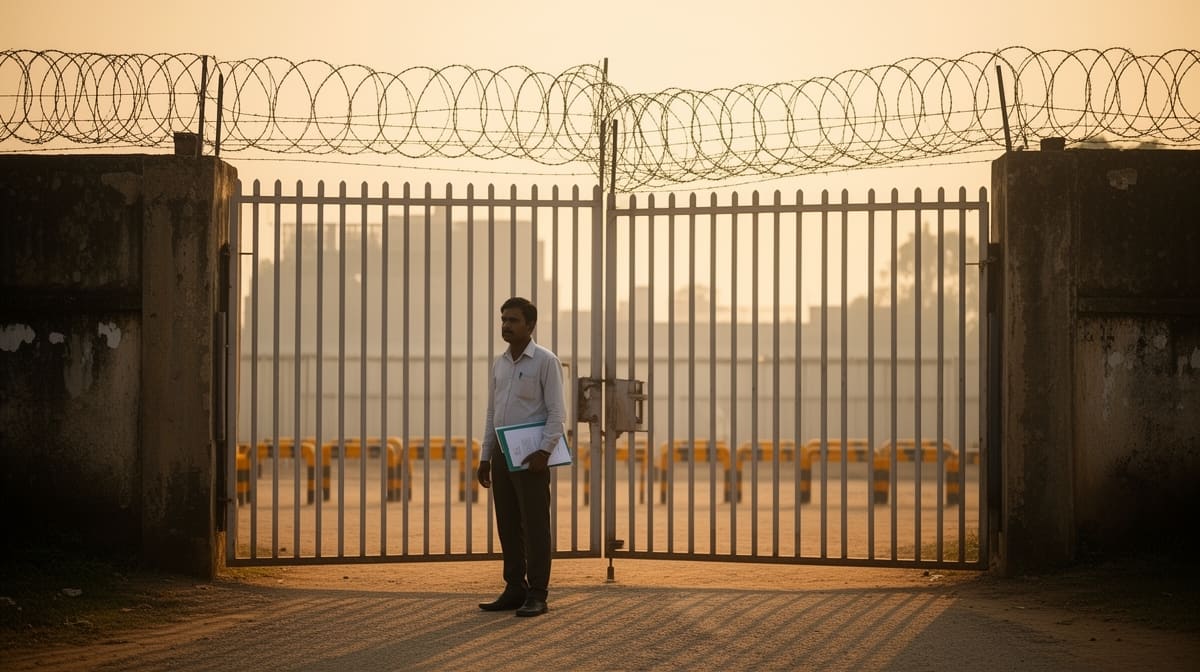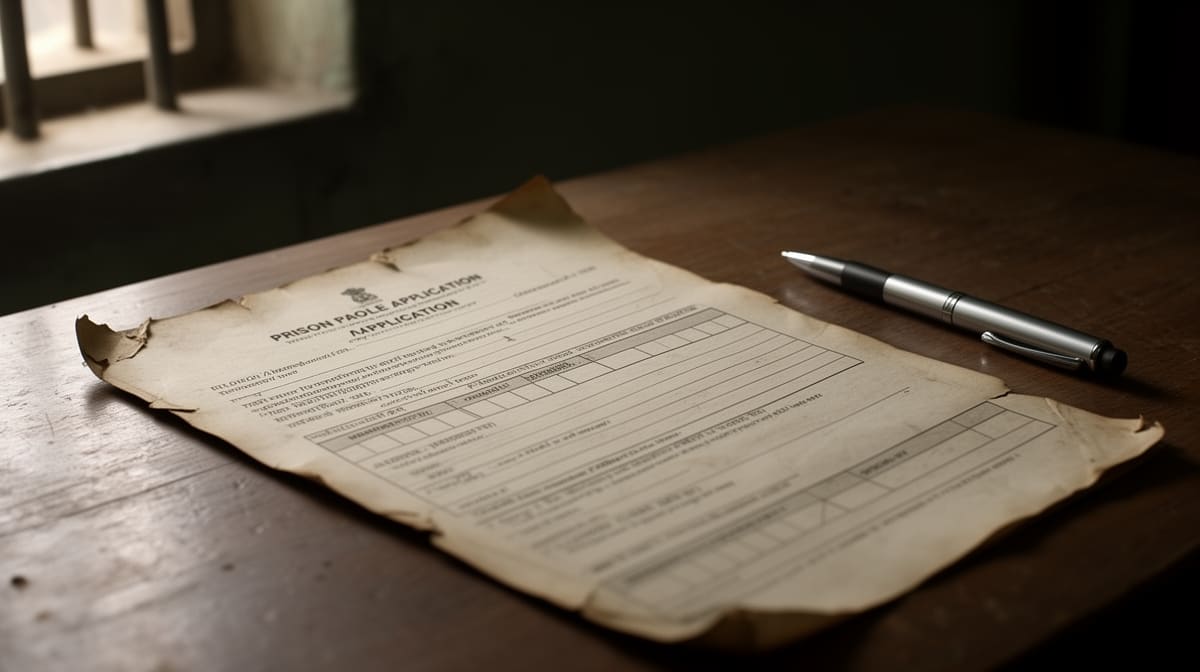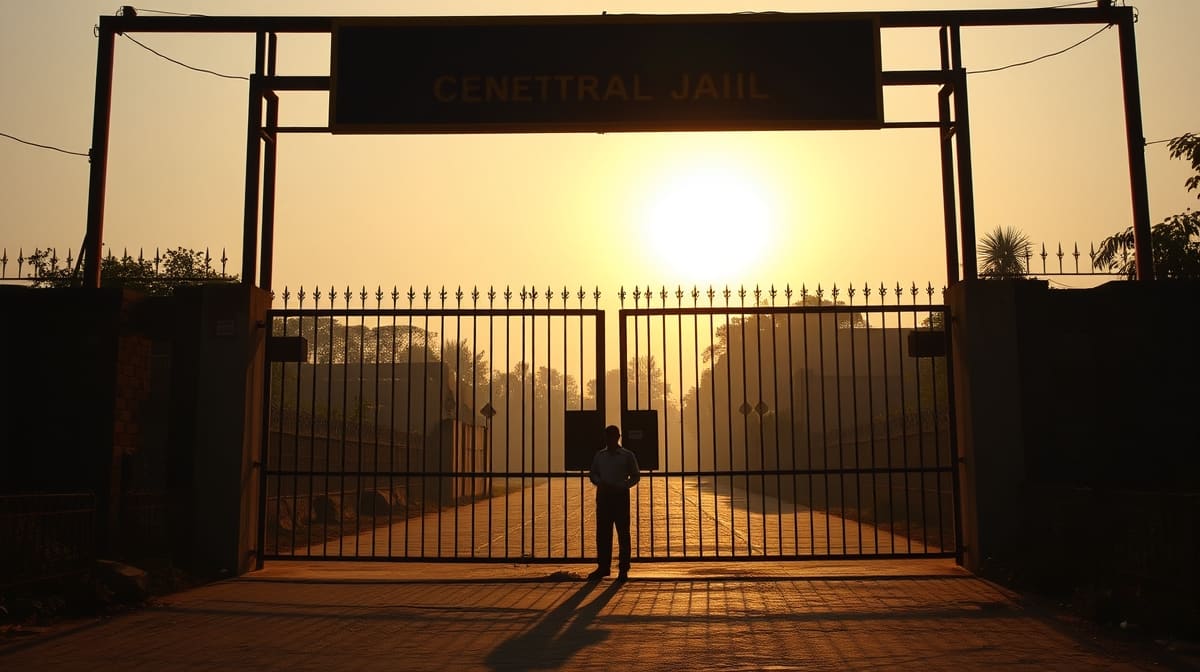
The Himachal Pradesh High Court has reaffirmed that the mere fact of conviction under the NDPS Act, even for a serious offence, cannot justify the automatic denial of parole. In a significant ruling grounded in reformative jurisprudence, the Court held that conduct during incarceration and specific threats to public order or state security are the only legally valid grounds for refusal, not the nature of the crime alone.
Background & Facts
The Dispute
The petitioner, Raj Kumar, was convicted by the Special Judge, Mandi, in Sessions Trial No. 8 of 2024 for offences under Section 21(c) read with Section 29 of the Narcotic Drugs and Psychotropic Substances Act, 1985. He was sentenced to 14 years of rigorous imprisonment, a fine of ₹1,40,000, and in default of payment, an additional one year and four months of imprisonment. He is currently serving his sentence at Model Central Jail, Nahan, District Sirmour.
Key Facts
- The petitioner applied for 28 days of parole to visit his ailing mother and minor son.
- As of 14.11.2025, he had served one year, 10 months, and 25 days of his sentence.
- His conduct in jail, as certified by the custody record, was rated as satisfactory.
- The application was forwarded to the District Magistrate and Superintendent of Police, Mandi, for recommendation.
- Both authorities declined the request, citing that the petitioner was involved in a "heinous crime" and was a "habitual offender."
- No specific evidence was provided to show that his release would endanger state security or disrupt public order.
- The petitioner had no prior criminal record, and no allegations of recidivism or association with drug networks were documented.
Procedural History
- 02.09.2025: Parole application rejected by the competent authority.
- 17.11.2025: Petitioner filed the present writ petition (CWP No. 17519 of 2025) before the High Court of Himachal Pradesh.
- 27.04.2026: Case reserved for judgment.
- 01.06.2026: Judgment delivered.
Relief Sought
The petitioner sought quashing of the parole rejection order dated 02.09.2025 and directed release on parole for 28 days to visit his family, subject to reasonable conditions.
The Legal Issue
Can the competent authority deny parole solely on the ground that the convict was convicted of a heinous offence under the NDPS Act, or must it restrict its refusal to the statutory grounds of endangering state security or prejudicing public order?
Arguments Presented
For the Petitioner
Mr. K.S. Gill, Advocate, submitted that the rejection of parole was legally unsustainable. He relied on Asfaq v. State of Rajasthan and Harbhajan Singh v. State of H.P., arguing that the nature of the offence cannot be a standalone ground for denial. He emphasized that the petitioner’s conduct in jail was satisfactory, and no concrete evidence was presented to show that his release would threaten public order or state security. He contended that the authorities had mechanically applied the label of "heinous" without applying their minds to the statutory conditions under the Himachal Pradesh Good Conduct Prisoners (Temporary Release) Act, 1968.
For the Respondent/State
Mr. Lokender Kutlehria, Additional Advocate General, argued that offences under the NDPS Act, particularly Section 21(c), pose a grave threat to societal well-being, especially among youth. He submitted that the Superintendent of Police’s report, which linked the petitioner’s crime to societal harm, justified the refusal. He maintained that the State had a duty to protect public order and that granting parole in such cases would send a wrong message.
The Court's Analysis
The Court undertook a comprehensive review of the statutory framework under the Himachal Pradesh Good Conduct Prisoners (Temporary Release) Act, 1968, and the relevant jurisprudence of the Supreme Court and this Court. It emphasized that Section 6 of the Act permits denial of parole only on two grounds: (i) endangering the security of the State, and (ii) being prejudicial to the maintenance of public order.
"The expressions ‘Security of State’ and ‘Public order’ occur in Article 19(2) of the Constitution. These expressions have been the subject matter of Judicial Consideration, and they have acquired a precise meaning. Thus, security of the State is endangered by crimes of violence, intended to over-throw the Government, waging of war and rebellion against the government, external aggression or war, but not by minor breaches of public peace or tranquillity..."
The Court held that the term "heinous" is not a statutory ground under the Act and cannot substitute for the required legal thresholds. It distinguished between "law and order" (a broader concept) and "public order" (a narrower, more serious category), noting that drug offences, while socially harmful, do not inherently equate to a threat to public order unless specific evidence of incitement, organized criminal activity, or recurrence is shown.
The Court further relied on Asfaq v. State of Rajasthan, where the Supreme Court observed that parole is a tool for reformation and social reintegration. It cited Harbhajan Singh v. State of H.P., holding that "the nature of the offence cannot be a ground to deny parole when the prisoner’s conduct shows a tendency to reform himself."
The Court noted that the custody certificate recorded satisfactory conduct, and the SHO of Joginder Nagar had no objection to parole if conditions were followed. The District Magistrate’s order, however, contained no reasoning linking the petitioner’s release to a concrete threat to public order or state security. The Court concluded that the refusal was arbitrary and violative of Article 21, which guarantees the right to live with human dignity, even for convicts.
"A convict, literally speaking, must remain in jail for the period of the sentence... It is in this context that his release from jail for a short period has to be considered as an opportunity afforded to him not only to solve his personal and family problems but also to maintain his links with society. Convicts, too, must breathe fresh air for at least some time, provided they maintain good conduct consistently during incarceration and show a tendency to reform themselves and become good citizens."
The Court rejected the argument that NDPS offences are inherently destabilizing to public order, stating that such a presumption would render the statutory safeguards under the Act meaningless.
The Verdict
The petitioner succeeded. The Court set aside the parole rejection order dated 02.09.2025 and directed the petitioner’s release on parole for 28 days. He is required to furnish a personal bond of ₹1,00,000 and two surety bonds of the same amount, with an undertaking to maintain good conduct and surrender upon expiry. The Probation Officer is directed to monitor his activities, and the Superintendent of Jail may impose additional reasonable conditions. The petitioner must surrender to the jail authorities on the 29th day, failing which he shall be liable to arrest without warrant and serve the unexpired portion of his sentence.
What This Means For Similar Cases
Parole Denial Must Be Based on Specific Threats, Not Offence Type
- Practitioners must challenge parole denials based solely on the nature of the offence (e.g., NDPS, murder, rape) as legally invalid.
- The burden shifts to the State to produce concrete, documented evidence linking release to a threat to state security or public order.
- Mere references to "heinous" or "societal harm" without factual basis are insufficient and arbitrary.
Conduct in Custody Is a Decisive Factor
- Satisfactory conduct reports from jail authorities must be treated as strong indicators of reform.
- Even convicts serving long sentences for serious offences are entitled to parole if they demonstrate good behavior.
- Legal teams should routinely obtain and submit custody certificates, disciplinary records, and rehabilitation program participation as evidence.
Statutory Grounds Are Exhaustive
- Authorities cannot invent new grounds for denial beyond those in Section 6 of the H.P. Prisoners Act, 1968.
- Courts will strike down refusals that rely on non-statutory considerations such as public sentiment, media pressure, or perceived "message" to society.
- Applications must be evaluated objectively, with written reasoning tied directly to the two statutory grounds.