The Allahabad High Court set aside the confiscation of a transport vehicle under the Uttar Pradesh Prevention of Cow Slaughter Act, holding that no permit is required for intra-state movement of cattle and awarding monetary compensation for loss of livelihood.
Background & Facts
The Dispute
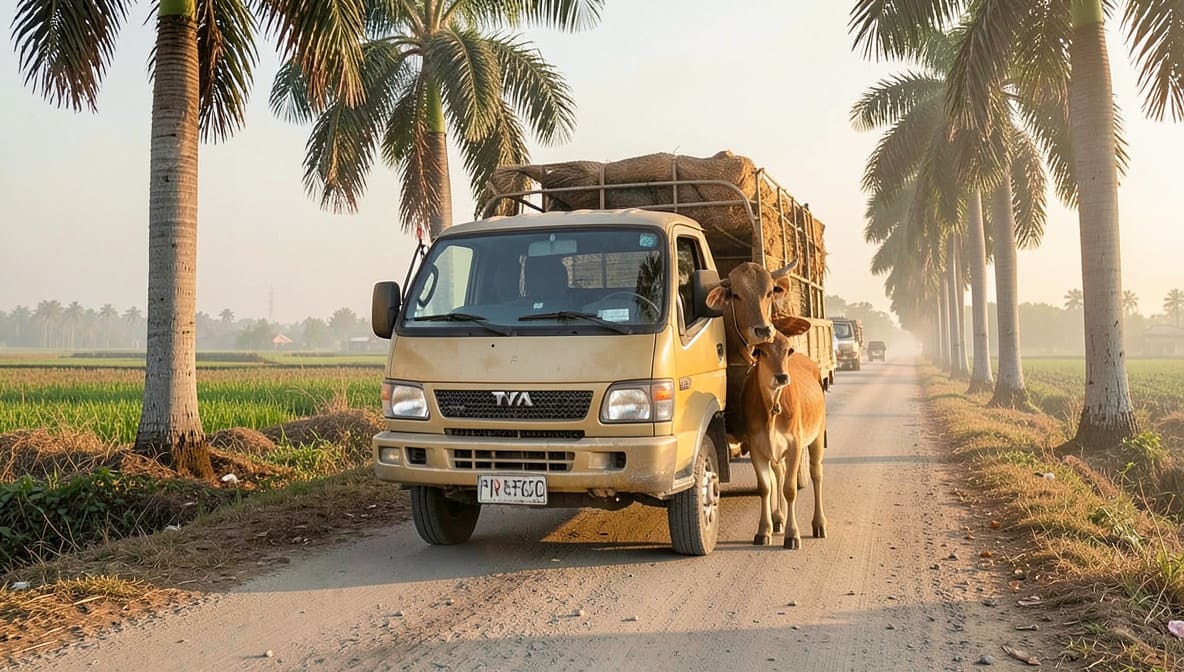
The petitioner, the registered owner of a Tata Ace Gold diesel transport vehicle (Registration No. UP-65-KT-4942), was accused of transporting cows and a calf from Uttar Pradesh to Bihar for slaughter. The State authorities seized the vehicle and ordered its confiscation under the Uttar Pradesh Prevention of Cow Slaughter Act, 1955.
Key Facts
- 19.09.2024: Police intercepted the vehicle at Shahabganj, District Chandauli, alleging transport of three bovine animals for slaughter.
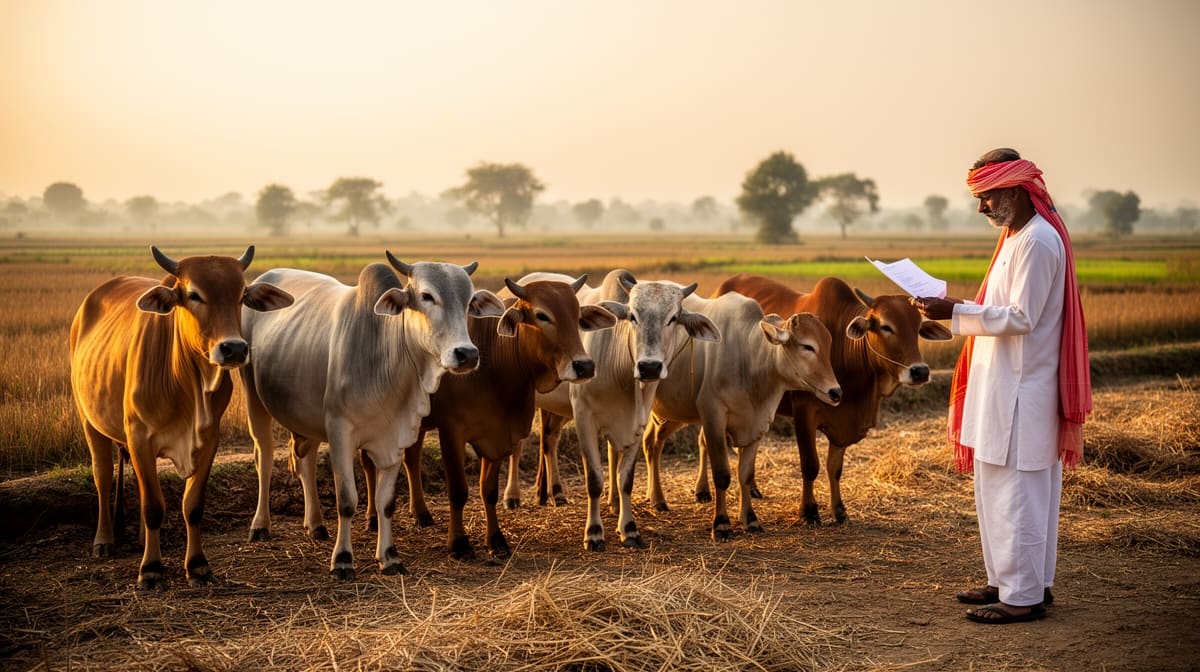
- The petitioner contended that only one cow and one calf belonging to Radhey Shyam were being taken to Mantosh’s residence within Uttar Pradesh for a consideration of Rs.2,000.
- The petitioner alleged police demanded illegal gratification; upon refusal, the vehicle was seized.
- The Veterinary Officer’s report dated 19.09.2024 found the animals healthy and not injured.
- No beef, carcasses, or evidence of slaughter was recovered.
- The petitioner was repaying a loan of Rs.12,599 per month to HDB Financial Services; repayments continued until November 2025 despite the seizure.
Procedural History
- 06.03.2025: District Magistrate, Chandauli, ordered confiscation of the vehicle under Section 5-A(7).
- 27.11.2025: Commissioner, Varanasi Division, affirmed the confiscation order.
- 05.08.2026: Allahabad High Court heard the writ petition under Article 226 and delivered the judgment.
- Earlier authorities cited: Kaliya v. State of UP And Others (2023), Kailash Yadav v. State of UP (2008), Munib v. State of UP (2024), and Mohd. Shakib v. State of UP (2022) for the proposition that no permit is required for intra-state transport.
Relief Sought
The petitioner sought:
- Quashing of the confiscation orders dated 06.03.2025 and 27.11.2025.
- Immediate release of the vehicle.
- Compensation of Rs.20,000 per month for loss of earnings from 19.09.2024 till release.
- Additional Rs.25,000 for mental agony and hardship.
The Legal Issue
Whether the confiscation of a vehicle under Section 5-A of the Uttar Pradesh Prevention of Cow Slaughter Act, 1955 is lawful when the alleged transport of cattle occurs wholly within the territorial limits of Uttar Pradesh and no permit is required under the Act and the 1964 Rules.
Arguments Presented
For the Petitioner
- Asserted that Section 5-A(1) applies only to transport from Uttar Pradesh to a place outside the State; intra-state movement does not attract the permit requirement.
- Cited Kaliya v. State of UP And Others, Kailash Yadav v. State of UP, and Mohd. Shakib v. State of UP for the settled view that no permit is needed for intra-state transport.
- Emphasised the absence of any evidence showing the destination was Bihar; the vehicle was intercepted in a border district, which is insufficient proof.
- Contended that the statutory presumption under Section 5-A(10) is not automatic and requires proof of beef or slaughtered remains, which were lacking.
- Sought compensation under Article 21 of the Constitution for deprivation of livelihood.
For the Respondent
- Argued that the vehicle was seized under Section 5-A(7) because the animals were being transported without a valid permit.
- Relied on the fact that the vehicle was intercepted in a border district, inferring intent to move the cattle to Bihar for slaughter.
- Maintained that the presumption in Section 5-A(10) applied, shifting the burden to the petitioner.
- Opposed any monetary compensation, stating that confiscation is a statutory remedy, not a basis for damages.
The Court's Analysis
The Court began by reproducing the relevant statutory provisions:
"5-A. Regulation on transport of cow, etc. - (1) No person shall transport … from any place within the State to any place outside the State … except under a permit …" It observed that the language of Section 5-A(1) is clear: the prohibition is triggered only when the animal is moved outside Uttar Pradesh. The Court noted that the petitioner’s vehicle was intercepted within District Chandauli, and no documentary or testimonial evidence established an intention to cross the state border.
The Court then examined the jurisprudence. In Kaliya v. State of UP And Others (2023), the Court held that the permit requirement does not arise for intra-state transport. Similarly, Kailash Yadav v. State of UP (2008) and Mohd. Shakib v. State of UP (2022) reiterated that the statutory scheme does not demand a permit when the movement remains inside the State. The present case fell squarely within that precedent.
Regarding the presumption under Section 5-A(10), the Court stressed that it is not a blanket inference. The provision states that the presumption arises only when beef or cow-remains are proved to have been recovered and laboratory-confirmed. Here, the Veterinary Officer’s report found the animals healthy, and no beef or carcasses were seized. Consequently, the presumption could not be invoked, and the burden of proof remained on the State.
The Court further evaluated the evidence. The prosecution’s case rested on the mere fact of interception in a border district and an uncorroborated claim of three animals. The petitioner produced a veterinary report and affidavits showing only one cow and one calf, both belonging to a private individual and destined for a residence within Uttar Pradesh. The Court found the State’s reliance on conjecture and surmise to be untenable.
Having established the illegality of the confiscation, the Court turned to the remedy. Invoking Article 21 and the principle that deprivation of livelihood warrants compensation, it referred to Nilabati Behera v. State of Orissa (1993) and Sube Singh v. State of Haryana (2006) for the award of exemplary damages against the State in public-law proceedings. The Court quantified loss of earnings at Rs.20,000 per month from the date of seizure (19.09.2024) and added Rs.25,000 for mental agony.
The Verdict
The petition is allowed. The orders dated 06.03.2025 (District Magistrate, Chandauli) and 27.11.2025 (Commissioner, Varanasi) are quashed. The respondents must release the vehicle (Reg. No. UP-65-KT-4942) within one week of producing a certified copy of this judgment. The petitioner is awarded compensation of Rs.20,000 per month from 19.09.2024 until the vehicle is actually released, and an additional Rs.25,000 for mental anguish, payable within one month of the judgment. Non-compliance will invite appropriate enforcement proceedings.
What This Means For Similar Cases
No Permit Needed for Intra-State Transport
- Section 5-A(1) applies only to inter-state movement; lawyers must verify the destination before invoking the permit requirement.
- Evidence of mere interception in a border district is insufficient to establish illegal inter-state transport.
Confiscation Requires Positive Proof of Intent and Destination
- Authorities must produce concrete evidence (e.g., driver’s statements, destination documents) showing the animal is being taken out of the State for slaughter.
- The statutory presumption under Section 5-A(10) is triggered only when beef or carcasses are recovered and laboratory-confirmed.
Compensation for Loss of Livelihood Is Available in Public-Law Remedies
-
Courts can award monthly loss-of-earnings compensation and mental-agony damages when State action arbitrarily deprives a citizen of his means of livelihood.
-
Practitioners should quantify loss accurately and cite Article 21 jurisprudence to support monetary relief.
-
Ensure demand for release of seized property includes a specific compliance timeline.
-
Prepare detailed financial statements to substantiate loss-of-income claims.
-
Anticipate the State’s reliance on presumptions and be ready to rebut with veterinary reports and ownership documents.