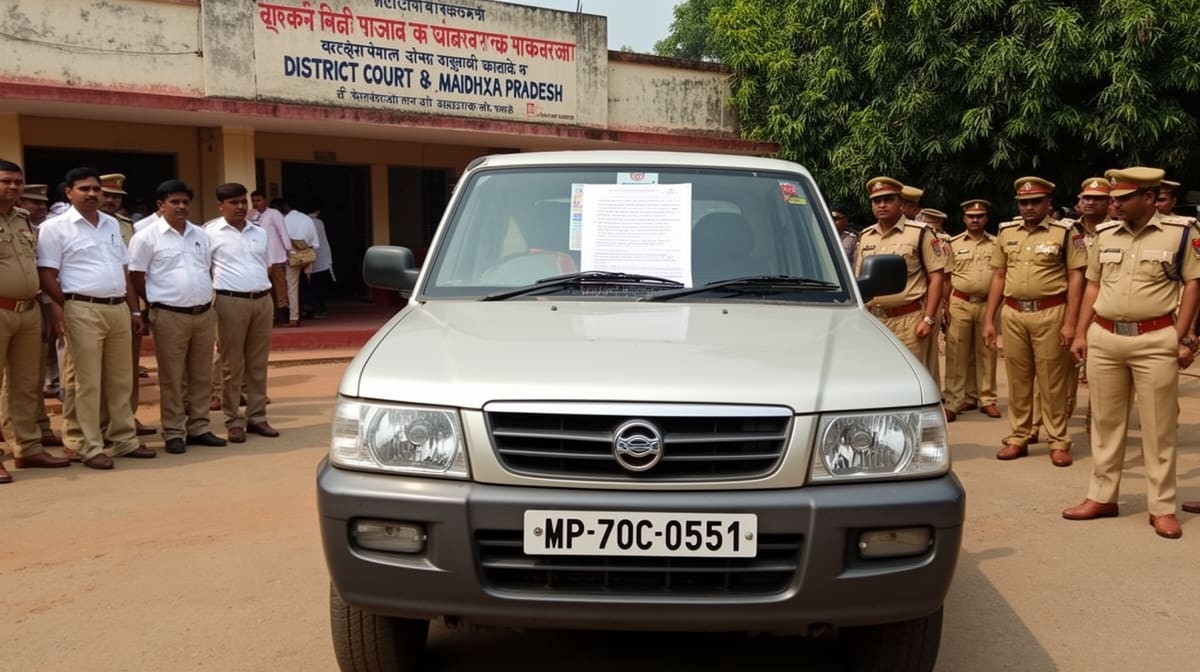
The Madhya Pradesh High Court has invalidated the legal basis for vehicle confiscation under Section 47-A of the Madhya Pradesh Excise Act, 1915, rendering all pending orders under that provision void. This judgment reinforces the supremacy of constitutional limits on executive power and provides immediate relief to individuals affected by unlawful seizures.
Background & Facts
The Dispute
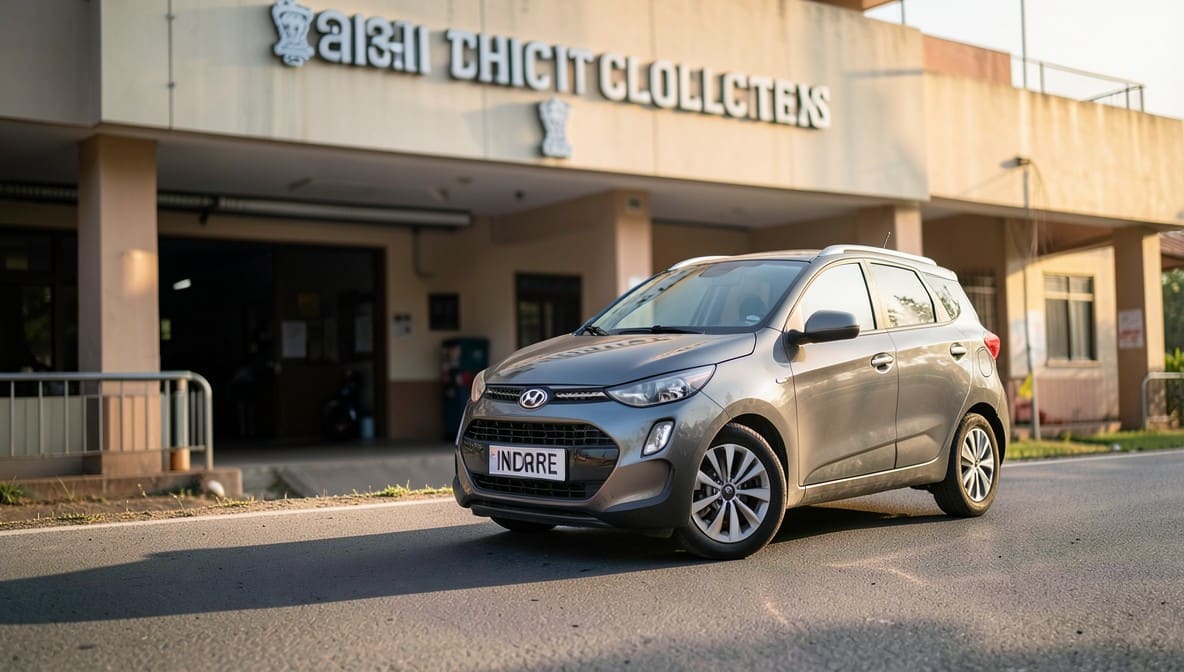
The petitioner, Alfej Khaan, challenged the confiscation of his Hyundai Venue vehicle bearing registration number RJ-27 CN-4800, ordered by the Collector, District Mandsaur, on 21.01.2025. The confiscation was based on an allegation that the vehicle was used to transport 60 bulk liters of illicit liquor, in connection with Crime No. 168 of 2024 registered at Police Station Bhavgarh under Section 34(2) of the Madhya Pradesh Excise Act, 1915.
Key Facts
- The vehicle was seized and confiscated under Section 47-A of the Madhya Pradesh Excise Act, 1915
- The impugned order was passed on 21.01.2025 (Annexure P/1)
- The alleged offence pertained to transportation of illicit liquor, not possession or sale
- No evidence was presented that the petitioner was the owner or driver of the vehicle at the time of the offence
- The petitioner had no prior record under the Excise Act
Procedural History
- 16.12.2024: Crime No. 168 of 2024 registered at Police Station Bhavgarh, District Mandsaur
- 21.01.2025: Collector, Mandsaur, passed confiscation order under Section 47-A of the Excise Act
- 05.02.2025: Petitioner filed this writ petition before the High Court at Indore
- 21.04.2025: Full Bench of the Madhya Pradesh High Court delivered judgment in Ramlal Jhariya v. State of M.P. and connected petitions, declaring Section 47-A ultra vires the Constitution
Relief Sought
The petitioner sought quashing of the confiscation order dated 21.01.2025 and release of the vehicle, with costs.
The Legal Issue
The central question was whether Section 47-A of the Madhya Pradesh Excise Act, 1915, which authorizes confiscation of vehicles used in the transportation of illicit liquor, remains valid after being declared ultra vires of the Constitution by a Full Bench of this Court.
Arguments Presented
For the Petitioner
The petitioner’s counsel, Shri Anshul Shrivastava, submitted that the impugned order was passed under a provision that had already been struck down by the Full Bench in Ramlal Jhariya v. State of M.P. dated 21.04.2025. He argued that any order passed under an unconstitutional provision is void ab initio and cannot be sustained, regardless of the facts of the case. He further contended that the petitioner was not given an opportunity to be heard before confiscation, violating principles of natural justice.
For the Respondent
The State, represented by Shri (Dr.) Amit Bhatia, Government Advocate, did not contest the constitutional invalidity of Section 47-A. The State acknowledged the binding effect of the Full Bench judgment and conceded that the impugned order could not stand in light of the subsequent declaration of unconstitutionality.
The Court's Analysis
The Court observed that the Full Bench judgment in Ramlal Jhariya v. State of M.P. had conclusively held that Section 47-A of the Madhya Pradesh Excise Act, 1915 violates Article 14 and Article 21 of the Constitution by conferring arbitrary and unguided power of confiscation without procedural safeguards. The Court emphasized that once a statutory provision is declared ultra vires, it ceases to have any legal force from the date of the judgment, and all subsequent actions taken under it are legally invalid.
"The power to confiscate under Section 47-A is not merely procedural but substantive in nature, and its absence of reasonable classification and disproportionate impact renders it arbitrary and unconstitutional."
The Court noted that the impugned order was passed on 21.01.2025, prior to the Full Bench judgment of 21.04.2025, but since the provision itself was void, the order derived no legitimacy from it. The Court further held that the petitioner’s right to property under Article 300A and the principle of proportionality required the immediate release of the vehicle, subject to conditions.
The Verdict
The petition was allowed. The Court quashed the confiscation order dated 21.01.2025 and directed the respondents to release the Hyundai Venue vehicle bearing registration number RJ-27 CN-4800 to the petitioner, subject to his furnishing adequate security to the satisfaction of the trial court. The order is operative only if the vehicle has not been auctioned; if auctioned, the direction shall not apply. The petitioner is entitled to costs of Rs. 10,000, payable within four weeks.
What This Means For Similar Cases
Confiscation Orders Under Section 47-A Are Void
- All pending confiscation orders under Section 47-A must be immediately quashed
- Petitioners with seized vehicles should file applications for release citing Ramlal Jhariya as binding precedent
- Authorities cannot rely on Section 47-A to justify retention or auction of vehicles seized after 21.04.2025
Procedural Defects Are Irrelevant When the Law Itself Is Invalid
- Even if procedural compliance occurred, the underlying authority is void
- Courts must examine the validity of the enabling statute before adjudicating the legality of the order
- Practitioners should challenge confiscations not on factual grounds but on constitutional invalidity of the provision
Auctions May Not Be Reversed, But Compensation Claims Remain Open
- If a vehicle has already been auctioned, release is not possible, but the owner may file a claim for compensation under Article 300A
- Claims for compensation must be filed before the appropriate civil court within one year of the judgment
- The State is now liable for unlawful deprivation of property under an unconstitutional provision