The Gujarat High Court held that Section 98(2) of the Gujarat Prohibition Act, 1949 does not operate as an absolute bar against releasing a seized vehicle on interim custody pending trial, exercising its constitutional jurisdiction under Articles 226 and 227 to direct release of an Eicher truck on stringent conditions including solvent surety and undertaking not to transfer.
Background & Facts
The Dispute
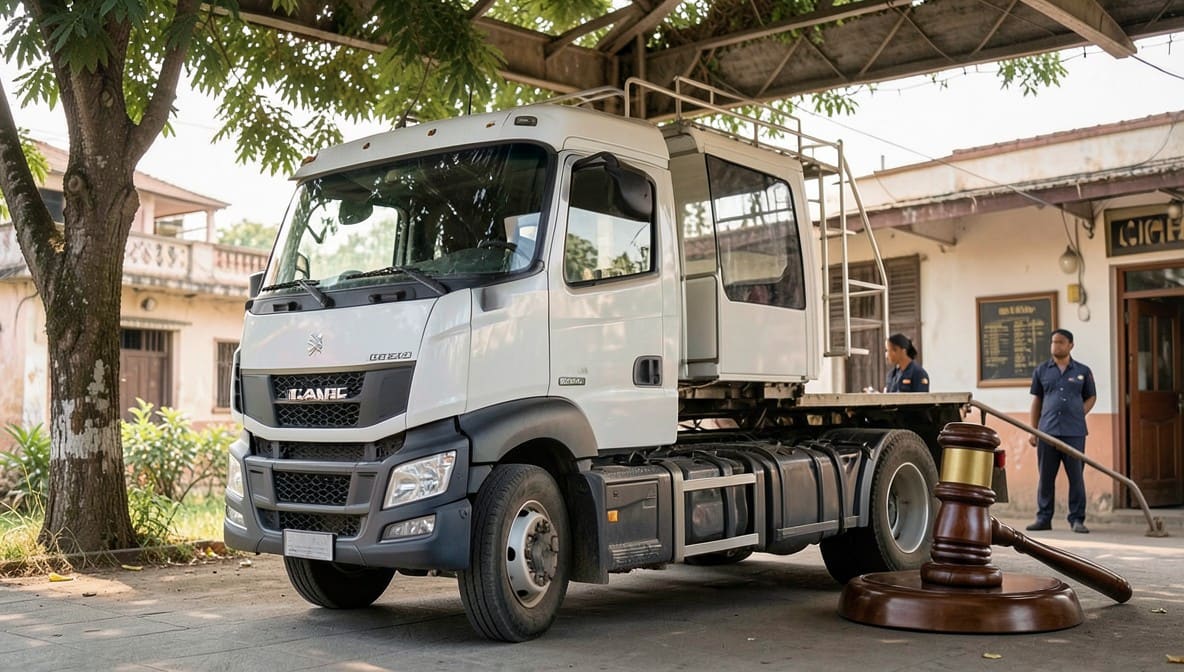
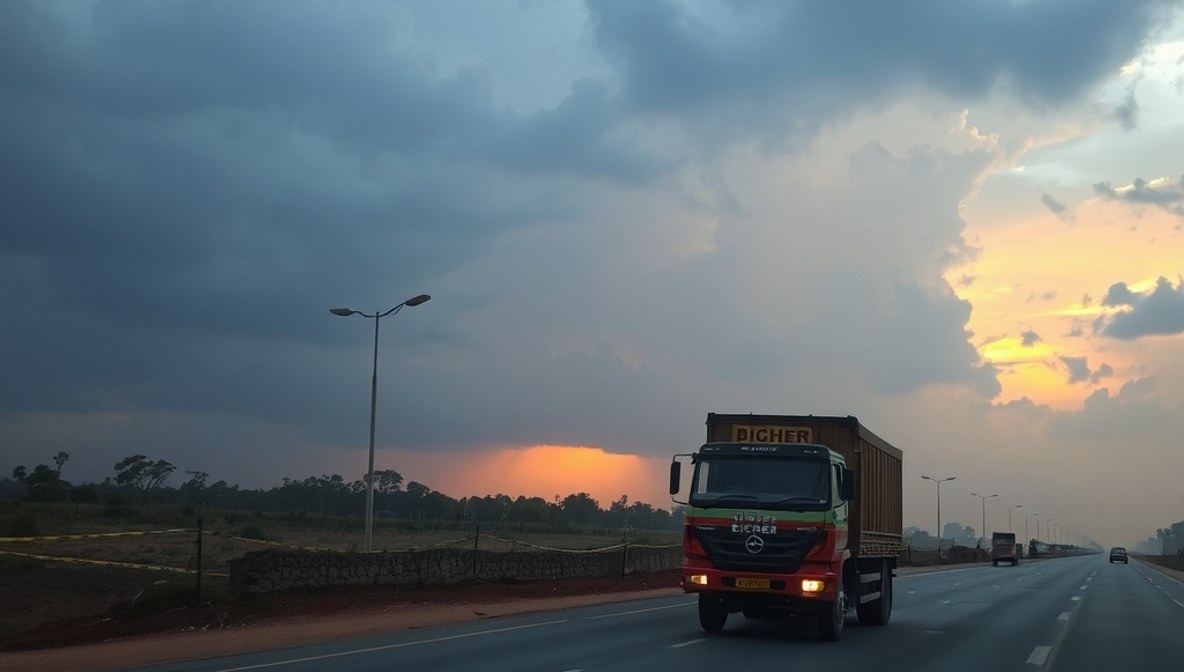
The petitioner, Pareshbhai Ashvinbhai Gamit, approached the High Court of Gujarat invoking its extraordinary jurisdiction under Article 226 and supervisory jurisdiction under Article 227 of the Constitution of India, as well as inherent powers under Section 497 of the Bharatiya Nagarik Suraksha Sanhita, 2023 (corresponding to Section 451 CrPC), seeking release of his Eicher Truck bearing RTO registration No. GJ-15-AV-3122 seized by Dharampur Police Station.
Key Facts
- Police personnel on patrolling received secret information about the vehicle carrying liquor
- The vehicle was intercepted and searched, and the driver was found carrying liquor without any pass or permit
- An FIR bearing C.R. No. 11200018261136 was registered at Dharampur Police Station for offences punishable under the Gujarat Prohibition Act, 1949
- The vehicle was seized as muddamal (case property) and kept in police custody
- The petitioner claimed ownership of the vehicle and sought its release pending trial
Procedural History
- Date of seizure and FIR registration: Not explicitly stated in judgment
- Filing of Special Criminal Application: SCR.A/15646/2026 before Gujarat High Court
- Hearing: 02/11/2026 before Hon'ble Mr. Justice J.C. Doshi
- Judgment pronounced: 02/11/2026
The Parties' Positions
Petitioner: Contended that the High Court has wide powers under Article 226 to order release of seized vehicles, relying on Sunderbhai Ambalal Desai v. State of Gujarat (AIR 2003 SC 638) where the Supreme Court lamented vehicles becoming junk in police stations and directed Magistrates to pass appropriate orders by taking bond and guarantee for return.
Respondent (State): Objected to the release in view of confiscation provisions under the Prohibition Act, but did not dispute the High Court's power under Article 226 to order release at any time when deemed appropriate.
Relief Sought
Release of Eicher Truck bearing registration No. GJ-15-AV-3122 on interim custody pending final disposal of the trial.
The Legal Issue
Whether Section 98(2) of the Gujarat Prohibition Act, 1949 operates as an absolute embargo against the release of a seized vehicle on interim custody pending trial, or whether the High Court can exercise its powers under Section 497 BNSS (Section 451 CrPC) and constitutional jurisdiction under Articles 226 and 227 to order such release with appropriate safeguards.
Arguments Presented
For the Petitioner
Learned advocate Krunal S. Mehta and Fehad A. Memon urged that the High Court possesses wide powers under Article 226 of the Constitution. They relied on the ratio in Sunderbhai Ambalal Desai v. State of Gujarat (AIR 2003 SC 638), where the Supreme Court observed that keeping seized vehicles at police stations for long periods serves no purpose and directed Magistrates to pass appropriate orders immediately by taking bond, guarantee, and security for return of vehicles if required at any point of time. They also cited the coordinate bench decision in Musa Khan Jat v. State of Gujarat (SCR.A/7190/2017) where an identical vehicle was released exercising powers under Articles 226 and 227.
For the Respondent
Learned Additional Public Prosecutor Manan Mehta objected to the release in view of the confiscation provisions contained in the Prohibition Act. However, the State did not dispute that the High Court's powers under Article 226 to order release of the vehicle can be exercised at any time whenever the Court deems it appropriate.
The Court's Analysis
The Court examined the interplay between Section 451 of the Code of Criminal Procedure, 1973 (now Section 497 BNSS) and Section 98 of the Gujarat Prohibition Act, 1949. It referred to the recent Supreme Court decision in M/s ABC Express v. State of Gujarat (2026 LiveLaw (SC) 885), which noticed this interplay and held that Section 98(2) of the Gujarat Prohibition Act does not operate as an absolute embargo against the release of a seized vehicle on interim custody pending trial. The Supreme Court further observed that the Court is competent to exercise powers under Section 451 CrPC (Section 497 BNSS) to pass appropriate orders for proper custody.
The Court also relied on the Supreme Court's observations in Sunderbhai Ambalal Desai where it was held:
"In our view, whatever be the situation, it is of no use to keep such seized vehicles at the police stations for a long period. It is for the Magistrate to pass appropriate orders immediately by taking appropriate bond and guarantee as well as security for return of the said vehicles, if required at any point of time. This can be done pending hearing of applications for return of such vehicles."
The Court noted the coordinate bench decision in Musa Khan Jat where an identical case resulted in release of the vehicle. Applying these precedents, the Court concluded that the petitioner was entitled to interim custody of the vehicle subject to stringent conditions to protect the interests of the prosecution and ensure the vehicle's availability for trial.
The Verdict
The petition was allowed. The Court directed the learned Trial Court/authority concerned to release the Eicher Truck bearing RTO registration No. GJ-15-AV-3122 on the following terms and conditions: (i) the petitioner shall furnish a solvent surety of the amount equivalent to the price of the vehicle stated in the FIR; (ii) the petitioner shall file an undertaking before the learned Trial Court that he shall not transfer the vehicle till final disposal of the trial; (iii) the petitioner shall produce the vehicle as and when directed by the learned Trial Court; (iv) in the event of any subsequent offence, the vehicle shall stand confiscated. Before release, the concerned police authority shall take photographs of the vehicle from all sides at the petitioner's cost and draw a panchanama, which shall form part of the charge sheet. A copy of the order shall be sent to the concerned RTO for necessary entry in the register restraining transfer of the vehicle till final disposal of the trial. The petitioner shall provide the original NOC to the Registry within a week. Rule made absolute with direct service permitted.
What This Means For Similar Cases
Confiscation Provisions Not Absolute Bar to Interim Release
The judgment clarifies that Section 98(2) of the Gujarat Prohibition Act does not create an absolute embargo against interim release of seized vehicles. Practitioners can confidently argue for interim custody under Section 497 BNSS (Section 451 CrPC) even when special statutes contain confiscation provisions, as the Supreme Court in M/s ABC Express has authoritatively settled this interplay.
- File applications under Article 226/227 read with Section 497 BNSS for vehicle release pending trial
- Cite M/s ABC Express v. State of Gujarat (2026 LiveLaw (SC) 885) as binding authority on the non-absolute nature of confiscation embargoes
- Emphasize the Supreme Court's observation in Sunderbhai Ambalal Desai that keeping vehicles to become junk serves no purpose
Stringent Conditions Standard for Release
The Court has prescribed a template of conditions that balances the owner's rights with prosecution interests. This template is likely to be followed in similar cases.
- Solvent surety equivalent to vehicle price as per FIR is mandatory
- Undertaking not to transfer till final disposal of trial
- Production undertaking as and when directed by trial court
- Automatic confiscation trigger for subsequent offences
- Photographic documentation and panchanama at owner's cost before release
- RTO notification to restrain transfer in registration records
Coordinate Bench Precedents Carry Persuasive Weight
The Court's reliance on Musa Khan Jat v. State of Gujarat (SCR.A/7190/2017) demonstrates that coordinate bench decisions in identical factual scenarios will be followed. Practitioners should research and cite coordinate bench rulings from the same High Court when seeking interim vehicle release.