The Allahabad High Court has held that transporting bovine animals within Uttar Pradesh does not require a permit under the U.P. Prevention of Cow Slaughter Act, 1955, and that confiscating a vehicle based solely on suspicion of interstate transport violates statutory and constitutional protections. The Court quashed confiscation orders and awarded compensation for unlawful auction and loss of livelihood.
Background & Facts
The Dispute
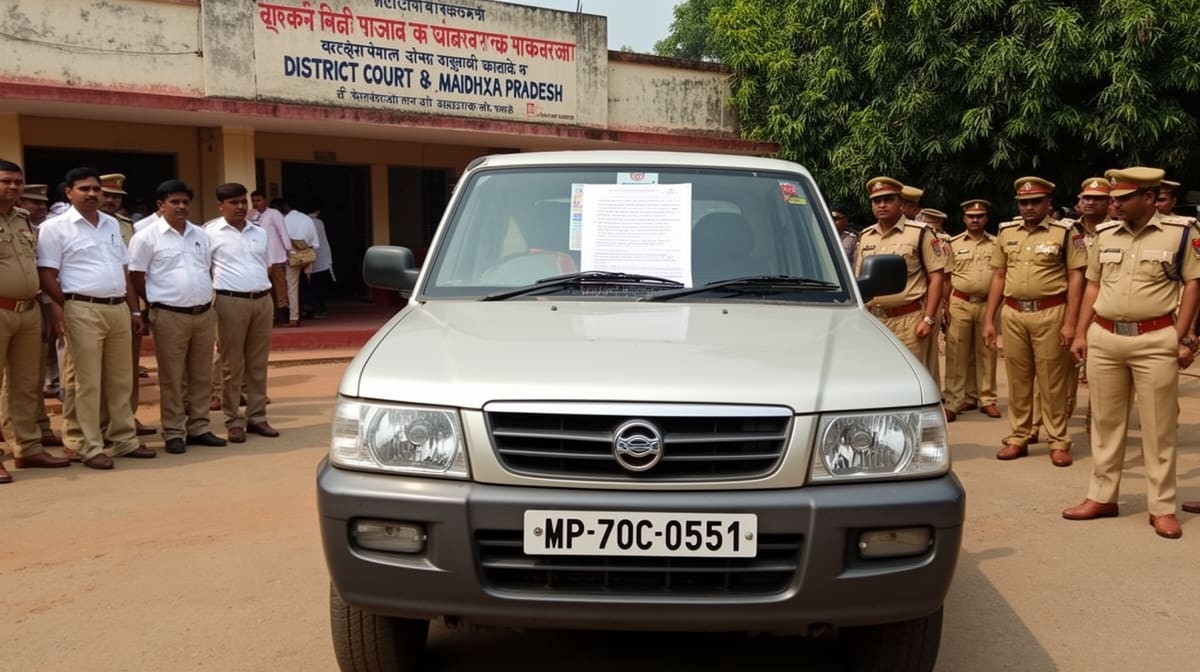
The petitioner, Chandrabhan Kumar, is the owner of vehicle no. UP65-JT-0125, used for commercial transport. On 08.09.2024, police at Police Station Saiyadraja, District Chandauli, intercepted the vehicle near the Bihar border based on an informer’s tip. Ten bovine animals - six heifers, two cows, one bull, and one bullock - were found inside. No slaughtered meat or beef was recovered. The police registered FIR No. 162 of 2024 under Sections 3, 5-A, 8, and 5 of the U.P. Prevention of Cow Slaughter Act, 1955, and Section 11 of the Prevention of Cruelty to Animals Act, 1960, naming the petitioner and others as accused.
Key Facts
- The vehicle was intercepted on 08.09.2024 within Uttar Pradesh, approximately 15 km from the Bihar border.
- No permit was produced by the petitioner, but none was legally required for intrastate movement.
- The animals were alive, unharmed, and showed no signs of physical injury or distress.
- The District Magistrate, Chandauli, issued a notice under Section 5-A(7) on 15.10.2024, leading to an order of confiscation dated 22.03.2025.
- The petitioner challenged the confiscation order via Criminal Revision No. 49 of 2025, dismissed by the District Judge on 16.06.2025 for lack of jurisdiction.
- The petitioner then filed a writ petition under Article 227 (No. 6375 of 2025), which was disposed of on 20.08.2025 with liberty to file a revision before the Commissioner.
- The Commissioner, Varanasi Division, affirmed the confiscation order on 27.11.2025.
- During pendency of the revision, the State auctioned the vehicle on 14.09.2025 for Rs. 85,000, despite its market value being approximately Rs. 7 lakhs and depreciated value estimated at Rs. 4 lakhs.
- The petitioner had purchased the vehicle in May 2023 for Rs. 5,20,000 and was paying monthly EMIs of Rs. 9,843 to Shriram Finance Ltd. until August 2024, after which default occurred due to seizure.
Procedural History
- 08.09.2024: Vehicle intercepted; FIR registered.
- 15.10.2024: District Magistrate issues notice under Section 5-A(7).
- 22.03.2025: District Magistrate orders confiscation of vehicle.
- 16.06.2025: District Judge dismisses Criminal Revision No. 49 of 2025 for lack of jurisdiction.
- 20.08.2025: High Court grants liberty to file revision before Commissioner.
- 29.08.2025: Petitioner files Criminal Revision under Section 5-A(8).
- 14.09.2025: Vehicle auctioned by State for Rs. 85,000.
- 27.11.2025: Commissioner affirms confiscation order.
- 27.11.2025: Writ Petition No. 28877 of 2025 filed before Allahabad High Court.
Relief Sought
The petitioner sought quashing of the confiscation orders dated 22.03.2025 and 27.11.2025, restoration of the vehicle, and compensation for economic loss, mental agony, and unlawful auction. He claimed the vehicle was his sole source of livelihood and had been sold at a grossly inadequate price.
The Legal Issue
The central question was whether Section 5-A(1) of the U.P. Prevention of Cow Slaughter Act, 1955, requires a permit for transporting bovine animals within the State of Uttar Pradesh, and whether confiscation of a vehicle can be justified in the absence of proof that the animals were being transported to a state outside Uttar Pradesh.
Arguments Presented
For the Petitioner
Learned counsel contended that Section 5-A(1) only applies to transport from within Uttar Pradesh to any place outside the State. Since the vehicle was intercepted within Uttar Pradesh and no evidence established intent to cross state borders, no permit was required. Reliance was placed on Kaliya v. State of U.P. (2023 SCC OnLine All 1974), Kailash Yadav v. State of U.P. (2008 (10) ADJ 623), and Mohd. Shakib v. State of U.P. (2022) to establish that intrastate transport does not attract permit requirements. It was further argued that confiscation without proof of violation is arbitrary and violates Article 300A and Article 19(1)(g). The auction of the vehicle during pendency of proceedings was submitted as a gross violation of natural justice and procedural fairness.
For the Respondent
The Additional Advocate General contended that the proximity to the Bihar border and the nature of the animals created a strong presumption of intent to transport for slaughter. He argued that the authorities acted within their statutory powers under Section 5-A(7) and that the petitioner failed to rebut the presumption. He submitted that the auction was a legitimate step to prevent misuse of seized property and that the compensation claim was premature.
The Court's Analysis
The Court undertook a meticulous statutory interpretation of Section 5-A of the U.P. Prevention of Cow Slaughter Act, 1955. It observed that sub-section (1) explicitly restricts the permit requirement to transport "from any place within the State to any place outside the State." The Court emphasized that the language is unambiguous and leaves no room for extension to intrastate movement.
"There is nothing on record to show that the alleged recovered animals... were being transported from within the State of U.P. to any other State. Therefore, from the plain reading of section 5-A of the Act, the permit is not required in the peculiar facts of this case."
The Court reiterated its earlier holdings in Kaliya, Kailash Yadav, and Mohd. Shakib, affirming that confiscation under Section 5-A(7) is contingent upon a violation of sub-section (1), which did not occur here. The Court rejected the State’s reliance on proximity to the border as a substitute for legal proof, stating: "Suspicion, however strong, cannot substitute legal proof."
Regarding Section 5-B, the Court noted that no evidence of physical injury, mutilation, or life-threatening conditions during transport was recorded. The authorities failed to establish any violation under this provision.
The Court further held that the auction of the vehicle during pendency of the revision was a flagrant violation of natural justice. The State acted in haste, depriving the petitioner of his property without adjudication. The sale for Rs. 85,000 against a depreciated value of Rs. 4 lakhs was deemed manifestly arbitrary and violative of Article 14.
The Court invoked Nilabati Behera v. State of Orissa (1993) and Indibily Creative v. Government of West Bengal (2020) to affirm that compensation under Article 226 is available for violation of fundamental rights, including Article 19(1)(g) (right to carry on trade) and Article 300A (right to property). The State’s failure to protect the petitioner’s livelihood constituted a public wrong warranting monetary amends.
The Verdict
The writ petition was allowed. The impugned orders dated 22.03.2025 and 27.11.2025 were quashed. The State is directed to restore the vehicle to the petitioner within 15 days. If restoration is not effected, the petitioner shall be paid the depreciated cost of the vehicle, Rs. 4,00,000, along with compensation of Rs. 1,80,000 (Rs. 15,000 per month for 12 months from 08.09.2024 to 14.09.2025) and an additional Rs. 20,000 for mental agony and harassment. If the vehicle is restored, the petitioner shall still receive Rs. 15,000 per month for the period of deprivation until actual restoration. All payments shall be made within 15 days of the judgment.
What This Means For Similar Cases
Permit Requirements Are Strictly Territorial
- Practitioners must argue that Section 5-A(1) applies only to interstate transport; intrastate movement of bovines is lawful without a permit.
- Any confiscation based on mere proximity to a state border, without concrete evidence of intent to export, is legally unsustainable.
- Authorities must produce documentary or testimonial proof of destination - suspicion or conjecture is insufficient.
Confiscation Cannot Precede Adjudication
- Auction or disposal of seized property during pendency of legal challenge violates natural justice and Article 14.
- Practitioners should immediately move for interim protection and seek stay of auction proceedings.
- Courts will award compensation for loss of livelihood if property is wrongfully auctioned.
Compensation Is a Constitutional Remedy for Economic Harm
- Loss of commercial vehicle as livelihood source engages Article 19(1)(g) and attracts compensation under Article 226.
- Courts will quantify damages based on market value, depreciation, and monthly income loss - not arbitrary sums.
- Nilabati Behera and Indibily Creative now form binding precedent for monetary relief in property-related rights violations.