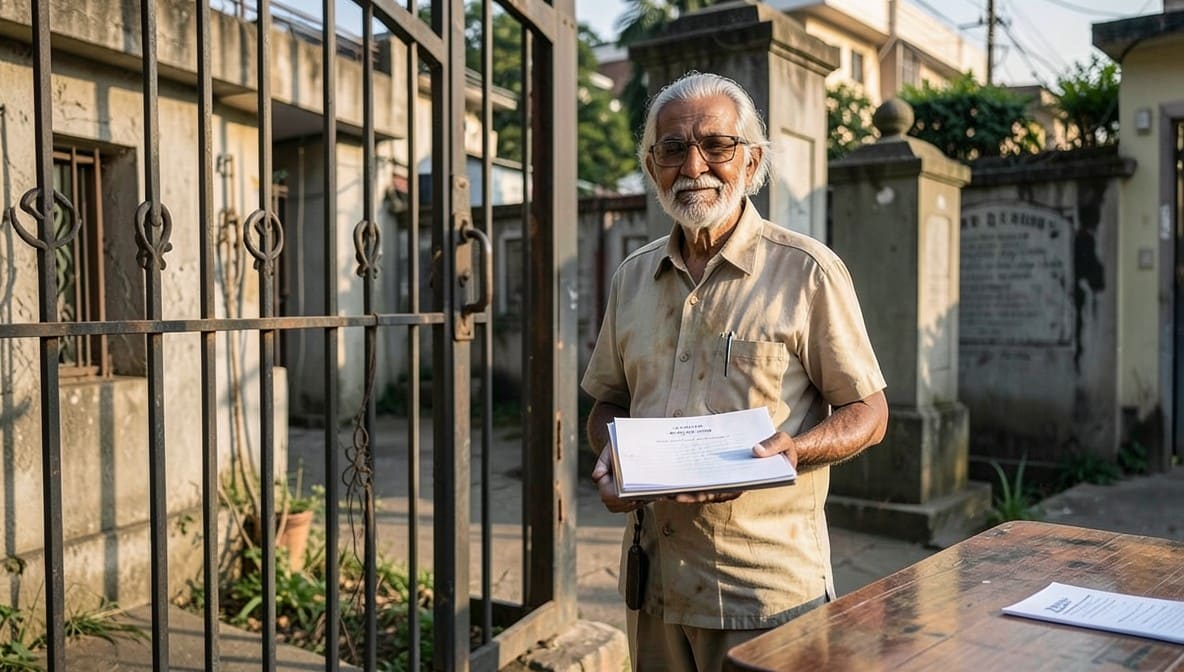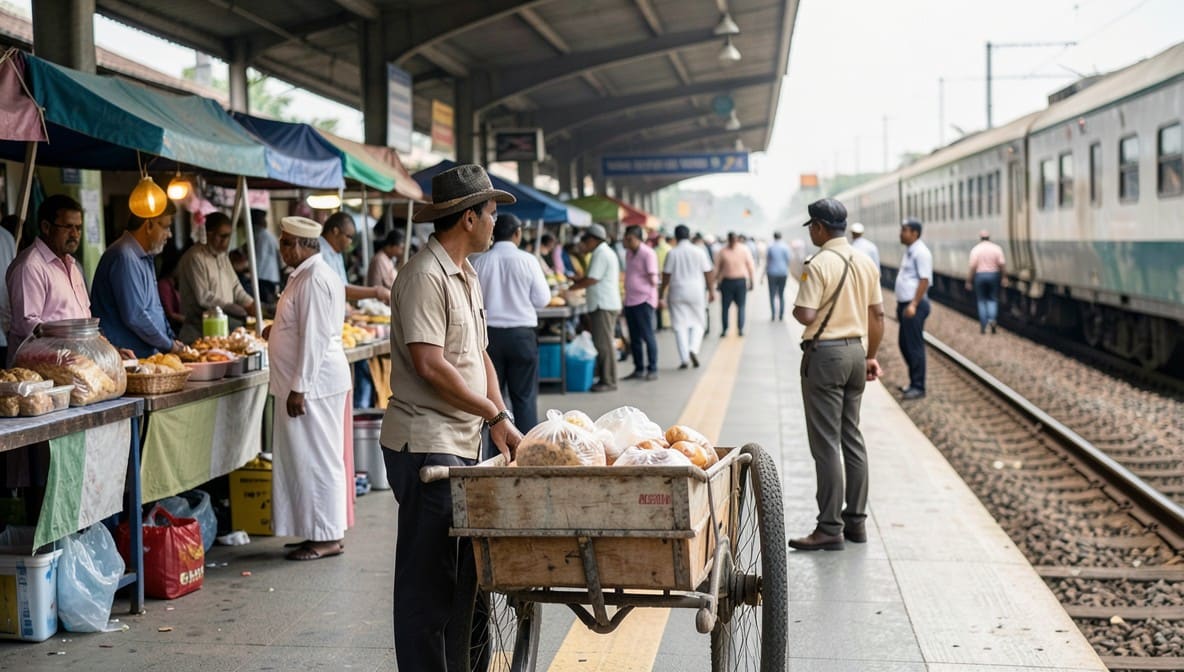
The Bombay High Court has clarified that prolonged physical presence and work on railway premises, even for decades, cannot substitute for a legally established employer-employee relationship. In quashing an Industrial Tribunal’s award that ordered absorption of 25 commission vendors into Group D posts, the Court emphasized that public employment must be grounded in formal appointment, not mere association or equitable considerations.
Background & Facts
The Dispute
The dispute arose from the restructuring of railway catering services in the early 2000s. Until 2000 - 2001, catering at Pune Railway Station was operated by the Central Railway’s Catering Department through departmental staff and commission-based vendors. In March 2001, the Ministry of Railways decided to transfer management of catering services to the Indian Railway Catering and Tourism Corporation Limited (IRCTC), a separate corporate entity. As part of this transition, 46 commission vendors who met prescribed criteria were absorbed into Group D posts as Khalasis.
Key Facts
- The respondents, Amar Singh Tomar and 24 others, claimed to have worked since 1984 as Assistant Vendors or Helpers selling food items at Pune Railway Station on commission basis.
- They were not appointed by the Railways; instead, they alleged they worked under commission vendors who held licenses from the Railways.
- The respondents received remuneration from the commission vendors, not from the Central Railway.
- The Railways issued identity cards and conducted medical examinations of the respondents for safety, hygiene, and access control to railway premises - not as evidence of employment.
- The 46 absorbed vendors had been selected under a 1981 Railway Board circular requiring payment of a security deposit of Rs. 250 and an annual license fee, with commission rates fixed by the Railways.
- The respondents were never issued such licenses, paid no deposit, and had no direct contractual or financial link with the Railways.
- On 16 March 2001, all unauthorized persons, including the respondents, were barred from operating stalls following the policy shift.
Procedural History
- 30 March 2001: Madhya Railway Sthaniya Lokadhikar Samiti filed a notice of industrial dispute seeking absorption of the respondents.
- 23 July 2002: Respondents filed Statement of Claim before the Industrial Tribunal, Pune, asserting employment and demanding reinstatement.
- 20 August 2002: Petitioners filed Written Statement denying any employer-employee relationship.
- Reference No. IT/22/2002: Registered on 30 March 2001 for adjudication.
- 30 September 2006: Industrial Tribunal awarded in favor of respondents, directing absorption and reinstatement with effect from 16 March 2001.
- 1 August 2007: Award published by Central Government.
- 2008: Writ Petition No. 2668 of 2008 filed before Bombay High Court challenging the Award.
- 2009: Civil Application No. 2762 of 2009 filed seeking stay on implementation of the Award.
- 24 April 2026: Judgment reserved.
- 30 April 2026: Judgment pronounced.
The Parties' Positions
Petitioners (Union of India & Central Railway): Contended that no employer-employee relationship existed. The respondents were helpers engaged by private commission vendors, not appointed or paid by the Railways. Identity cards and medical checks were administrative safeguards, not proof of employment. The 46 absorbed vendors were selected under a formal, documented process; the respondents did not qualify.
Respondents (Amar Singh Tomar & Others): Argued that they performed identical duties as the 46 absorbed vendors, were subject to the same supervision, and were entitled to parity. They claimed long-term, continuous service created an implied employment relationship. They asserted that records of sales and commission were held by the Railways, making it impossible for them to produce evidence.
Relief Sought
The respondents sought:
- Reinstatement as Assistant Vendors or Helpers with effect from 16 March 2001
- Absorption and regularisation in Group D posts of the Central Railway
- Continuation of work during pendency of proceedings
- Back wages and other benefits on parity with the 46 absorbed vendors
The Legal Issue
The central question was whether long-term physical presence and performance of work on railway premises, without formal appointment, payment by the employer, or control over terms of engagement, can establish an employer-employee relationship under public employment law sufficient to justify absorption into permanent service.
Arguments Presented
For the Petitioner
The petitioners argued that the Industrial Tribunal erred in conflating physical presence with legal employment. They cited that the respondents were never appointed, paid, or supervised by the Railways. The 46 absorbed vendors were selected under a 1981 Railway Board circular with documented eligibility criteria; the respondents were not part of this group. Identity cards and medical checks were routine for all persons entering railway premises, including hawkers and vendors, and could not be treated as proof of employment. The Tribunal improperly shifted the burden of proof and drew adverse inferences without foundational evidence.
For the Respondent
The respondents contended that their continuous service since 1984, identical duties to the absorbed vendors, and subjection to railway rules established an implied employment relationship. They argued that the Railways’ failure to produce records of commission payments or to examine the original vendors amounted to suppression of evidence. They relied on the principle of parity, asserting that discrimination against similarly situated workers violated Article 14 of the Constitution.
The Court's Analysis
The Court undertook a rigorous analysis of the legal test for establishing an employer-employee relationship. It held that the Tribunal failed to examine the foundational elements: who appointed the respondents, under what authority, on what terms, and from whom they received remuneration.
"The fact of working at a particular place is not sufficient. What is required to be examined is under whose control the work was performed, who had authority to appoint or remove them, and who was responsible for payment of salary."
The Court rejected the Tribunal’s reliance on identity cards and medical examinations as conclusive proof of employment, noting that such measures are standard for regulating access in high-traffic public spaces like railway stations. The explanation provided by the petitioners - that these were safety and hygiene protocols - was not rebutted with evidence.
The Court further held that the Tribunal’s assumption that commission records were maintained by the Railways was speculative. The petitioners had categorically denied any payment of commission to the respondents. Without proof that such records existed or pertained to the respondents, shifting the burden onto the employer was legally impermissible.
Regarding the 46 absorbed vendors, the Court emphasized that parity cannot be invoked without establishing identical status. The Tribunal made no comparative analysis of the selection process, eligibility, or documentation of the 46 versus the 25 respondents. The mere fact that some were absorbed did not create an obligation to absorb others.
"Adverse inference cannot be used to fill up complete absence of primary proof. The nature of relationship must be determined on evidence."
The Court also rejected the argument that interim continuation of work during litigation conferred any legal right. Interim orders are procedural safeguards, not substantive entitlements.
Finally, while acknowledging the respondents’ long association and potential hardship, the Court held that sympathy cannot override legal principles governing public employment. Absorption into government service requires a legally recognized employment relationship, not mere longevity of service.
The Verdict
The writ petition succeeded. The Bombay High Court set aside the Industrial Tribunal’s Award dated 30 September 2006. The claims for reinstatement, absorption, and regularisation of the respondents were rejected in their entirety. The Reference (IT) No. 22 of 2002 stands answered in the negative. There shall be no order as to costs. All pending interlocutory applications are disposed of as infructuous.
What This Means For Similar Cases
Absorption Requires Formal Appointment, Not Longevity
- Practitioners must now establish that the claimant was formally appointed, paid, and controlled by the employer - not merely present on premises.
- Long-term service alone, even for 15 - 20 years, cannot create a right to absorption in public employment.
- Tribunals and courts must examine the source of payment, authority of appointment, and terms of engagement as non-negotiable prerequisites.
Burden of Proof Remains on the Claimant
- The burden to prove employer-employee relationship lies squarely on the person asserting it.
- Failure by the employer to produce documents or examine witnesses does not automatically validate the claimant’s case.
- Adverse inference is permissible only where there is a prima facie case and the documents are known to be in the employer’s custody - not as a substitute for proof.
Parity Cannot Be Applied Mechanically
- Absorption of some workers does not create a blanket entitlement for others.
- Any claim of parity must be supported by a detailed comparison of selection criteria, documentation, and legal status.
- Courts must scrutinize whether the claimants were part of the same class as those absorbed - not merely performing similar tasks.
Interim Continuation Does Not Confer Rights
- Work permitted under interim orders is temporary and does not create a vested right.
- Any argument that continuation during litigation implies recognition of employment is legally unsound.
- This principle applies across service law, labor law, and administrative law contexts.