The Bombay High Court has clarified that completion of apprenticeship training under the Apprentices Act, 1961 does not confer a legal right to absorption into regular service, absent a clear contractual obligation. This ruling reinforces the distinction between training and employment in public sector recruitment, with significant implications for graduate apprentices across India.
Background & Facts
The Dispute
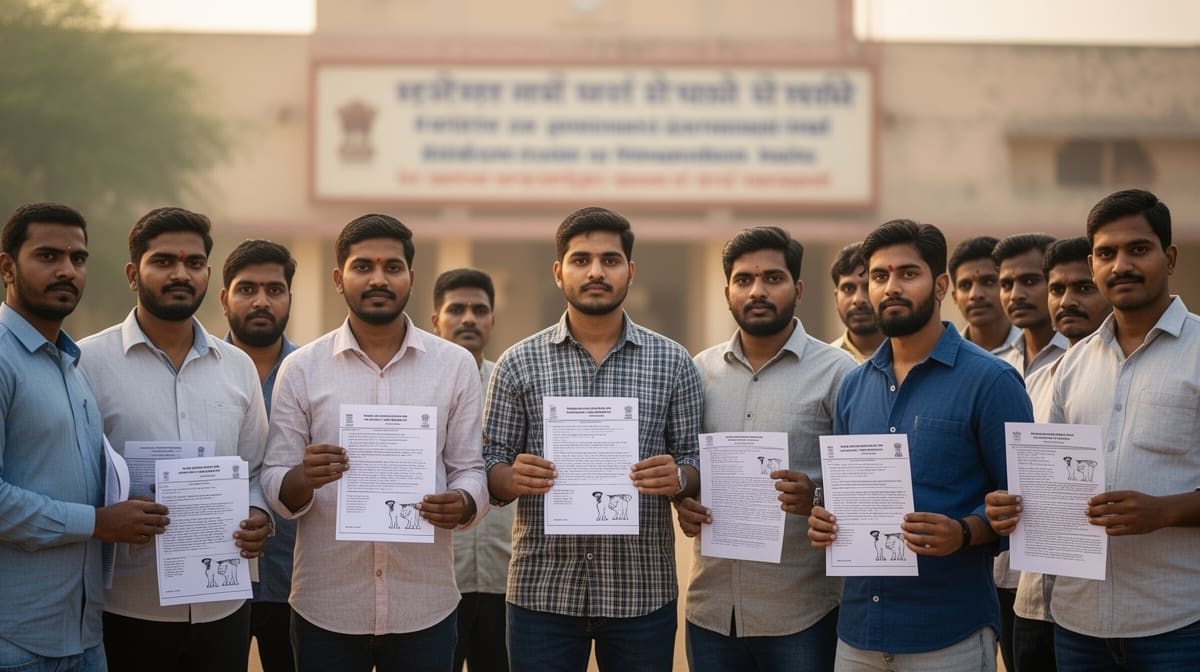
The petitioners, 71 engineering graduates, were appointed as Graduate Apprentice Trainees (GATs) by Hindustan Petroleum Corporation Ltd. (HPCL) in 2016 under an advertisement that offered one-year apprenticeship training with a monthly stipend of Rs. 25,000. They contend that HPCL, as a Navratna PSU, had a legitimate expectation of absorption into Grade "A" officer posts upon successful completion of training, especially since similar PSUs like Indian Oil Corporation Ltd. (IOCL) had absorbed apprentices. The petitioners allege that their engagement as apprentices was a camouflaged method to fill permanent vacancies without following regular recruitment procedures, while paying them a fraction of the salary of regular officers.
Procedural History
- 2016: HPCL issued an advertisement for Graduate Apprentice Trainees (Engineering), attracting over 15,000 applicants; 204 candidates were selected after a Computer Based Test (CBT) and interview.
- 2016 - 2017: Petitioners completed one-year apprenticeship training at various HPCL locations, undergoing on-job training and assessments.
- 2017 - 2018: Petitioners submitted multiple representations demanding absorption under Section 22(1) of the Apprentices Act.
- June 2018: HPCL issued a policy for recruiting apprentices, but excluded petitioners on grounds of prospective application.
- 2018: Writ petition filed under Article 226 seeking mandatory absorption, quashing of HPCL’s policy, and exemption from further competitive exams.
Relief Sought
The petitioners sought: (a) mandatory absorption into Grade "A" officer posts; (b) direction to frame a policy under Section 22(1); (c) quashing of HPCL’s June 2018 policy as retrospective and arbitrary; and (d) appointment based solely on prior assessments without additional written tests.
The Legal Issue
The central question was whether Section 22(1) of the Apprentices Act, 1961 creates a statutory right for apprentices to be absorbed into regular service upon completion of training, or whether it merely imposes a discretionary obligation on employers to formulate a recruitment policy without guaranteeing employment.
Arguments Presented
For the Petitioner
The petitioners argued that Section 22(1) mandates employers to formulate a policy for recruiting apprentices who have completed training, and that HPCL’s failure to do so until June 2018 violated their legitimate expectation and rights under Articles 14 and 16 of the Constitution. They relied on Narender Kumar v. State of Punjab, UP State Road Transport Corporation v. UP Parivahan Nigam, and Ex-Apprentices Association v. Union of India to assert that where vacancies exist and apprentices have performed well, absorption is not merely discretionary but a statutory entitlement. They emphasized that the contract’s proviso - "if there is any recruitment, employer shall formulate its own policy" - implied a binding obligation to consider them for absorption.
For the Respondent
HPCL contended that the contract of apprenticeship explicitly stated that there was no obligation to offer employment upon completion of training, as per Schedule VI, Rule 6. It argued that Section 22(1) is permissive, not mandatory, and that the 2014 amendment did not alter this. HPCL cited Chairman/Managing Director, Mahanadi Coalfields Ltd. v. S. Behra to affirm that public sector recruitment must follow transparent, merit-based procedures. It further argued that petitioners were free to apply for GATE and other recruitment drives, and that granting automatic absorption would violate constitutional principles of equality and merit.
The Court's Analysis
The Court undertook a detailed textual and contextual analysis of Section 22 of the Apprentices Act. It emphasized that sub-section (1) uses the phrase "shall formulate its own policy" - a directive to create a framework, not a mandate to absorb. The Court contrasted this with sub-section (2), which creates a binding obligation only where the contract explicitly requires the apprentice to serve the employer after training. In this case, the contract contained the clear clause: "It shall not be obligatory on the part of the employer to offer an employment to the apprentice on completion of period of his apprenticeship training."
"The statutory obligation under Section 22(1) is to frame a policy, not to absorb. The policy, once framed, must comply with constitutional norms of equality and merit; it cannot create a vested right to employment."
The Court distinguished Narender Kumar on the ground that the contract in that case contained an express promise of absorption if vacancies existed, whereas here, the contract negated any such promise. Similarly, Ex-Apprentices Association was distinguished because it directed policy formulation due to employer inaction, whereas HPCL had already framed a policy. The Court held that the mere fact that other PSUs like IOCL absorbed apprentices did not create a legal precedent binding on HPCL.
The Court also rejected the argument that apprentices were exploited as "disguised workers," noting that the petitioners received certificates of successful completion and were not subjected to labor laws under Section 18, which explicitly classifies apprentices as trainees, not workers. The Court affirmed that public sector recruitment must be open, competitive, and non-discriminatory, and that granting automatic absorption would undermine these principles.
The Verdict
The petition was dismissed. The Court held that Section 22(1) of the Apprentices Act does not create a legal right to absorption into regular service, and that the absence of a contractual obligation to employ renders the petitioners’ claims untenable. HPCL’s policy of granting grace marks and age relaxation to apprentices in future recruitment was upheld as a permissible, non-discriminatory measure.
What This Means For Similar Cases
Absorption Is Not Automatic
- Practitioners must advise clients that mere completion of apprenticeship under the Apprentices Act does not entitle them to absorption.
- Absorption can only arise if the contract of apprenticeship contains an express promise to offer employment upon completion.
- Public sector employers are under no duty to absorb apprentices even if vacancies exist, unless bound by contract.
Policy Framing Is Discretionary, Not Mandatory
- Employers may choose whether or not to frame a recruitment policy under Section 22(1); failure to do so does not create a cause of action.
- Once a policy is framed, it must be fair and non-arbitrary, but it cannot override merit-based selection norms.
- Courts will not compel absorption even if the policy is silent on preference - only procedural fairness is enforceable.
Contractual Clauses Trump Statutory Provisions
- The proviso in Schedule VI, Rule 6 - "it shall not be obligatory on the employer to offer employment" - is binding and overrides any implied expectation.
- Any attempt to argue legitimate expectation based on PSU practices (e.g., IOCL) will fail without a contractual or statutory basis.
- Legal challenges must focus on the specific terms of the apprenticeship contract, not general policy trends.