The Bombay High Court has clarified that mere recovery of cannabis plant material does not automatically establish a commercial quantity under the NDPS Act unless the flowering or fruiting tops - exclusively defined as 'ganja' - are separately quantified. This ruling reinforces the necessity of precise forensic and evidentiary standards in narcotics cases, significantly impacting prosecutorial strategy and bail jurisprudence.
Background & Facts
The Dispute
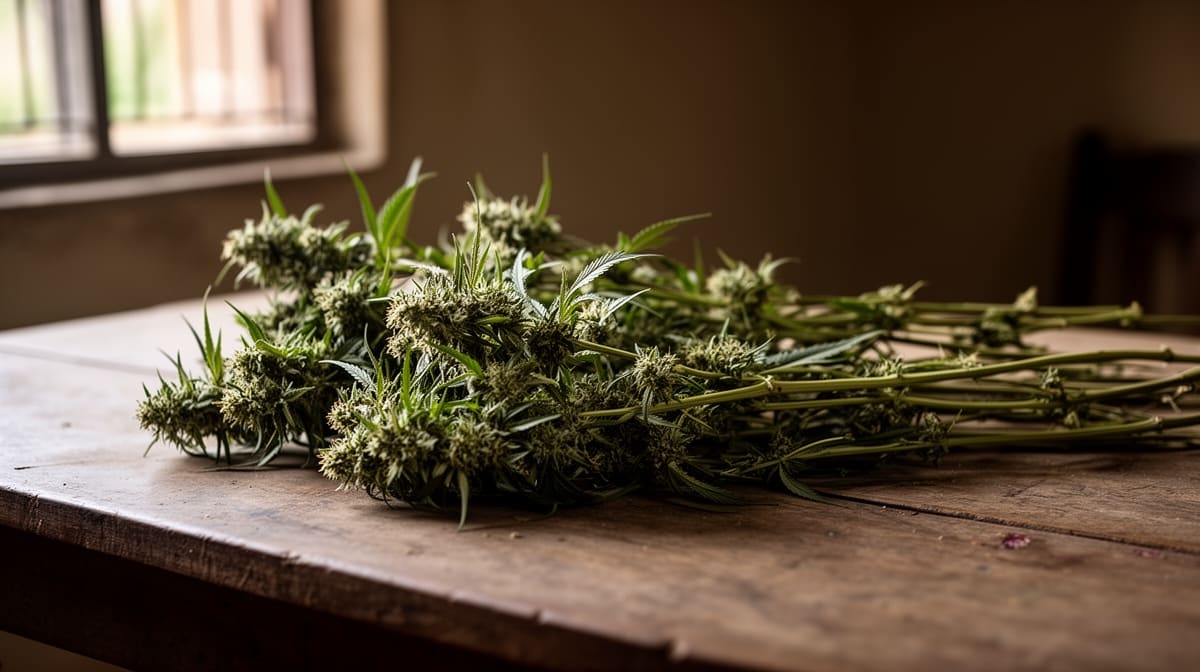
The applicant, Bhaurao Tatyaba Turukmare, was arrested in connection with FIR No. 178 of 2026, registered on 24.03.2026 at Georai Police Station, District Beed, under Sections 8(c), 20, 20(b), 20(b)(i), and 20(b)(ii) of the Narcotic Drugs and Psychotropic Substances Act, 1985. The prosecution alleged that during a raid on the applicant’s agricultural land, approximately 5.804 kg of contraband, described as ganja, was seized.
Key Facts
- The raid occurred on 24.03.2026 based on secret intelligence.
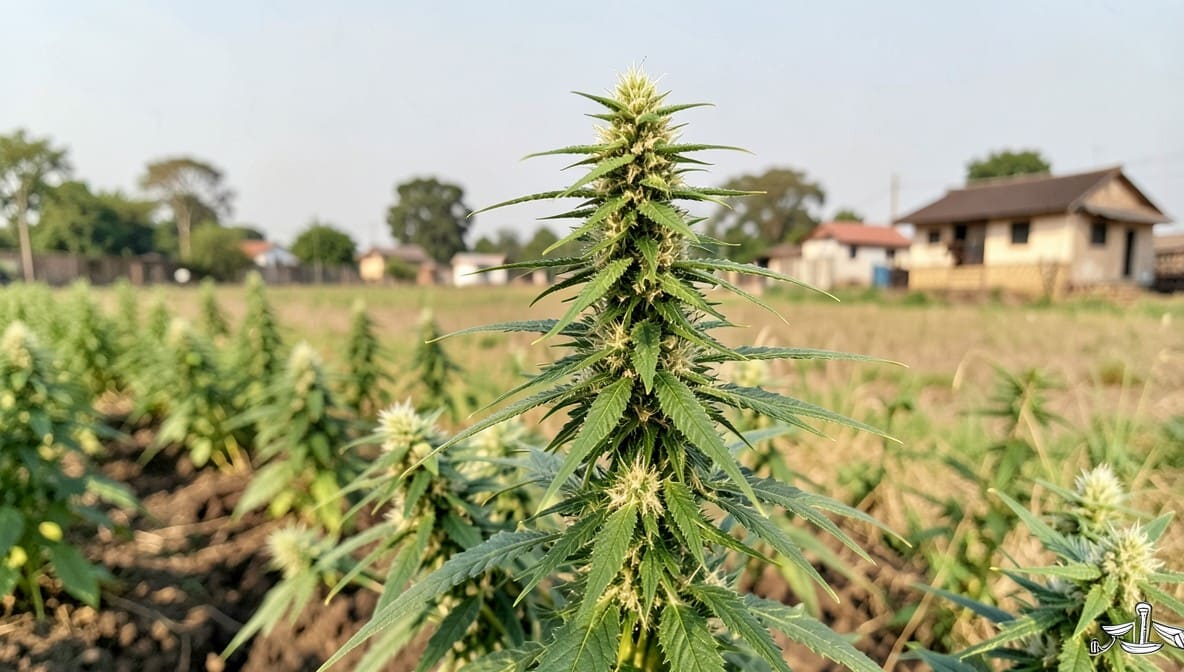
- The seized material included seeds, stems, flowers, and tops of the cannabis plant.
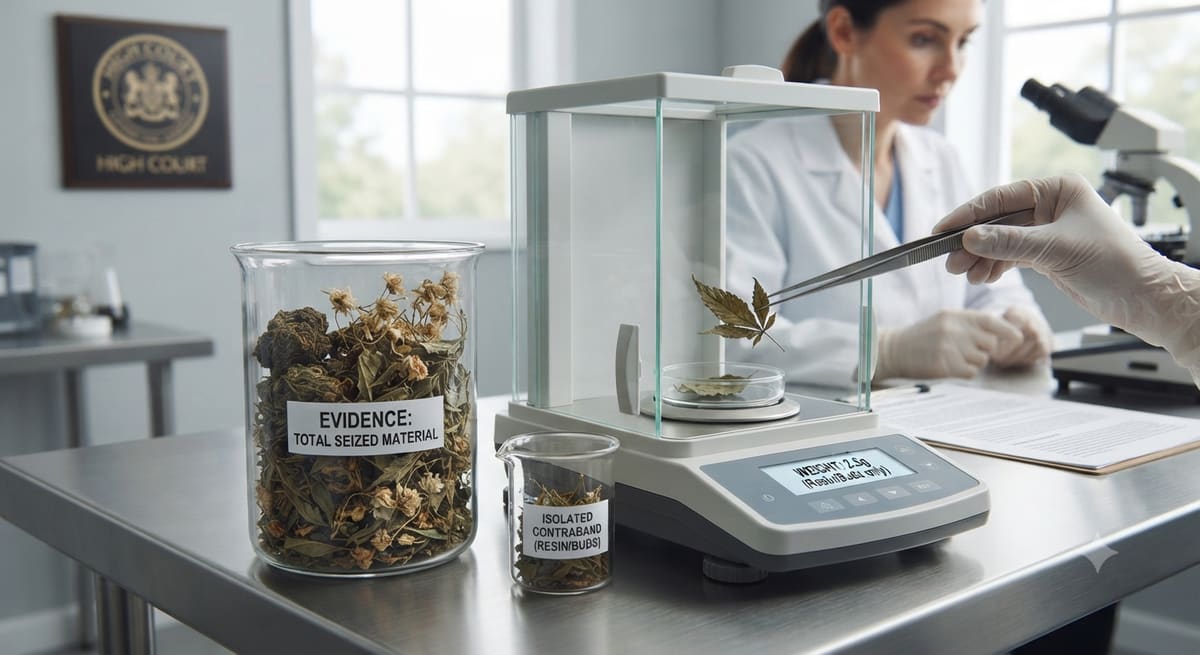
- The prosecution did not provide a separate weight or analysis isolating the flowering or fruiting tops from the rest of the plant material.
- The applicant was arrested on the same day as the raid, 24.03.2026, and has remained in judicial custody since.
- The NDPS Act defines 'commercial quantity' for ganja as 20 kg or more under Section 2(xxi).
- Section 2(b) of the NDPS Act defines 'ganja' exclusively as the flowering or fruiting tops of the cannabis plant, excluding seeds and leaves unless accompanied by the tops.
Procedural History
- 24.03.2026: Raid conducted; contraband seized; FIR registered.
- 24.03.2026: Applicant arrested and taken into judicial custody.
- 09.06.2026: Bail application filed before the Bombay High Court, Aurangabad Bench.
Relief Sought
The applicant sought regular bail on the grounds that the seized material does not meet the statutory definition of 'ganja' under Section 2(b), and therefore, the offence does not prima facie attract the threshold of commercial quantity under Section 20(b). He further argued that his prolonged pre-trial detention is unjustified in the absence of clear evidence establishing the nature and weight of the contraband as defined by law.
The Legal Issue
The central question was whether the recovery of 5.804 kg of cannabis plant material - including seeds, stems, and flowers - constitutes a commercial quantity of 'ganja' under Section 20(b) of the NDPS Act, given that Section 2(b) legally defines 'ganja' as only the flowering or fruiting tops, excluding seeds and leaves.
Arguments Presented
For the Applicant
The applicant’s counsel contended that the prosecution failed to establish that the seized material consisted of the flowering or fruiting tops as required by Section 2(b). The inclusion of seeds, stems, and non-tops plant matter renders the total weight irrelevant for determining commercial quantity. Reliance was placed on Laxman Shankar Ghankute v. State of Maharashtra (2021), where the court held that without separate quantification of flowering tops, the charge under Section 20(b) cannot be sustained. The applicant further argued that his detention since 24.03.2026, without any material showing risk of flight or tampering, violates the principle of proportionality in pre-trial detention.
For the Respondent-State
The State opposed bail, asserting that the nature of the offence under the NDPS Act is inherently serious, and possession of over 5 kg of cannabis material, even if not precisely categorized, indicates involvement in narcotics trade. The State highlighted the applicant’s prior criminal antecedents and expressed apprehension that he may reoffend or influence witnesses if released. It argued that the definition of 'ganja' should be interpreted pragmatically in light of the overall contraband recovered.
The Court's Analysis
The Court undertook a strict textual interpretation of Section 2(b) of the NDPS Act, emphasizing that the statutory definition of 'ganja' is unambiguous: it includes only the flowering or fruiting tops of the cannabis plant, excluding seeds and leaves unless accompanied by the tops. The Court noted that the FIR and seizure memo did not distinguish the weight of flowering tops from other plant parts.
"The expression 'ganja' thus, makes it abundantly clear that it refers specifically to the flowering or fruiting tops of the cannabis plant, excluding the seeds and leaves when they are not accompanied by the tops."
The Court observed that the prosecution had not provided any laboratory report or forensic analysis isolating the qualifying portion of the seized material. Without such evidence, the Court held that the presumption of commercial quantity under Section 20(b) could not be established. The Court relied on Laxman Shankar Ghankute, where a similar factual matrix led to the conclusion that the absence of quantified flowering tops renders the charge unsustainable at the preliminary stage.
Regarding the State’s reliance on criminal antecedents, the Court cited Prabhakar Tewari v. State of U.P. (2020) to reaffirm that pending cases alone cannot justify denial of bail. The Court emphasized that pre-trial detention must be justified by concrete risk factors - not merely the nature of the charge or past history.
The Court further noted that no evidence suggested the applicant was likely to abscond or tamper with evidence. The contraband had already been seized, and the investigation was complete. The applicant had been in custody for over two months without any procedural delay attributable to him.
The Verdict
The applicant succeeded. The Court granted regular bail on the following terms: a personal bond of Rs. 50,000 with one or two local solvent sureties in the same amount. The applicant is prohibited from intimidating witnesses, tampering with evidence, or committing similar offences. The Court explicitly stated that its observations are confined to the bail stage and shall not influence the trial court. The applicant shall comply with all conditions, and breach shall render bail liable for cancellation.
What This Means For Similar Cases
Quantification of Flowering Tops Is Mandatory
- Prosecutors must now provide forensic reports separating the weight of flowering/fruiting tops from other plant matter in all NDPS cases involving ganja.
- Recovery of whole cannabis plants without isolating qualifying portions cannot sustain a charge under Section 20(b) for commercial quantity.
- Defence counsel may file applications under Section 227 CrPC to discharge accused where such evidence is absent.
Bail Cannot Be Denied Solely on Criminal Antecedents
- Pending cases, without evidence of flight risk or witness tampering, are insufficient grounds to deny bail under the NDPS Act.
- Courts must apply the Prabhakar Tewari test: absence of tangible risk must lead to bail being granted, even in serious drug cases.
- Conditions such as no contact with witnesses and no reoffending are sufficient safeguards in the absence of concrete threats.
Procedural Rigor Over Assumption
- The judgment reinforces that statutory definitions in the NDPS Act are not subject to judicial expansion.
- Courts must resist the temptation to treat all cannabis material as 'ganja' for prosecutorial convenience.
- This ruling will likely lead to increased scrutiny of seizure reports and lab analyses in lower courts.