The Madhya Pradesh High Court has granted bail in a serious NDPS case by emphasizing that prolonged pre-trial detention cannot be justified when the prosecution’s evidence is vulnerable to challenge on statutory definition grounds. The judgment reinforces that bail under Section 439 CrPC must be evaluated with due regard to the likelihood of undue delay in trial and the fragility of the prosecution’s case.
Background & Facts
The Dispute
The applicant, Suresh Singh, was arrested on 07.09.2024 in connection with Crime No. 62/2024 registered at Police Station Narcotics Cell, Indore, for offences under Section 8 and Section 20 of the Narcotic Drugs and Psychotropic Substances Act, 1985. He is accused of possessing 50.50 kg of cannabis, which exceeds the commercial quantity threshold of 20 kg under Section 20(a) of the NDPS Act.
Key Facts
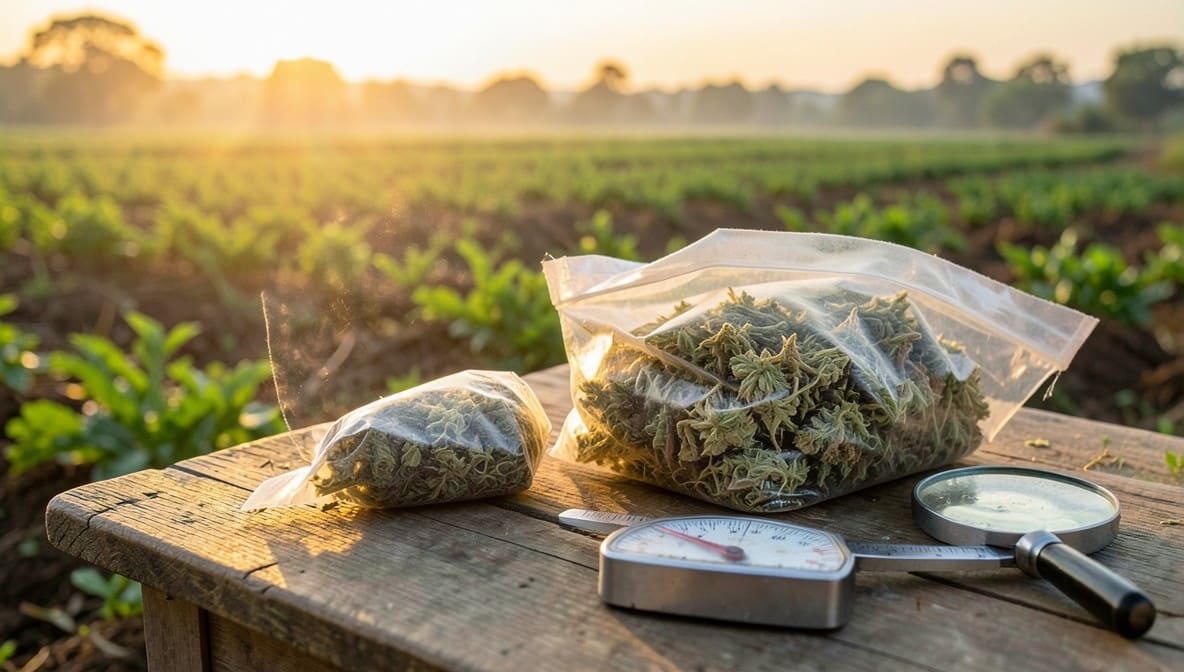
- The contraband seized consisted of 50.50 kg of plant material described as cannabis, including stems, seeds, leaves, and flowers.
- The Forensic Science Laboratory (FSL) report explicitly noted the presence of non-flower parts of the plant.
- Under Section 2(b) of the NDPS Act, "cannabis" is defined as: (i) charas, (ii) ganja, or (iii) any mixture or preparation containing either.
- Section 20(a) defines "commercial quantity" of ganja as 20 kg, but only if it refers to the flowering or fruiting tops.
- The prosecution has not established that the seized material consisted exclusively of the flowering or fruiting tops.
- The seizure witnesses examined by the prosecution have not corroborated the prosecution’s version.
- The applicant has been in judicial custody since 07.09.2024.
- An earlier bail application (M.Cr.C. No. 35046/2025) was withdrawn by the applicant on 04.09.2025.
Procedural History
- 07.09.2024: Arrest of applicant and seizure of contraband.
- 04.09.2025: Withdrawal of first bail application (M.Cr.C. No. 35046/2025).
- 02.04.2026: Second bail application filed under Section 483 of BNSS, 2023 and Section 439 CrPC.
- 02.04.2026: Hearing before the High Court at Indore.
Relief Sought
The applicant sought release on bail on the grounds that: (1) the seized material does not meet the statutory definition of "cannabis" under Section 2(b) of the NDPS Act; (2) the prosecution witnesses have not supported the case; and (3) the trial is likely to be prolonged, making continued detention unjust.
The Legal Issue
The central question was whether bail under Section 439 CrPC can be granted in an NDPS case where the seized contraband includes non-prohibited plant parts, the prosecution’s evidence is weak, and the trial is likely to be unduly prolonged.
Arguments Presented
For the Appellant/Petitioner
Counsel for the applicant argued that the FSL report conclusively showed the seized material included stems, seeds, and leaves - components explicitly excluded from the definition of "ganja" under Section 2(b) of the NDPS Act. Reliance was placed on judicial interpretations holding that only the flowering or fruiting tops constitute "cannabis" for the purpose of commercial quantity. It was further submitted that the prosecution witnesses failed to support the charge, and the applicant had been in custody for over seven months with no indication of an early trial. The applicant’s prolonged detention, in the absence of a strong prima facie case, violated the principle of presumption of innocence.
For the Respondent/State
The Government Advocate opposed the bail plea, asserting that the quantity seized (50.50 kg) far exceeded the commercial threshold, and the nature of the offence under the NDPS Act warranted strict denial of bail. No specific rebuttal was offered regarding the composition of the seized material or the delay in trial.
The Court's Analysis
The Court examined the statutory definition of "cannabis" under Section 2(b) of the NDPS Act and the FSL report, which explicitly identified the seized substance as including stems, seeds, leaves, and flowers. The Court noted that the definition of "ganja" under Section 2(b) refers to the flowering or fruiting tops of the cannabis plant. The presence of non-prohibited parts raises a serious doubt as to whether the seized material qualifies as "cannabis" in the legal sense.
"The FSL report clearly mentions that the contraband seized from the applicant include stems, seeds, leaves, flowers etc. Thus, it was not purely cannabis but involves other parts of the plant and would not fall within the definition of cannabis as provided under Sections 2(b) and 20(a) of NDPS Act."
The Court further observed that the prosecution witnesses had not substantiated the charge, and the applicant had been in custody since 07.09.2024 - a period exceeding seven months - with no foreseeable end to the trial. The Court emphasized that while NDPS cases are serious, the right to liberty under Article 21 cannot be suspended indefinitely without a strong evidentiary foundation. The Court declined to comment on the merits of the case but held that the combination of a questionable statutory basis and prolonged detention justified bail.
The Verdict
The applicant succeeded. The Court allowed the bail application and directed the applicant’s release upon furnishing a personal bond of Rs. 25,000 with one solvent surety of the like amount, subject to conditions under Section 437(3) CrPC. The applicant must remain present before the trial court throughout the proceedings. The order was issued on 02.04.2026.
What This Means For Similar Cases
Contraband Composition Matters More Than Quantity
- Practitioners must scrutinize FSL reports to determine whether seized material meets the statutory definition of "cannabis" under Section 2(b) of the NDPS Act.
- If stems, seeds, or leaves predominate, the charge under Section 20(a) for commercial quantity may not be sustainable.
- Bail applications should highlight this defect early to challenge the prima facie case.
Prolonged Custody Without Trial Justifies Bail Even in Serious Offences
- Courts are increasingly willing to grant bail in NDPS cases where trial delays are evident and the prosecution’s case is legally vulnerable.
- Detention beyond six months without a clear trial timeline should be raised as a ground for liberty under Article 21.
- The burden shifts to the prosecution to demonstrate why continued custody is necessary when the evidentiary basis is weak.
Judicial Scrutiny of FSL Reports Is Now Mandatory
- FSL reports are no longer treated as conclusive; their textual details must be parsed for statutory compliance.
- Defence counsel must extract and cite specific language from FSL reports to challenge the nature of the contraband.
- This judgment sets a precedent for challenging NDPS charges based on botanical composition, not just weight.