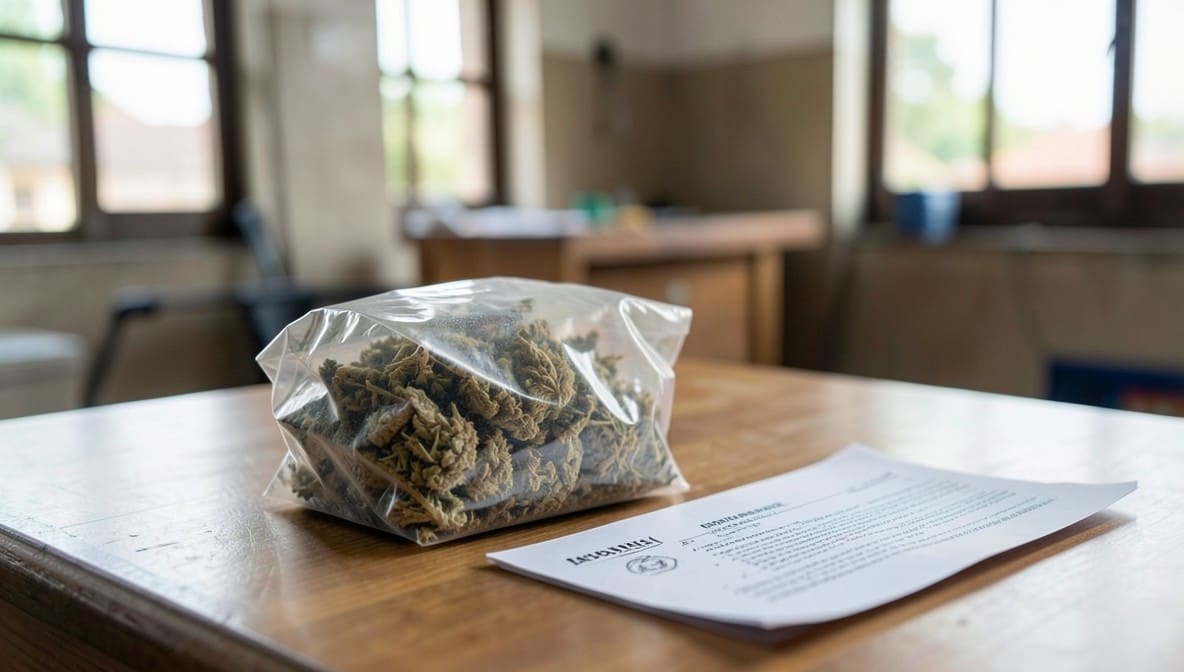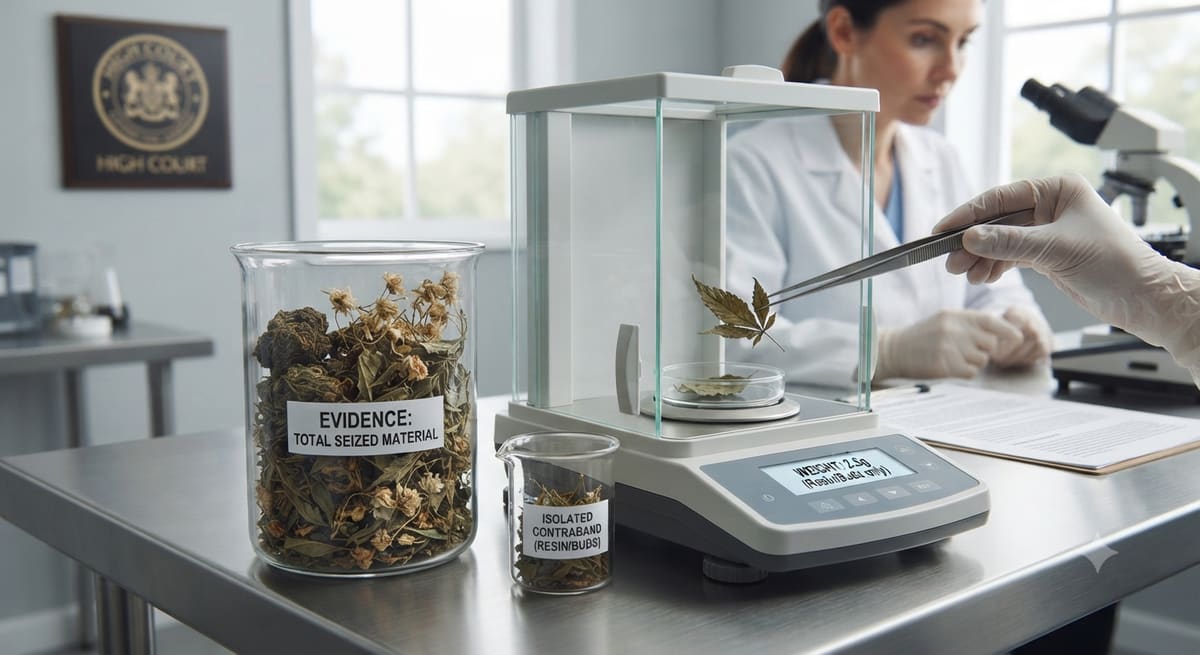
In a significant ruling on bail under the Narcotic Drugs and Psychotropic Substances Act, 1985 (NDPS Act), the Bombay High Court has underscored that the weight of seized contraband must exclude non-narcotic material like leaves and flowers. The judgment raises critical questions about the applicability of Section 2(iii)(b) of the NDPS Act when proper segregation is not carried out, offering relief to an accused arrested for possession of ganja where the seized material included extraneous substances.
Background & Facts
The Dispute
The applicant, Nitin Limbaji Kande, was arrested on 04.03.2026 in connection with Crime No. 67 of 2026 registered at Bardapur Police Station, District Beed, for offences punishable under Sections 8(c) and 20 of the NDPS Act. The case arose from a raid conducted by Ambajogai S.D.P.O. police, who allegedly found the applicant in a room within a field owned by Bhaskar Rokdiba Phad. The police claimed to have seized contraband ganja from the premises, but the applicant contended that the room was not owned by him and that he was falsely implicated.
Key Facts
Date of Arrest: 04.03.2026
Offence: Possession of ganja under Sections 8(c) and 20 of the NDPS Act
Seizure Details: Contraband ganja was allegedly found in two gunny bags, but the inventory revealed that the seized material included green leaves along with ganja, without segregation
Ownership Dispute: The applicant asserted that the room where the contraband was found was owned by his neighbour, not him, and that he resides in Pune
Procedural Lapses: The inventory did not segregate ganja from non-narcotic material, raising doubts about whether the seized substance met the definition under Section 2(iii)(b) of the NDPS Act
Investigation Status: Chargesheet was filed in May 2026, and the trial had not commenced as of the bail application
Criminal Antecedents: The applicant had no prior criminal record
Procedural History
04.03.2026: Applicant arrested in Crime No. 67 of 2026
May 2026: Chargesheet filed by the prosecution
BA 1099 of 2026: Bail application filed before the Bombay High Court, Aurangabad Bench
09.07.2026: Bail application reserved for orders
10.07.2026: Bail application allowed
Relief Sought
The applicant sought regular bail on the grounds of false implication, lack of ownership of the premises, and procedural lapses in the seizure of contraband. He offered to abide by any conditions imposed by the court.
The Legal Issue
The central question before the court was whether bail could be granted under the NDPS Act when:
The seized contraband included non-narcotic material (leaves and flowers) without segregation, potentially falling outside the definition of Section 2(iii)(b) of the NDPS Act.
The ownership of the premises where the contraband was found was disputed, and the applicant claimed no connection to the seized material.
The chargesheet had been filed, and the trial had not commenced, raising concerns about prolonged detention.
Arguments Presented
For the Applicant
False Implication: The applicant was not the owner of the room or the field where the contraband was seized, and he resided in Pune, not Beed.
Procedural Lapses: The inventory did not segregate ganja from non-narcotic material, casting doubt on whether the seized substance met the legal definition under Section 2(iii)(b) of the NDPS Act.
Investigation Status: The chargesheet had been filed, and no purpose would be served by further detention, as the trial had not commenced.
No Criminal Antecedents: The applicant had no prior criminal record and was willing to comply with any bail conditions.
For the Respondent
Quantity of Seizure: The prosecution opposed bail on the ground that a huge quantity of contraband was seized.
CA Report: The Chemical Analyser’s report was positive, confirming the presence of ganja.
The Court's Analysis
The court critically examined the procedural and factual aspects of the case, particularly the inventory process and the definition of contraband under the NDPS Act. The judgment highlighted the following key points:
Ownership Dispute: The prosecution did not refute the applicant’s claim that he was not the owner of the room or the field where the contraband was found. This raised doubts about his direct involvement in the offence.
Procedural Lapse in Seizure: The inventory revealed that the seized material included green leaves along with ganja, without segregation. The court observed that this lapse questioned whether the seized substance fell within the definition of Section 2(iii)(b) of the NDPS Act, which specifies what constitutes contraband.
"Further, inventory drawn by the learned Magistrate, of which copy is placed with chargesheet, shows that along with the weight ganja, green leaves were found in two gunny bags. Therefore there being no segregation, question of provisions of NDPS Act arises."
Stage of Proceedings: The court noted that the chargesheet had been filed, and the trial had not commenced. Given the uncertainty over the trial’s timeline, the court held that further detention would serve no purpose.
No Criminal Antecedents: The absence of any prior criminal record was a mitigating factor in favour of the applicant.
The court concluded that the procedural lapses, disputed ownership, and lack of criminal antecedents warranted the grant of bail, particularly as the trial had not yet begun.
The Verdict
The Bombay High Court allowed the bail application. The applicant was directed to be released on bail upon executing a Personal Bond of Rs. 15,000/- with one surety in the like amount, subject to the following conditions:
The applicant shall not tamper with prosecution evidence.
The applicant shall not leave the jurisdiction of the concerned police station until the conclusion of the trial.
The applicant shall regularly attend each and every effective date before the trial court.
What This Means For Similar Cases
Procedural Compliance Is Non-Negotiable
This judgment underscores the importance of strict adherence to procedural requirements under the NDPS Act. Practitioners must note:
Segregation of Contraband: The weight of seized material must exclude non-narcotic substances like leaves and flowers. Failure to segregate can raise doubts about the applicability of the NDPS Act, particularly Section 2(iii)(b).
Inventory Accuracy: The inventory process must accurately reflect the nature of the seized material. Any lapse can be grounds for challenging the seizure’s legality.
Ownership and Possession Matter
Disputed Ownership: Where the ownership of the premises or the seized material is disputed, courts may view the prosecution’s case with scepticism, especially if the prosecution fails to refute the accused’s claims.
Direct Involvement: The absence of evidence linking the accused to the contraband (e.g., ownership, control, or knowledge) can be a strong ground for bail.
Bail Considerations in NDPS Cases
Stage of Proceedings: Courts are more inclined to grant bail when the chargesheet has been filed, and the trial has not commenced, particularly if the accused has no criminal antecedents.
Quantity vs. Procedure: While the quantity of contraband is a relevant factor, procedural lapses can outweigh it, especially when the seized material’s compliance with legal definitions is in doubt.
Practitioners should leverage this judgment to argue for bail in cases where procedural lapses or disputed facts weaken the prosecution’s case under the NDPS Act.