The Madhya Pradesh High Court has clarified a critical procedural safeguard in narcotics cases under the NDPS Act, holding that the weight of packaging material must be excluded when determining whether a contraband quantity qualifies as 'commercial'. This ruling reinforces the requirement for precise, scientifically valid measurement in drug prosecutions and provides a vital precedent for bail applications where the prosecution's evidence is technically flawed.
Background & Facts
The Dispute
The applicant, Adnan, was arrested on 29.11.2024 in connection with Crime No. 85/2024 registered at Police Station Narcotics Cell, Indore Cell, District Mandsaur (Madhya Pradesh). He is accused of possessing 99 grams of marijuana (MD), which the prosecution claims exceeds the statutory commercial quantity threshold of 50 grams under Section 29 of the Narcotic Drugs and Psychotropic Substances Act, 1985.
Key Facts
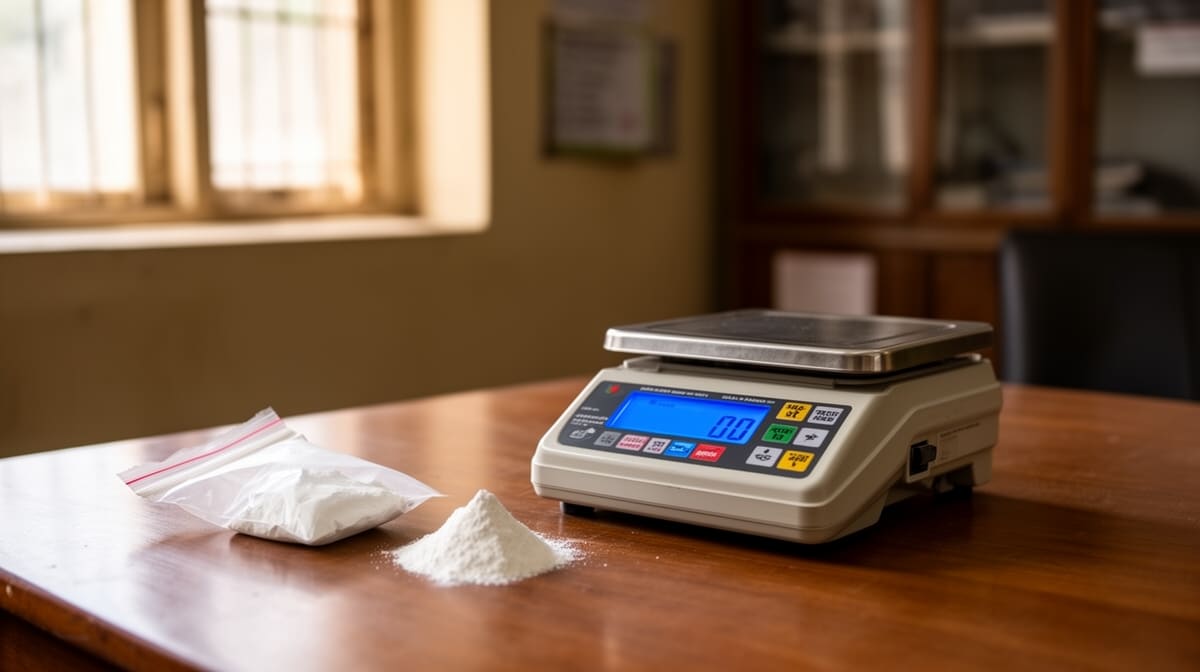
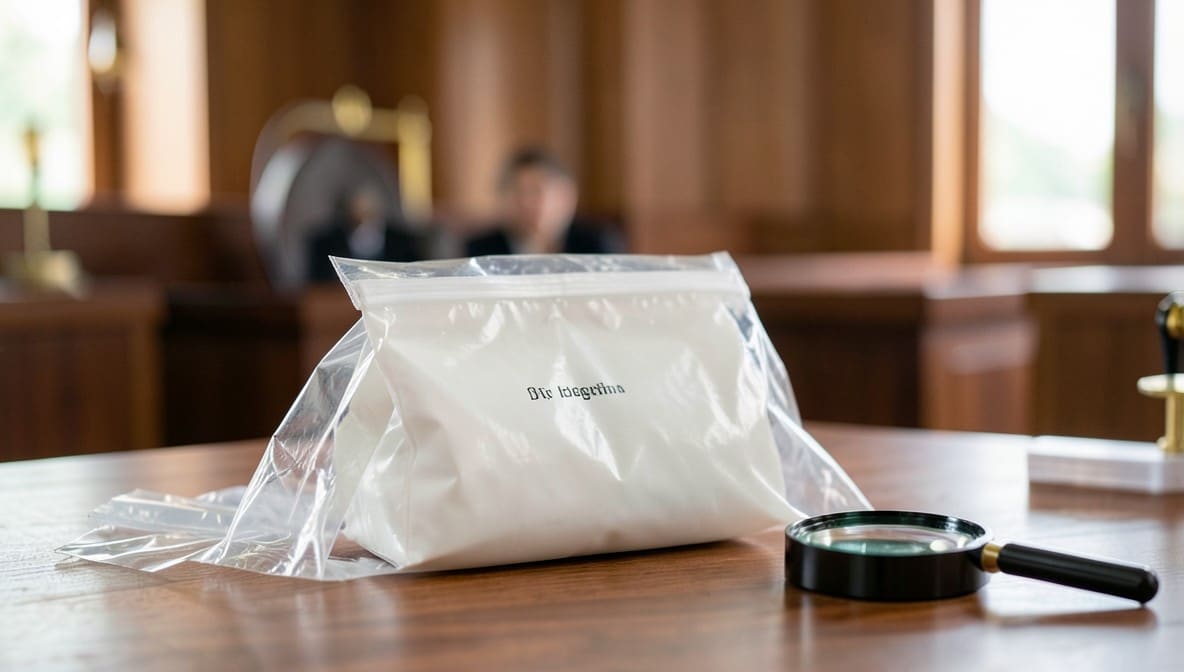
- The contraband was seized in a polythene bag.
- The seizure memo and case diary record the total weight as 99 grams, but do not separately account for the weight of the polythene packaging.
- The applicant has no prior criminal record.
- The prosecution’s seizure witnesses have already been examined, and their testimony reportedly does not corroborate the charge.
- The applicant has been in judicial custody since 29.11.2024.
- The first bail application, filed as M.Cr.C. No. 41422/2025, was withdrawn on 14.10.2025.
Procedural History
- 29.11.2024: Arrest of applicant following seizure of contraband.
- 14.10.2025: First bail application (M.Cr.C. No. 41422/2025) withdrawn before this Court.
- 07.04.2026: Second bail application filed under Section 439 CrPC and Section 483 BNSS, 2023.
- 07.04.2026: Hearing conducted before Justice Subodh Abhyankar.
Relief Sought
The applicant sought bail on the grounds that: (1) the seized quantity does not constitute a commercial quantity as packaging weight was not excluded; (2) the prosecution witnesses have not supported the case; (3) the trial is likely to be protracted; and (4) he has no criminal antecedents.
The Legal Issue
The central question was whether the weight of the polythene packaging must be excluded from the total seized weight to determine whether the quantity of marijuana constitutes a 'commercial quantity' under Section 29 of the NDPS Act, and whether the failure to do so renders the charge legally unsustainable for the purpose of bail.
Arguments Presented
For the Appellant
Counsel for the applicant argued that the seizure record fails to comply with the mandatory requirement under Section 52A of the NDPS Act and judicial precedents that the weight of the contraband must be determined excluding the packaging material. He cited that the polythene bag was of considerable size and its weight was not separately recorded, making the 99-gram figure unreliable. He further submitted that the prosecution witnesses had already been examined and failed to substantiate the charge, and that the applicant’s prolonged detention without trial warranted bail.
For the Respondent
The State did not dispute that the weight of the polythene was not separately recorded. However, it opposed bail on the ground that the quantity seized (99 grams) was above the statutory threshold of 50 grams for commercial quantity. No specific legal argument was advanced to rebut the technical defect in measurement.
The Court's Analysis
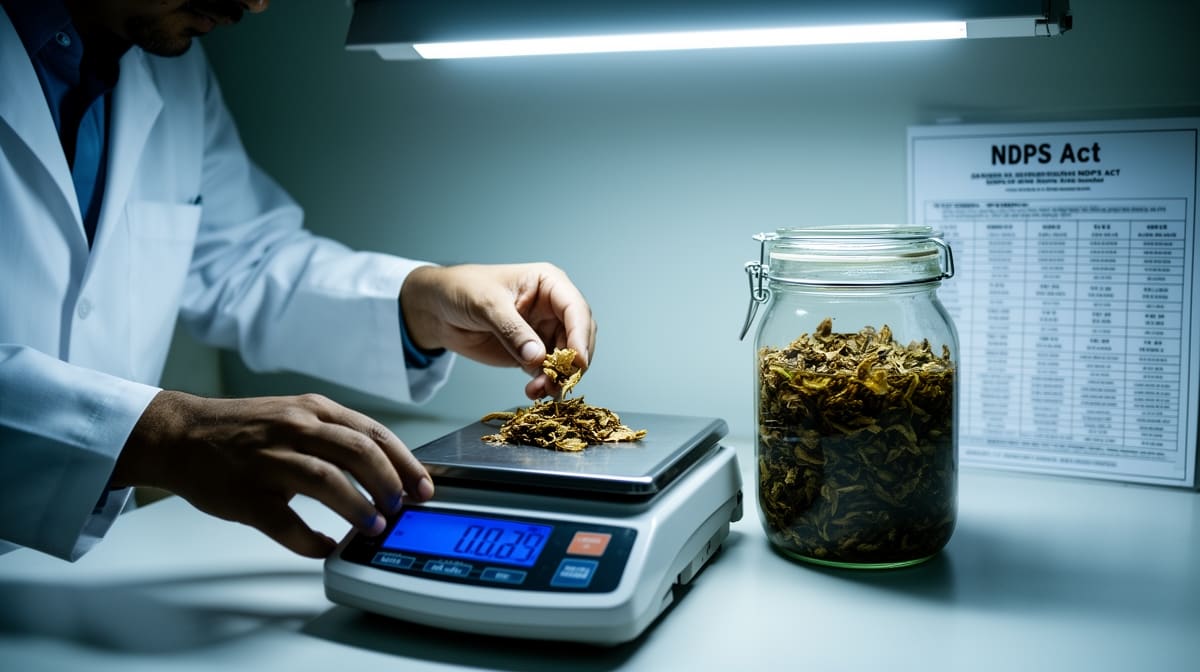
The Court examined the statutory framework under the NDPS Act and relevant judicial interpretations, particularly the principle that the weight of the contraband must be determined free from extraneous materials. The Court noted that the prosecution’s failure to separate the weight of the polythene bag from the total seized weight creates a material defect in the evidentiary foundation of the charge.
"The weight of the contraband must be ascertained by excluding the weight of the packaging material, as the law requires the substance itself to be measured for determining commercial quantity."
The Court emphasized that the absence of this basic procedural step undermines the very basis of the accusation under Sections 8 and 22 of the NDPS Act. While the Court explicitly declined to comment on the merits of the prosecution’s case, it held that the technical infirmity in the seizure record, coupled with the applicant’s clean record and prolonged custody, justified the grant of bail. The Court also noted that the prosecution witnesses had already been examined and their testimony did not support the charge, further weakening the case against the applicant.
The Verdict
The applicant succeeded. The Court allowed the bail application and directed the applicant’s release upon furnishing a personal bond of Rs. 25,000 with one solvent surety of the like amount. The applicant must remain present before the trial court during proceedings and abide by the conditions under Section 437(3) CrPC. The trial court is empowered to cancel bail if any condition is violated. The order is effective immediately.
What This Means For Similar Cases
Packaging Weight Must Be Excluded in NDPS Seizures
- Practitioners must challenge the admissibility of seizure reports where packaging weight is not separately recorded.
- Bail applications under NDPS Act can be strengthened by highlighting this procedural defect, even if the total weight exceeds the commercial threshold.
- Courts are now more likely to grant bail where the prosecution fails to meet the basic evidentiary standard of accurate weight measurement.
Bail Is Not Automatically Denied in Commercial Quantity Cases
- The mere fact that the seized quantity exceeds the statutory threshold does not preclude bail if the charge is legally defective.
- Courts will consider the integrity of the evidence, the length of custody, and the accused’s background when deciding bail, even in serious drug cases.
- This judgment reinforces that procedural compliance is not a mere formality but a substantive safeguard under the NDPS Act.
Witness Testimony Matters Even at Bail Stage
- If prosecution witnesses have already been examined and their testimony is inconsistent or unsupportive, this can be raised as a factor favoring bail.
- The absence of corroboration from witnesses weakens the prosecution’s prima facie case and supports the applicant’s claim of undue detention.