The Rajasthan High Court has clarified that bail under Section 483 of the Bharatiya Nagarik Suraksha Sanhita (BNSS) may be granted in cases involving cannabis possession where the punishment under Section 20(a)(i) of the NDPS Act does not exceed ten years, thereby excluding the mandatory denial of bail under Section 37. This decision reinforces procedural fairness in drug-related prosecutions where the statutory bar does not apply.
Background & Facts
The Dispute
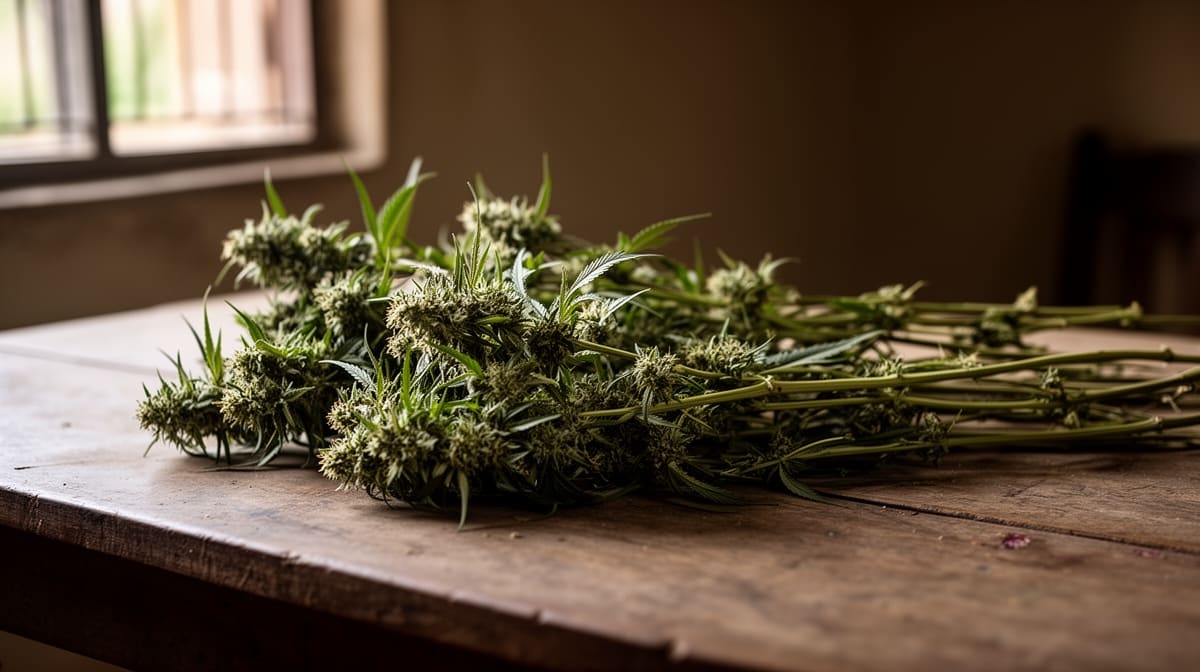
The petitioner, Ramaram S/o Nanaram, aged approximately 28 years, resident of Kakrali Fali, Paniya, Police Thana Rohida, District Sirohi, was arrested in connection with F.I.R. No. 14/2026 registered at Police Station Rohera, District Sirohi. The case pertains to alleged offences under Section 8 and Section 20 of the Narcotic Drugs and Psychotropic Substances Act, 1985 (NDPS Act). The sole substance recovered was 153 cannabis plants.
Key Facts
- The quantity of cannabis plants recovered - 153 - triggers Section 20(a)(i) of the NDPS Act, which prescribes a maximum punishment of ten years’ imprisonment and a fine of Rs. 1,00,000.
- No other contraband, weapons, or proceeds of crime were alleged to have been recovered from the petitioner.
- The petitioner has no prior criminal record apart from the instant case.
- The petitioner has been in judicial custody since the date of arrest.
- The trial is expected to take a prolonged period due to procedural delays and evidentiary requirements.
Procedural History
- Date of Arrest: Not explicitly stated, but inferred to be prior to 23/06/2026.
- F.I.R. Registration: 14/2026 at Police Station Rohera, District Sirohi.
- 23/06/2026: Bail application filed under Section 483 BNSS before the High Court.
- 23/06/2026: Hearing conducted by Vacation Judge, Justice Baljinder Singh Sandhu.
- 23/06/2026: Order passed granting bail.
The Parties' Positions
For the Petitioner
Counsel for the petitioner, Mr. JVS Deora, submitted that:
- The recovery of 153 cannabis plants falls squarely under Section 20(a)(i) of the NDPS Act, which prescribes a maximum punishment of ten years and a fine of Rs. 1,00,000.
- Section 37 of the NDPS Act, which imposes a stringent bar on bail for offences punishable with imprisonment of ten years or more, does not apply because the maximum punishment under Section 20(a)(i) is exactly ten years, and the provision requires punishment to be more than ten years to trigger the bar.
- The petitioner has no criminal antecedents.
- The trial is likely to be protracted, and the petitioner has been in custody since arrest.
- There is no indication that the petitioner will abscond if released on bail.
For the Respondent
The learned Public Prosecutor, Mr. Narendra Singh Chandawat, opposed the bail application but did not dispute the applicability of Section 20(a)(i) or the absence of a Section 37 bar. No specific grounds of flight risk or tampering with evidence were advanced.
Relief Sought
The petitioner sought release on bail under Section 483 BNSS, pending trial, with conditions to ensure his appearance before the trial court.
The Legal Issue
Whether the bar under Section 37 of the NDPS Act applies to an offence under Section 20(a)(i) where the maximum punishment is exactly ten years, and whether bail may be granted under Section 483 BNSS in the absence of such a bar.
Arguments Presented
For the Petitioner
The petitioner’s counsel relied on the plain language of Section 37 of the NDPS Act, which bars grant of bail if the offence is punishable with imprisonment of more than ten years. Since Section 20(a)(i) prescribes a maximum of ten years, the bar does not apply. The counsel cited State of Punjab v. Baldev Singh and Kamaljit Singh v. State of Punjab to support the interpretation that the threshold is strictly more than ten years. The absence of criminal antecedents, the non-violent nature of the offence, and the prolonged trial timeline were emphasized as factors favoring bail.
For the Respondent
The Public Prosecutor did not contest the legal interpretation of Section 37. No counter-arguments were presented regarding the applicability of the bar or the risk of flight. The opposition appeared to be procedural rather than substantive.
The Court's Analysis
The Court undertook a textual analysis of Section 37 of the NDPS Act, which states: "No person accused of an offence punishable under Section 8, 9, 12, 13, 14, 15, 18 or 19 of this Act, which is punishable with imprisonment for more than ten years, shall be released on bail..." The Court noted that the phrase "more than ten years" is unambiguous and excludes offences where the maximum punishment is exactly ten years.
"Section 20(a)(i) prescribes a maximum punishment of ten years and a fine of one lakh rupees. The bar under Section 37 is triggered only if the punishment is more than ten years. This case does not meet that threshold."
The Court further observed that the prosecution had not raised any apprehension regarding the petitioner’s potential to flee or tamper with evidence. The absence of prior criminal history and the prolonged nature of the trial were considered in favor of the petitioner’s liberty. The Court emphasized that Section 483 BNSS empowers High Courts to grant bail in any case where the conditions of justice and fairness so require, even in cases governed by special statutes like the NDPS Act, provided the statutory bar does not apply.
The Court explicitly declined to express any opinion on the merits of the prosecution’s case, reaffirming that bail decisions are procedural and not determinative of guilt.
The Verdict
The petitioner succeeded. The High Court allowed the bail application under Section 483 BNSS. The petitioner, Ramaram S/o Nanaram, shall be released on bail upon furnishing a personal bond of Rs. 50,000 and two sureties of Rs. 25,000 each, to the satisfaction of the trial court. He must appear before the trial court on every hearing date and whenever called upon until the conclusion of the trial. The order is subject to the condition that he is not wanted in any other case.
What This Means For Similar Cases
Section 37 NDPS Act Does Not Bar Bail for Exactly Ten-Year Offences
- Practitioners must carefully distinguish between offences punishable with "more than ten years" and those with a maximum of ten years.
- Possession of cannabis plants under Section 20(a)(i) is now clearly outside the Section 37 bar, making bail applications under BNSS viable.
- Courts must apply the statutory language literally - "more than" excludes "equal to."
Bail Under BNSS Is Available Even in NDPS Cases Without Statutory Bar
- Section 483 BNSS provides a broad discretionary power to High Courts to grant bail in any case where justice so requires.
- Absence of flight risk and prolonged trial duration are sufficient grounds for bail, even in drug cases, if Section 37 does not apply.
- Prosecution must articulate specific grounds for opposing bail; mere invocation of NDPS Act is insufficient.
Procedural Fairness Over Presumption of Guilt
- The judgment reinforces that bail is the rule, not the exception, even in serious drug cases.
- Courts must avoid conflating the seriousness of the offence with the risk of flight or tampering.
- No criminal antecedents and lack of evidence of dangerousness are decisive factors in favor of liberty.