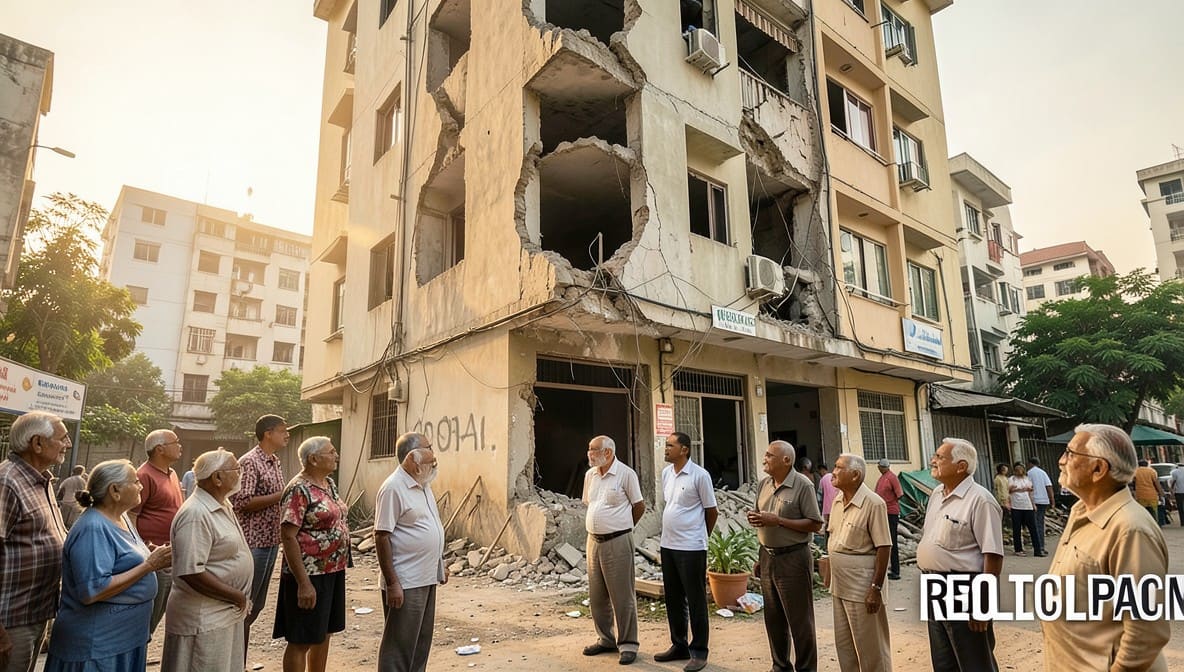
The Bombay High Court has granted an interim stay against the demolition of a safety door installed by tenants for family security, emphasizing that municipal authorities cannot act on private complaints without considering long-standing use and absence of prior objection. The order underscores the importance of balancing public order with fundamental safety needs in tenanted housing.
Background & Facts
The Dispute
The appellants, Uma Shailesh Hatle and another, are tenants of the Municipal Corporation of Greater Bombay residing in Peru Chawl No.2, Lalbaug, Mumbai. They are aggrieved by a notice issued under Section 351 of the Mumbai Municipal Corporation Act, 1888, dated 04.08.2025, directing them to remove a wooden safety door installed at the entrance of their room. The notice was issued following a complaint by a neighbour, allegedly motivated by personal animosity. The appellants filed a civil suit seeking injunctive relief against the removal of the structure.
Key Facts
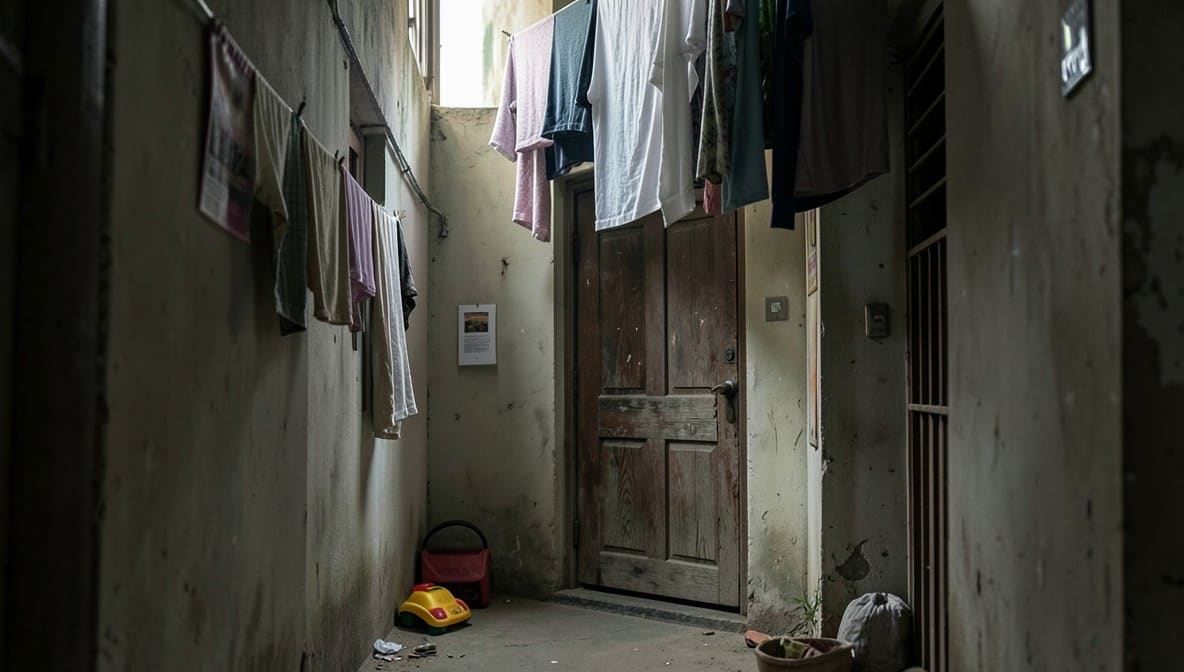
- The safety door measures 3.65 meters in height and 1 meter in width and is installed in the common passage directly in front of the appellants’ corner room
- The structure has been in continuous use since 1977, as evidenced by documentary records appended to the pleadings (pages 91 onwards)
- The appellants have two twin daughters aged 10 years, and the door was installed for security purposes
- The Corporation, as landlord, had never objected to the structure for nearly five decades
- A similar safety door exists on the same floor, installed by another tenant occupying a corner room
- The appellants filed a non-cognizable complaint against the neighbour regarding harassment and threatening behaviour (Exhibit-I, pages 107 onwards)
- On 07.08.2025, the second appellant wrote to the Corporation’s Engineer (Exhibit-H, page 105) explaining the safety rationale for the door
- The Designated Officer issued a speaking order on 11.11.2025 rejecting the appellants’ explanation on the sole ground that no prior permission from the Corporation was produced
- The Trial Court, by order dated 23.01.2026, dismissed the application for interim relief, holding that absence of permission rendered the structure illegal
Procedural History
- 1977: Safety door installed by appellants in the common passage
- 04.08.2025: Notice issued under Section 351 of the Mumbai Municipal Corporation Act, 1888, directing removal
- 11.11.2025: Speaking order passed by Designated Officer rejecting appellants’ representation
- 23.01.2026: Trial Court dismissed application for interim injunction in Notice of Motion No.6532 of 2025
- 23.04.2026: Appeal from Order No.342 of 2026 filed before the Bombay High Court
- 23.04.2026: Interim Application No.2679 of 2026 filed seeking immediate stay against demolition
Relief Sought
The appellants sought an interim stay against the removal of the safety door, pending final adjudication of the appeal. They also requested that the Corporation be restrained from taking any coercive action until the appeal is heard for admission.
The Legal Issue
The central question was whether a municipal authority may direct the removal of a structure that has been in continuous, unchallenged use for nearly five decades, where the sole basis for action is a private complaint and no prior objection was ever raised by the landlord, and whether such action warrants interim relief on prima facie grounds.
Arguments Presented
For the Appellant
Ms. Kranti Anand, appearing for the appellants, submitted that the safety door was installed in 1977 for the protection of the family, particularly the two minor daughters, and had been tolerated by the Corporation for over 45 years. She argued that the Corporation’s sudden action, triggered solely by a neighbour’s complaint, amounted to arbitrary enforcement. She relied on the principle that long-standing, non-obstructive structures, especially those serving safety purposes, cannot be summarily removed without due consideration of historical context and absence of prior objection. She highlighted that the Corporation had permitted similar structures on the same floor, indicating inconsistent enforcement.
For the Respondent
The Respondent, through the Designated Officer, contended that any structure erected in common areas without prior written permission from the Corporation is illegal under the Mumbai Municipal Corporation Act, 1888. The absence of any formal sanction, regardless of duration of use, rendered the structure unlawful. The Respondent argued that the Court should not interfere at the interim stage where statutory compliance was not established.
The Court's Analysis
The Court observed that the appellants had established a prima facie case by demonstrating the structure’s continuous existence since 1977 and the Corporation’s prolonged silence. The Court noted that the Corporation, as landlord, had never raised any objection during this period, despite having full knowledge of the structure’s presence. The Court emphasized that the purpose of the structure was not commercial or structural expansion but personal safety, particularly for minors.
"The notice structure enures to the safety of Plaintiffs' family, at this interim stage an arguable case is made out..."
The Court rejected the notion that absence of formal permission alone justifies coercive action, especially where the structure has been in place for nearly half a century without disruption. It held that the Corporation’s action appeared to be retaliatory, prompted by a neighbour with alleged personal grievances. The Court further noted the existence of a similar structure on the same floor, indicating selective enforcement and potential violation of the principle of equality before the law.
The Court also considered the urgency of the matter, as the appellants were informed that demolition was scheduled for the very next day. The Court found that irreparable harm would result if the structure were removed before the appeal could be heard, particularly given the security needs of the appellants’ minor children.
The Verdict
The appellants succeeded on interim relief. The Court stayed all coercive action by the Corporation to remove the safety door pending final disposal of the appeal. The Corporation was directed not to take any steps to demolish the structure until the appeal is heard for admission. The Court issued notice to the Respondent and directed the Corporation to file an Affidavit-in-Reply within four weeks, with an Affidavit-in-Rejoinder to follow within another four weeks. The appellants were directed to serve a copy of the order and appeal documents on the Respondent and file proof of service. The matter was listed for hearing on 18.06.2026.
What This Means For Similar Cases
Long-Standing Use Can Override Formal Permission Gaps
- Practitioners may argue that structures in municipal housing, if non-obstructive and in continuous use for decades without objection, cannot be deemed illegal solely on the absence of formal sanction
- The doctrine of acquiescence by the landlord (Corporation) may be invoked to challenge arbitrary enforcement
- Evidence of historical use, including photographs, witness statements, or municipal records, should be systematically collected in such cases
Safety Justifications Carry Weight in Municipal Disputes
- Structures installed for the protection of vulnerable occupants, particularly children or elderly, merit heightened judicial scrutiny
- Municipal authorities must distinguish between structural violations and safety adaptations
- Courts are likely to grant interim relief where removal poses a demonstrable risk to personal security
Selective Enforcement Violates Natural Justice
- The existence of identical structures elsewhere on the same premises undermines the legitimacy of enforcement actions
- Courts may treat selective enforcement as evidence of mala fide intent or arbitrariness
- Petitioners should document all similar structures in the building to challenge discriminatory application of rules