The Bombay High Court has held that a Scheduled Tribe Caste Scrutiny Committee cannot reject a pre-Independence birth record on the ground of suspected interpolation without obtaining expert handwriting opinion. The Division Bench quashed two impugned orders and directed issuance of caste validity certificates to both petitioners within three weeks, reinforcing that non-consideration of material documentary evidence vitiates administrative orders.
Background & Facts
The Dispute
Two siblings, Truptej Dhondiram Kamble and Tejaswi Dhondiram Kamble, filed separate writ petitions challenging orders of the Scheduled Tribe Caste Scrutiny Committee (Respondent No. 2) rejecting their applications for caste validity certificates. Both petitioners claimed membership of the "Mahadev Koli" Scheduled Tribe community. Truptej sought the certificate to secure admission in the First Year MBBS course under the ST category after appearing for NEET 2023, while Tejaswi's petition arose from an earlier rejection.
Key Facts
- 30 April 2021: Principal of A.D. Joshi Junior College forwarded Truptej's proposal for caste certificate validity to the Scrutiny Committee.
- 23 May 2023: Truptej submitted his online application with all supporting documents to the Scrutiny Committee.
- 13 June 2023: NEET results declared; Truptej secured 294 marks, All India Rank 434,612, Category Rank 13,261.
- 19 July 2023: Truptej, through his advocate, filed an application requesting expeditious hearing of his validity claim.
- 27 July 2023: Vigilance Committee submitted its detailed investigation report based on documents submitted and records inspected.
- 10 August 2023: Scrutiny Committee issued notice to Truptej for hearing on 17 August 2023.
- 17 August 2023: Truptej filed detailed written arguments and reply to the Vigilance Committee report.
- 21 August 2023: Scrutiny Committee passed impugned order rejecting Truptej's application (WP 11653/2023).
- 27 November 2020: Scrutiny Committee passed impugned order rejecting Tejaswi's application (WP 425/2021).
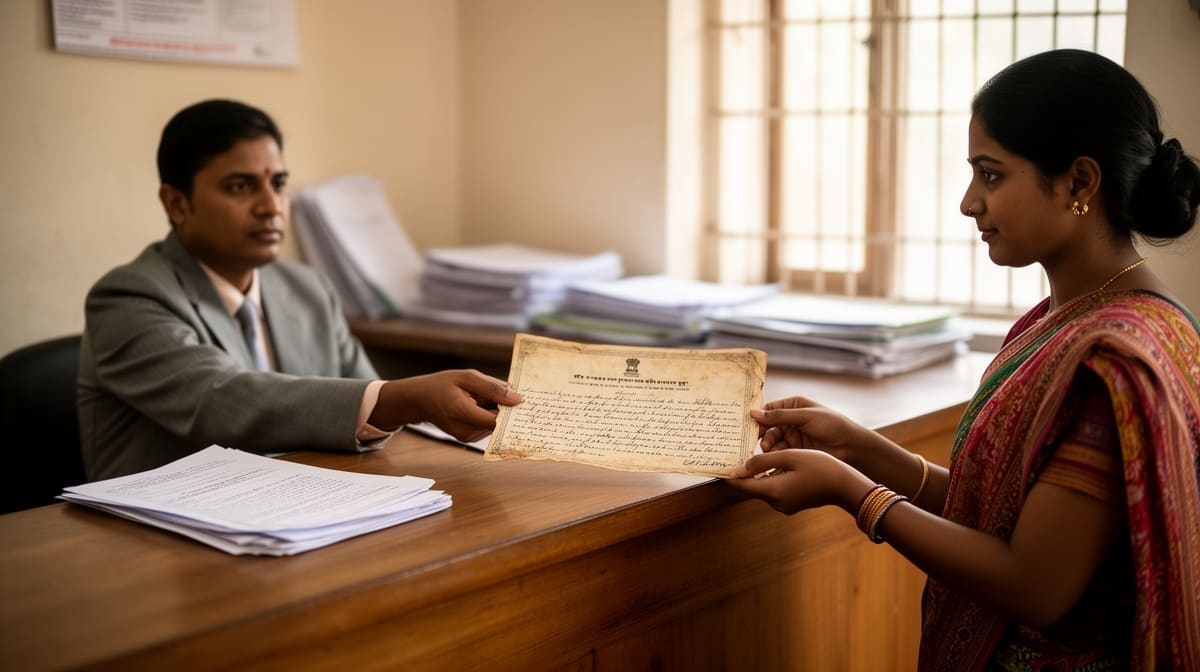
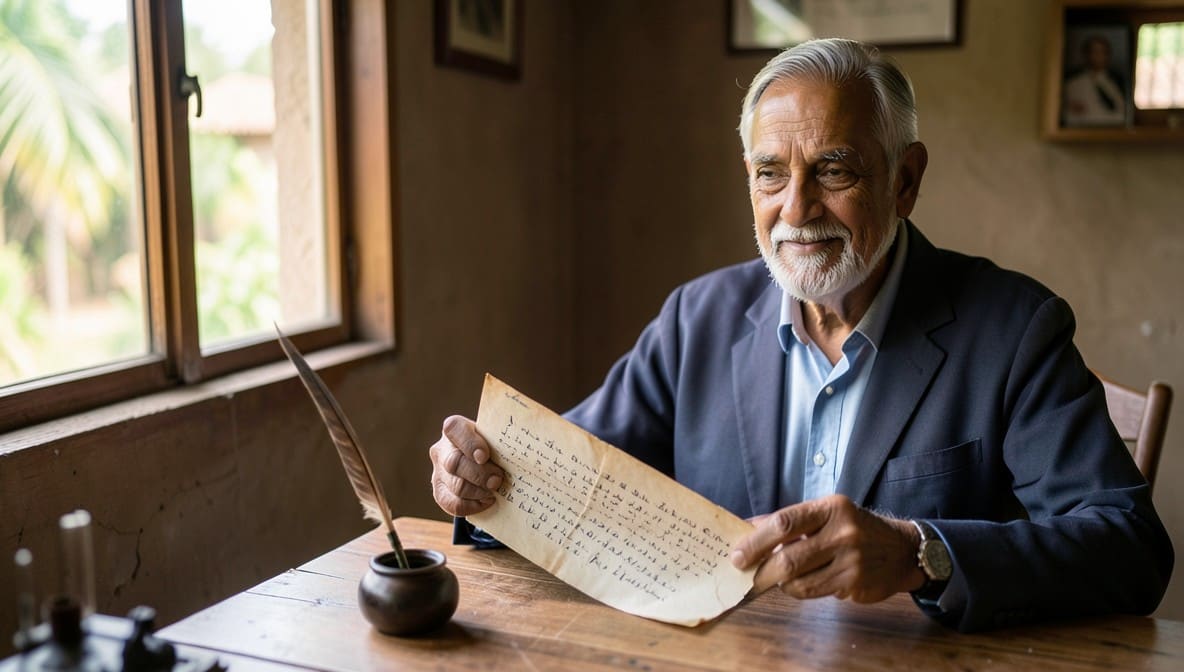
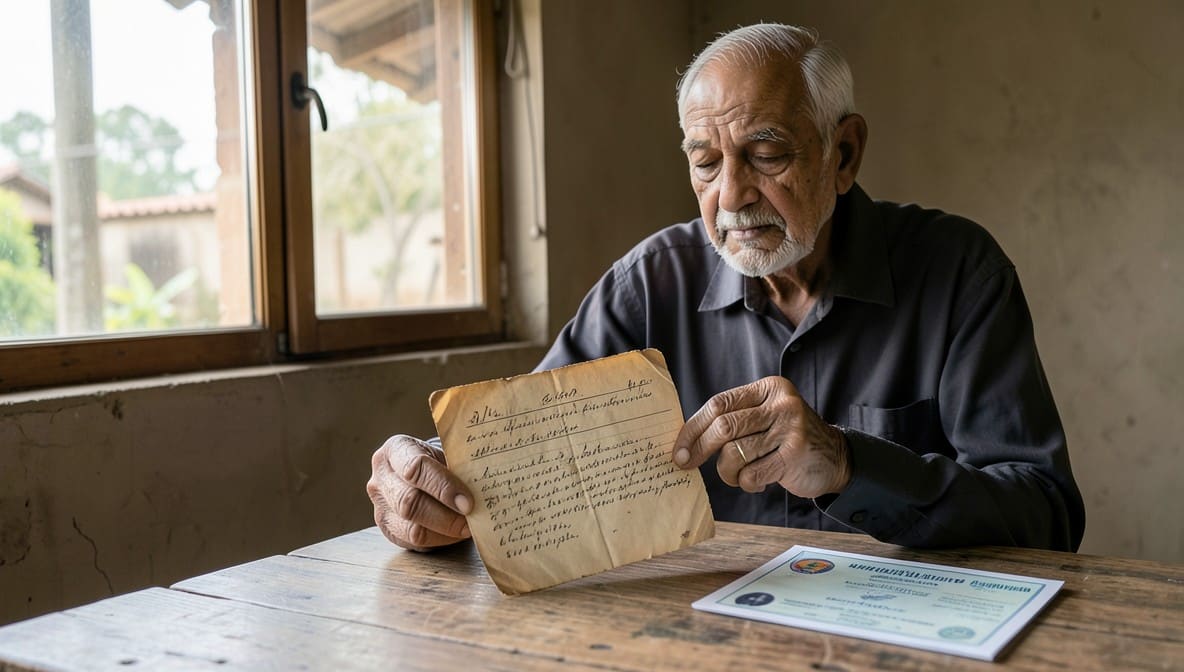
- The petitioners relied on a pre-Independence birth record of the Municipal Corporation, Pandharpur City, of their grandfather Nagnath, son of Kondabai @ Kom Babaji Kamble, dated 3 June 1937, showing caste entry as "Mahadev Koli".
- The Scrutiny Committee disregarded this document on the ground that the name "Nagnath" appeared to have been added subsequently on 8 June 1937 in different ink.
Procedural History
- WP 11653/2023: Filed by Truptej challenging order dated 21 August 2023.
- WP 425/2021: Filed by Tejaswi challenging order dated 27 November 2020.
- Both petitions heard together by the Division Bench (R.I. Chagla J and Firdosh P. Pooniwalla J) as common issues arose.
- Arguments concluded; judgment reserved on 15 October 2026.
- Judgment pronounced on 22 October 2026.
Relief Sought
The petitioners sought quashing of the impugned orders, declaration that they belong to the "Mahadev Koli" Scheduled Tribe, and direction to the Scrutiny Committee to issue caste validity certificates.
The Legal Issue
The central questions were: (1) Whether the Scrutiny Committee can disregard a pre-Independence document on the basis of suspected interpolation without obtaining expert handwriting evidence; (2) Whether non-consideration of a material pre-Independence document, which establishes caste status, vitiates the Committee's order; (3) Whether the burden lies on the Committee to prove interpolation was made by the claimant or at their behest.
Arguments Presented
For the Petitioners
Mr. Anil V. Anturkar, Senior Counsel for Truptej, submitted that the Scrutiny Committee disregarded the only pre-Independence document - the 1937 birth record of grandfather Nagnath showing caste "Mahadev Koli" - solely because the name appeared added later in different ink. He relied on Sayanna v. State of Maharashtra ((2009) 10 SCC 268), where the Supreme Court held that mere addition of a word in a document does not lead to an irresistible conclusion of interpolation by the claimant; expert opinion or comparison of admitted handwriting is necessary. He further cited Yogesh Madhav Makalwad v. State of Maharashtra (2025 SCC OnLine SC 1679) and Anand v. Committee for Scrutiny and Verification of Tribe Claims ((2012) 1 SCC 113), establishing that pre-Independence documents carry higher probative value. He also invoked the Division Bench judgment in Minakshi Manohar Gholap v. State of Maharashtra (WP 2204/2014, order dated 28.01.2015), holding that non-consideration of a material document vitiates an order, and Santosh Ramling Kamble v. State of Maharashtra (WP 2383/2026, judgment dated 23.07.2026), reiterating that Scrutiny Committees are not handwriting experts. Mr. Suhas Deokar for Tejaswi adopted these submissions.
For the Respondents
Mr. P.P. Kakade, Additional Government Pleader for the State and Scrutiny Committee, supported the impugned orders. He submitted that the original school records of the petitioner's paternal blood relatives showed inconsistencies in tribal claims, with entries showing "Hindu Koli" and additions of "Mahadev" in some records. He argued that the genealogy tree produced by the petitioner omitted the name of the grandfather's mother, Kondabai. He maintained that the pre-Independence birth record itself showed interpolation - the name Nagnath added subsequently in different ink - and therefore could not be relied upon to establish the tribe claim.
The Court's Analysis
The Division Bench, per R.I. Chagla J, found merit in the petitioners' submissions. The Court began by reaffirming the principle from Anand v. Committee for Scrutiny and Verification of Tribe Claims that pre-Independence documents furnish a higher degree of probative value for caste status declaration compared to post-Independence documents.
"It has been laid down by the Supreme Court in Anand Vs. Committee for Scrutiny and Verification of Tribe Claims (supra) that while dealing with the documentary evidence, greater reliance may be placed on pre-Independence documents, because they furnish a high degree of probative value to the declaration of status of a caste, as compared to post-Independence documents."
The Court noted that the Scrutiny Committee's view - that the grandfather's name was interpolated because added later in different ink - was not backed by any expert evidence. Relying squarely on Sayanna, the Court held that the Vigilance Committee report must establish that interpolation was at the hands of the person claiming benefit. Mere statement that a word or name was added is insufficient; the officer must state it was interpolated by the claimant. Whether interpolation by addition occurred can only be determined by a handwriting expert or by comparison of admitted writings.
"It has been held by the Supreme Court in Sayanna (supra) that the Vigilance Committee Report on which the Scrutiny Committee has placed reliance, is required to establish that the interpolation in the document is at the hands of the person, who is taking benefit of the entry in the document... It is insufficient for the Police Inspector to merely state that the word has been added, but it is for the Police Inspector to state that the word has been interpolated by the Appellant."
The Court found Sayanna directly applicable: no attempt was made to obtain expert opinion to establish different handwriting, nor was the petitioner given opportunity to explain the subsequent addition - which, as submitted, is common practice after naming ceremonies in India.
Further, invoking Minakshi Manohar Gholap, the Court held that the existence of other documents allegedly disproving the claim cannot justify non-consideration of a material pre-Independence document. The principle that non-consideration of a material document vitiates an order was applied: the Scrutiny Committee overlooked the only pre-Independence document establishing the Mahadev Koli claim while relying on other entries it deemed suspicious.
The Verdict
The petitioners succeeded. The Division Bench allowed both writ petitions and passed the following operative orders: (i) The impugned orders dated 21 August 2023 (WP 11653/2023) and 27 November 2020 (WP 425/2021) passed by the Scrutiny Committee were quashed and set aside; (ii) It was declared that both petitioners belong to the "Mahadev Koli" Scheduled Tribe; (iii) The Scrutiny Committee was directed to issue Caste Validity Certificates in favour of both petitioners within three weeks from the date of uploading of the order (22 October 2026); (iv) Both petitions were disposed of with no order as to costs.
What This Means For Similar Cases
Pre-Independence Documents Demand Expert Scrutiny, Not Mere Suspicion
Scrutiny Committees cannot dismiss pre-Independence records on visual inspection alone. Where interpolation is alleged, the Committee must obtain a handwriting expert opinion or conduct a comparison of admitted and disputed writings. The burden is on the authority to prove the claimant interpolated the document, not on the claimant to prove they did not. Practitioners should immediately demand expert examination when Committees raise interpolation doubts.
Non-Consideration of Material Documents Is Fatal to Administrative Orders
The principle from Minakshi Manohar Gholap is reinforced: an authority cannot ignore a document that "could turn the table" merely because other documents exist against the claimant. Every material document must be considered and reasons recorded for acceptance or rejection. Lawyers should ensure all pre-Independence documents are formally placed on record and specifically pray for their consideration in written submissions.
Subsequent Addition of Names in Birth Records Is Not Per Se Interpolation
The Court recognised that addition of a child's name in birth records days after birth - following naming ceremonies - is a common and culturally accepted practice in India. This factual context must be pleaded and proved. Committees drawing adverse inferences from such additions without expert backing act arbitrarily. Practitioners should lead evidence on local naming customs when such issues arise.