The Bombay High Court, Nagpur Bench, has affirmed that the issuance of a Scheduled Tribe caste certificate cannot be unduly delayed or conditioned on the submission of extraneous documents when primary evidence such as Form C and historical birth records are duly furnished. This ruling reinforces the principle that procedural hurdles must not obstruct the constitutional right to identity and affirmative action.
Background & Facts
The Dispute
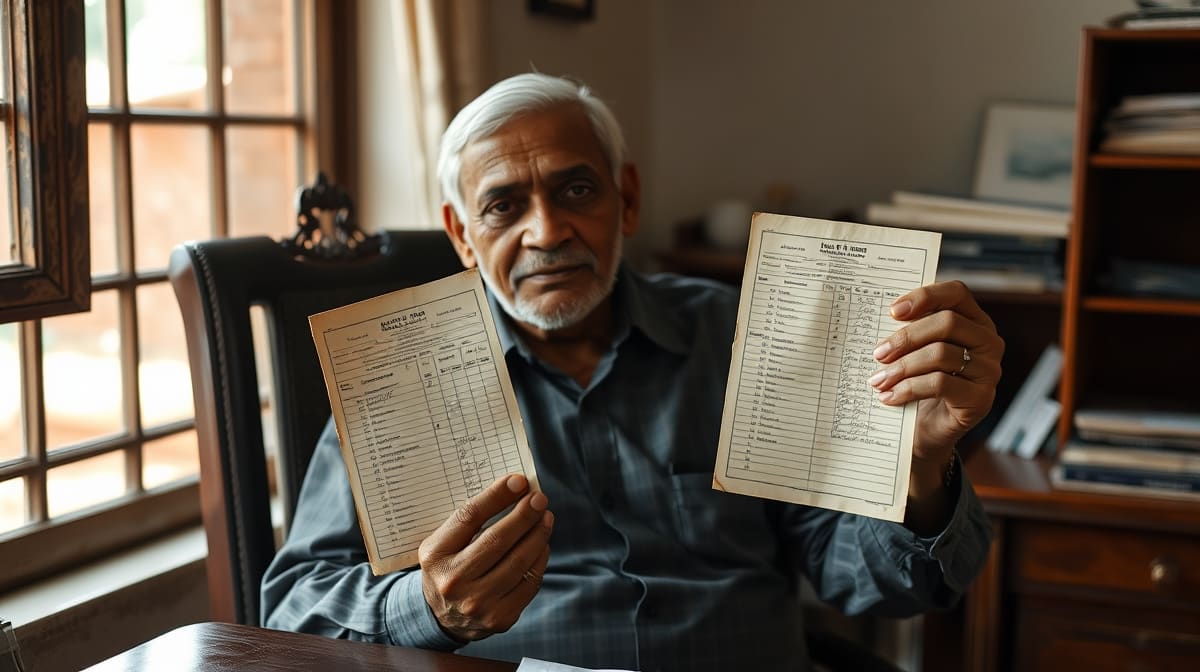
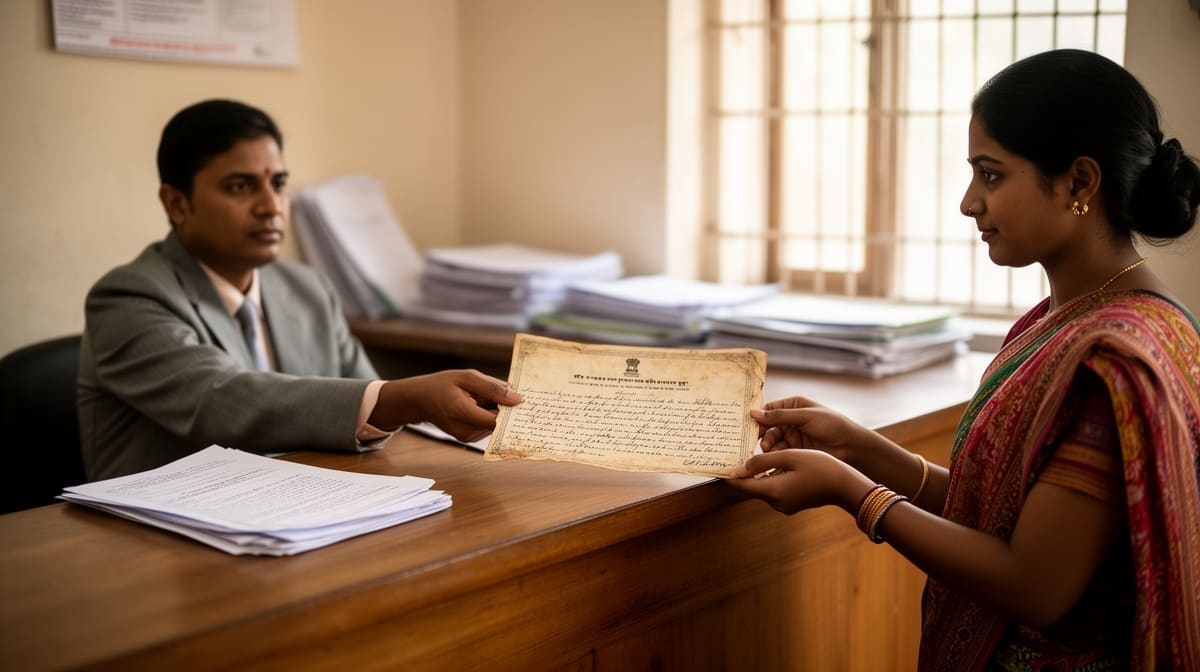
The petitioner, Vedanti S/o Ravindra Dharne, a 17-year-old student, applied for a caste certificate recognizing her as a member of the 'Mana' Scheduled Tribe under the Scheduled Tribes Order, 1950. Her application, submitted on 06.03.2026, was accompanied by Form C certificate issued to her father, a School Leaving Certificate of a relative, and a Birth Register Extract dated 27.11.1923 pertaining to Bhiva Mana, an ancestor. Despite this, the Sub-Divisional Officer, Chandur Railway, issued a communication on 25.03.2026 directing her to submit a Family Tree and a Home Enquiry Report before processing the application.
Key Facts
- The petitioner submitted her application for caste certificate on 06.03.2026
- Accompanying documents included:
- Form C certificate of her father, issued under the Maharashtra Scheduled Castes and Scheduled Tribes (Certification of Caste) Rules, 1977
- School Leaving Certificate of a relative (uncle) identifying him as a member of the Mana tribe
- Birth Register Extract dated 27.11.1923 of Bhiva Mana, an ancestor, recorded in the village register of Bori, Amravati
- The Sub-Divisional Officer, on 25.03.2026, issued a communication (Annexure-6) requiring:
- A Family Tree tracing lineage to the Mana tribe
- A Home Enquiry Report to be prepared after a vigilance investigation
- The petitioner expressed willingness to submit the Family Tree but pointed out that the Home Enquiry Report could only be generated after a vigilance probe, which is statutorily triggered only when the authenticity of the caste claim is under suspicion
- No prior adverse findings or suspicion of fraud had been raised against the petitioner or her family
Procedural History
- 06.03.2026: Application for caste certificate filed before Sub-Divisional Officer, Chandur Railway
- 25.03.2026: Communication issued directing submission of Family Tree and Home Enquiry Report
- 12.04.2026: Writ Petition No. 3152 of 2026 filed before the Bombay High Court, Nagpur Bench
- 17.04.2026: Hearing concluded with consent of parties; judgment delivered orally
Relief Sought
The petitioner sought:
- Quashing of the communication dated 25.03.2026
- Direction to the Sub-Divisional Officer to issue the caste certificate of 'Mana' Scheduled Tribe in Form C without further delay
- No costs claimed
The Legal Issue
The central question was whether the Sub-Divisional Officer could lawfully require a Family Tree and a Home Enquiry Report as preconditions for issuing a caste certificate when Form C and verifiable historical birth records establishing lineage to a recognized Scheduled Tribe are already submitted.
Arguments Presented
For the Petitioner
Learned counsel argued that Form C, issued by the competent authority to the petitioner’s father, is a legally recognized document under the Maharashtra Rules, 1977, and constitutes prima facie proof of caste. The Birth Register Extract dated 1923, maintained by the village administration, is a contemporaneous public record that corroborates ancestral affiliation with the Mana tribe. Requiring a Family Tree and Home Enquiry Report at this stage, without any indication of fraud or discrepancy, amounts to imposing an unreasonable and ultra vires condition. Reliance was placed on State of Maharashtra v. Suresh B. Patil and Rajendra Singh v. State of Maharashtra, which held that additional documentation cannot be mandated where primary evidence is sufficient.
For the Respondent
The Assistant Government Pleader contended that the Home Enquiry Report is a standard procedural requirement under the State’s Caste Certificate Guidelines and that the Family Tree aids in verifying lineage. However, no statutory provision or rule was cited to support the mandatory nature of these documents in the absence of suspicion. The respondent did not dispute the authenticity of Form C or the 1923 Birth Register Extract.
The Court's Analysis
The Court observed that the petitioner had submitted two highly credible and legally recognized documents: Form C, issued by a competent authority to her father, and a Birth Register Extract from 1923 naming an ancestor as Bhiva Mana. These documents are not merely supportive - they are foundational. The Court noted that the Maharashtra Rules governing caste certification do not mandate a Family Tree or Home Enquiry Report as prerequisites when such primary evidence is available.
"The requirement of a Home Enquiry Report is only triggered when there is a reasonable suspicion of misrepresentation or fraud. No such suspicion has been raised in this case. To impose such a condition now is to convert a right into a privilege dependent on administrative discretion."
The Court further held that the Family Tree, while helpful, is not a statutory requirement under any rule governing caste certification in Maharashtra. The submission of such a document may be invited for convenience, but cannot be made mandatory. The Court emphasized that the State’s duty under Article 15(4) and Article 16(4) of the Constitution is to facilitate access to affirmative action, not to erect procedural barriers.
The Court also rejected the argument that vigilance is a prerequisite for issuing caste certificates. Vigilance inquiries are investigative tools reserved for cases where there is credible evidence of falsification - not for routine verification where documentary proof is clear and unchallenged.
The Verdict
The writ petition was allowed. The communication dated 25.03.2026 was quashed and set aside. The Sub-Divisional Officer, Chandur Railway, District Amravati, was directed to issue the caste certificate of 'Mana' Scheduled Tribe in Form C to the petitioner within three weeks. No costs were awarded.
What This Means For Similar Cases
Documentary Evidence Prevails Over Administrative Discretion
- Practitioners must insist that Form C certificates and verifiable ancestral records (birth registers, village records, school certificates) are sufficient to establish caste claims
- Any demand for additional documents like Family Trees or Home Enquiry Reports without prior suspicion of fraud is legally untenable
- Administrative delays based on non-statutory conditions can be challenged under Article 226
Procedural Hurdles Violate Constitutional Rights
-
The right to caste certification is integral to the right to equality and affirmative action under Articles 14, 15, and 16
-
Requiring vigilance probes or home inquiries as routine steps converts a statutory right into a discretionary benefit
-
Courts will intervene where procedural formalities are used to obstruct access to reservation benefits
-
File writ petitions immediately when caste certificate applications are stalled on non-statutory grounds
-
Cite State of Maharashtra v. Suresh B. Patil and Rajendra Singh v. State of Maharashtra to establish that Form C is conclusive prima facie evidence
-
Demand issuance within 15 - 30 days as per judicial precedent; seek costs if delay is unjustified