The Rajasthan High Court has reaffirmed that administrative decisions affecting civil rights - particularly in the allocation of scarce agricultural water resources - cannot be made without affording affected parties a meaningful opportunity to be heard. This ruling reinforces the foundational principle that procedural fairness is non-negotiable, even in technical or bureaucratic contexts.
Background & Facts
The Dispute
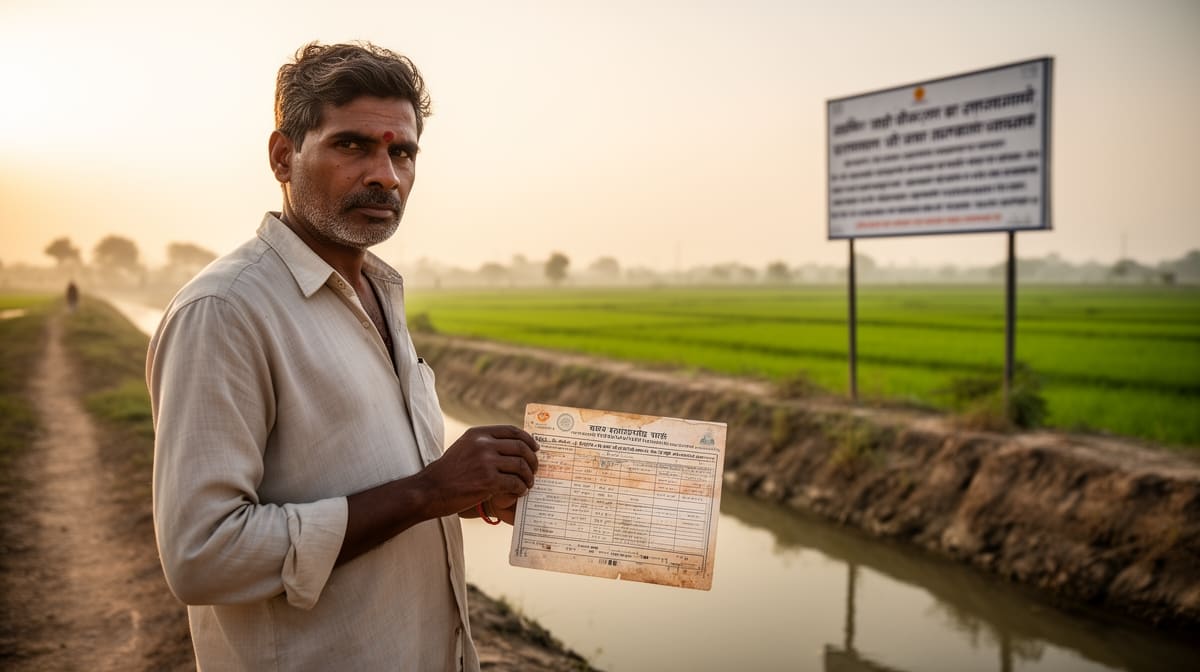
The petitioners, two farmers from Sri Ganganagar district, challenged the issuance of revised water slips and an amended barabandi (water distribution schedule) that drastically reduced their allocated irrigation water. The orders were issued by the President of the Water Users Association, a body entrusted with implementing state water distribution policies. The petitioners claimed they were not notified of any meeting, hearing, or consultation prior to the revision, despite their land being directly impacted.
Procedural History
- October 2023: Original water slip (Annexure-P/5) issued, allocating water based on historical usage and landholding.
- October 2025: Revised water slips and amended barabandi (Annexure-P/8) issued without notice or hearing to petitioners.
- December 2025: Petitioners filed a civil writ petition before the Rajasthan High Court seeking quashing of the revised orders and restoration of the 2023 slip.
Relief Sought
The petitioners sought quashing of the impugned water slips and amended barabandi dated 15.10.2025, and restoration of the 2023 water allocation. They also sought a stay on enforcement of the revised orders pending adjudication.
The Legal Issue
The central question was whether administrative authorities may alter water allocation orders affecting farmers’ civil rights without providing prior notice and an opportunity to be heard, and whether such omission violates the principle of natural justice.
Arguments Presented
For the Petitioner
The petitioners’ counsel argued that the revised water slips constituted a quasi-judicial action impacting property rights and livelihood. Reliance was placed on Maneka Gandhi v. Union of India, which established that natural justice applies to any decision affecting rights, even if not strictly judicial. The absence of notice or hearing rendered the orders void ab initio.
For the Respondent
The State contended that water allocation was an administrative function governed by internal rules and that hearings were not mandatory under the Rajasthan Water Resources Act. It argued that the Water Users Association operated on consensus and that the petitioners had not been prejudiced as the revised allocation was based on technical assessments.
The Court's Analysis
The Court rejected the State’s contention that water allocation was purely administrative. It held that when such decisions directly affect the right to cultivate land and secure livelihood, they transcend mere policy implementation and enter the domain of civil rights protected under Article 21 of the Constitution. The Court emphasized that natural justice is not a technicality but a constitutional imperative.
"The right to a fair hearing is not contingent upon the nature of the authority but on the impact of the decision on individual rights. To deny hearing in matters affecting agricultural water supply is to deny the very foundation of equitable governance."
The Court distinguished prior cases where procedural lapses were deemed curable, noting that here, the petitioners were entirely excluded from the process. The absence of any record of notice, meeting minutes, or opportunity to present data on landholding or crop patterns rendered the orders procedurally defective. The Court further held that even if the revised allocation was technically sound, legality cannot be substituted for legitimacy.
The Verdict
The petitioners succeeded. The Court quashed the impugned water slips and amended barabandi dated 15.10.2025, holding that they violated natural justice. The Court clarified that the State may issue fresh orders, but only after providing a fair opportunity of hearing to all affected parties.
What This Means For Similar Cases
Procedural Compliance Is Non-Negotiable
- Practitioners must now insist on proof of notice and hearing in all water allocation disputes, even where statutes are silent.
- Any administrative order affecting irrigation rights must be challenged on grounds of violation of natural justice if no hearing was afforded.
- Water Users Associations and similar bodies are now subject to judicial review under Article 226 for procedural lapses.
Documentary Evidence of Notice Is Essential
- Oral assurances or generic notifications posted at panchayat offices are insufficient.
- Petitioners should demand production of: (i) meeting notices, (ii) attendance records, (iii) minutes of deliberations, and (iv) correspondence with affected farmers.
- Absence of such documents renders the order vulnerable to quashing.
Restoration Is Not Automatic, But Right to Hearing Is
- Courts will not restore old allocations; they will mandate fresh proceedings.
- Practitioners should file applications for interim relief to prevent enforcement of illegal orders while fresh hearings are conducted.
- The burden shifts to the authority to prove compliance with natural justice, not to the farmer to prove its absence.