The Karnataka High Court has reaffirmed that procedural fairness under Article 14 of the Constitution mandates a prior hearing before any coercive action is taken against property owners, even when the action concerns alleged encroachments on public drainage channels. This judgment clarifies that internal administrative communications cannot substitute for statutory or constitutional due process.
Background & Facts
The Dispute
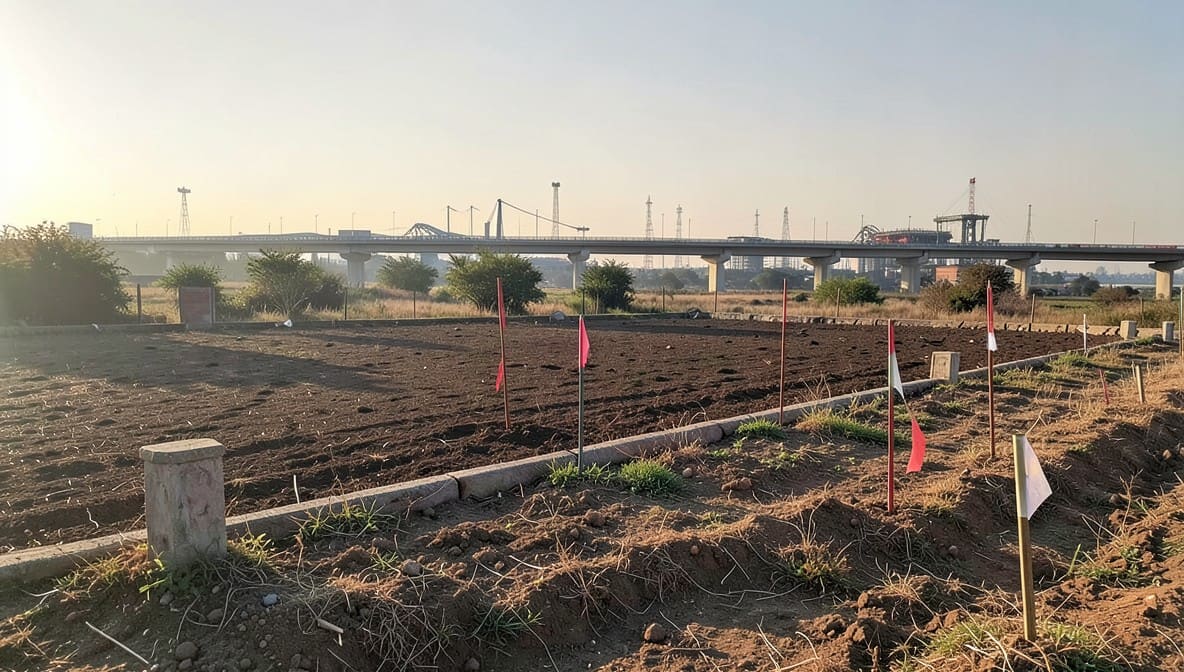
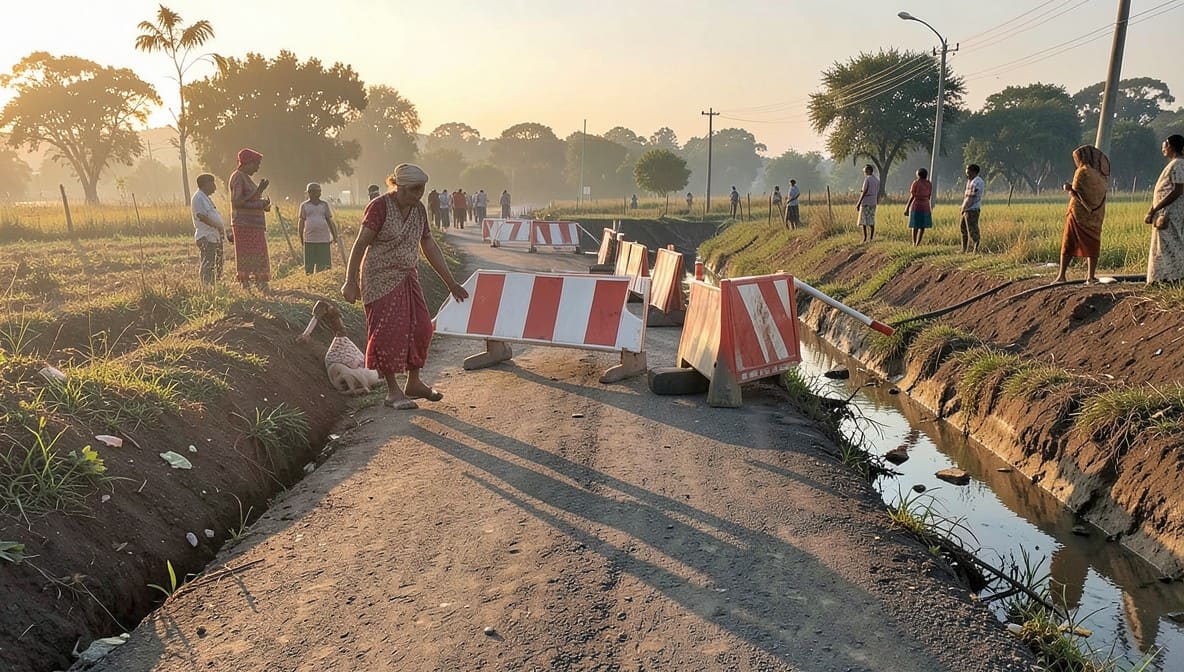
The petitioner, M/s Strides Pharma Science Limited, owns a property in Bengaluru Urban District adjacent to an alleged Rajakaluve (traditional water channel). Respondents, including the State of Karnataka and revenue authorities, issued internal communications proposing the removal of an access road constructed over the Rajakaluve. The petitioner contended that the road is essential for access to its premises and that no formal inquiry or notice had been issued before initiating demolition plans.
Key Facts
- The access road was constructed prior to 2024 and has been in continuous use by the petitioner and local residents.
- On 31.01.2024, Respondent No.3 (Tahsildar, Anekal) issued a communication (Annexure-B) indicating intent to remove the road.
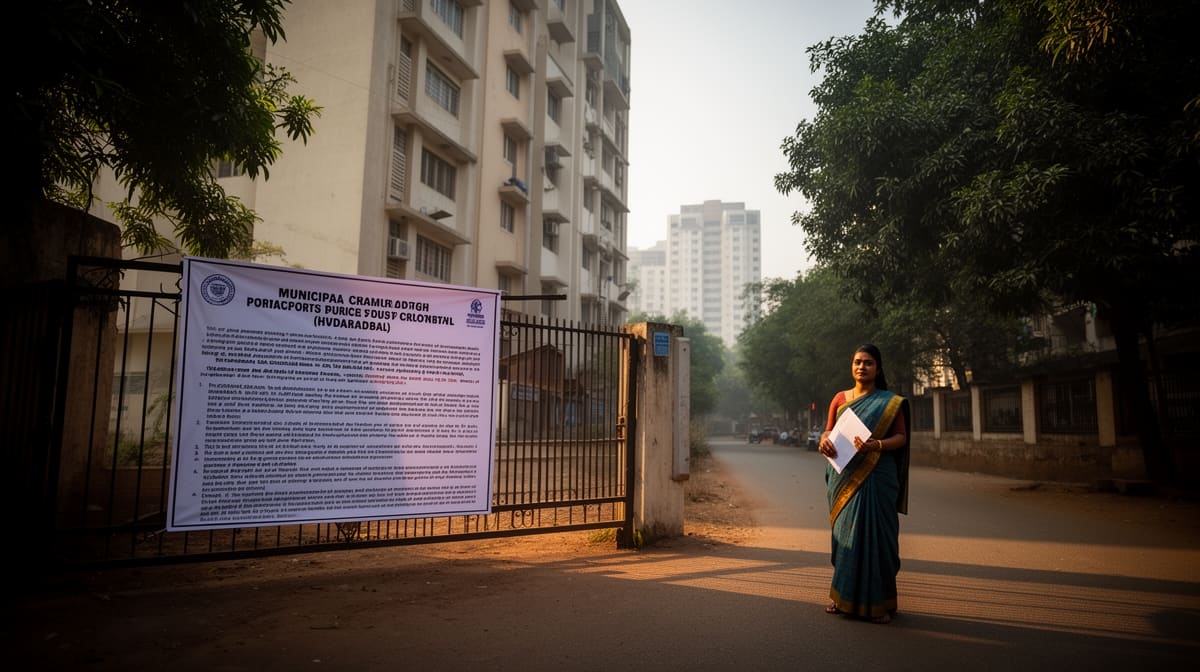
- On 20.01.2026, Respondent No.2 (Deputy Commissioner, Bengaluru Urban) issued a letter (Annexure-A) directing demolition without prior notice or hearing.
- The petitioner filed this writ petition on 15.02.2026, challenging the legality of these communications.
- The petitioner has not been granted any opportunity to present objections, submit documents, or appear before any authority.
- The disputed road lies over a portion of the Rajakaluve, which is claimed to be a public drainage channel under the Karnataka Land Revenue Act, 1964.
Procedural History
- 31.01.2024: Communication issued by Tahsildar, Anekal (Annexure-B) indicating intent to remove road.
- 20.01.2026: Letter issued by Deputy Commissioner, Bengaluru Urban (Annexure-A) directing demolition without hearing.
- 15.02.2026: Writ Petition No. 9400 of 2026 filed before the Karnataka High Court.
- 02.06.2026: Hearing before Justice E.S. Indiresh.
The Parties' Positions
Petitioner: Argued that the communications are not mere administrative notes but de facto orders with coercive intent. Relied on Article 14 and Article 21 of the Constitution, and Section 68 of the Karnataka Land Revenue Act, 1964, which mandates inquiry before altering public drainage channels. Asserted that the absence of notice violates natural justice.
Respondents: Contended that the communications were preliminary and not final orders. Argued that the road was illegally constructed over a public Rajakaluve and that no formal order had been passed yet. Claimed that the matter was under internal review.
Relief Sought
The petitioner sought:
- Quashing of Annexures A and B.
- A writ of prohibition restraining respondents from demolishing the access road without due process.
- A direction to conduct a fair inquiry under Section 68 of the Karnataka Land Revenue Act, 1964.
The Legal Issue
The central question was whether Section 68 of the Karnataka Land Revenue Act, 1964, and the principles of natural justice, require a prior hearing before any coercive action is taken to remove a structure alleged to be encroaching upon a Rajakaluve.
Arguments Presented
For the Petitioner
The petitioner relied on Maneka Gandhi v. Union of India to assert that any action affecting property rights must comply with the rule of law and natural justice. It argued that Annexure-A, though labeled a letter, functioned as a de facto order directing demolition. The petitioner further cited State of U.P. v. Mohd. Noor to emphasize that even preliminary communications can become actionable if they indicate final intent. Section 68 of the Karnataka Land Revenue Act, 1964, was invoked to show that inquiry is mandatory before altering drainage channels.
For the Respondent
The respondents contended that the communications were internal and non-final, and that no actual demolition had been carried out. They argued that the petitioner had not exhausted alternative remedies and that the matter was still under consideration. They relied on K.S. Puttaswamy v. Union of India to suggest that administrative discretion must be respected unless mala fide.
The Court's Analysis
The Court examined the nature of Annexures A and B and found that despite their labeling as "communications," they contained clear directives to remove the road, thereby constituting actionable steps. The Court noted that the Division Bench of this Court, in W.A. No. 949 of 2026, had already held that Section 68 of the Karnataka Land Revenue Act, 1964, requires an inquiry before any removal of a road over a Rajakaluve. The Court observed:
"Even if Section 68 is not applicable, a hearing must be given to the appellants/petitioners and other affected parties, after which a decision has to be taken."
The Court emphasized that the right to be heard is not contingent on the formality of the order but on its practical effect. The petitioner, as a property owner directly affected, had a legitimate expectation of procedural fairness. The respondents’ reliance on internal review was rejected as insufficient to override constitutional and statutory obligations. The Court held that the absence of notice and hearing rendered the proposed action legally unsustainable.
The Verdict
The writ petition was disposed of with directions. Respondent No.2 shall afford a reasonable opportunity of hearing to the petitioner and all other stakeholders before taking any coercive action regarding the access road. No demolition or removal shall occur until such a hearing is conducted and a reasoned order is passed. The Deputy Commissioner shall complete the inquiry and issue a decision within six weeks from the date of this order.
What This Means For Similar Cases
Due Process Trumps Administrative Convenience
- Practitioners must challenge any administrative communication that effectively directs demolition or seizure without notice, even if labeled as "internal" or "preliminary."
- Courts will look beyond form to substance: if a communication causes irreversible harm or signals final intent, it is subject to judicial review.
Section 68 of the Karnataka Land Revenue Act Is a Procedural Safeguard
- Any action affecting Rajakaluves, whether by government or private parties, triggers mandatory inquiry under Section 68.
- The duty to hear affected parties is non-negotiable, even if the land is claimed as public drainage.
No Coercive Action Without Hearing
- Authorities cannot proceed with demolition, sealing, or removal based solely on suspicion or internal notes.
- The burden is on the state to prove compliance with natural justice before taking action.
- Legal notices under Section 68 must be issued in writing, specifying grounds, and allow sufficient time for response.