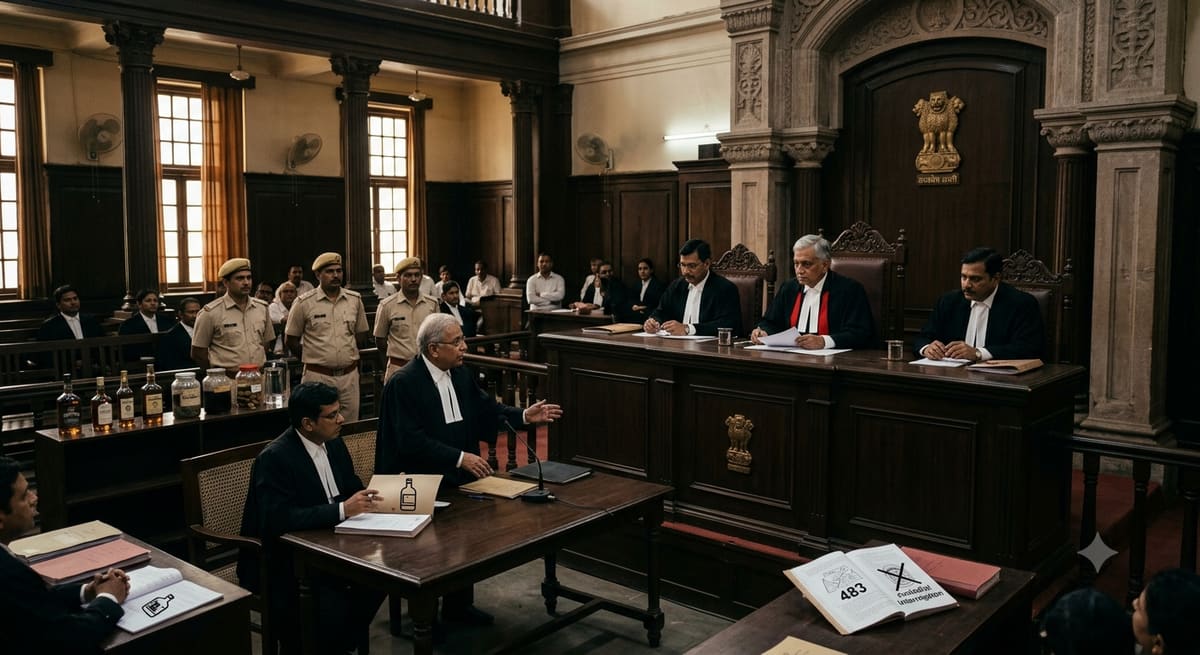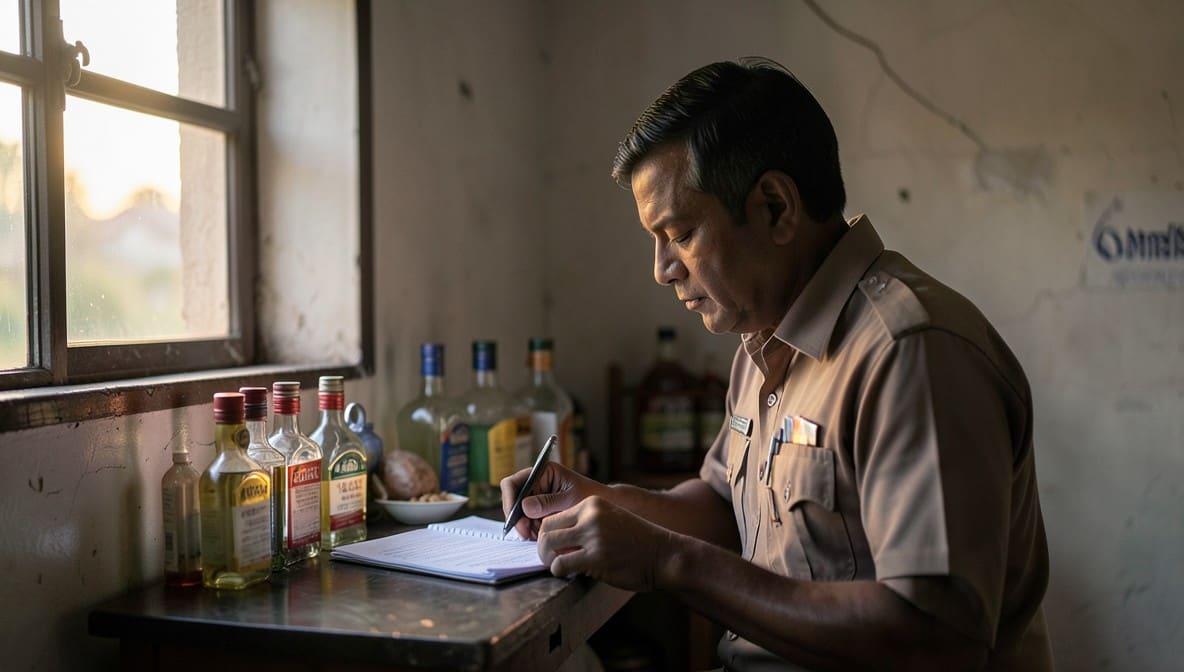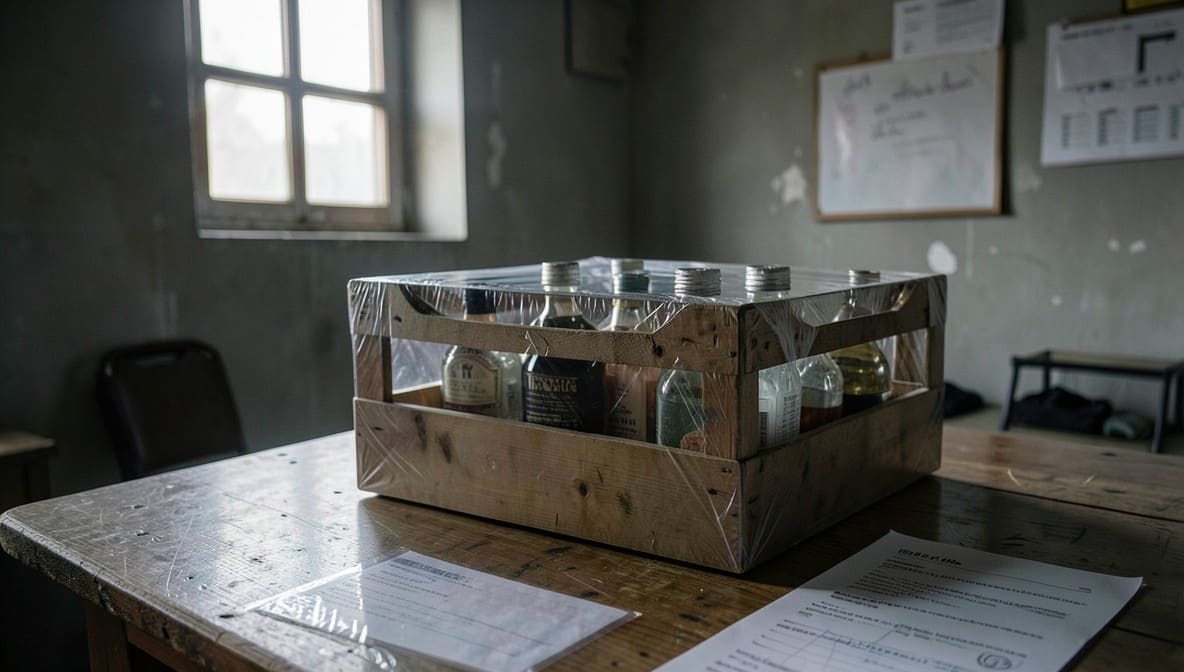
The Madhya Pradesh High Court has clarified that in cases under the M.P. Excise Act, the absence of a forensic laboratory report on the chemical nature of recovered alcohol renders the prosecution’s case legally insufficient to justify continued judicial custody. This order reinforces the principle that police officers cannot be presumed to possess expert knowledge of chemical analysis, and bail must be granted where trial delays are likely and no credible scientific evidence supports the charge.
Background & Facts
The Dispute
The applicant, Parmanand Kori, was arrested and lodged in jail on 17.06.2026 following the registration of FIR/Crime No. 657/2026 at Police Station Motinagar, District Sagar. The case was initiated on allegations that 15 liters of illicit alcohol were recovered from his possession, attracting charges under Sections 34 and 49A of the Madhya Pradesh Excise Act, 1915. The prosecution claimed the recovered substance was unfit for human consumption, thereby constituting an offence under Section 49A.
Key Facts
- The recovered substance: 15 liters of illicit alcohol
- Date of arrest: 17.06.2026
- No FSL or laboratory report was attached to the case diary
- No chemical analysis was conducted to determine whether the alcohol was poisonous or unfit for human consumption
- The police officer who conducted the recovery did not provide any expert testimony or certification regarding the chemical properties of the substance
- The prosecution relied solely on the officer’s assertion that the alcohol was "unfit for human consumption"
Procedural History
- 17.06.2026: Arrest of applicant following recovery of 15 liters of illicit alcohol
- Before 01.07.2026: Chargesheet filed or under preparation; no trial commenced
- 01.07.2026: Application filed under Section 483 of Bharatiya Nagarik Suraksha Sanhita, 2023, seeking regular bail
- 01.07.2026: Hearing before Justice Devnarayan Mishra, High Court of Madhya Pradesh at Jabalpur
The Parties' Positions
For the Applicant
The applicant’s counsel, Shri Jafar Khan, argued that:
- The prosecution failed to establish the essential ingredient of Section 49A - that the alcohol was unfit for human consumption
- No FSL report or scientific evidence was produced to substantiate this claim
- Police officers are not qualified to determine chemical composition or toxicity of alcohol
- The case is entirely based on unsubstantiated assertion, making continued detention unjustified
- Trial is likely to be protracted, and the applicant has no prior criminal record
For the Respondent/State
The State, represented by Ms. Garima Tiwari, opposed the bail application on the grounds that:
- The recovery of illicit alcohol itself constitutes a serious offence
- The nature of the substance was apparent from the circumstances of recovery
- No formal rebuttal was offered to the prosecution’s claim
- Granting bail would undermine enforcement of excise laws
Relief Sought
The applicant sought immediate release on regular bail, with conditions, pending trial, on the grounds that the prosecution had failed to establish a prima facie case under Section 49A due to absence of scientific evidence.
The Legal Issue
Can an accused be denied bail under the M.P. Excise Act when the prosecution fails to produce an FSL report establishing that recovered alcohol is unfit for human consumption, and the police officer’s assertion alone is relied upon to invoke Section 49A?
Arguments Presented
For the Applicant
The applicant’s counsel relied on the principle that Section 49A of the M.P. Excise Act requires proof that the illicit liquor is not merely unlicensed but also unfit for human consumption - a fact requiring scientific verification. The absence of an FSL report, the counsel argued, renders the charge speculative. Citing State of Madhya Pradesh v. Rameshwar and K. S. Puttaswamy v. Union of India, the counsel emphasized that procedural fairness and presumption of innocence demand corroboration of material allegations with objective evidence. The court, the counsel submitted, cannot accept the ipse dixit of a police officer as conclusive proof of chemical toxicity.
For the Respondent/State
The State contended that the recovery of illicit liquor in substantial quantity, coupled with the officer’s observation that the liquor was of poor quality and unfit for consumption, was sufficient to establish a prima facie case. It argued that excise laws are regulatory in nature and require strict enforcement, and that requiring FSL reports in every case would create an unreasonable burden on law enforcement. The State did not cite any precedent to support its position.
The Court's Analysis
The Court examined the statutory requirements under Section 49A of the M.P. Excise Act, which criminalizes the possession of liquor "unfit for human consumption." The Court noted that the term "unfit for human consumption" is not self-evident and requires objective determination. The Court observed:
"The police officer cannot be assumed to be an expert of chemical examination. Without any FSL or Lab report, it cannot be inferred that the recovered alcohol was unfit for human consumption or poisonous."
The Court held that the prosecution’s case rested entirely on an unverified assertion, lacking any scientific or technical substantiation. The absence of an FSL report, the Court emphasized, is not a mere procedural lapse but a substantive failure to establish a key ingredient of the offence. The Court further noted that the applicant had been in custody since 17.06.2026, and given the lack of credible evidence, continued detention would violate the principle of proportionality under Article 21 of the Constitution. The Court declined to prejudge the merits of the case but found that the threshold for granting bail under Section 483 of BNSS was met due to the weakness of the prosecution’s case and the likelihood of prolonged trial.
The Verdict
The applicant succeeded. The Court granted regular bail on the condition that the applicant furnish a personal bond of Rs. 50,000 with one solvent surety of the like amount, to be approved by the trial court. The applicant is directed to comply with Section 480(3) of BNSS. The Court directed the applicant’s release upon fulfillment of these conditions. No comment was made on the merits of the case.
What This Means For Similar Cases
FSL Reports Are Mandatory for Section 49A Cases
- Practitioners must insist on production of FSL reports in all cases invoking Section 49A of the M.P. Excise Act
- Absence of such reports renders the charge legally unsustainable at the bail stage
- Courts should not accept police assertions as substitutes for scientific evidence
Bail Should Be the Norm Where Evidence Is Speculative
- In excise and similar regulatory offences, bail must be granted where the prosecution fails to establish a prima facie case with credible evidence
- Prolonged custody without scientific substantiation violates Article 21
- Courts must apply the triple test for bail (nature of accusation, likelihood of flight, risk of tampering) with heightened scrutiny when evidence is circumstantial
Procedural Deficiencies Cannot Be Ignored
- Failure to follow mandatory evidentiary procedures cannot be cured by judicial assumption
- The burden of proof remains on the prosecution; it cannot be shifted to the accused to disprove allegations
- Defence counsel should routinely file applications under Section 483 BNSS where FSL reports are missing in alcohol-related cases