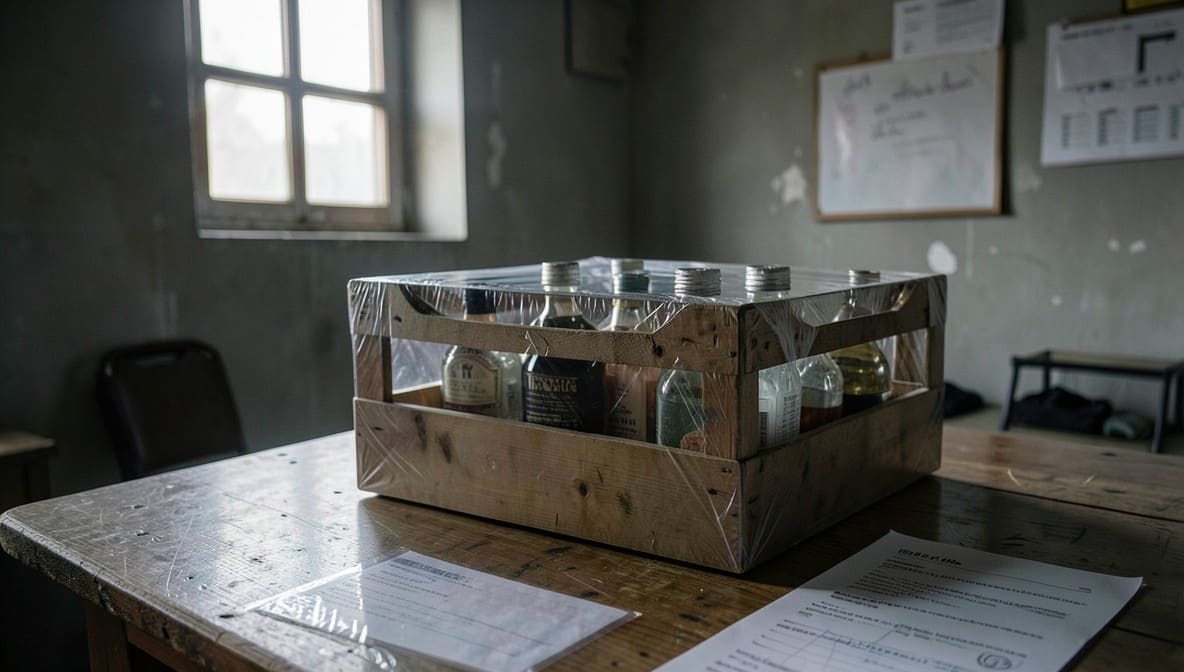
The Patna High Court has reinforced the necessity of strict adherence to procedural safeguards under the Bharatiya Nagarik Suraksha Sanhita, 2023, in excise-related seizures. Granting bail to a petitioner with no prior criminal record, the Court underscored that failure to comply with statutory requirements for seizure and witness verification undermines the legitimacy of prosecution and warrants judicial intervention.
Background & Facts
The Dispute
The petitioner, Gurjant Singh, was arrested on 23.01.2026 in connection with Excise Sadar P.S. Case No. 131 of 2026, registered on 22.01.2026 under Sections 30(a) and 47 of the Bihar Prohibition & Excise Act, 2016. The case stems from the recovery of 2,592.00 litres of Indian Made Foreign Liquor (IMFL) from a vehicle, along with two mobile phones. The petitioner is not the owner of the vehicle and claims to have been falsely implicated.
Key Facts
- The F.I.R. was registered on 22.01.2026 at Excise Sadar P.S., Bhagalpur
- Recovery of 2,592.00 litres of IMFL and two mobile phones occurred on or before 22.01.2026
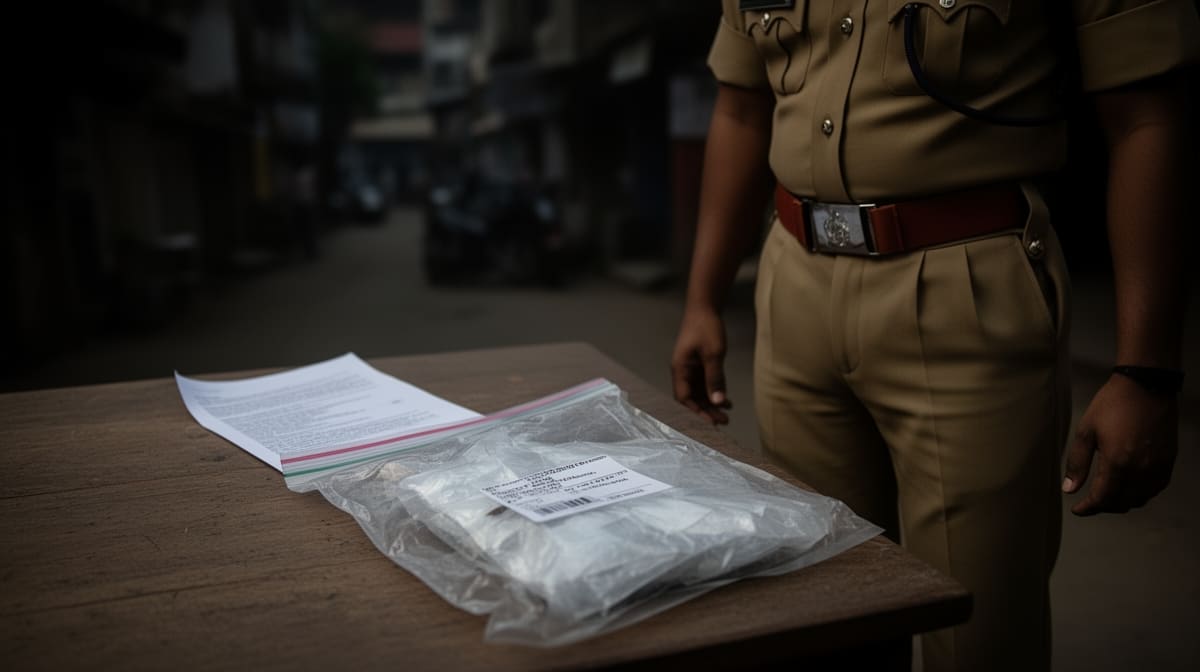
- The seizure list names police personnel as witnesses, raising concerns about impartiality
- The petitioner has no prior criminal record
- The petitioner was taken into custody on 23.01.2026 and remained in custody at the time of the bail application
- The chargesheet was filed by the investigating agency, leading to continued detention
Procedural History
- 22.01.2026: F.I.R. registered under Sections 30(a) and 47 of the Bihar Prohibition & Excise Act, 2016
- 23.01.2026: Petitioner arrested and placed in judicial custody
- 04.05.2026: Bail application filed before the Patna High Court
- 04.05.2026: Oral hearing conducted by Justice Rajesh Kumar Verma
Relief Sought
The petitioner sought immediate release on bail, arguing procedural irregularities in the seizure process under BNSS, 2023, and the absence of independent witnesses.
The Legal Issue
The central question was whether non-compliance with Sections 103 and 105 of the Bharatiya Nagarik Suraksha Sanhita, 2023, in the recovery and seizure of contraband renders the investigation defective to the extent that bail must be granted despite the seriousness of the offence.
Arguments Presented
For the Petitioner
Learned counsel argued that the seizure list exclusively named police personnel as witnesses, violating Section 103 which mandates the presence of independent, respectable witnesses during search and seizure. Further, Section 105 requires that the seizure list be signed by both the investigating officer and the witnesses, a requirement allegedly unfulfilled. The petitioner’s clean antecedents and non-ownership of the vehicle were emphasized to show lack of intent or involvement. The counsel contended that the procedural lapses cast doubt on the integrity of the evidence and that continued custody was unjustified.
For the Respondent
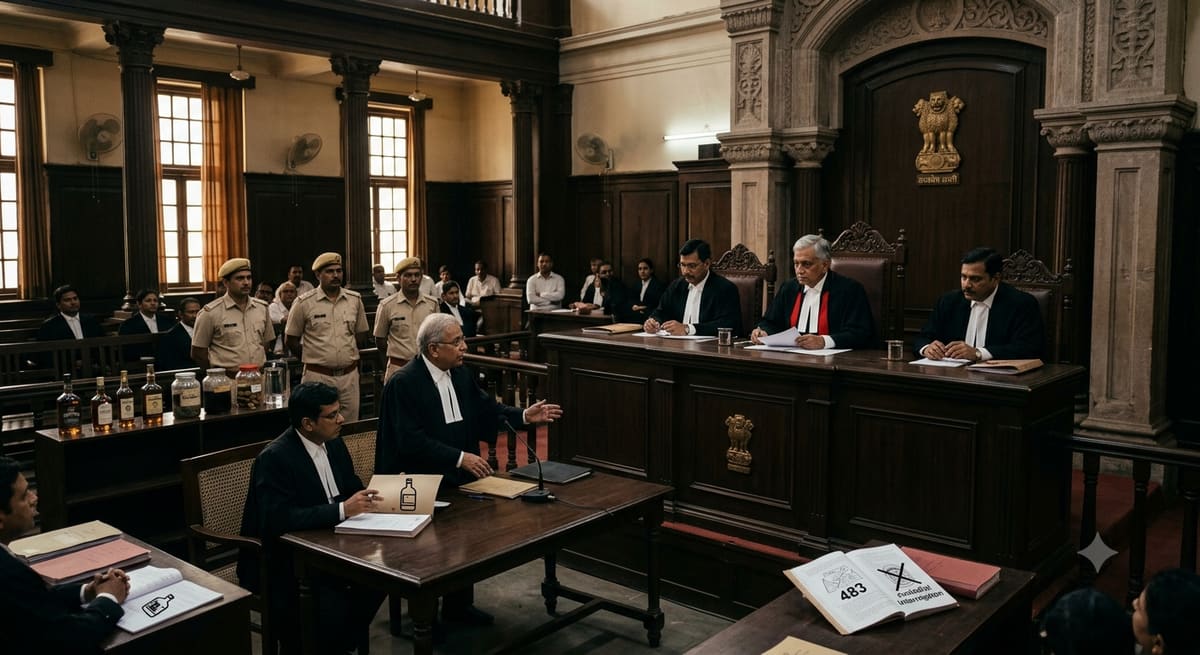
The Additional Public Prosecutor opposed bail, asserting that the quantity of liquor recovered (over 2,500 litres) constituted a serious offence under the Bihar Prohibition & Excise Act, 2016, and that the investigation was otherwise lawful. The State argued that procedural irregularities, if any, were technical and did not invalidate the substantive case against the petitioner.
The Court's Analysis
The Court examined the procedural framework under Sections 103 and 105 of the BNSS, 2023, which were introduced to ensure transparency and prevent fabrication of evidence. The Court noted that Section 103 requires that searches be conducted in the presence of independent witnesses, and Section 105 mandates that the seizure list be attested by such witnesses. The fact that all witnesses listed were police personnel directly involved in the investigation rendered the seizure process legally suspect.
"The presence of police officers as witnesses to their own seizure violates the spirit of Sections 103 and 105 of the BNSS, 2023, which are designed to ensure impartial corroboration of recovered items."
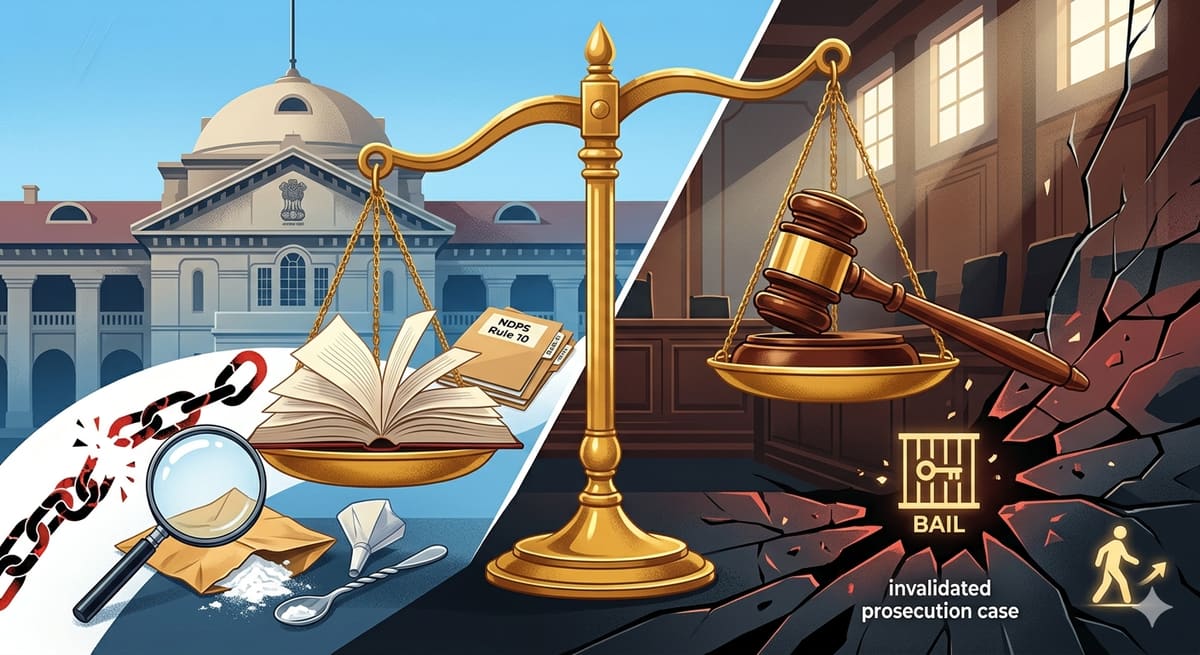
The Court held that while the quantity of liquor recovered was substantial, procedural compliance is not a mere formality but a constitutional safeguard under Article 21. The absence of independent witnesses created a reasonable doubt regarding the authenticity of the seizure, which the Court could not ignore in the context of bail jurisprudence. The petitioner’s clean antecedents and the absence of any allegation of prior involvement in similar offences further supported the grant of bail.
The Verdict
The petitioner was granted bail on furnishing a bail bond of Rs. 10,000 with two sureties of Rs. 10,000 each, to be approved by the Exclusive Special Excise Judge-I, Bhagalpur. The bail is subject to four conditions: (1) one surety must be a family member; (2) the petitioner must appear on all court dates and face cancellation of bail for two consecutive absences without cause; (3) any tampering with evidence or witnesses will trigger immediate cancellation; and (4) the court below shall verify the petitioner’s antecedents, with bail cancellation if concealment is found. The Court directed that verification shall not delay the release.
What This Means For Similar Cases
Procedural Compliance Is Non-Negotiable
- Practitioners must now challenge the admissibility of evidence in excise and NDPS cases where seizure witnesses are police personnel
- Any seizure list lacking independent, non-official witnesses is vulnerable to being set aside under BNSS Sections 103 and 105
- Bail applications should routinely cite these provisions when procedural defects are present, even in serious offences
Clean Antecedents Amplify Procedural Defects
- A petitioner’s clean record, when coupled with procedural irregularities, strengthens the case for bail under Section 439 CrPC (now BNSS)
- Courts are increasingly willing to prioritize procedural integrity over the gravity of the offence where safeguards are breached
- This judgment provides a template for arguing bail in cases involving contraband seizures with flawed documentation
Bail Is Not a Merit-Based Decision Alone
- The Court’s reasoning confirms that bail is not solely determined by the nature of the offence or the quantity of contraband
- When statutory procedures are violated, the burden shifts to the prosecution to justify continued custody
- This reinforces the principle that bail is the rule, jail is the exception, even in statutory offences