The Tripura High Court has affirmed that unrepealed government notifications creating reservation quotas in public recruitment remain legally binding unless formally withdrawn. This ruling reinforces the principle that administrative promises made through official notifications cannot be disregarded arbitrarily, even in the absence of explicit mention in subsequent recruitment advertisements.
Background & Facts
The Dispute
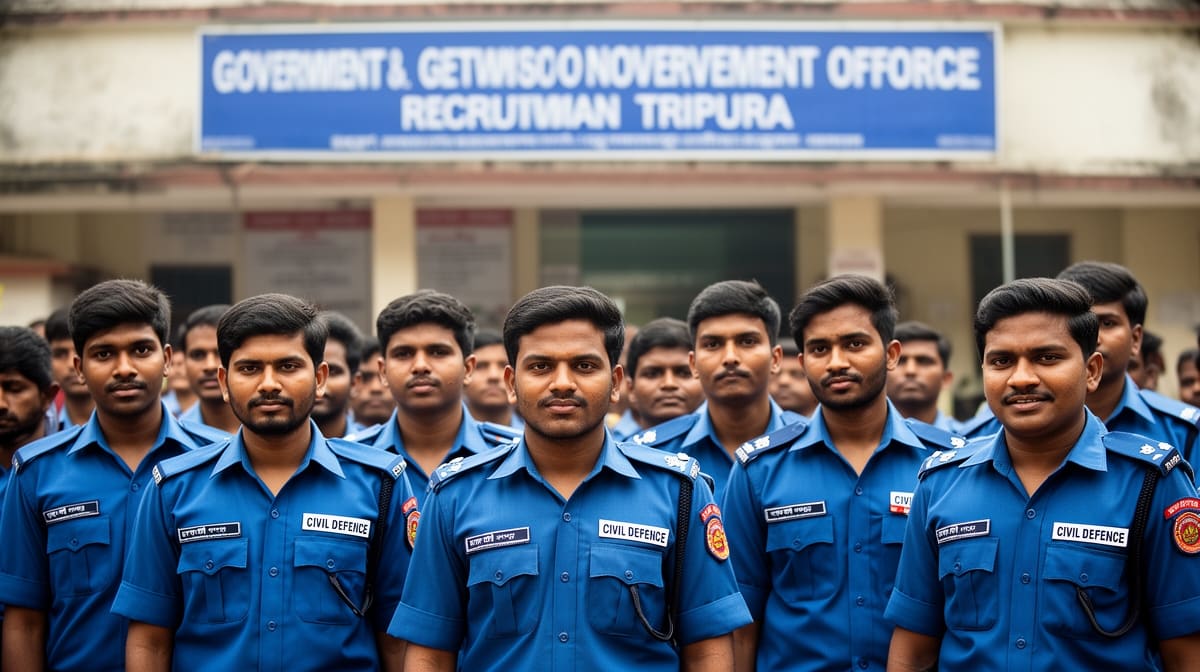
The respondents, seven individuals who served as Civil Defence Volunteers in Tripura, were excluded from the 2% reservation quota intended for such personnel in the 2022 recruitment for Constables in the Tripura Police. Despite a clear 2013 government notification granting this reservation, the State failed to implement it during the 2022 recruitment process, prompting the respondents to file a writ petition.
Procedural History
- 26 October 2013: Government of Tripura issued Notification No. 12/2013/HOME, granting 2% reservation in police constable recruitment for Civil Defence Personnel.
- 20 December 2022: Recruitment notification issued for 1000 Constable posts, stating that candidates would be considered "in accordance with orders and notifications issued by Government of Tripura from time to time."
- 2025: Respondents filed Writ Petition (C) No. 197 of 2025, seeking enforcement of the 2% quota.
- 27 August 2025: Single Judge allowed the petition, directing the State to implement the 2013 reservation.
- 10 March 2026: Writ Appeal filed by the State challenging the Single Judge’s order.
Relief Sought
The respondents sought a direction to the State to reserve 2% of the 1000 Constable posts for Civil Defence Personnel as per the 2013 notification and to issue appointment offers to them, subject to their qualifying all recruitment tests.
The Legal Issue
The central question was whether an unrepealed government notification granting reservation to Civil Defence Personnel remains enforceable when a subsequent recruitment advertisement refers generally to "existing notifications" without reiterating the specific percentage.
Arguments Presented
For the Appellant
The State contended that the 2022 recruitment notification did not explicitly mention the 2% reservation, rendering the 2013 notification inapplicable. It argued that administrative discretion permits non-implementation of old notifications unless expressly revived, and that the phrase "in accordance with orders and notifications" was too vague to create a binding obligation.
For the Respondent
The respondents argued that the 2013 notification was never repealed, withdrawn, or superseded. They relied on the principle that once a reservation policy is notified under statutory authority, it becomes a legitimate expectation and a binding administrative commitment. The reference in the 2022 notification to "existing notifications" was sufficient to incorporate the 2013 policy by implication.
The Court's Analysis
The Court examined the nature of administrative notifications and their legal effect under the doctrine of legitimate expectation and principles of administrative law. It held that a government notification, once issued and not revoked, retains its force until formally rescinded. The Court emphasized that the 2022 recruitment advertisement’s explicit reference to "orders and notifications issued by Government of Tripura from time to time" was not a mere procedural formality but a clear incorporation of existing policies.
"The appellants are bound by the notification dated 26.10.2013 and give the 2% reservation to Civil Defence Personnel like respondents."
The Court rejected the State’s argument that vagueness negated obligation, noting that the 2013 notification was specific, unambiguous, and publicly accessible. It further held that the State cannot evade its duty by omitting explicit repetition of a pre-existing, valid reservation policy. The principle of promissory estoppel and the duty of fairness under Article 14 of the Constitution were invoked to uphold the respondents’ legitimate expectation.
The Court also distinguished this from cases where reservations are created by statute, noting that even non-statutory administrative notifications, if unrevoked, create enforceable rights when relied upon by candidates.
The Verdict
The writ appeal was dismissed. The Court held that the 2013 notification granting 2% reservation to Civil Defence Personnel remains valid and enforceable. The State must implement the quota in the 2022 recruitment process and issue appointment offers to the respondents, provided they have cleared all selection criteria.
What This Means For Similar Cases
Administrative Promises Cannot Be Ignored
- Practitioners must now argue that any unrevoked government notification creates a binding obligation, even if not reiterated in subsequent advertisements.
- Recruitment authorities cannot rely on silence or omission to avoid implementing pre-existing quotas.
- Legitimate expectation under Article 14 protects candidates who rely on published policies.
Reference to "Existing Notifications" Is Sufficient
- The phrase "in accordance with existing notifications" in recruitment ads is legally operative and incorporates all unrevoked policies.
- No need for redundant repetition of quota percentages or eligibility criteria if the original notification remains active.
- This applies to all categories: SC/ST/OBC, ex-servicemen, Civil Defence, and other special reservations.
Procedural Revocation Is Mandatory
- To withdraw a reservation policy, the State must issue a formal, explicit order of repeal or amendment.
- Merely failing to mention a policy in a new advertisement does not extinguish it.
- Practitioners should verify the status of all relevant notifications before challenging or defending recruitment processes.