The Andhra Pradesh High Court has reaffirmed that motor insurance companies cannot evade liability merely because the deceased was an unauthorized passenger. This ruling reinforces the protective intent of the Motor Vehicles Act, ensuring that victims’ families receive timely compensation regardless of technical violations by the vehicle owner.
Background & Facts
The Dispute
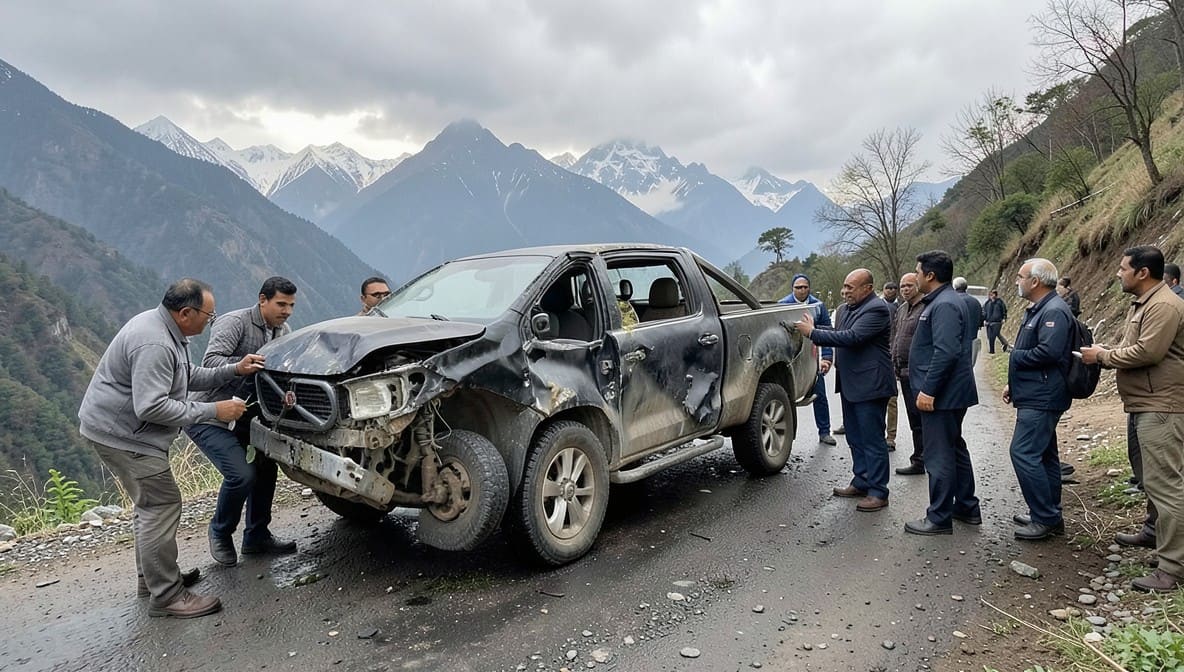
The dispute arose from a fatal motor accident on 24 May 2016, when Sunkara Modayya, a farmer, boarded the mudguard of a tractor owned by the 5th respondent and driven by the 4th respondent. While en route to his agricultural land, the driver lost control after hitting a stone, causing the tractor to overturn and kill Modayya instantly. The deceased was not a named or authorized passenger under the vehicle’s insurance policy.
Procedural History
The Motor Accident Claims Tribunal (MACT) in Visakhapatnam heard the claim petition filed under Section 166 of the Motor Vehicles Act, 1988:
- 2016: Claim petition filed by widow and two minor children seeking Rs. 12 lakh compensation
- 2019: MACT awarded Rs. 10.8 lakh, including Rs. 40,000 for loss of consortium
- 2019: Insurance company appealed to the High Court, challenging liability on grounds of unauthorized passenger status
- 2026: High Court heard appeal and delivered judgment
Relief Sought
The appellant-insurance company sought to set aside the MACT award, arguing it was not liable due to breach of policy terms. The respondents sought enhancement of the loss of consortium award to reflect all three dependents.
The Legal Issue
The central question was whether an insurance company can deny compensation under Section 147 of the Motor Vehicles Act, 1988 on the ground that the deceased was an unauthorized passenger, despite the vehicle being duly insured.
Arguments Presented
For the Appellant
The appellant contended that the deceased’s presence on the mudguard violated the terms of the insurance policy and the provisions of the Motor Vehicles Act, rendering him an unauthorized passenger. Relying on policy exclusions and principles of contractual liability, it argued that Section 147 does not extend protection to persons carried in contravention of statutory norms. It cited general insurance law principles that insurers are not liable for losses arising from policy breaches.
For the Respondent
The respondents argued that Section 147 imposes a statutory duty on insurers to compensate victims irrespective of the insured’s fault or policy violations. They emphasized that the Act’s primary objective is victim-centric relief, and that the insurer’s liability is independent of the owner’s negligence or breach of terms. They relied on binding precedents from the Supreme Court to assert that the insurer’s obligation is absolute and non-negotiable.
The Court's Analysis
The Court examined the statutory framework under Section 147 of the Motor Vehicles Act, 1988, which mandates that every motor vehicle must be insured against third-party liability. The Court held that the purpose of this provision is not to protect the insured, but to ensure that victims of accidents receive prompt and adequate compensation.
"The liability of the insurer under Section 147 is statutory and not contractual. The insurer cannot escape liability by pleading breach of policy conditions by the insured."
The Court relied on V. Renganathan v. United India Insurance Co. Ltd., where the Supreme Court held that even if the insured violated policy terms, the insurer must first pay the claimant and then recover from the owner. The Court further distinguished this case from those involving intentional fraud or exclusion clauses that are void under Section 149, which prohibits insurers from excluding liability for death or bodily injury.
Regarding the quantum of compensation, the Court noted that the MACT had awarded only Rs. 40,000 for loss of consortium to one dependent, despite three dependents being alive. It invoked National Insurance Co. Ltd. v. Pranay Sethi, which mandates that each dependent is entitled to Rs. 40,000 for loss of consortium. The Court therefore enhanced the award to Rs. 1,20,000.
The Court emphasized that the insurer’s right to recover from the owner is not extinguished by its obligation to pay the claimant. This dual mechanism ensures both victim protection and accountability of negligent owners.
The Verdict
The appellant-insurance company’s appeal was dismissed. The Court held that Section 147 of the Motor Vehicles Act imposes an absolute liability on insurers to compensate victims, even if the deceased was an unauthorized passenger. The compensation was enhanced from Rs. 10.8 lakh to Rs. 11.6 lakh, with interest at 7.5% per annum from the date of petition.
What This Means For Similar Cases
Insurer Liability Is Statutory, Not Contractual
- Practitioners must argue that Section 147 overrides any policy exclusion clause relating to unauthorized passengers
- Insurers cannot raise policy breaches as a defense against third-party claims
- The burden shifts to the insurer to recover from the owner after paying the claimant
Loss of Consortium Must Be Awarded Per Dependent
- Each dependent (spouse, child, parent) is entitled to Rs. 40,000 for loss of consortium under Pranay Sethi
- MACTs and lower courts must calculate this award separately for each claimant, not as a lump sum
- Failure to do so invites appellate enhancement
No Discretion to Deny Compensation on Technical Grounds
- Claims tribunals and courts must prioritize victim relief over procedural or contractual technicalities
- Evidence of policy violation may be relevant for recovery proceedings, but not for denying initial compensation
- Practitioners should immediately raise Renganathan and Pranay Sethi in all MACT appeals involving unauthorized passengers