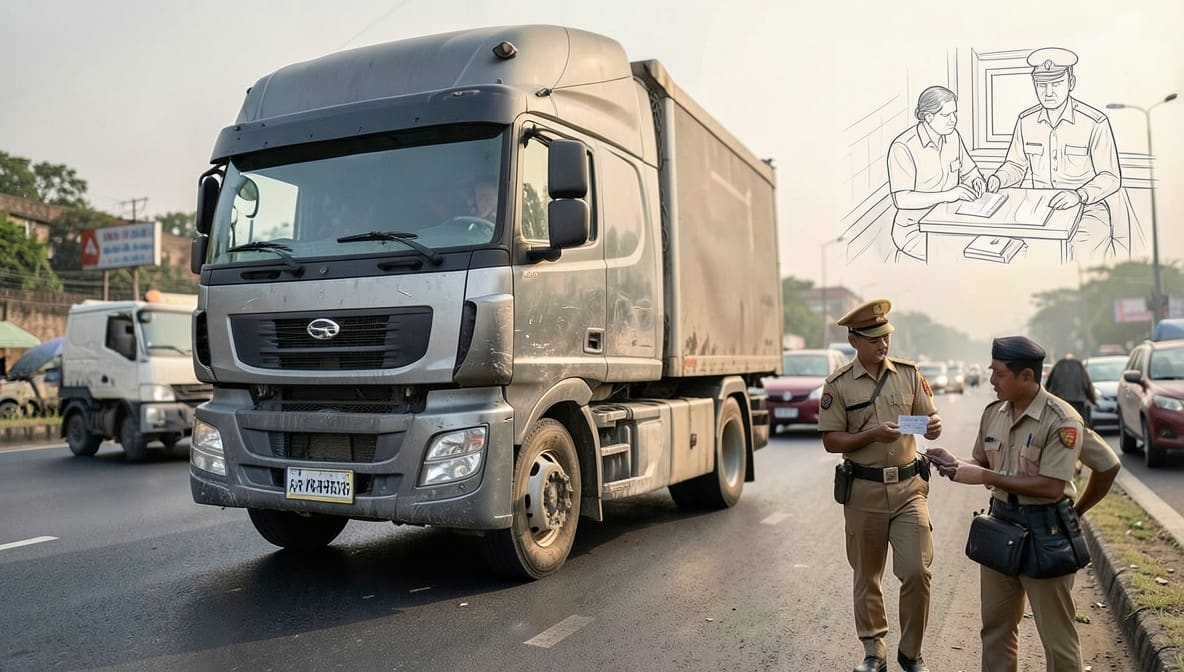
The Himachal Pradesh High Court has clarified a critical principle in motor accident claims: an insurance company cannot escape liability merely because the driver involved in an accident held a forged licence. The judgment reinforces that the burden lies squarely on the insurer to prove the insured’s knowledge of the fraud, not on the victim to prove the validity of documents.
Background & Facts
The Dispute
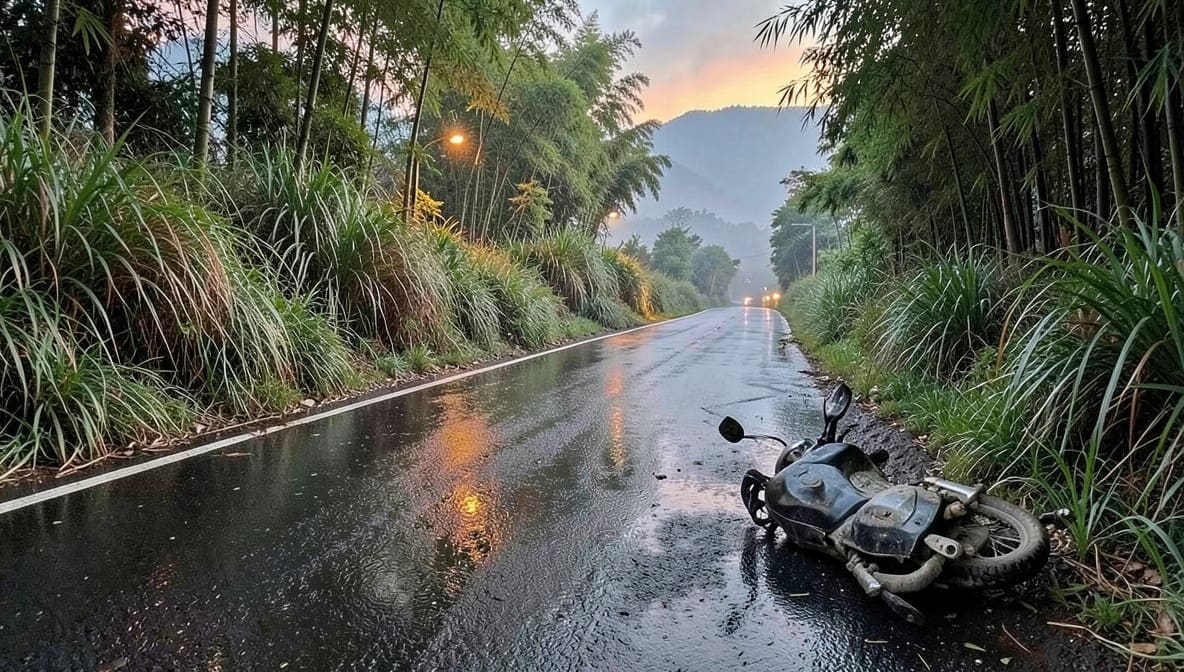
The claim arose from a fatal road accident on 10 February 2010, when a tractor driven by Kewal, registered to Sukesh Pathania, collided with a motorcycle ridden by Om Parkash, a 24-year-old pursuing Hotel Management. Om Parkash died at the scene. His parents, Nirmala Devi and another, filed a claim petition under Section 166 of the Motor Vehicles Act seeking Rs.15 lakh in compensation.
Procedural History
- 2010: Accident occurred on NH20 near Jachh, Kangra
- 2013: Claim petition filed before Motor Accidents Claims Tribunal-II, Kangra
- 2016: Tribunal awarded Rs.15,45,600/- plus 8% interest to claimants
- 2016: United India Insurance Company appealed to High Court under Section 173 of the Motor Vehicles Act
- 2026: Appeal heard and decided by Justice Sushil Kukreja
The Parties' Positions
- Claimants (Respondents): Argued the tractor driver was negligent; deceased was a qualified hotel management student with future earning potential
- Insurance Company (Appellant): Contended the tractor driver’s licence (Ext.R4) was fake, as verified by RTO Gurdaspur; thus, policy conditions were breached
- Owner’s Legal Heirs (Respondents 4a-4c): Maintained the deceased owner had checked the licence at hiring and had no reason to suspect forgery
Relief Sought
The appellant sought to set aside the award, arguing the insurer should not be liable due to the fake licence and that the compensation calculation was erroneous. The respondents sought confirmation of the award.
The Legal Issue
The central question was whether Section 149(2)(a)(ii) of the Motor Vehicles Act and the terms of the insurance policy absolve the insurer from third-party liability when the driver holds a forged licence, and whether the burden of proving the insured’s knowledge of the forgery rests on the insurer.
Arguments Presented
For the Appellant
The insurer relied on the RTO’s certificate proving Ext.R4 was not issued by Gurdaspur Licensing Authority. It argued that under Section 149(2)(a)(ii), the insurer is not liable if the vehicle was driven by an unlicensed person, and that the insured’s failure to verify the licence with the issuing authority constituted negligence. It cited general principles of contract law to argue that fraudulent documents void coverage.
For the Respondents
The respondents relied on Hind Samachar Ltd. v. National Insurance Co. Ltd., Nirmala Kothari v. United India Insurance Co. Ltd., and Ram Chandra Singh v. Rajaram. They contended that the insured’s duty is limited to visually inspecting the licence presented at the time of hiring. Absent evidence of collusion or willful blindness, the insurer cannot escape liability. The Supreme Court has consistently held that the burden of proving the insured’s knowledge of the forgery lies with the insurer.
The Court's Analysis
The Court undertook a detailed review of binding precedents from the Supreme Court, emphasizing that mere production of a fake licence does not discharge the insurer’s liability. The Court held that Section 149(2)(a)(ii) does not create an automatic exception; rather, it requires proof that the insured knowingly permitted an unlicensed person to drive.
"The Insurance Company must establish that the breach was on the part of the insured."
The Court noted that the owner, Sukesh Pathania, had testified that he examined the licence before hiring the driver and had no reason to doubt its authenticity. The insurer failed to cross-examine him on any specific circumstances suggesting suspicion - no prior incidents, no irregularities in the licence’s appearance, no history of fraud. The Court rejected the insurer’s argument that the owner should have contacted the RTO, stating: "It would be unreasonable to place such a high onus on the insured to make enquiries with RTOs all over the country."
The Court also examined the compensation calculation. It upheld the Tribunal’s finding of Rs.10,000/month as a reasonable notional income for a diploma holder in Hotel Management. Applying Pranay Sethi, it added 40% for future prospects (since the deceased was under 40), resulting in Rs.14,000/month. As the deceased was a bachelor, the Court applied the 50% deduction for personal expenses, as settled in Sarla Verma. The multiplier of 18 was correctly applied based on the deceased’s age (24), per Amrit Bhanu Shali and M. Mansoor. Conventional heads were revised to the standardized amounts under Pranay Sethi: Rs.15,000 for loss of estate, Rs.40,000 for filial consortium, and Rs.15,000 for funeral expenses.
The Court also clarified that only the mother, as the sole proven dependent, was entitled to compensation. The brother, though a claimant, failed to establish dependency.
The Verdict
The appellant’s appeal was partially allowed. The High Court modified the compensation to Rs.15,82,000/-, but held the insurer remains liable despite the fake licence. The Court affirmed that the insurer’s liability is not extinguished by a forged licence unless it proves the insured knowingly permitted the unlicensed driver.
What This Means For Similar Cases
Insurance Liability Is Not Voided by Fake Licences Alone
- Practitioners must now argue that insurers bear the burden of proving the insured’s knowledge of the licence’s falsity
- Mere RTO verification reports are insufficient to discharge this burden
- Insurers must present evidence of collusion, prior complaints, or visible anomalies in the licence
Compensation Calculations Must Follow Standardized Benchmarks
- For bachelors under 40: 40% addition to notional income for future prospects
- 50% deduction for personal expenses is the default unless evidence shows otherwise
- Multiplier is determined solely by the deceased’s age, not the dependents’ age
- Conventional heads must follow Pranay Sethi: Rs.15,000 (loss of estate), Rs.40,000 (filial consortium), Rs.15,000 (funeral expenses)
Dependency Must Be Proven, Not Assumed
- Only those who can prove financial dependence qualify as claimants
- Brothers and sisters are not presumed dependents unless evidence shows they were wholly reliant
- In cases of deceased bachelors, only the mother is presumed dependent unless the father is shown to be incapacitated or non-earning