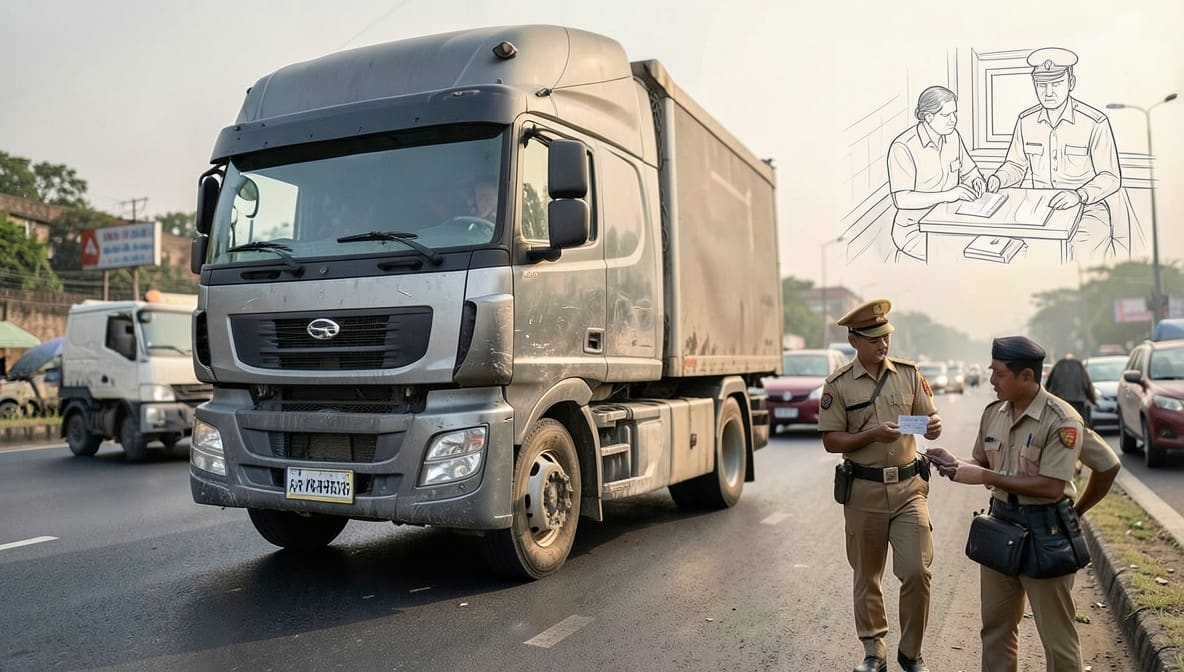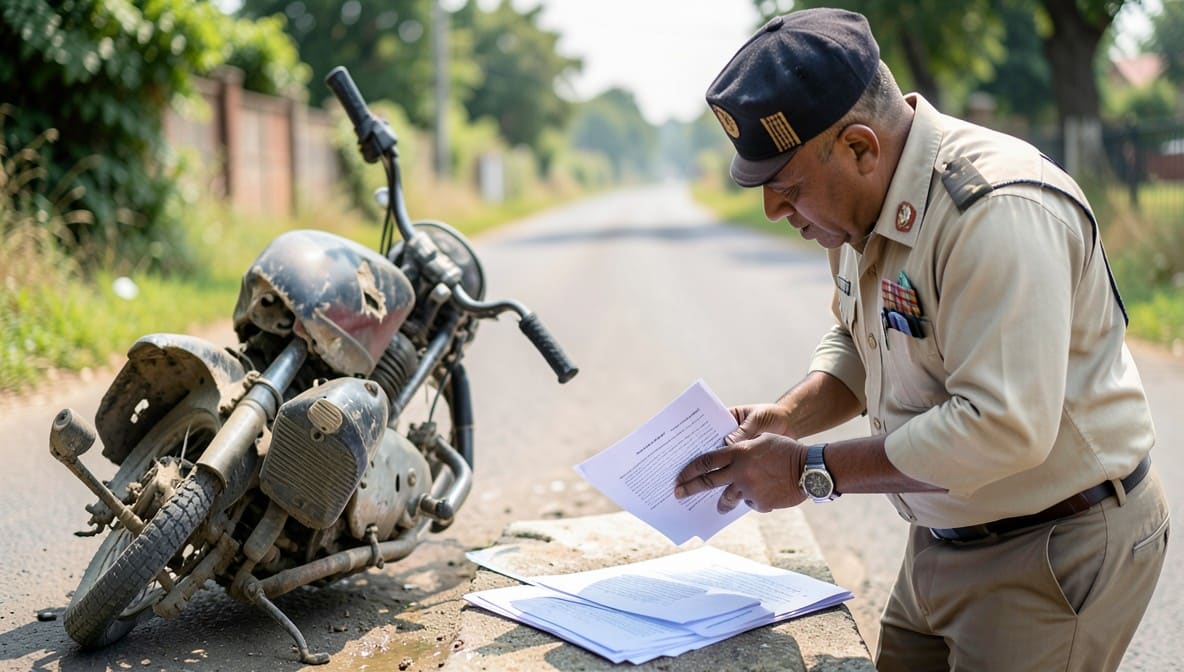
The Punjab & Haryana High Court has clarified that the validity of a driver’s foreign-issued licence is a foundational issue affecting an insurer’s right to recover compensation paid under the Motor Vehicles Act, 1988. The Court remanded the matter to the Tribunal for fresh adjudication, emphasizing that evidence on licence authenticity must be examined at the earliest opportunity.
Background & Facts
The Dispute
The present appeal arises from a Motor Accident Claims Tribunal (MACT) award dated 08.01.2015, which held the appellants - Jagdev Singh (driver) and the owner of the offending vehicle - liable to pay compensation to the claimants following a road accident that occurred in 2013. The Tribunal also granted recovery rights to respondent No.1, Shriram General Insurance Co. Ltd., on the ground that the driver was operating the vehicle with a foreign-issued driving licence, which the Tribunal deemed invalid under Indian law.
Key Facts
- The accident occurred in the year 2013.
- The driver, Jagdev Singh, was alleged to be holding a driving licence issued by a foreign authority at the time of the accident.
- The Tribunal relied on this fact to hold the insurer entitled to recover the compensation paid from the driver and owner under Section 140 and Section 149 of the Motor Vehicles Act, 1988.
- The appellants now seek to introduce two new documents: (i) a driving licence issued by Indian authorities (Annexure A-1), and (ii) a verification report from the Indian licensing authority (Annexure A-2), both dated subsequent to the accident.
- The appellants contend these documents prove that the driver held a valid Indian licence on the date of the accident, rendering the insurer’s recovery claim invalid.
Procedural History
- 2013: Road accident occurred.
- 2014: Claim petition filed under Section 166 of the Motor Vehicles Act, 1988 before the Motor Accident Claims Tribunal, Ludhiana.
- 08.01.2015: Tribunal awarded compensation and granted recovery rights to the insurer based on the driver’s foreign licence.
- 2015: Appellants filed CM No.7174-CII of 2015 seeking to adduce additional evidence (Annexures A-1 and A-2).
- 07.04.2026: Appeal heard and reserved.
- 08.04.2026: Judgment pronounced.
The Parties' Positions
Appellants (Driver and Owner): Argued that the Tribunal erred in denying them the opportunity to prove the driver’s licence was valid under Indian law. They submitted that Annexures A-1 and A-2, if admitted, would conclusively establish the driver’s compliance with licensing requirements.
Respondent (Insurer): Opposed the admission of additional evidence at the appellate stage, contending that the documents were not part of the original record, could not be verified, and that the Tribunal’s finding on the foreign licence was based on evidence properly before it.
Relief Sought
The appellants sought: (i) setting aside of the Tribunal’s award to the extent it granted recovery rights to the insurer; (ii) admission of Annexures A-1 and A-2 as evidence; and (iii) dismissal of the insurer’s recovery claim on the ground that the driver held a valid Indian licence.
The Legal Issue
The central question was whether an insurer’s right to recover compensation paid under Section 149 of the Motor Vehicles Act, 1988 is extinguished if the driver, at the time of the accident, was in fact holding a valid Indian driving licence, despite the initial reliance on a foreign licence by the Tribunal.
Arguments Presented
For the Appellant
Counsel for the appellants argued that the Tribunal’s finding on the invalidity of the driver’s licence was based on incomplete evidence. They relied on Section 3 of the Motor Vehicles Act, which requires a valid licence issued by a competent Indian authority, and contended that if Annexures A-1 and A-2 are proven authentic, the insurer’s recovery right under Section 149 cannot arise. They cited National Insurance Co. Ltd. v. Laxmi Narain Dhut to emphasize that recovery rights are contingent on the driver being unlicensed under Indian law.
For the Respondent
Counsel for the insurer argued that the appellate court cannot permit the introduction of new evidence that was not placed before the Tribunal, especially when the documents were available during the original proceedings. He relied on State of Haryana v. Bhagwan Das to assert that appellate courts must generally not act as courts of first instance. He further contended that the verification report (A-2) lacked proper authentication and could not be accepted without cross-examination.
The Court's Analysis
The Court acknowledged that the validity of the driver’s licence is not a mere procedural formality but goes to the very root of the insurer’s statutory right to recover compensation. Under Section 149(2)(b), an insurer is entitled to recover from the insured only if the accident occurred due to the driver being unlicensed under Indian law. The Tribunal’s finding that the licence was foreign-issued was made without examining whether the driver had, in fact, obtained a valid Indian licence.
"The additional documents sought to be produced by the appellants, if proved in accordance with law, may have a material bearing on the adjudication of this issue."
The Court observed that the Tribunal had not been given the opportunity to assess the authenticity, relevance, or admissibility of Annexures A-1 and A-2. It noted that the documents were not inherently inadmissible but required proper examination - including examination-in-chief and cross-examination - to determine their veracity. The Court emphasized that justice demands a fair opportunity to prove facts that could fundamentally alter the outcome.
The Court further held that while appellate courts generally refrain from admitting new evidence, exceptions exist where the failure to produce evidence earlier was not due to laches or negligence, and where the evidence is decisive to the rights of the parties. Here, the potential impact on the insurer’s recovery right justified remand.
The Verdict
The appeal was allowed in part. The impugned award dated 08.01.2015 was set aside solely with respect to the issue of the driver’s licence validity and the consequential grant of recovery rights to the insurer. The matter was remanded to the Motor Accident Claims Tribunal, Ludhiana, for fresh adjudication. Both parties were directed to lead evidence on the authenticity of Annexures A-1 and A-2, including examination-in-chief and cross-examination. The Tribunal was directed to decide the matter expeditiously, preferably within four months from the date of appearance of the parties on 28.04.2026.
What This Means For Similar Cases
Licence Validity Must Be Proven, Not Assumed
- Practitioners must now ensure that insurers seeking recovery under Section 149 provide concrete proof that the driver was unlicensed under Indian law - not merely that the licence was foreign-issued.
- Claimants and insureds may introduce post-accident documentation (e.g., Indian licence, verification reports) to rebut allegations of invalidity, provided they show due diligence in obtaining them.
Evidence at Appellate Stage Is Permissible When Decisive
- Appellate courts may permit additional evidence if it is material, credible, and was not available or deliberately withheld during the original proceedings.
- The burden shifts to the party seeking to introduce new evidence to demonstrate that the failure to produce it earlier was not due to negligence.
Insurer Recovery Is Conditional on Statutory Conditions
- The insurer’s right to recover is not automatic; it is contingent on proving the driver’s non-compliance with Section 3 of the Motor Vehicles Act.
- A foreign licence alone does not establish invalidity - proof that the driver was not licensed under Indian law is required.
Procedural Fairness Trumps Technicality
- Courts will prioritize substantive justice over procedural technicalities when the outcome hinges on a factual dispute that was never properly adjudicated.
- Tribunals must be given the opportunity to assess evidence in full, even if it is introduced late, if it affects the core liability of the insurer.