The National Consumer Disputes Redressal Commission has clarified that the sum insured under an insurance policy is binding on the insurer unless fraud, coercion, or misrepresentation is established. In a significant ruling, the Commission rejected the insurer’s attempt to repudiate a flood-related claim on grounds of invalid hospital licensing and failure to prove ownership, emphasizing that the policyholder’s consumer status and contractual rights prevail.
Background & Facts
The Dispute
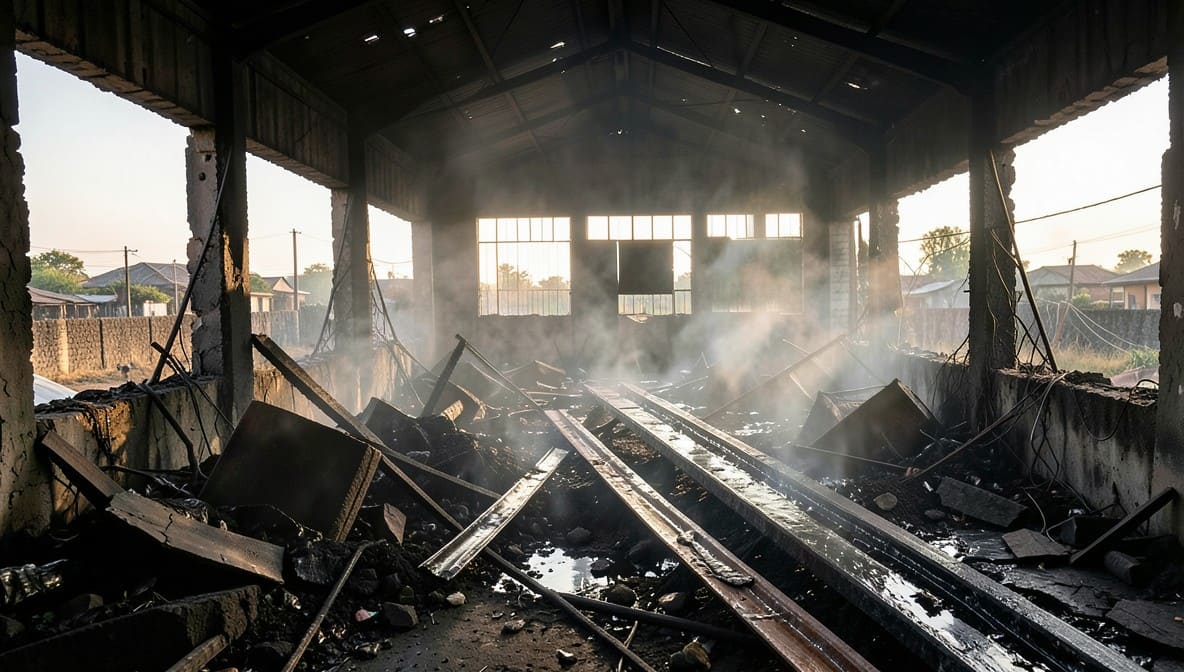
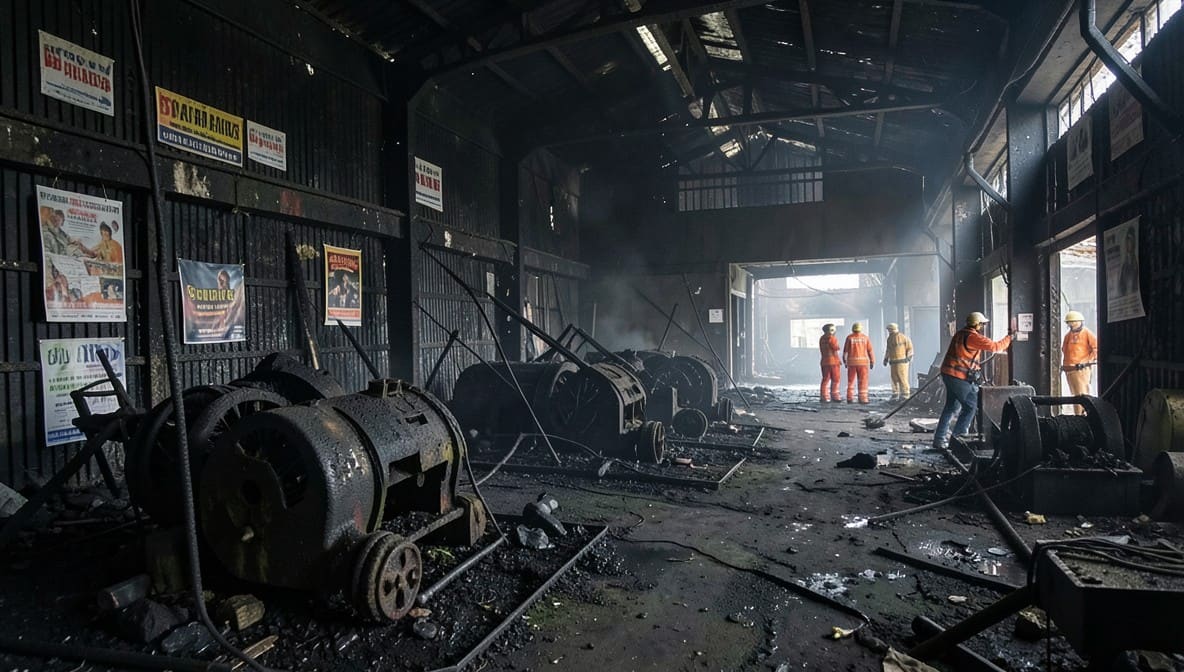
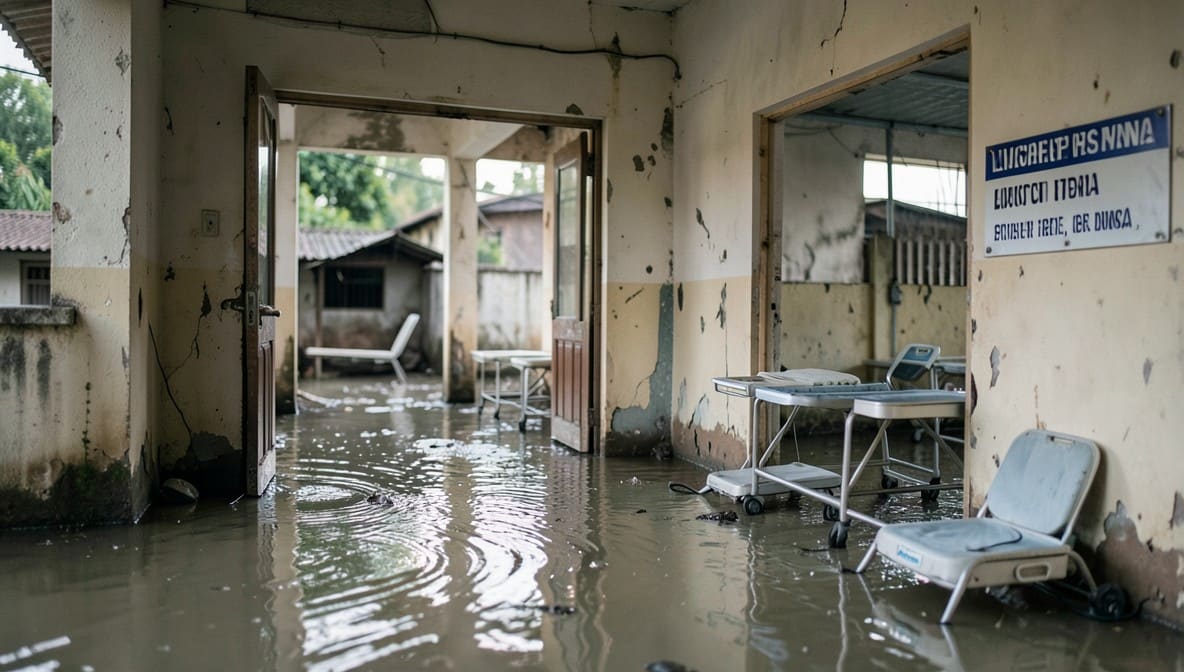
The complainant, GFC Hospital, operated by Mr. Subrata Karmakar, held a Standard & Special Perils Insurance Policy with National Insurance Company Limited for the period 29.07.2016 to 28.07.2017, with an assured sum of Rs.9,81,95,583/-. The policy was renewed for the subsequent year (29.07.2017 to 28.07.2018) against a premium of Rs.60,603/-. On 27.07.2017, a devastating flood caused by the breach of the Shilabati River embankment inundated the ground floor of the hospital, damaging medical equipment, furniture, and other assets.
Key Facts
- The hospital was originally owned by Silabad Hospital, mortgaged to SBI, and later sold to Dr. Tushar Kanti Karmakar on 07.06.2010 under a sale certificate.
- Dr. Tushar Kanti Karmakar operated the facility as Ghatal Fertility Centre until 2013.
- In 2013, the entire property, including medical instruments and fittings, was leased to Nanda Rekha Foundation under a notarized agreement, which commenced operations as GFC Hospital.
- The complainant, Mr. Subrata Karmakar, was the licensee of GFC Hospital under a valid license issued under the West Bengal Clinical Establishment Act, 1950, dated 27.07.2016, valid until 17.05.2017, and renewed until 17.05.2020.
- The insurance policy was issued and renewed by the insurer with full knowledge of the hospital’s name and licensee.
- The flood damage was certified by the Ghatal Municipality Councilor on 12.08.2017.
- The complainant intimated the insurer via email on 29.07.2017.
- Surveyor Sh. Subhasish Das was appointed on 02.08.2017, followed by Sh. Souren Chatterjee on 07.08.2017.
- The insurer issued multiple requests for documents on 13.09.2017, 25.09.2017, and 26.09.2017.
- The complainant submitted documents via letters dated 14.09.2017 and 14.11.2017.
- The claim for Rs.48,79,992/- was submitted on 23.08.2017.
- The surveyor’s final report dated 01.04.2018 assessed loss at Rs.2,06,791/- and recommended repudiation on two grounds: (1) lack of valid hospital license, and (2) failure to prove ownership of assets.
- The insurer repudiated the claim via letter dated 25.07.2018.
- The complainant commenced repairs on the damaged "C" Arm machine and replaced it after surveyor’s advice, informing the insurer via letter dated 25.11.2017 and reminder dated 13.12.2017.
- The complainant filed the complaint before NCDRC on 20.07.2018.
Procedural History
- 27.07.2016: Insurance policy issued for period 29.07.2016 to 28.07.2017.
- 29.07.2017: Policy renewed for period 29.07.2017 to 28.07.2018.
- 27.07.2017: Flood occurred at GFC Hospital.
- 12.08.2017: Flood certification issued by Ghatal Municipality.
- 29.07.2017: Intimation sent to insurer via email.
- 02.08.2017: Surveyor Sh. Subhasish Das appointed.
- 07.08.2017: Surveyor Sh. Souren Chatterjee visited hospital.
- 13.09.2017: First document request by surveyor.
- 14.09.2017: Complainant responded with documents.
- 23.08.2017: Claim submitted for Rs.48,79,992/-.
- 01.04.2018: Surveyor’s final report submitted.
- 25.07.2018: Claim repudiated by insurer.
- 20.07.2018: Complaint filed before NCDRC.
- 24.08.2018: Commission ordered amendment of complaint.
- 07.04.2026: Judgment pronounced.
The Parties' Positions
Complainant: Argued that the policy was issued and renewed with full knowledge of the hospital’s status and license. The insurer failed to raise objections at inception. The license was valid at the time of policy issuance and renewal. The surveyor’s valuation was arbitrary, applying 50% depreciation without justification. The insurer could not deny liability based on documents destroyed by flood. The complainant was a consumer under Section 2(1)(d) of the Consumer Protection Act, 1986, as the insurance was for indemnity, not profit.
Respondent (Insurer): Contended that the complainant lacked a valid license in the name of GFC Hospital and failed to prove ownership of assets. The surveyor’s report showed the machinery was defunct since 2010 and no valuation report was submitted. The claim was below the pecuniary jurisdiction of NCDRC. The complainant was engaged in commercial activity and thus not a consumer. The insurer relied on the surveyor’s findings and precedent cases to justify repudiation.
Relief Sought
The complainant sought:
- Payment of claim amount of Rs.46,69,687/- with 18% interest from the date of claim till realization.
- Rs.1,00,000/- as litigation costs.
- Rs.5,00,000/- for mental agony and Rs.10,00,000/- for loss of business.
- Any other relief deemed appropriate.
The Legal Issue
The central questions were: (1) Whether the sum insured under an insurance policy can be disregarded by the insurer or surveyor absent proof of fraud, misrepresentation, or coercion; and (2) Whether a hospital’s insurance claim can be repudiated on the ground that the license is issued in the name of the licensee rather than the trade name, when the policy was issued and renewed with full knowledge of the arrangement.
Arguments Presented
For the Appellant/Petitioner
The complainant relied on National Insurance Co. Ltd. v. Harsolia Motors (2023) 8 SCC 362 to establish that a hospital seeking insurance indemnity is a consumer under Section 2(1)(d) of the Consumer Protection Act, 1986, as its purpose is not commercial gain but risk mitigation. It cited Sumit Kumar Saha v. Reliance General Insurance Co. Ltd. (2019) 16 SCC 370 to argue that the sum insured is binding unless fraud is proven. The complainant emphasized that the insurer had issued and renewed the policy with full knowledge of the hospital’s structure and license, and could not later raise objections. The surveyor’s 50% depreciation was arbitrary, with no basis in market valuation or policy terms. The documents destroyed by flood could not be held against the complainant.
For the Respondent/State
The insurer relied on AR Fuels Pvt. Ltd. v. National Insurance Co. Ltd. (2013) CPJ 637 (NC) and Manager Legal Department NAI Co. Ltd. v. Oswal Plastic Industries (2019) CPJ 80 (CF) to argue that non-disclosure of defunct machinery and lack of ownership proof justified repudiation. It contended that the license issued to Mr. Subrata Karmakar, not GFC Hospital, rendered the policy invalid. It also argued that the claim value was below Rs.1 crore, placing jurisdiction with the District Forum. It further claimed the complainant was engaged in commercial activity and thus excluded from the definition of consumer.
The Court's Analysis
The Commission first addressed the jurisdictional challenge. It held that the value of the service for determining pecuniary jurisdiction is the total sum assured under the policy, not the claimed loss. Citing M/s Shivam Wood Industries v. Oriental Insurance Co. Ltd. and Renu Singh v. Experion Developers, the Commission affirmed that the aggregate consideration agreed upon between the parties - here, Rs.9,81,95,583/- - determines jurisdiction, not the quantum of loss claimed. The objection was dismissed.
On the merits, the Commission examined the insurer’s two grounds for repudiation. First, regarding the license: The Commission noted that the policy was issued and renewed in the name of GFC Hospital, with the licensee clearly identified as Mr. Subrata Karmakar. The license dated 27.07.2016 explicitly named GFC Hospital as the establishment. The insurer had ample opportunity to verify the license at inception and renewal but did not. The Commission held that the insurer cannot now challenge the validity of the license after accepting premiums for two years.
Second, regarding ownership: The Commission found that the complainant, as the licensee and operator of the hospital, had insurable interest. The lease deed and transfer history were disclosed to the surveyor. The insurer’s demand for original purchase bills was unreasonable given the flood destroyed all records. The Commission held that the burden of proof cannot be shifted unfairly to the insured after a natural disaster.
The Commission then critically evaluated the surveyor’s report. It noted that the surveyor applied a 50% depreciation to medical equipment despite the policy’s assured sum being significantly higher than the 2010 purchase value. The Commission relied on Sumit Kumar Saha v. Reliance General Insurance Co. Ltd., holding that the sum insured is the starting point for valuation unless fraud or misrepresentation is established. The surveyor’s attempt to reduce the claim by applying depreciation from 2010 was impermissible. The Commission further rejected the application of the average clause, as the insurer had not proven overvaluation.
"The assessment must start with the amount described as sum insured on the day when the contract was entered into. It is not open to the surveyor or the Insurance Company to disregard the figure stipulated as sum insured except in cases of fraud, coercion or misrepresentation."
The Commission accepted the surveyor’s deductions of Rs.45,000/- for salvage and Rs.6,05,605/- for non-covered items (medicines, cooking materials, etc.) but rejected all other reductions. The net claim was adjusted to Rs.40,19,082/-. The Commission held that the insurer’s repudiation was unjustified and contrary to the principles of uberrimae fidei.
The Verdict
The complainant succeeded. The Commission directed the insurer to pay the claim amount of Rs.40,19,082/- with simple interest at 6% per annum from the date the claim became due (25.07.2018) until realization. If payment is not made within eight weeks, the interest rate shall increase to 8% per annum until full payment. The insurer was also directed to pay litigation costs of Rs.25,000/-. The complaint was allowed in full, and all pending applications were disposed of.
What This Means For Similar Cases
Sum Insured Is Contractually Binding
- Practitioners must argue that insurers cannot unilaterally reduce claims below the sum insured absent proof of fraud or misrepresentation.
- Surveyors must begin valuation from the sum insured, not the original purchase cost or market value at time of acquisition.
- Depreciation can only be applied from the policy inception date, not retroactively.
License Name Discrepancy Does Not Invalidate Coverage
- Insurance policies issued in the trade name of a business are valid even if the license is in the individual’s name, provided the insurer was aware of the arrangement.
- Insurers must verify licenses at policy issuance and renewal; silence constitutes waiver of objections.
- Post-loss challenges to licensing validity are barred by estoppel and laches.
Natural Disasters Shift Burden of Proof
- When documents are destroyed by flood, fire, or other natural calamities, insurers cannot demand original receipts or invoices.
- Secondary evidence, such as lease deeds, renewal records, and municipal certifications, suffices to establish ownership and insurable interest.
- Courts will not penalize insureds for loss of records beyond their control.