The National Consumer Disputes Redressal Commission has clarified that insurers cannot repudiate fire insurance claims based on allegations of negligence alone. The judgment reinforces that only wilful acts or fraud by the insured can forfeit policy benefits, not ordinary carelessness or unproven worker statements.
Background & Facts
The Dispute
The complainant, Vineet Vidge, proprietor of M/s Kapi's Creations, operated a business manufacturing ladies' suits and sarees from premises in Karol Bagh, New Delhi. On 31.10.2013, he obtained a Standard Fire & Special Perils Policy from United India Insurance Co. Ltd. for stock valued at Rs. 3,05,00,000, with coverage valid until 30.10.2014.
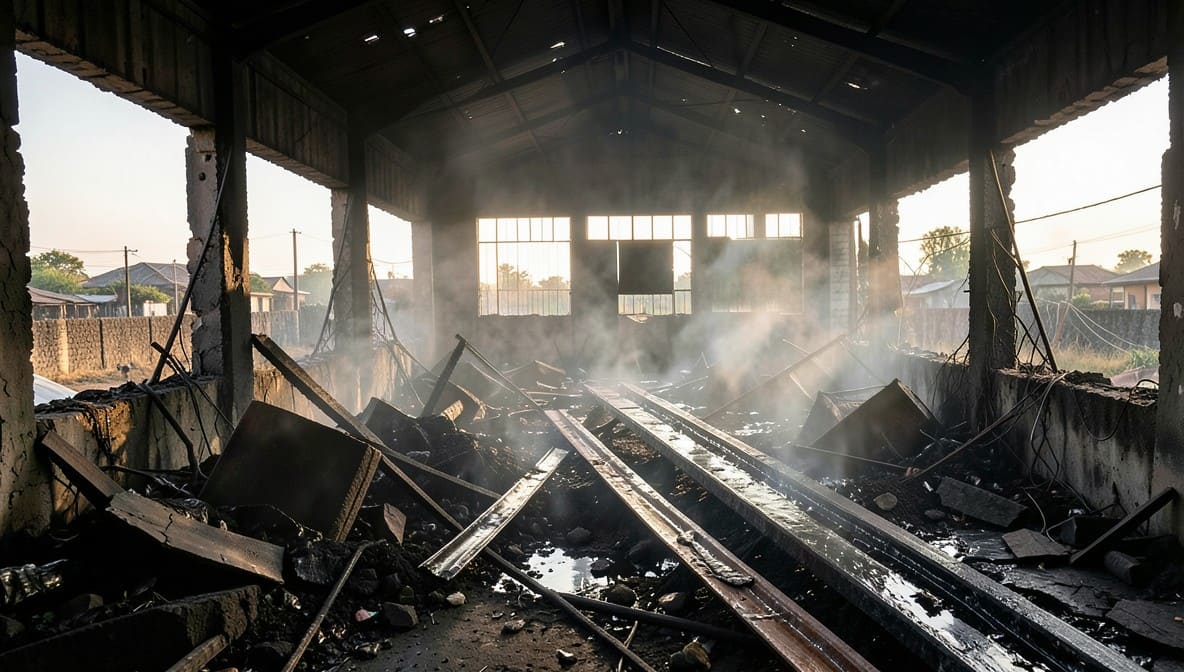
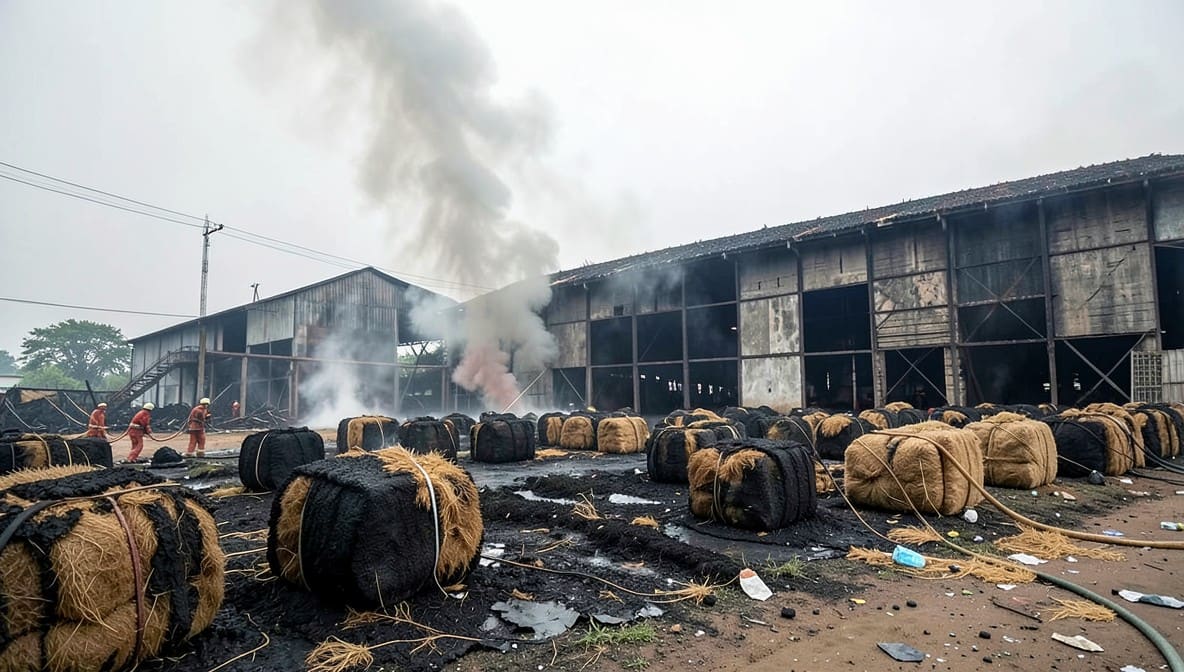
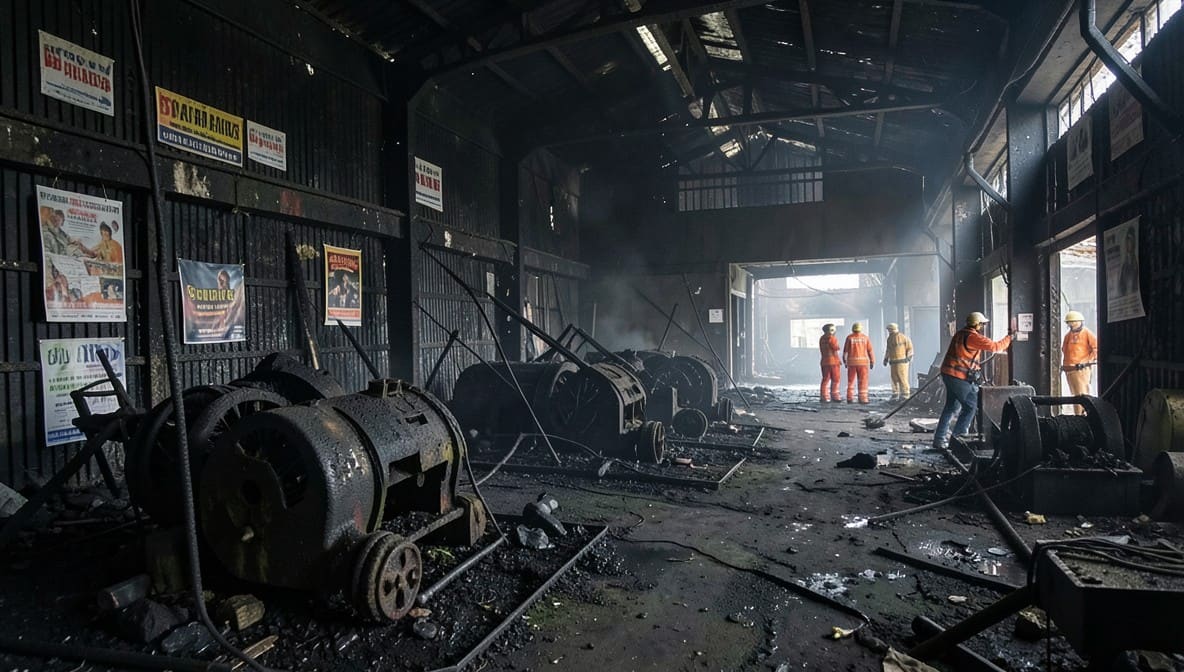
On 19.01.2014, a fire broke out in the premises, resulting in substantial loss of stock. The complainant estimated the loss at Rs. 85-90 lakhs. The incident was reported to police, and FIR No. 42 of 2014 under Section 287 IPC was registered by Sunita, wife of Pappu Singh, who sustained burn injuries.
The insurer appointed M/s Ravi Singhal & Associates as surveyor, who assessed the loss at Rs. 39,31,100. The complainant initially consented to this assessment. However, the claim was repudiated on 29.06.2017 on the basis of a statement allegedly made by a worker, Jogender, who claimed the fire resulted from the complainant’s failure to repair an electric press.
Key Facts
- Fire incident occurred on 19.01.2014
- FIR No. 42/2014 registered on 19.01.2014 under Section 287 IPC; no mention of negligence in maintenance of electric press
- Surveyor’s report dated 27.01.2014 (Ex.CW-1/6) attributed fire to overheating or short-circuit in electric press, with no allegation of negligence
- Statement of supervisor Gyanander Kumar (recorded during survey) confirmed fire origin but did not allege owner negligence
- Worker Jogender’s statement was recorded under Section 161 Cr.P.C. but never examined in any proceeding
- Charge-sheet under Sections 287 and 338 IPC was filed on 15.05.2015 (Ex.OP-2), but no conviction or final outcome was produced
- Complainant requested survey report on 17.10.2015; insurer failed to respond
- Claim repudiated via letter dated 29.06.2017 (Ex.CW-1/3)
- Complaint filed before NCDRC on 05.04.2018 (CC No. 413 of 2018)
Procedural History
- 19.01.2014: Fire incident
- 27.01.2014: Fire survey report prepared
- 15.05.2015: Charge-sheet filed by police
- 17.10.2015: Complainant requested survey report; no response
- 29.06.2017: Claim repudiated by insurer
- 05.04.2018: Consumer complaint filed before NCDRC
- 23.04.2026: Judgment pronounced
The Parties' Positions
Complainant: Argued that the fire was accidental, the surveyor’s assessment was fair, and the repudiation was based solely on an uncorroborated, unexamined statement by a disgruntled worker. No evidence of wilful misconduct was produced. The insurer failed to prove fraud or intentional act under Condition 8 of the policy.
Respondent (Insurer): Relied on the charge-sheet and Jogender’s statement to allege negligence in maintenance of the electric press, claiming it constituted wilful act under Condition 8 of the policy, thereby forfeiting the claim.
Relief Sought
The complainant sought payment of Rs. 90,00,000 as claim amount, interest at 12% per annum from 19.01.2014, and litigation expenses.
The Legal Issue
The central question was whether negligence in maintenance of equipment, without proof of wilful act or fraud by the insured, justifies repudiation of a fire insurance claim under Condition 8 of the Standard Fire & Special Perils Policy.
Arguments Presented
For the Appellant/Petitioner
The complainant’s counsel relied on Cement Corporation of India v. ICICI Lombard General Insurance Company Ltd. (2023 SCC OnLine SC 2821) to argue that fire insurance covers accidental loss, and the burden lies on the insurer to prove wilful act or fraud by the insured. Mere allegations from an unexamined worker, without technical evidence or criminal conviction, cannot establish wilful misconduct. The surveyor’s report, which found no negligence, should prevail. The insurer’s reliance on a charge-sheet without final outcome was legally unsustainable.
For the Respondent/State
The insurer contended that the charge-sheet filed under Sections 287 and 338 IPC, coupled with Jogender’s statement, established negligence amounting to wilful act under Condition 8 of the policy. It argued that the insured’s failure to repair a known hazardous appliance constituted a breach of duty, thereby forfeiting the claim under the policy’s exclusion clause.
The Court's Analysis
The Commission undertook a rigorous analysis of the policy terms and judicial precedents. It emphasized that Condition 8 of the Standard Fire & Special Perils Policy permits forfeiture only if the loss is caused by the wilful act of the insured or with his connivance. The court held that negligence, even if proven, does not equate to wilful misconduct.
"The cause of fire becomes material where the fire is occasioned not by negligence but by the wilful act of Insured himself or of someone acting with his privity or consent. In such a case, his conduct, coupled with the making of a claim, is a fraud upon the insurers and he cannot enforce his claim against them."
The Commission noted that the surveyor’s report, which was accepted by the insurer initially, found the fire was caused by overheating or short-circuit - inherently accidental. No technical report or expert opinion was produced to substantiate the claim of negligence in maintenance. The statement of Jogender, the sole source of the allegation, was never recorded under oath, nor was he examined before the Commission. The charge-sheet, while indicating criminal proceedings, did not establish guilt or wilful intent.
The court further observed that the insurer’s conduct was procedurally flawed: it failed to obtain an independent verification of the worker’s statement, ignored the surveyor’s findings, and relied on an unproven, uncorroborated assertion. The Commission held that mere registration of FIR or filing of charge-sheet cannot be equated with proof of wilful act.
The court distinguished between negligence - which may be remediable - and wilful misconduct - which requires intentional disregard for safety or deliberate risk creation. The insurer failed to meet this higher threshold.
The Verdict
The complainant succeeded. The NCDRC set aside the repudiation order dated 29.06.2017 and directed United India Insurance Co. Ltd. to pay Rs. 39,31,100 as assessed by the surveyor, with interest at 6% per annum from 19.07.2014 (six months after the incident) until realization. If payment is not made within eight weeks, the balance shall attract enhanced interest at 8% per annum from the date of default. No costs were awarded.
What This Means For Similar Cases
Negligence Alone Cannot Justify Repudiation
- Practitioners must now argue that insurers bear the burden of proving wilful act or fraud, not mere carelessness
- Allegations from unexamined employees, even if recorded in police statements, are insufficient without corroboration or cross-examination
- Surveyor reports, if unchallenged by technical evidence, carry decisive weight in consumer forums
Charge-Sheet Is Not Proof of Wilful Conduct
- Filing of charge-sheet under IPC does not equate to conviction or proof of intent
- Insurers must produce final court findings or independent expert reports to substantiate wilful misconduct claims
- Relying solely on police documents without evidentiary foundation is legally untenable
Policy Exclusions Require Strict Interpretation
- Exclusion clauses like Condition 8 must be construed narrowly against the insurer
- Courts will not allow insurers to exploit ambiguities to deny legitimate claims
- Insurers must act in good faith and honor the principle of uberrima fides (utmost good faith) inherent in insurance contracts