The Allahabad High Court has clarified that madarsas offering only informal, non-formal instruction in Hafiz and Qari training, along with elementary Arabic, Urdu, and Persian language classes, are not subject to mandatory recognition by the U.P. Board of Madarsa Education. This ruling resolves a critical ambiguity affecting thousands of small religious educational institutions across Uttar Pradesh.
Background & Facts
The Dispute
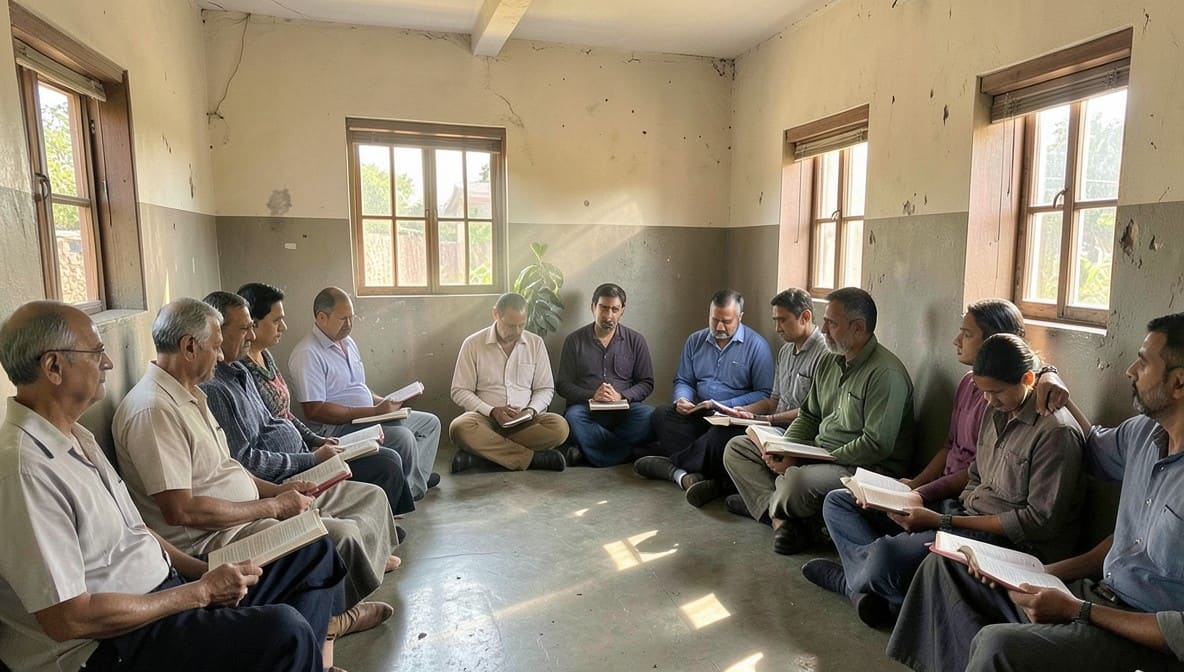
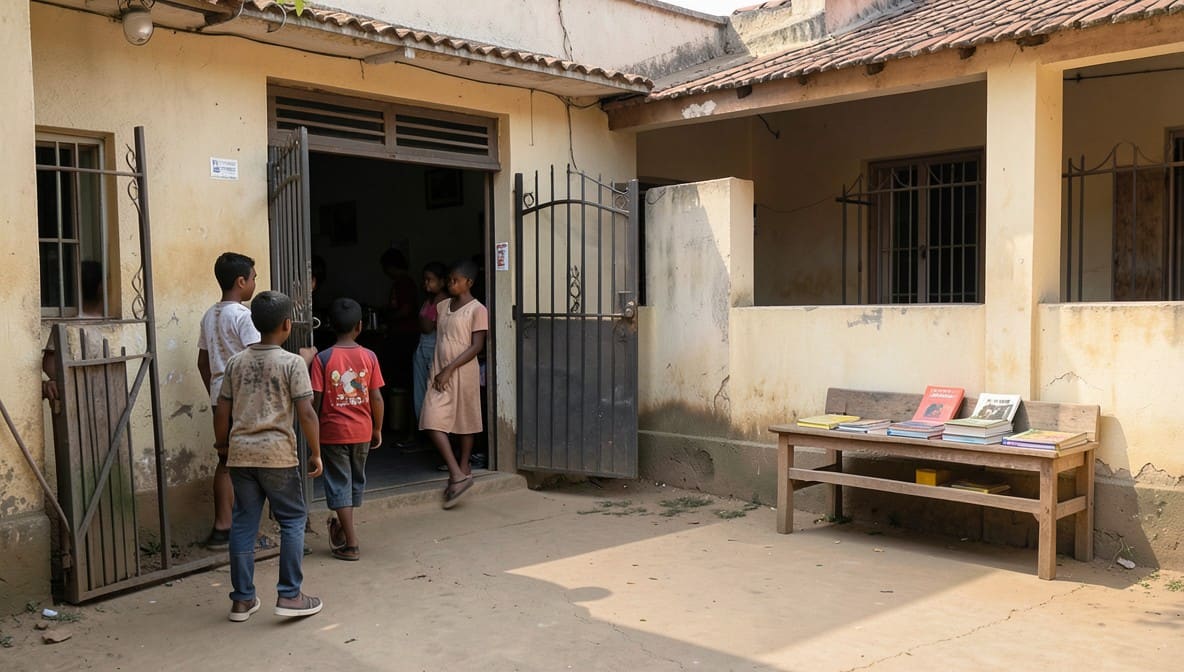
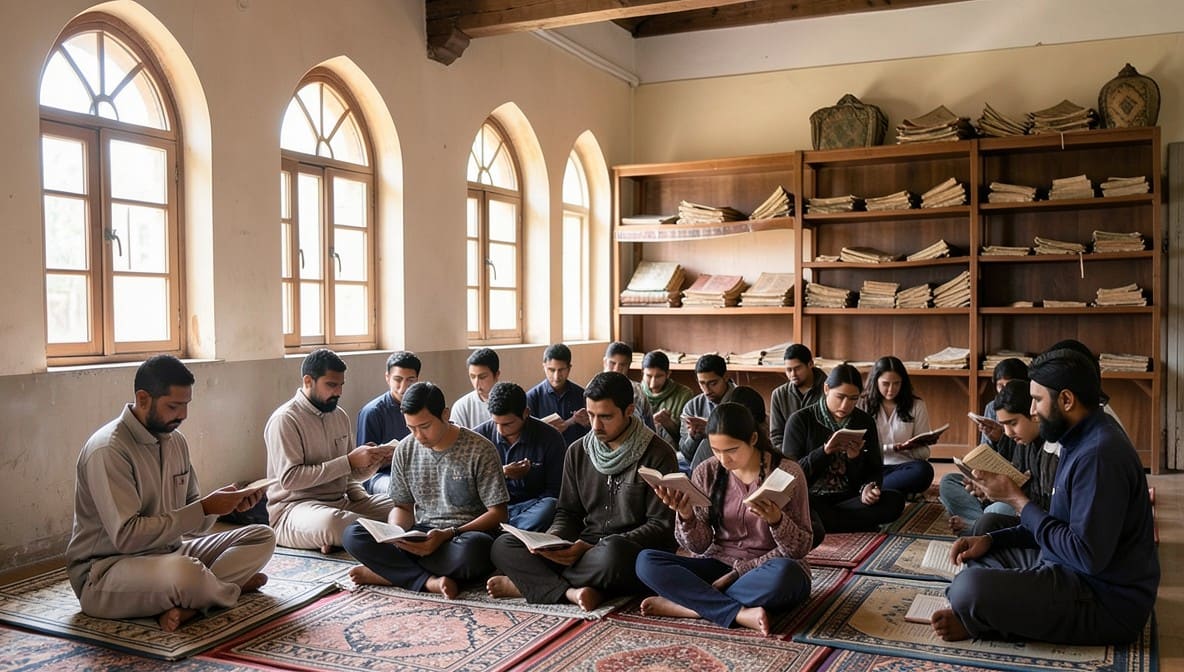
The petitioner, Madarsa Darul Uloom Raza E Mustafa, operates an Islamic educational institution in Lucknow that provides informal instruction in Quranic memorization (Hafiz), recitation (Qari), and foundational teaching of Arabic, Urdu, and Persian languages. The institution does not offer formal academic curricula aligned with the U.P. Board of Madarsa Education’s recognized syllabi. On 01.05.2025, officials of the Minority Welfare Department, acting under the authority of respondent No. 4, sealed the premises of the madarsa, alleging non-compliance with mandatory recognition requirements.
Key Facts
- The madarsa offers no formal degree or certification programs
- Instruction is conducted through traditional, informal methods without structured examinations
- The curriculum is limited to: memorization of the Quran, Tajweed, basic Arabic grammar, Urdu script, and Persian vocabulary
- No student is enrolled in a formal academic stream recognized by the U.P. Board of Madarsa Education
- The petitioner has never applied for recognition under the U.P. Madarsa Education Act or Rules
- A notice dated 26.08.2025 was issued by respondent No. 2 seeking information on the nature of education being imparted
- The petitioner disputes receipt of the notice and asserts that no formal education requiring recognition is being offered
Procedural History
- 01.05.2025: Madarsa sealed by authorities under the authority of respondent No. 4
- 26.08.2025: Official notice issued by respondent No. 2 seeking details of educational activities
- 16.01.2026: Coordinate Bench of this Court delivered judgment in Writ-C No. 307 of 2026, holding that informal Hafiz/Qari and language instruction does not require recognition
- 21.04.2026: Coordinate Bench directed petitioner to file supplementary affidavit clarifying nature of instruction
- 25.04.2026: Supplementary affidavit filed by petitioner, reaffirming the scope of instruction
- 04.05.2026: Present writ petition (Writ-C No. 3844 of 2026) heard and decided
Relief Sought
The petitioner sought quashing of the sealing order dated 01.05.2025 and a direction to respondent No. 4 to immediately de-seal the madarsa premises.
The Legal Issue
The central question was whether informal instruction in Hafiz, Qari, Arabic, Urdu, and Persian language at a madarsa requires mandatory recognition from the U.P. Board of Madarsa Education under the U.P. Madarsa Education Act, 1961, or whether such activities fall outside the statutory definition of "formal education" requiring registration.
Arguments Presented
For the Petitioner
Counsel argued that the madarsa’s activities are purely religious and cultural in nature, confined to traditional Islamic pedagogy. He relied on the precedent set in Writ-C No. 307 of 2026, decided on 16.01.2026, where this Court held that teaching limited to Hafiz/Qari training and elementary language instruction does not constitute "formal education" under the Act. He emphasized that the petitioner’s institution does not issue certificates, conduct board examinations, or follow any prescribed curriculum. The sealing, he contended, was arbitrary and violative of Article 14 and Article 25 of the Constitution.
For the Respondent
The State counsel acknowledged that the notice dated 26.08.2025 was issued but disputed whether it was received. He did not contest that the madarsa was not imparting formal education. However, he argued that the absence of formal recognition could still justify regulatory action under general administrative powers. He did not cite any statutory provision requiring recognition for the specific activities described.
The Court's Analysis
The Court examined the nature of the instruction provided and compared it with the statutory framework under the U.P. Madarsa Education Act, 1961. The Act defines "formal education" as instruction leading to certification or alignment with recognized syllabi. The Court noted that the petitioner’s institution offers no such structured program. The Court observed:
"The petitioner is not imparting formal education as contemplated under the U.P. Madarsa Education Act. The teaching of Hafiz and Qari, along with elementary Arabic, Persian and Urdu, is traditional, religious and informal in nature, and falls outside the ambit of recognition requirements."
The Court further held that the decision in Writ-C No. 307 of 2026 was directly applicable, as the factual matrix was identical. The State did not dispute the nature of instruction, nor did it produce any evidence that the madarsa was offering formal courses. The Court rejected the argument that administrative notice or non-compliance with procedural formalities could justify sealing of premises where no statutory violation existed.
The Court emphasized that the right to establish and administer educational institutions under Article 30 of the Constitution extends to religious minorities, and that informal religious instruction is protected under Article 25. The sealing order, therefore, lacked legal basis and was arbitrary.
The Verdict
The writ petition is allowed. The impugned sealing order dated 01.05.2025 is quashed. Respondent No. 4 is directed to de-seal the premises of Madarsa Darul Uloom Raza E Mustafa within the next 48 hours. A copy of this order shall be communicated by the learned Additional Chief Standing Counsel to respondent No. 4.
What This Means For Similar Cases
Informal Religious Education Is Exempt from Formal Recognition
- Practitioners representing madarsas offering only Hafiz/Qari training or basic Arabic/Urdu/Persian instruction may now confidently challenge sealing orders or demands for recognition
- The burden shifts to the State to prove that the institution is imparting formal education as defined under the U.P. Madarsa Education Act
- Any notice demanding recognition for non-formal religious instruction is legally unsustainable
Precedent-Based Relief Is Available for Identical Scenarios
- Madarsas in similar factual situations may directly rely on Writ-C No. 307 of 2026 as binding precedent
- No need to re-litigate the same issue; a simple application citing the precedent and requesting immediate de-sealing is sufficient
- Courts are likely to apply the principle uniformly across Uttar Pradesh
Administrative Action Requires Statutory Basis
- Authorities cannot act on general administrative powers to shut down institutions without identifying a specific statutory violation
- Sealing without proof of formal education being imparted violates the principle of proportionality under Article 14
- Legal notices must specify the exact provision allegedly violated; vague notices are invalid