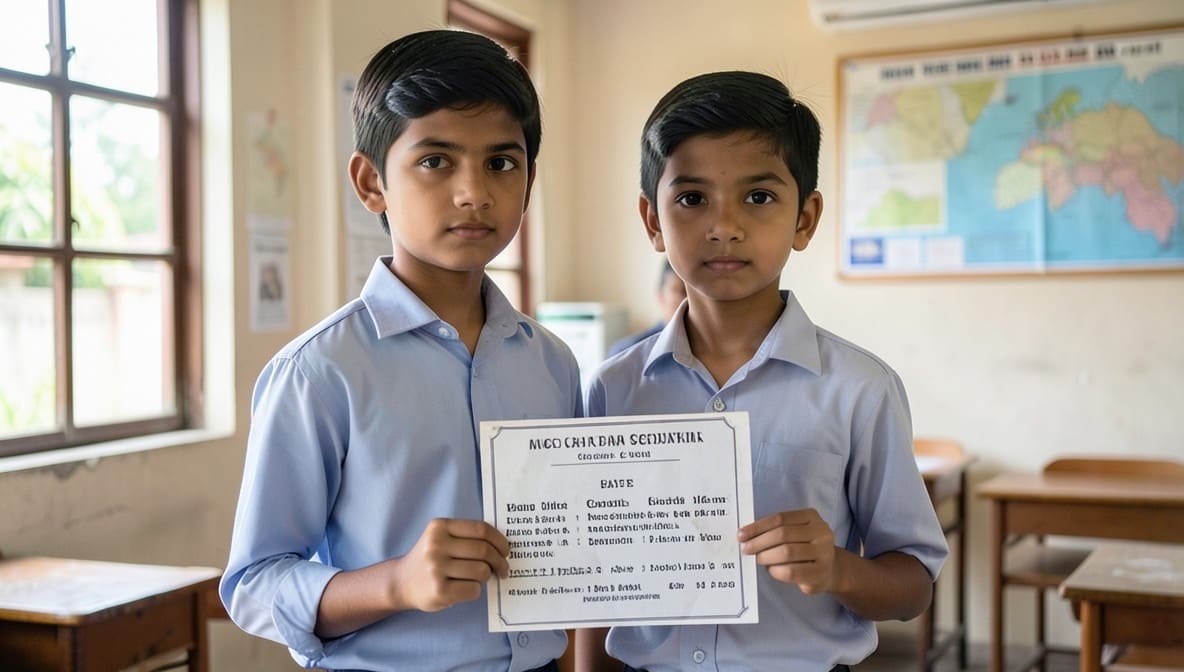
The Madhya Pradesh High Court has reaffirmed that the Right to Education for minor students is not contingent on perfect conduct, and that expulsion through transfer certificates citing vague grounds of 'indiscipline' without procedural fairness violates constitutional guarantees. This judgment sets a critical precedent for school disciplinary actions under the Right to Education framework.
Background & Facts
The Dispute
The petitioners, two minor students studying in Class X at Jawahar Navodaya Vidyalaya, Ratibad, Bhopal, were allegedly subjected to physical assault and verbal abuse by a school official on 12 December 2025. Following the incident, they fled the campus, surviving for six to seven days on footpaths without food, water, or shelter. Their parents, upon learning of their disappearance, lodged an FIR and approached the Collector. The students were later recovered in Ujjain and returned home. Despite this, the school refused to allow them to rejoin, citing prior disciplinary violations.
Procedural History
- 12 December 2025: Petitioners caught smoking during surprise inspection; packet seized and photograph taken
- 25 November 2025: Petitioner No.1 previously suspended for using mobile phone in class
- 16 November 2025: Petitioner No.2 previously caught cooking on roof, a prohibited act
- 8 December 2024: Petitioner No.1 previously suspended for smoking
- 9 February 2026: School issued Transfer Certificates (TCs) citing 'indisciplined' as reason, without detailed inquiry or hearing
- 23 February 2026: Writ petition filed under Article 226 seeking readmission and quashing of TCs
Relief Sought
The petitioners sought: (1) immediate readmission without academic loss, (2) a reasoned order on their representations, and (3) directions to prevent adverse impact on their educational future.
The Legal Issue
The central question was whether a school can issue Transfer Certificates to minor students under Article 21A of the Constitution, citing vague grounds of 'indiscipline' without conducting a fair inquiry, providing an opportunity of hearing, or considering the child’s right to continuous education.
Arguments Presented
For the Petitioner
The petitioners’ counsel argued that expulsion via TCs without due process violates the Right to Education guaranteed under Article 21A and the Juvenile Justice (Care and Protection of Children) Act, 2015. They emphasized that minor students are entitled to corrective, not punitive, measures. The school’s failure to inform parents of the assault incident, coupled with the abrupt issuance of TCs, amounted to a denial of natural justice. Reliance was placed on Mohini Jain v. State of Karnataka and Unni Krishnan v. State of A.P. to establish education as a fundamental right.
For the Respondent
The school contended that the petitioners had a history of repeated misconduct - smoking, mobile phone use, and unauthorized cooking - violating the Code of Conduct under Rule 6.3.5. They cited Prashant Dixit v. CBSE and Jitendra Singh v. State of M.P. to argue that schools have the authority to expel students for persistent indiscipline. The term 'indisciplined' on TCs, they claimed, was a legitimate administrative reason and not punitive in nature.
The Court's Analysis
The Court declined to adjudicate the merits of the assault allegation, noting the absence of a formal inquiry. Instead, it focused on the procedural irregularity in issuing Transfer Certificates. The Court observed that Article 21A imposes a positive obligation on the state to ensure uninterrupted education for children aged six to fourteen. The issuance of TCs without a formal disciplinary hearing, without affording the students an opportunity to explain, and without considering their academic potential, amounted to a violation of procedural fairness.
"The Right to Education is not a privilege contingent upon perfect conduct. It is a constitutional guarantee that must be protected even when a child errs, particularly when the child is still in the formative years of learning."
The Court distinguished Prashant Dixit, noting that in that case, the student had been given multiple opportunities and a formal inquiry was conducted. Here, no such process existed. The Court also rejected the argument that 'indisciplined' was merely an administrative label, holding that such language on official documents carries a stigma that directly impacts future admissions and career prospects. The school’s reliance on prior misconduct was insufficient to justify permanent exclusion without a rehabilitative framework.
The Verdict
The petitioners won. The Court quashed the Transfer Certificates and directed the school to permit the petitioners to rejoin classes and appear in upcoming examinations. The permission was conditional upon parents furnishing an undertaking that the students would not repeat misconduct and would voluntarily withdraw after exams.
What This Means For Similar Cases
Transfer Certificates Cannot Be Used as Punitive Tools
- Schools must not use TCs to punish students for minor or repeated indiscipline without a formal disciplinary committee hearing
- Any reason recorded on a TC must be specific, fact-based, and procedurally justified
- Vague terms like 'indisciplined' or 'misbehaved' are legally unsustainable and violate the child’s dignity under Article 21
Due Process Is Non-Negotiable in School Disciplinary Actions
- Students must be given notice, a hearing, and an opportunity to present their side before any adverse action
- Parents must be formally informed of all allegations and disciplinary proceedings
- Schools must maintain records of counseling, warnings, and corrective measures before resorting to expulsion
Rehabilitation Over Retribution for Minors
- Educational institutions must prioritize restorative justice over punitive exclusion
- Repeated misconduct should trigger counseling, parental engagement, and behavioral intervention - not immediate expulsion
- The best interest of the child standard under the Juvenile Justice Act must guide all school decisions affecting education