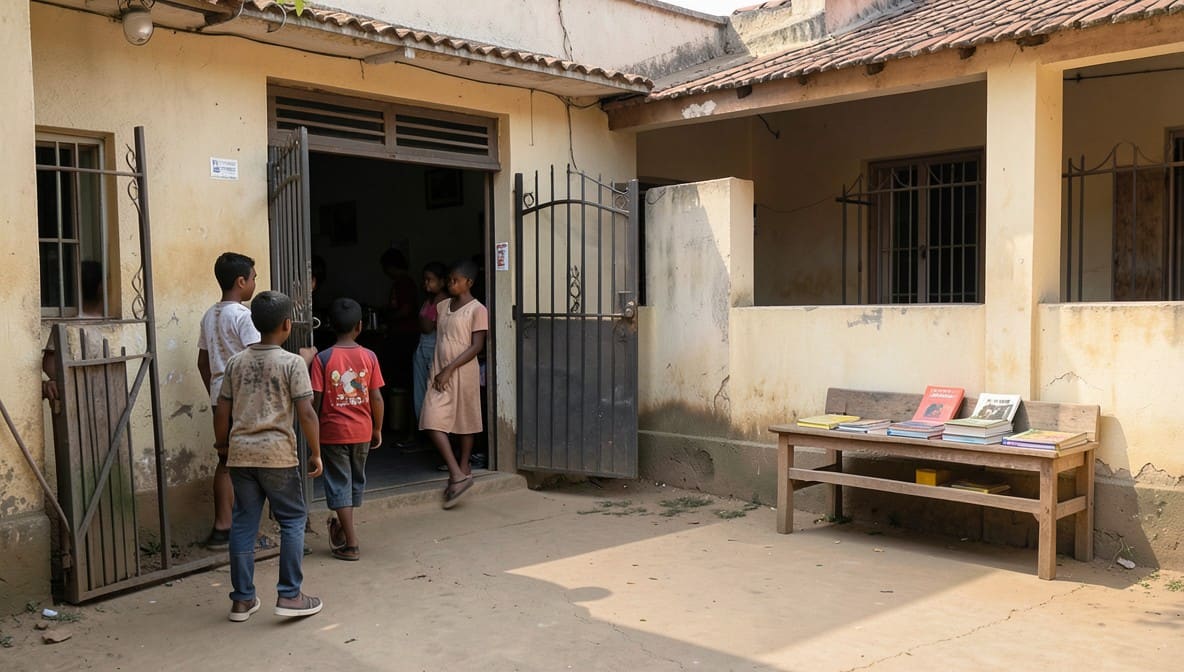
The Madhya Pradesh High Court has affirmed that educational institutions operated by registered societies are entitled to property tax exemption when the property is used exclusively for educational purposes. This ruling reinforces a long-standing principle under the Madhya Pradesh Municipal Corporation Act and provides clarity to hundreds of similar institutions across the state.
Background & Facts
The Dispute
The petitioner, Booti Bai Agrawal Vidya Sadan, is a school operated by the Agarwal Navyuvak Mandal Samiti, a society registered under the Madhya Pradesh Society Registration Act in 1962. The society was established with the primary objective of providing education to children. The school currently imparts instruction up to the 8th standard and serves 270 students. On 18.02.2026, the respondent authorities levied property tax, education cess, and other surcharges on the school premises, asserting that the property did not qualify for exemption.
Key Facts
- The petitioner society was registered in 1962 with a charitable educational purpose
- The school, Booti Bai Agrawal Vidya Sadan, has been functioning continuously since its establishment
- The school offers education up to Class VIII and is not engaged in any commercial activity
- The property is used exclusively for educational purposes with no part leased or utilized for profit-making ventures
- The tax demand was issued without any prior notice or opportunity of hearing
- The petitioner had previously relied on judicial precedents to seek exemption but was denied relief by the assessing authority
Procedural History
- 18.02.2026: Property tax, education cess, and surcharges levied by the municipal authority
- 05.03.2026: Writ Petition No. 8826 of 2026 filed before the High Court of Madhya Pradesh at Jabalpur
- 17.03.2026: Hearing conducted before Justice Vishal Mishra
The Parties' Positions
For the Petitioner: The counsel argued that the school qualifies for exemption under Section 136(c) of the Madhya Pradesh Municipal Corporation Act, which provides for exemption of property tax for buildings and lands exclusively used for educational purposes. Reliance was placed on three prior judgments of the same court: Municipal Corporation Bhopal v. RKDF Institute of Science and Others (2013 (4) MPHT 375), Satna Diocesan Society v. Municipal Corporation, Rewa (2013 (3) MPLJ 244), and two recent orders dated 25.01.2023 (WP No. 2261/2023), 20.10.2025 (WP No. 23486/2021), and 13.06.2022 (WP No. 6421/2020), all of which upheld tax exemption for similar educational institutions.
For the Respondents: The Government Advocate did not contest the legal principle but submitted that a representation filed by the petitioner was pending adjudication. Advocate Satyendra Kumar Patel, appearing for respondents no. 2 and 3, stated that the matter would be decided within 30 days and assured that no lock would be placed on the school premises.
Relief Sought
The petitioner sought quashing of the tax demand order dated 18.02.2026, a declaration that the school premises are exempt from property tax under Section 136(c) of the Madhya Pradesh Municipal Corporation Act, and a direction to the authorities to cease all further demands.
The Legal Issue
Whether an educational institution operated by a registered society, using its property exclusively for imparting education up to Class VIII, is entitled to exemption from property tax under Section 136(c) of the Madhya Pradesh Municipal Corporation Act, in light of binding precedents.
Arguments Presented
For the Petitioner
The petitioner’s counsel contended that the school meets all conditions for exemption under Section 136(c): the property is used exclusively for educational purposes, the institution is non-profit, and the educational activity is the sole function of the entity. The reliance on Municipal Corporation Bhopal v. RKDF Institute and Satna Diocesan Society was emphasized as binding precedents of the same court. The petitioner further cited three recent orders from the Jabalpur and Indore Benches, all granting similar relief, to demonstrate consistent judicial interpretation. It was argued that the absence of a formal exemption certificate does not negate the statutory right, and that the burden lies on the authority to prove non-compliance, which was not discharged.
For the Respondent/State
The State Advocate did not dispute the applicability of Section 136(c) or challenge the precedents. Instead, the focus was on procedural grounds, asserting that the petitioner’s representation was pending and would be decided within 30 days. No legal argument was advanced to refute the claim of exemption under the statute.
The Court's Analysis
The Court examined the statutory language of Section 136(c) of the Madhya Pradesh Municipal Corporation Act, which explicitly exempts "buildings and lands exclusively used for educational purposes" from property tax. The Court noted that the petitioner’s school is not engaged in any commercial activity, does not charge fees beyond nominal tuition, and serves the public interest in education. The Court observed that the precedents cited by the petitioner - Municipal Corporation Bhopal v. RKDF Institute, Satna Diocesan Society, and the three recent orders - are directly on point and have not been overruled or distinguished.
"The exemption under Section 136(c) is not contingent upon the nature of the managing body, but on the exclusive use of the property for education. A society, whether religious, charitable, or secular, is equally entitled if the condition of exclusive educational use is satisfied."
The Court further noted that the respondents did not dispute the factual matrix of exclusive educational use. The submission that a representation was pending was not a legal defense to an unlawful tax demand. The Court held that the petitioner’s right to exemption is statutory and immediate, and cannot be withheld pending administrative adjudication.
The Verdict
The writ petition was disposed of finally. The Court quashed the tax demand order dated 18.02.2026 and declared that the school premises of Booti Bai Agrawal Vidya Sadan are exempt from property tax, education cess, and surcharges under Section 136(c) of the Madhya Pradesh Municipal Corporation Act. The authorities were directed to immediately cease all recovery proceedings and remove any pending tax liability. The Court further directed that no lock or restriction be placed on the school premises, and compliance was to be effected within 7 days.
What This Means For Similar Cases
Exemption Is Automatic Upon Proof of Exclusive Use
- Practitioners representing educational societies need not wait for a formal exemption certificate - the statutory right arises upon proof of exclusive educational use
- Tax authorities cannot impose conditions beyond those prescribed in Section 136(c)
- The nature of the managing body (trust, society, religious institution) is irrelevant; only the use of property matters
Precedents Bind All Benches of the Same High Court
- Orders from Jabalpur and Indore Benches are binding on all benches of the Madhya Pradesh High Court unless overruled by a larger bench
- Lawyers should cite recent judgments from the same court to reinforce consistency in judicial interpretation
- Municipal corporations cannot ignore binding precedents by invoking "pending representation" as a delaying tactic
Procedural Fairness Requires Immediate Relief
- Tax demands issued without opportunity of hearing are void ab initio
- Courts will not permit administrative inaction to override statutory rights
- Injunctions against lock-ins or disruption of educational activities are readily granted when the institution serves public interest