The Bombay High Court has clarified that procedural discrepancies in preliminary planning documents cannot halt critical public infrastructure projects when technical alignment is justified by engineering necessity and compensation is assured under statutory frameworks. This judgment reinforces the balance between individual property rights and the public interest in energy infrastructure development.
Background & Facts
The Dispute
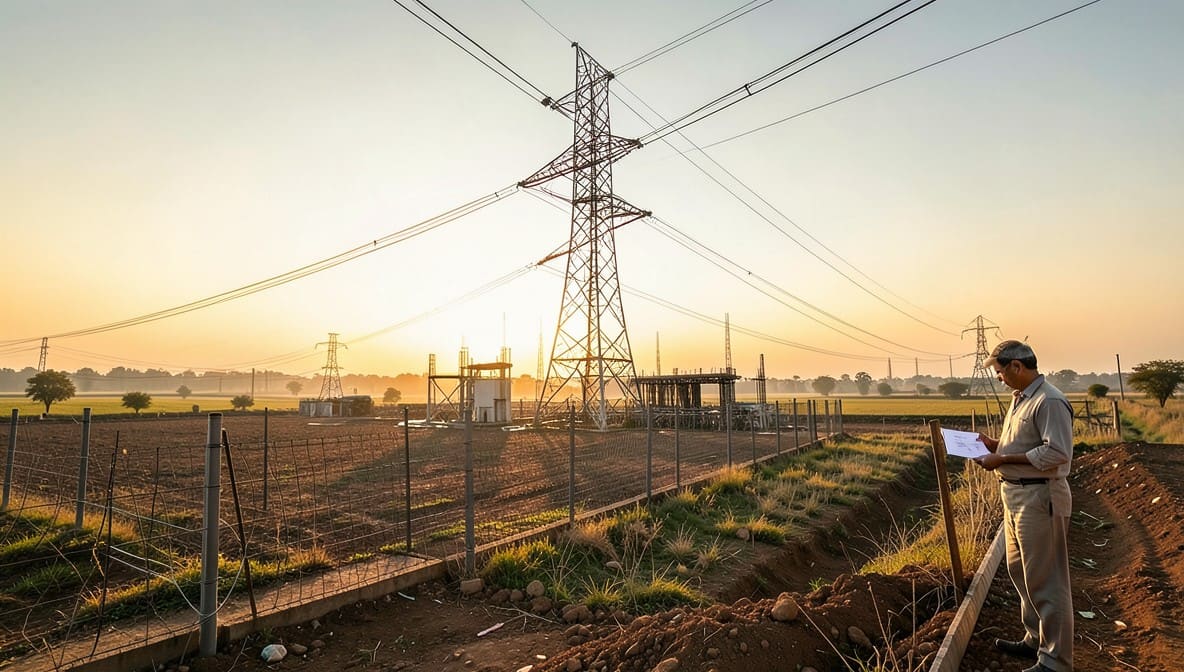
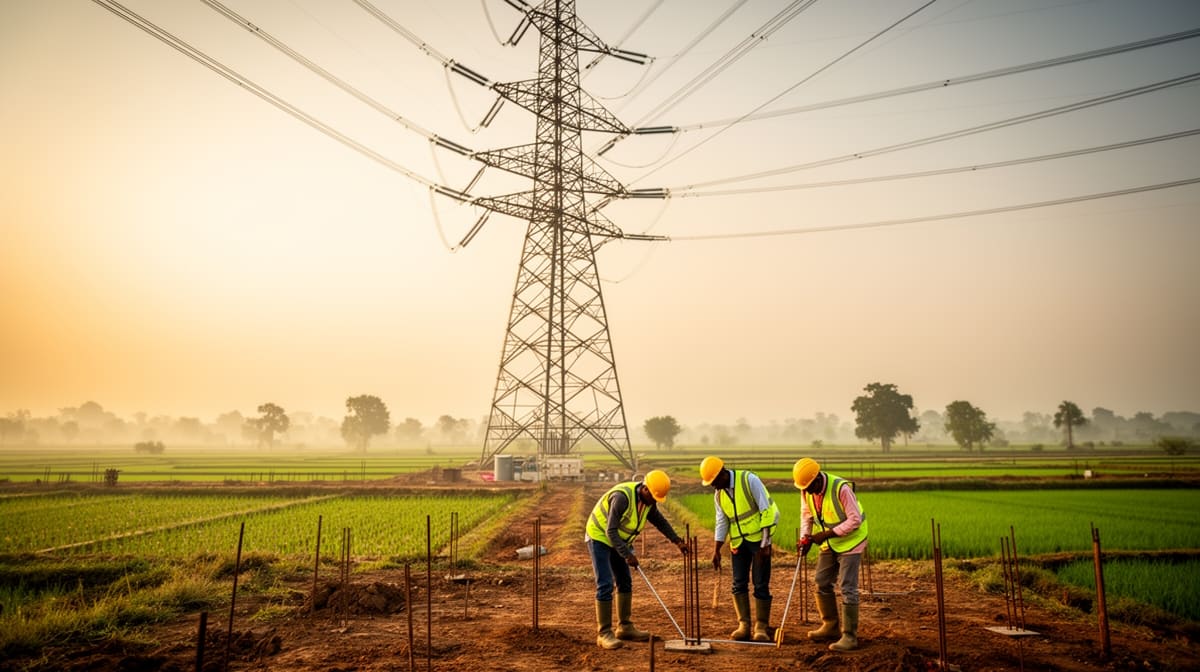
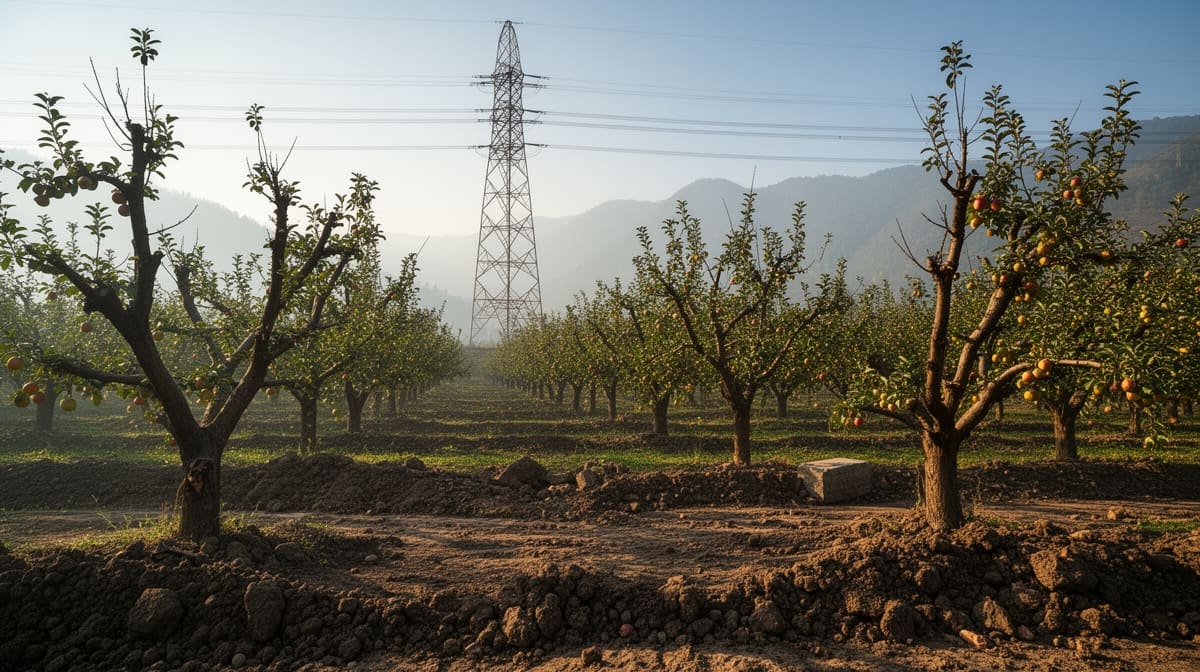
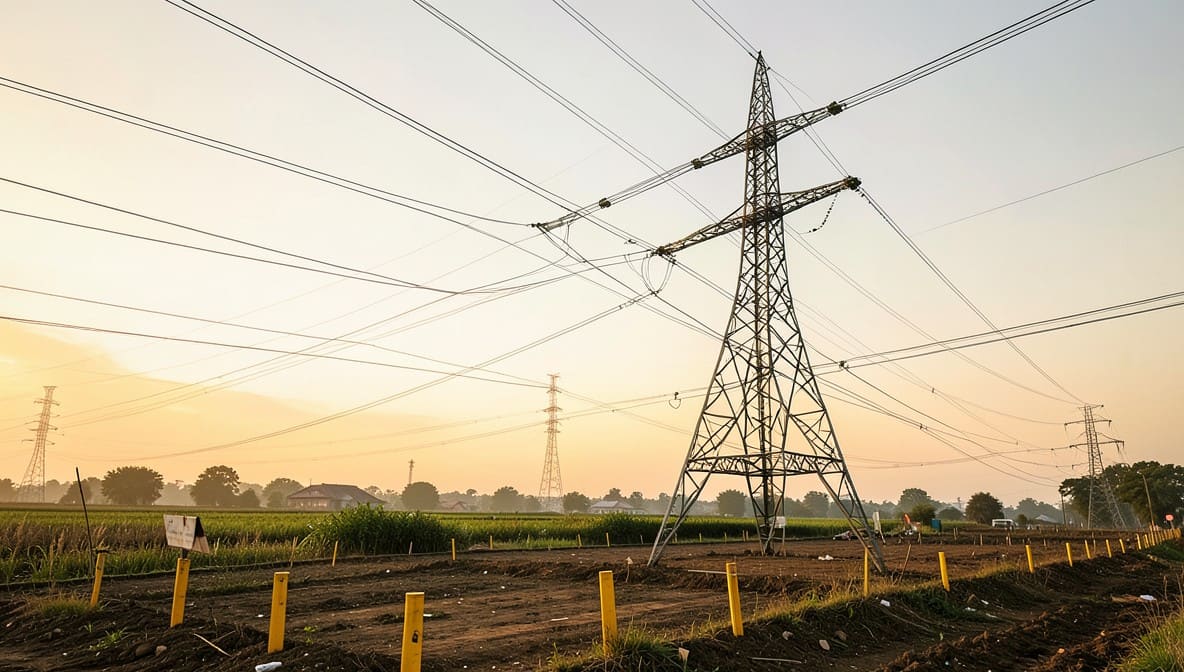
The petitioner, Aditya Yogesh Dhamdhere, challenged the proposed erection of a high tension transmission tower (Tower No. 145/4) on his land located in Survey No. 1524, Village Talegaon, Dhamdhere-3, Taluka-Shirur, District-Pune. The respondents, including the State of Maharashtra and the power transmission company, sought to install the tower as part of a state-sponsored high voltage transmission line project. The petitioner contended that Survey No. 1524 was not listed in the official tabular chart annexed to the minutes of a meeting held on 29.02.2024, which identified proposed tower locations and corresponding survey numbers.
Key Facts
- The petitioner is the lawful owner of land in Survey No. 1524, which is not mentioned in the 29.02.2024 meeting minutes or its annexed chart.
- The transmission line project involves multiple survey numbers across Pune district, including Survey Nos. 1525 and 1526, which were included in the 2024 chart.
- The petitioner filed the writ petition on 09.01.2026, seeking to restrain the respondents from carrying out any activity on his land.
- On 09.01.2026, the Court granted ad-interim relief restraining the respondents from erecting the tower on Survey No. 1524.
- Respondent No. 3, the power transmission company, filed a reply affidavit on record, supported by Exhibit-D (a detailed map) and Exhibit-E (a chart showing current longitude/latitude coordinates of the transmission line).
- Exhibit-D demonstrates that the transmission line alignment inevitably passes through Survey No. 1524.
- Exhibit-E confirms the precise geospatial route of the transmission line as of 2026.
- The State has issued Government Resolutions dated 02.11.2022 and 01.12.2022 outlining a compensation framework for land affected by transmission line projects.
Procedural History
- 29.02.2024: Meeting held to identify proposed tower locations; tabular chart annexed, excluding Survey No. 1524.
- 09.01.2026: Writ Petition No. 383 of 2026 filed before the Bombay High Court; ad-interim injunction granted restraining construction on Survey No. 1524.
- 18.03.2026: Hearing concluded; reply affidavits from Respondent No. 2 (Sub-Divisional Officer, Pune) and Respondent No. 3 filed and taken on record.
- 18.03.2026: Judgment delivered by the Division Bench.
The Parties' Positions
Petitioner: Argued that the exclusion of Survey No. 1524 from the 2024 planning document rendered the proposed action arbitrary and violative of Article 14 of the Constitution. Asserted that the absence of inclusion in the official chart invalidated any subsequent claim to use the land.
Respondents: Contended that the 2024 chart was a preliminary document and that the final alignment, determined in 2026 based on engineering and safety parameters, necessitated the tower’s location on Survey No. 1524. Relied on technical maps (Exhibit-D and Exhibit-E) to demonstrate the inevitability of the alignment.
Relief Sought
The petitioner sought a permanent injunction restraining the respondents from erecting any tower on Survey No. 1524, and a direction to revise the alignment to avoid his land.
The Legal Issue
Can a writ petition succeed in halting a public infrastructure project on the ground that a preliminary planning document omitted the petitioner’s land, when the final technical alignment, supported by engineering data, necessitates its use and compensation is assured under statutory provisions?
Arguments Presented
For the Petitioner
The petitioner’s counsel argued that the omission of Survey No. 1524 from the 29.02.2024 official chart constituted an arbitrary and non-transparent exercise of power. He contended that the petitioner’s right to property under Article 300A and the principle of legitimate expectation were violated. He relied on the doctrine of procedural fairness, asserting that any change in location after publication of the chart required fresh consultation and notice.
For the Respondent
The respondents’ counsel emphasized the highly technical nature of transmission line alignment, which depends on factors such as terrain, electromagnetic safety, load distribution, and distance from populated areas. They submitted that the 2024 chart was an initial draft and not a final, binding document. The maps (Exhibit-D and Exhibit-E) demonstrated that the alignment was fixed based on current engineering assessments, and Survey No. 1524 was the only viable location for Tower No. 145/4. They further cited the Indian Telegraph Act, 1885, and Government Resolutions of 2022 as providing a robust compensation mechanism.
The Court's Analysis
The Court examined the nature of the dispute and the evidentiary record. It noted that the petitioner’s challenge was grounded solely on the absence of Survey No. 1524 from a 2024 planning document, while the actual construction activity occurred in 2026. The Court observed that infrastructure projects of this nature involve dynamic technical assessments that evolve over time.
"There can be no doubt about the fact that erecting such towers for the purpose of laying down the high tension transmission lines is a highly-technical activity, which would require alignments to be decided on the basis of the safety concerns and engineering feasibility and in that context, it would be difficult for this Court in writ jurisdiction to question the wisdom of locating tower No.145/4 in Survey No.1524."
The Court juxtaposed the 2024 chart with the current technical maps (Exhibit-D and Exhibit-E) and found that the transmission line’s path inevitably traversed Survey No. 1524. It held that judicial review in writ jurisdiction cannot substitute technical expertise with subjective notions of procedural compliance, especially when the final decision is grounded in engineering necessity.
The Court further emphasized that the Indian Telegraph Act, 1885, particularly Section 16, provides a statutory mechanism for determining and disputing compensation. It also noted the existence of Government Resolutions dated 02.11.2022 and 01.12.2022, which establish a transparent compensation framework. The Court accepted the State’s assurance that compensation would be determined and disbursed in accordance with these provisions.
The Court distinguished between procedural irregularities in preliminary documentation and substantive rights. It held that while the petitioner’s right to compensation is absolute, his right to veto the project based on an outdated document is not.
The Verdict
The writ petition was dismissed. The interim order dated 09.01.2026 restraining construction on Survey No. 1524 was vacated. The respondents are permitted to proceed with the erection of Tower No. 145/4 on the petitioner’s land. The petitioner’s right to receive compensation under Section 16 of the Indian Telegraph Act, 1885, and the Government Resolutions dated 02.11.2022 and 01.12.2022 is preserved. The petitioner retains the right to challenge the quantum of compensation through the statutory mechanism provided under the Act.
What This Means For Similar Cases
Procedural Omissions Do Not Invalidate Technical Decisions
- Practitioners must distinguish between preliminary planning documents and final technical determinations in infrastructure cases.
- Challenges based solely on exclusion from early charts or lists will fail if the final alignment is supported by engineering data and statutory compensation mechanisms.
- Courts will defer to technical expertise in public utility projects unless there is evidence of mala fide or arbitrary decision-making.
Compensation Rights Are Absolute, Even When Project Location Is Not
- Landowners cannot block infrastructure projects on procedural grounds, but they retain enforceable rights to fair compensation.
- The Indian Telegraph Act, 1885, and state compensation schemes provide a clear legal pathway for dispute resolution - this must be exhausted before seeking judicial intervention.
- Legal advice should prioritize securing compensation assessments under statutory frameworks rather than seeking injunctions against project alignment.
Judicial Restraint in Infrastructure Disputes
- Writ courts will not interfere with the technical alignment of public utility projects absent gross illegality or violation of fundamental rights.
- The doctrine of public interest overrides minor procedural lapses in preliminary documentation when the end goal is essential infrastructure.
- Petitioners should focus on documenting compensation claims and initiating proceedings under Section 16 of the Indian Telegraph Act, rather than filing writ petitions to halt construction.