The Himachal Pradesh High Court has affirmed that acceptance of partial compensation under protest does not extinguish a landowner's right to claim full compensation for damage to crops and fruit trees caused by transmission infrastructure. This ruling reinforces the statutory remedy under Section 16(3) of the Indian Telegraph Act, 1885, and clarifies that procedural acceptance without consent cannot waive substantive rights.
Background & Facts
The Dispute
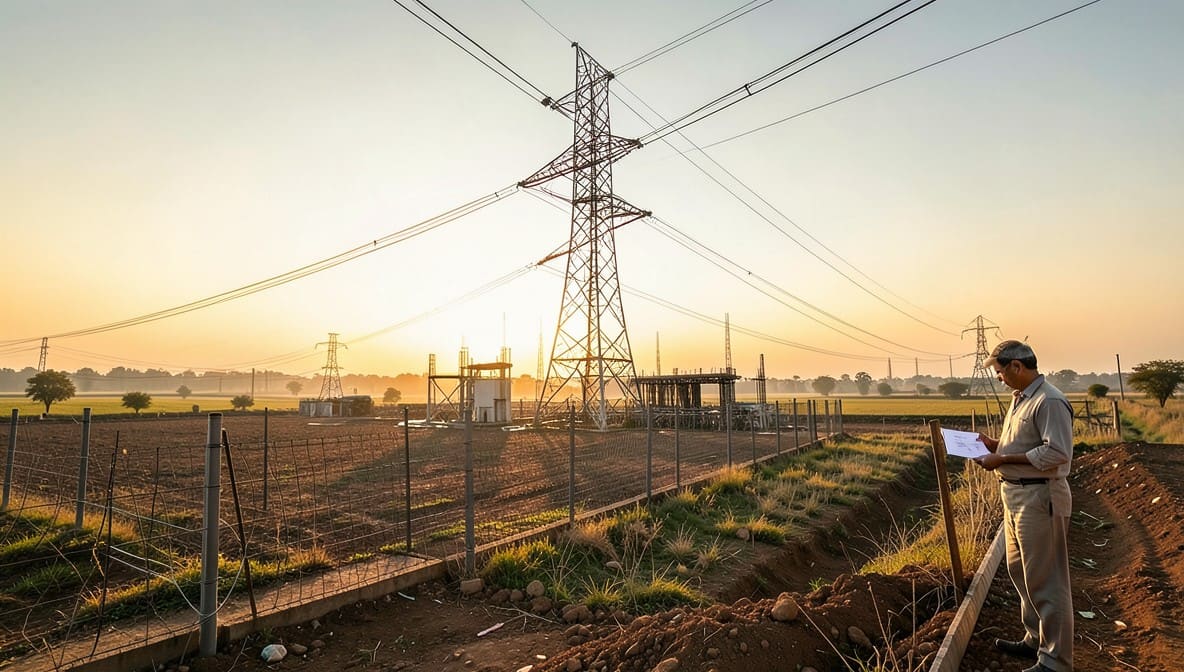
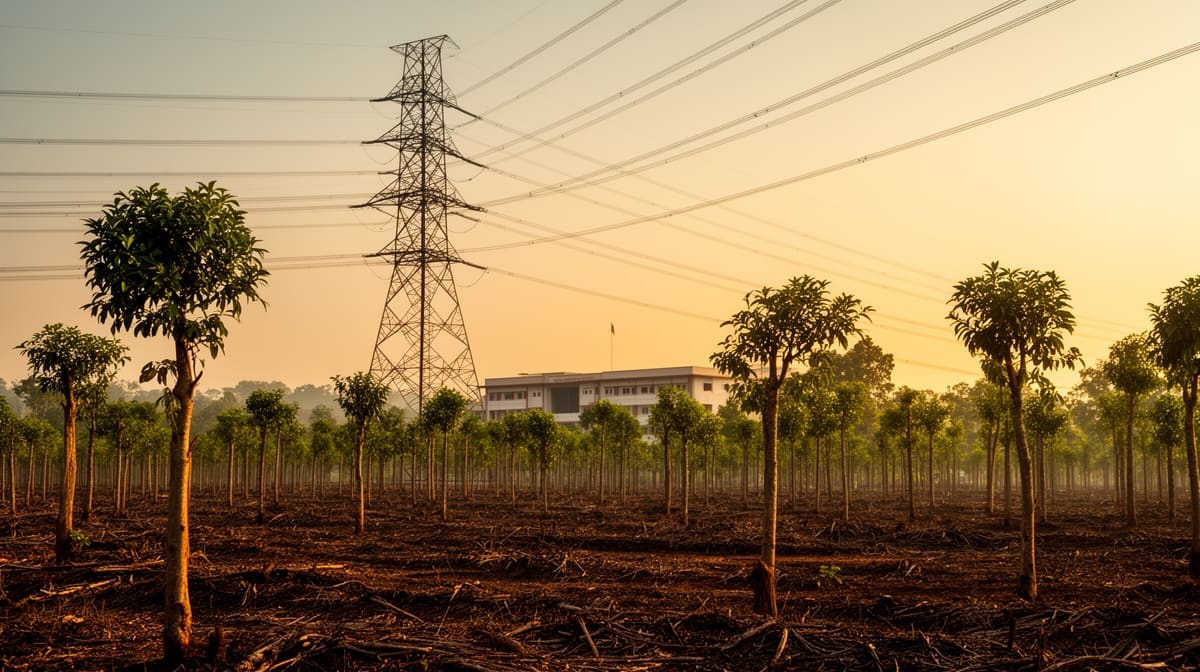
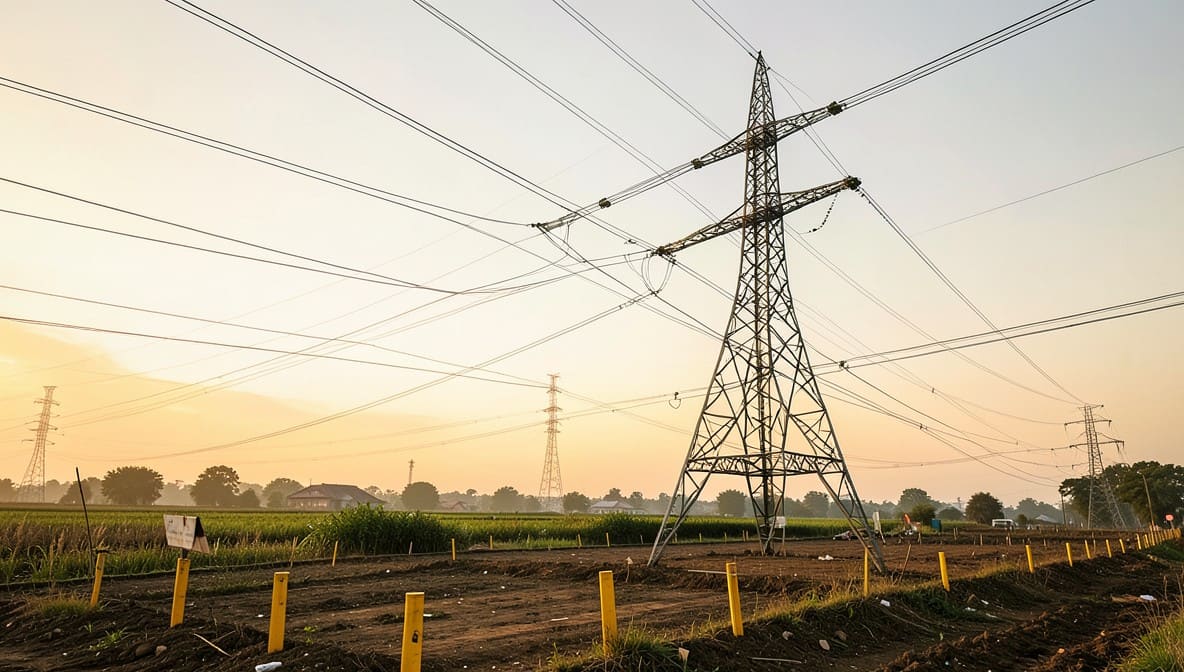
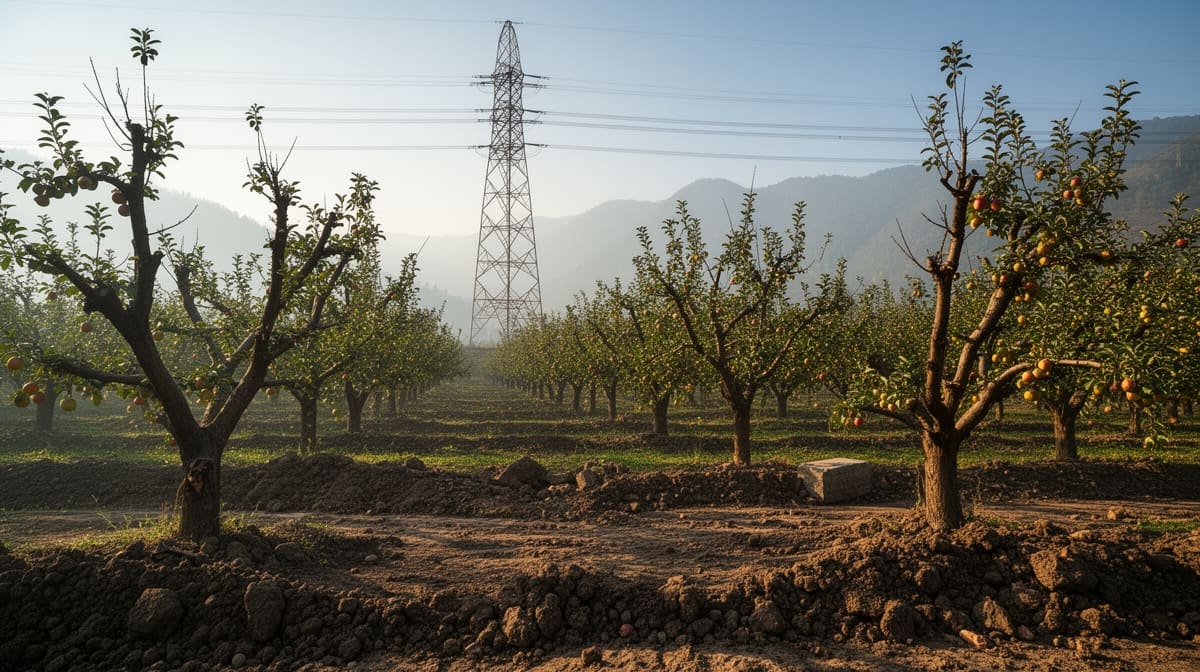
The petitioners, M/s JP Power Grid Limited, erected a transmission tower and laid transmission lines over Khasra No. 801, measuring 0-25-24 hectares, located at Mauja Thanari, Pargana and Tehsil Kotkhai in 2009. The land belonged to the respondents, who were cultivators of apple orchards and agricultural crops. The construction activities caused damage to 20 apple trees and the standing crops on the land.
Key Facts
- The transmission infrastructure was installed without prior acquisition of the land.
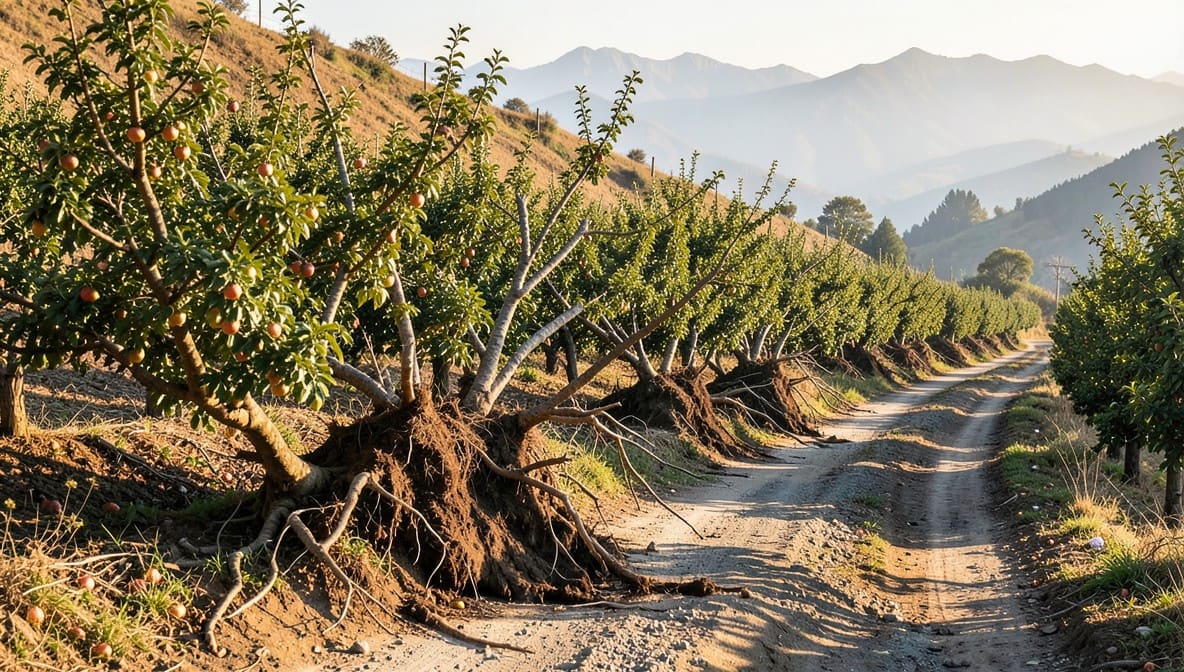
- The respondents suffered complete loss of yield from 20 apple trees due to damage from the tower and transmission lines.
- The petitioners paid Rs. 2,08,126/- to the respondents as compensation.
- The respondents received the amount under protest, explicitly reserving their right to claim further compensation.
- The respondents filed a petition under Section 16(3) of the Indian Telegraph Act, 1885, seeking Rs. 55 lakhs in compensation.
- The Field Kanungo (PW-3) submitted a report (Ext. PW-3/A) confirming complete damage to 20 apple trees and destruction of crops.
- A retired Deputy Director of Horticulture (PW-2) submitted an expert report (Ext. PW-2/A) assessing the total damage at Rs. 4,75,032/-, based on the age and market value of 12 trees aged approximately 10 years and 8 trees aged approximately 8 years.
- The respondents' testimony (PW-1) stated the trees were 10-12 years old; the expert's assessment of 8-10 years was deemed scientifically reasonable and consistent.
Procedural History
- 2009: Transmission tower and lines erected by petitioners over respondents' land.
- 2009: Payment of Rs. 2,08,126/- made to respondents under protest.
- 2010: Petition filed under Section 16(3) of the Indian Telegraph Act, 1885, before the Additional District Judge, Shimla.
- 2022: Additional District Judge allowed the petition and awarded Rs. 2,66,906/- as balance compensation (Rs. 4,75,032/- minus Rs. 2,08,126/-) with interest at 9% per annum from the date of filing.
- 2023: Petitioners filed Writ Petition No. 3146/2023 under Articles 226 and 227 of the Constitution of India before the High Court of Himachal Pradesh.
- 12.03.2026: Judgment delivered by the High Court.
Relief Sought
The petitioners sought quashing of the Additional District Judge's order dated 2022, arguing that the respondents had already accepted compensation and could not re-agitate the claim. The respondents sought confirmation of the award of Rs. 2,66,906/- with 9% interest from the date of filing of the petition.
The Legal Issue
The central question was whether acceptance of partial compensation under protest bars a claim for additional compensation under Section 16(3) of the Indian Telegraph Act, 1885, and whether the findings of fact by the subordinate court can be disturbed by the High Court under its writ jurisdiction.
Arguments Presented
For the Petitioner
Learned counsel for the petitioners contended that the respondents had accepted Rs. 2,08,126/- as full and final compensation for the damage to 20 apple trees. They argued that such acceptance, even if made under protest, constituted a waiver of further claims and estopped the respondents from seeking additional compensation. They further challenged the expert report as unsubstantiated, alleging it was not prepared after a site inspection and contained inconsistencies regarding tree age and damage extent.
For the Respondent
Learned counsel for the respondents argued that the payment of Rs. 2,08,126/- was received under protest, with explicit reservation of rights. They relied on the Field Kanungo's report and the expert's assessment to prove complete loss of 20 apple trees and crops. They emphasized that the petitioners failed to lead any rebuttal evidence and that the subordinate court's findings were based on credible, unchallenged testimony and documentation.
The Court's Analysis
The Court reaffirmed the well-established principle that the High Court, in exercise of its jurisdiction under Articles 226 and 227, cannot reappreciate evidence or substitute its own findings of fact unless the subordinate authority has acted perversely or without any evidence. The Court cited Ajay Singh v. Khacheru & Ors, Chandavarkar Sita Ratna Rao v. Ashalata S. Guram, and Shamshad Ahmad v. Tilak Raj Bajaj to underscore that the writ jurisdiction is supervisory, not appellate.
"The High Court does not act as a court of appeal or a court of error. It can neither review nor reappreciate, nor reweigh the evidence upon which determination of a subordinate court or inferior tribunal purports to be based."
The Court found that the findings of the Additional District Judge were fully supported by evidence. The Field Kanungo's report (Ext. PW-3/A) conclusively established complete damage to the apple trees, with no yield possible thereafter. The expert report (Ext. PW-2/A) provided a scientifically grounded valuation based on tree age and market rates. The minor discrepancy between the respondent's oral testimony (10-12 years) and the expert's assessment (8-10 years) was deemed immaterial and consistent with reasonable professional judgment.
The Court rejected the petitioners' argument that acceptance of payment barred further claim. It held that acceptance under protest does not constitute waiver or accord and satisfaction. The respondents had clearly reserved their rights, and the law under Section 16(3) permits claimants to seek full compensation even after interim payments.
The petitioners failed to lead any expert evidence to contradict the respondents' case. The absence of rebuttal evidence rendered their objections speculative and legally insufficient.
The Verdict
The petition was dismissed. The High Court upheld the order of the Additional District Judge dated 2022, confirming the respondents' entitlement to a balance compensation of Rs. 2,66,906/- with interest at 9% per annum from the date of filing of the petition until realization. All pending miscellaneous applications were disposed of.
What This Means For Similar Cases
Acceptance Under Protest Does Not Waive Statutory Rights
- Practitioners must advise clients that receiving interim compensation under protest preserves the right to claim full statutory compensation under Section 16(3).
- Any payment receipt should be accompanied by a written protest to avoid future estoppel claims.
- Courts will not infer waiver from partial payment unless there is clear, unambiguous consent to full and final settlement.
Expert Evidence Must Be Rebutted with Equal Rigor
- When expert reports are submitted in compensation cases, the burden shifts to the opposing party to produce a counter-expert or demonstrate material flaws.
- Mere allegations of non-inspection or inconsistency without evidence will not invalidate a report.
- Courts will accept reasonable variations in expert assessments if they are scientifically plausible and consistent with other evidence.
Judicial Restraint in Writ Jurisdiction
- High Courts will not interfere with factual findings in compensation matters unless perversity or jurisdictional error is established.
- Petitioners seeking writ relief against compensation awards must focus on procedural illegality, not factual disagreement.
- This judgment reinforces that Section 16(3) claims are fact-intensive and best resolved at the trial level.