The judgment by the Customs, Excise and Service Tax Appellate Tribunal (CESTAT) Kolkata clarifies a critical threshold for imposing penalties under Section 112(b) of the Customs Act, 1962: mere denial of knowledge is insufficient to evade liability when circumstantial evidence overwhelmingly points to conscious involvement in smuggling. This decision reinforces that administrative tribunals must assess intent through the totality of conduct, not just self-serving statements.
Background & Facts
The Dispute
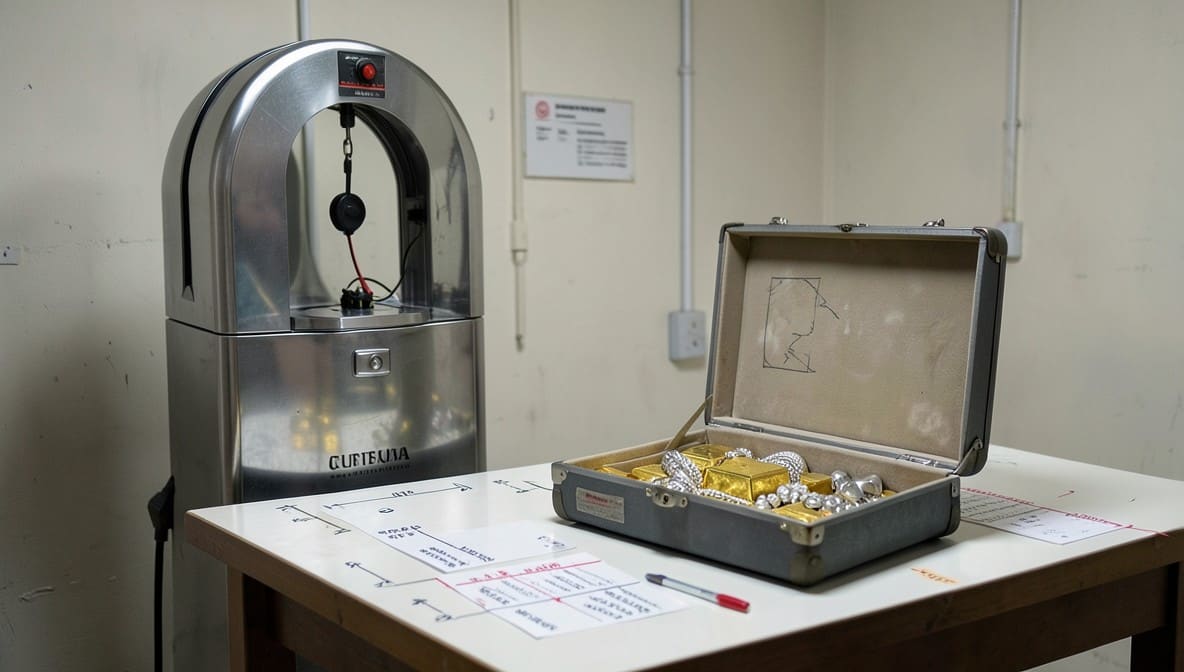
The appellants, Shri Vishal Kumar Trivedi and Shri Kundan Kumar Vyas, were apprehended on 1 October 2015 at Kolkata with 90 foreign-marked gold biscuits totaling 10,494 grams, valued at over Rs. 2.77 crore. Both claimed they were unaware of the contents of the packets they were carrying, asserting they were merely hired couriers acting under instructions from a person named Shri Rajesh Bhai, who allegedly provided them the gold at a temple in Kolkata.
Procedural History
- 1 October 2015: Seizure of gold biscuits by Customs authorities during routine interception.
- 31 January 2017: Commissioner of Customs (Preventive) passed an order under Section 111(b) and Section 111(d) of the Customs Act, 1962, ordering absolute confiscation of the gold.
- Same Order: Imposed penalties of Rs. 30 lakh on Trivedi and Rs. 20 lakh on Vyas under Section 112(b) for being "concerned in carrying" goods they allegedly knew or had reason to believe were liable to confiscation.
- 2017: Appeals filed before CESTAT challenging both confiscation and penalty.
Relief Sought
The appellants sought quashing of the penalty under Section 112(b), arguing they lacked prior knowledge of the gold’s illicit nature and were duped by a third party. They contended that their initial statements to Customs officers, wherein they disclaimed knowledge, should be accepted as credible.
The Legal Issue
The central question was whether Section 112(b) of the Customs Act, 1962 requires proof of actual knowledge of illicit nature, or whether prior knowledge can be inferred from circumstantial evidence when the accused’s narrative is internally inconsistent and uncorroborated.
Arguments Presented
For the Appellant
The appellants’ counsel argued that the penalty under Section 112(b) cannot be sustained without direct evidence of prior knowledge. They relied on the appellants’ immediate statements to Customs officers, wherein they stated they were unaware of the contents. They emphasized that the appellants were low-wage laborers from Rajasthan, lured by promises of easy work, and had no motive to smuggle high-value gold. The absence of any independent verification of Shri Rajesh Bhai’s existence, they argued, should not be held against the appellants.
For the Respondent
The Revenue contended that the appellants’ story was a fabricated cover-up. Key inconsistencies included: the mobile number attributed to Shri Rajesh Bhai was registered under a different person whose Aadhaar was cancelled in 2012; no verification was conducted to trace the alleged accomplice; the appellants failed to provide any address or identity of Shri Rajesh Bhai or his employee; and both appellants willingly signed No Objection Certificates for seizure without seeking direction from the alleged owner. The Revenue argued these facts collectively established reason to believe.
The Court's Analysis
The Tribunal examined the statutory language of Section 112(b), which penalizes a person who is "concerned in carrying" goods they "know or have reason to believe" are liable to confiscation. It held that "reason to believe" is not confined to express admissions but may be inferred from conduct, inconsistencies, and surrounding circumstances.
"The fact that no other ingredient of the version as put out by the two accused could be corroborated or verified inevitably leads to the premise of it being a made up story."
The Court noted that the appellants’ narrative contained multiple unverifiable claims: the existence of Shri Rajesh Bhai, the meeting at Ram Mandir, the delivery by an employee named Vyas - all of which collapsed under scrutiny. The Tribunal emphasized that the appellants’ willingness to surrender the gold without protest, despite claiming it belonged to someone else, was inconsistent with innocence. The use of a fake mobile number further indicated deliberate deception.
The Court distinguished between mere ignorance and willful blindness. It held that when a person carries high-value contraband under vague instructions from an untraceable intermediary, and the entire story unravels upon investigation, the law does not permit evasion of liability through a self-serving denial. The burden shifts to the accused to offer a plausible, verifiable explanation - which they failed to do.
The Verdict
The appellants lost on the issue of penalty liability. The Court upheld that Section 112(b) was applicable based on inferred prior knowledge. However, in view of the appellants’ limited role and the fact they had already undergone two weeks of imprisonment and faced criminal prosecution, the Tribunal reduced the penalties to Rs. 3 lakh and Rs. 2 lakh respectively.
What This Means For Similar Cases
Prior Knowledge Can Be Inferred from Conduct
- Practitioners must now argue that Section 112(b) liability arises not only from direct admissions but from a constellation of suspicious conduct: unverifiable alibis, inconsistent statements, and failure to challenge seizure despite claiming third-party ownership.
- A claim of ignorance will be rejected if the narrative is implausible or lacks corroboration.
Circumstantial Evidence Trumps Oral Denials
- In smuggling cases, oral statements denying knowledge carry little weight if contradicted by objective facts: fake contact details, untraceable third parties, and voluntary surrender of contraband.
- Customs authorities are empowered to rely on logical inferences drawn from the totality of evidence, not just recorded statements.
Penalty Reduction May Be Warranted for Minor Roles
- While liability under Section 112(b) is established through circumstantial inference, tribunals retain discretion to reduce penalties where the accused’s role is peripheral and they face concurrent criminal proceedings.
- Practitioners should seek mitigation on grounds of proportionality, especially where the accused is not the organizer or financier.