The Calcutta High Court has clarified that establishments engaged in Khadi production cannot evade Employees’ State Insurance coverage by classifying skilled artisans as self-employed when they are, in effect, integrated into the production workflow and compensated through wage-like structures. The judgment reinforces that statutory coverage under the ESI Act hinges on factual employment relationships, not labels.
Background & Facts
The Dispute
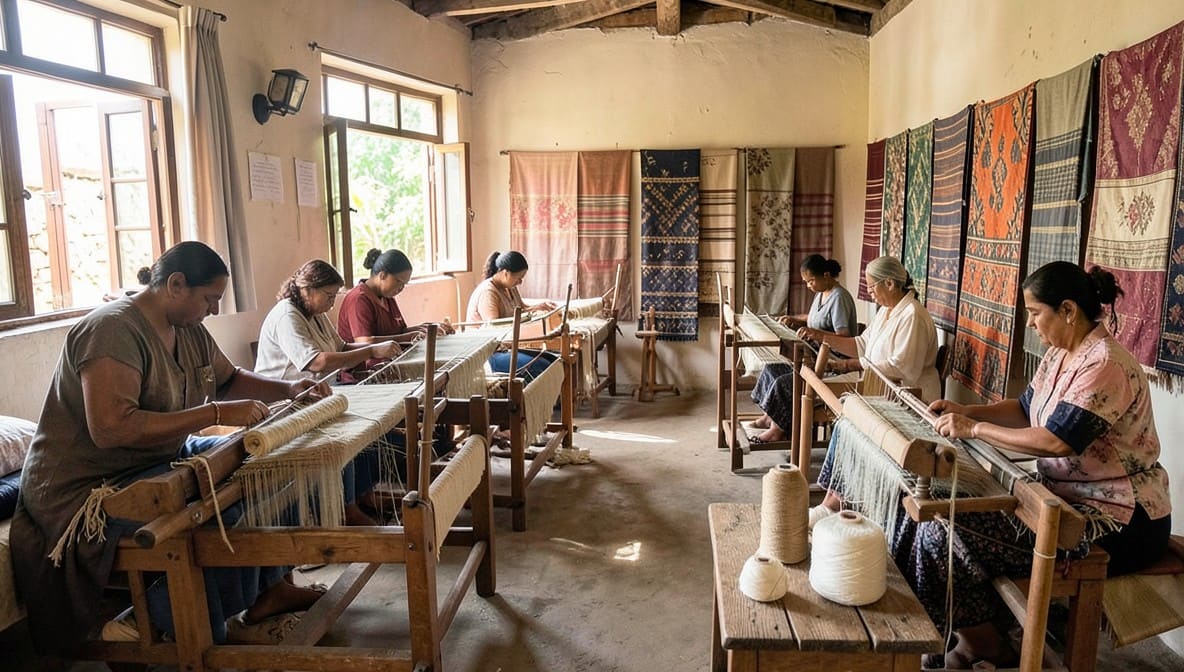
The petitioner, M/S. Diamond Silk Khadi Society, is a certified "Khadi Mark" institution operating under the Khadi and Village Industries Commission (KVIC) framework. It produces hand-spun and hand-woven silk fabric through artisans who work primarily from home, sourcing raw yarn and returning finished cloth. The institution claims it employs fewer than 10 persons at any time and that its artisans are self-employed under the Bye-laws of the Artisan Welfare Fund Trust (AWFT), established by KVIC in 1999. The Employees’ State Insurance Corporation (ESIC) contended that the petitioner’s establishment employed 13 persons, thereby mandatorily falling under the ESI Act, 1948.
Key Facts
- The petitioner is registered under the Khadi Mark Regulations, 2013, and operates under KVIC’s guidelines issued on 19.05.2003.
- The AWFT Bye-laws define "artisan" as a self-employed individual engaged in handloom weaving, with no fixed hours, no employment contract, and no supervision.
- On 22.03.2018, ESIC conducted an inspection and recorded 13 individuals associated with the establishment.
- The payment register listed 9 workers under "wages" and 4 others under "allowance," with Provident Fund (PF) deductions made from all 13.
- The petitioner claimed the 4 individuals under "allowance" were managing committee members receiving travel allowances, not employees.
- The petitioner’s annual turnover during FY 2024-25 was between ₹1.5 crore and ₹5 crore, necessitating GST registration.
- The petitioner did not produce wage records, identity proofs, or attendance registers for the 7 weavers/artisans during the inspection.
- The petitioner paid PF at 5% - a rate inconsistent with the mandatory 12% under the EPF & MP Act, 1952 - claiming it was a voluntary welfare contribution.
- The West Bengal Unorganized Sector Workers’ Welfare Act, 2007, lists "Khadi," "Sericulture," and "Handloom" as unorganized sector activities under Schedule entries 13, 15, and 33.
- ESIC’s 19.11.2014 press release acknowledged that 93% of India’s workforce in the unorganized sector is outside ESI coverage.
Procedural History
- 22.03.2018: ESIC inspection conducted at petitioner’s establishment.
- 02.05.2022: ESIC passed order under Section 45A of the ESI Act, 1948, declaring the petitioner’s establishment covered and demanding contributions of ₹6,12,150 for May 2017 to June 2021.
- 07.01.2025: Appellate Authority under Section 45AA dismissed the petitioner’s appeal without addressing substantive arguments.
- 07.01.2025: ESIC attached the petitioner’s bank account; later vacated by High Court order.
- 2025: Writ Petition (WPA 21943 of 2025) filed before Calcutta High Court challenging both orders.
The Parties' Positions
For the Petitioner:
- Artisans are self-employed under AWFT Bye-laws and KVIC guidelines.
- No employer-employee relationship exists: no control, no fixed hours, no termination rights.
- Travel allowances are not wages under Section 2(22) of the ESI Act.
- PF deduction at 5% was for discretionary welfare fund, not statutory PF.
- GST registration does not negate unorganized sector status.
- The establishment is seasonal due to sericulture cycles.
- The inspection report was not provided at the time of inspection, violating natural justice.
For the Respondent (ESIC):
- 13 individuals were engaged, exceeding the 10-employee threshold.
- The 4 individuals listed under "allowance" received PF deductions, indicating they were employees.
- No documentary evidence was provided for the 7 weavers/artisans, justifying their inclusion as employees.
- GST registration implies formal accounting, disqualifying the establishment from unorganized sector exemption.
- The payment register’s bifurcation was a deliberate attempt to evade ESI obligations.
Relief Sought
The petitioner sought quashing of the orders dated 02.05.2022 and 07.01.2025, and a direction to revoke its coverage under the ESI Act, 1948.
The Legal Issue
The central question was whether individuals classified as "artisans" under KVIC’s AWFT Bye-laws, who receive payments labeled as "allowance" with PF deductions and are integral to production, qualify as "employees" under Section 2(9) of the Employees’ State Insurance Act, 1948, thereby triggering mandatory coverage when total workforce exceeds 10 persons.
Arguments Presented
For the Appellant/Petitioner
The petitioner relied on the AWFT Bye-laws, which define artisans as self-employed, and cited the West Bengal Unorganized Sector Workers’ Welfare Act, 2007, to assert statutory recognition of Khadi and sericulture as unorganized sector activities. It argued that the absence of supervision, fixed hours, and employment contracts negated an employer-employee relationship. It further contended that travel allowances under Section 2(22) of the ESI Act are excluded from wages and that PF deductions at 5% were voluntary welfare contributions, not statutory contributions. The petitioner emphasized that GST registration does not convert an unorganized unit into an organized one.
For the Respondent/State
The ESIC relied on the inspection report and payment register, which showed 13 individuals receiving payments with PF deductions. It cited Regional Provident Fund Commissioner (II) v. Vivekananda Vidyamandir to argue that payments labeled as "allowance" but accompanied by PF deductions constitute wages if not demonstrably variable or performance-linked. It contended that the bifurcation of the payment register was a sham to circumvent statutory obligations. The ESIC further argued that formal registration under GST and maintenance of accounts indicated organized operations, disqualifying the establishment from unorganized sector exemptions.
The Court's Analysis
The Court undertook a fact-based analysis of the employer-employee relationship, rejecting the petitioner’s reliance on labels such as "artisan" or "self-employed." It emphasized that statutory coverage under the ESI Act depends on the reality of the relationship, not contractual or institutional designations.
"In order that the amount goes beyond the basic wages, it has to be shown that the workman concerned had become eligible to get this extra amount beyond the normal work which he was otherwise required to put in."
The Court applied the principle from Vivekananda Vidyamandir to the 4 individuals listed under "allowance." It found no evidence that these payments were variable, performance-linked, or tied to extra output. The fact that PF was deducted from these amounts indicated they were treated as wages in practice. The bifurcation of the payment register into two sections was deemed a deliberate stratagem to obscure the true number of employees.
The Court further held that the absence of wage records for the 7 weavers/artisans justified their inclusion as employees under the ESI Act’s evidentiary rules. The petitioner’s failure to produce documentation shifted the burden of proof, and the ESIC’s inference was upheld.
The Court dismissed the argument that GST registration or turnover negated unorganized sector status. However, it held that the existence of formal accounting, PF deductions, and structured payment systems indicated organized operations, which outweighed the petitioner’s claim of informal status.
The Court concluded that the total workforce of 13 persons, including both wage recipients and allowance recipients with PF deductions, clearly exceeded the 10-person threshold under Section 2(9) of the ESI Act. The petitioner’s attempt to exclude artisans based on institutional Bye-laws was legally unsustainable.
The Verdict
The writ petition was dismissed. The orders dated 02.05.2022 and 07.01.2025 under Sections 45A and 45AA of the ESI Act, 1948, were upheld. The petitioner’s establishment is covered under the ESI Scheme. The demand for contributions of ₹6,12,150 for the period May 2017 to June 2021 remains enforceable. The bank account attachment previously vacated is not reinstated, and all interim orders stand vacated.
What This Means For Similar Cases
Artisan Status Does Not Override Employment Reality
- Practitioners must assess the actual nature of work, payment structure, and control mechanisms - not institutional labels - when determining ESI applicability.
- Even if artisans are classified as self-employed under cooperative or trust bye-laws, ESI coverage applies if they are integrated into production and receive regular, PF-deducted payments.
Payment Labels Are Not Dispositive
- Payments labeled as "allowance," "stipend," or "incentive" will be treated as wages if PF is deducted and no evidence shows they are performance-linked or variable.
- Employers must maintain clear, unified wage registers to avoid suspicion of evasion.
GST Registration and Turnover Are Relevant Indicators
- Formal registration under GST, maintenance of accounts, and high turnover may undermine claims of being an unorganized sector unit for ESI purposes, even if the activity is traditionally informal.
- The unorganized sector exemption under state laws does not automatically override central social security statutes.
Burden of Proof Lies with the Employer
- Failure to produce wage records, attendance registers, or contracts for workers will lead to adverse inference under the ESI Act’s evidentiary framework.
- Employers must proactively document and substantiate claims of non-employment for artisans, contractors, or home-based workers.