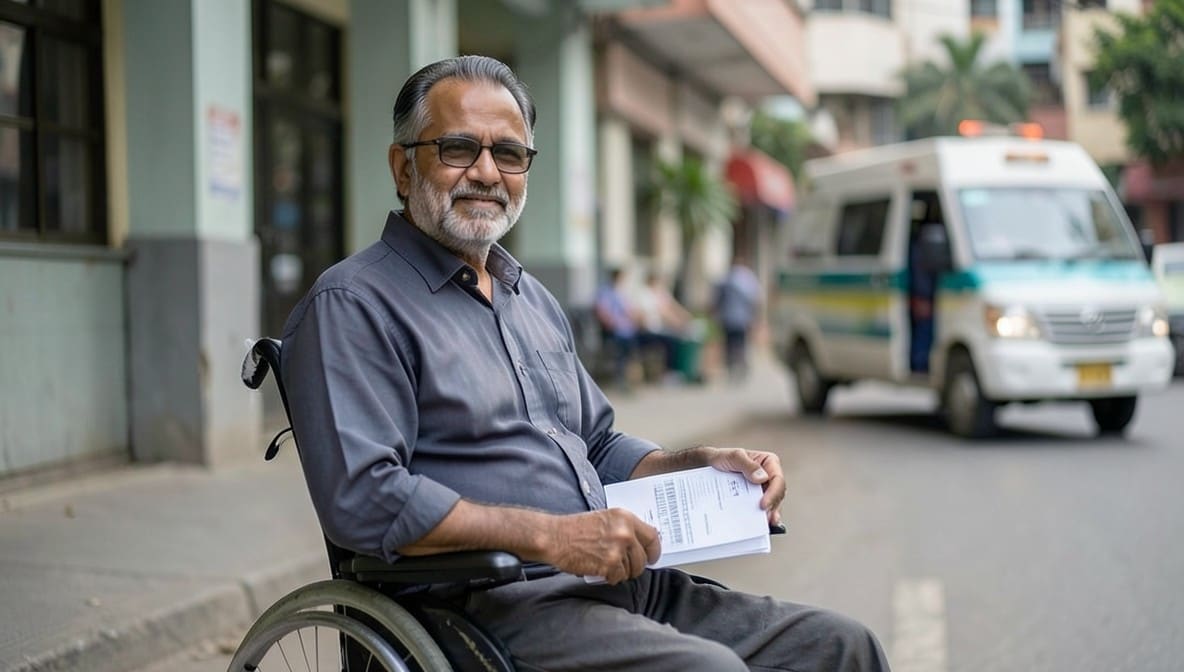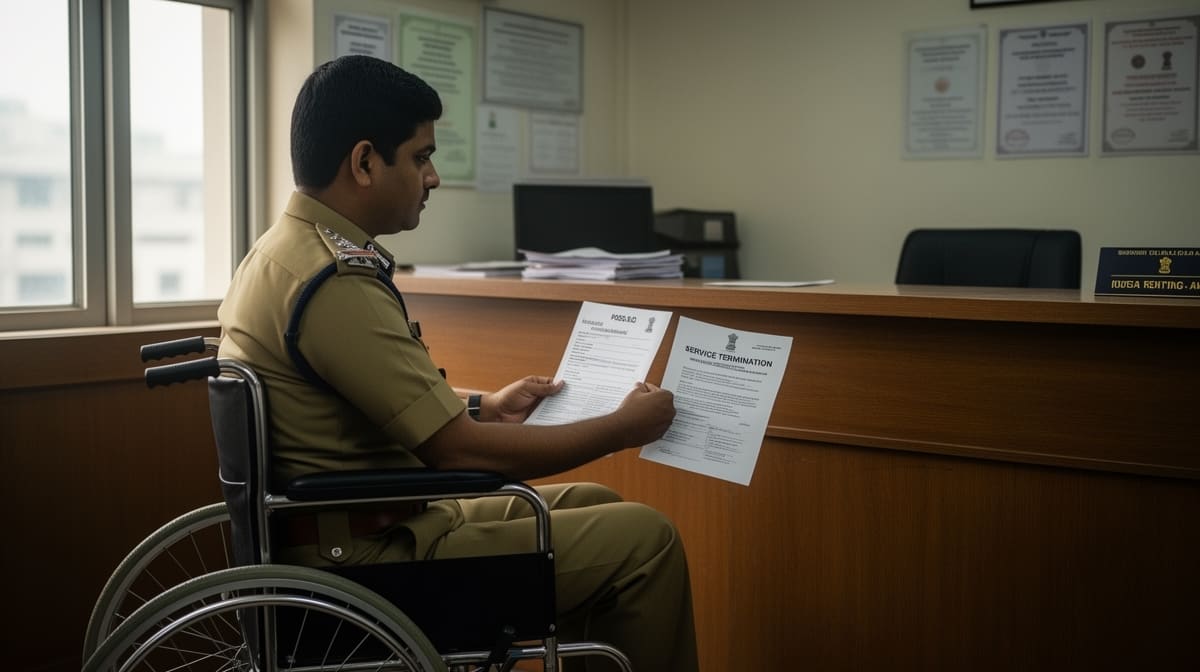
The Delhi High Court has clarified that under the Employee's Compensation Act, 1923, the assessment of loss of earning capacity must account for the cumulative impact of both pre-existing physical disability and new injury sustained in the course of employment. This ruling reinforces the welfare-oriented intent of the statute and mandates a holistic evaluation of disability in compensation claims.
Background & Facts
The Dispute
The dispute arose from a workplace accident involving Geeta @ Jitu @ Gitu, a female workman employed by Yogesh Sharma & Anr., operating under the name M/s Sharma Garments. The workman alleged she had been working since 24.07.2008 at two premises in Delhi - 7313, Guru Govind Singh Gali, Gandhi Nagar and 46/2 Gali No.17, East Arjun Nagar - without any formal appointment letter, attendance records, or written contract. The Management frequently changed business names and did not inform employees of such changes. Operations were overseen by Rajender Batra, a senior employee paid on a piece-rate basis.
Key Facts
- The workman suffered from pre-existing post-polio residual paralysis in her left lower limb.
- On 24.05.2013 at approximately 7:00 PM, while using a lift in a multi-storey building, the lift chain broke and the cabin fell, causing injury to her right leg.
- She sustained a fracture and was taken to Usha Memorial Orthopedic Centre, Krishan Nagar, by the Management.
- She was discharged on 27.05.2013 but continued treatment until 21.05.2014.
- The Management allegedly threatened her not to file a complaint.
- She filed a police complaint on 17.07.2014 after repeated threats.
- The workman was paid wages exclusively in cash, explaining the absence of formal payroll records.
- She produced printed white envelopes bearing her name as evidence of employment.
- Her age was inconsistently recorded across documents; the Commissioner relied on her Aadhaar card, which indicated she was 28 years old at the time of the accident.
Procedural History
- 24.05.2013: Workplace accident occurred.
- 17.07.2014: Workman filed police complaint.
- 2015: Workman filed claim application before the Commissioner, Employee’s Compensation (District-East).
- 31.10.2017: Commissioner passed ex parte award in favour of the workman.
- 01.02.2017: Delhi High Court set aside the ex parte award in W.P.(C) 7915/2015 and remanded the matter for fresh consideration.
- 31.10.2017: Commissioner issued fresh award granting compensation of Rs.3,89,508 and penalty of Rs.88,952.
- 2018: Both parties filed appeals before the Delhi High Court - FAO 20/2018 (Management) and FAO 23/2018 (Workman).
The Parties' Positions
For the Management (Appellants in FAO 20/2018):
- Denied employment relationship, claiming the workman was merely a visitor to the premises.
- Challenged the accident’s occurrence, citing testimony of Ashwani Sharma, Yogesh Sharma, and Saurabh Kohli, who stated the lift was never operational.
- Argued that Rajender Batra, a tenant, testified the workman was not an employee.
- Contended the disability certificate dated 11.05.2016 erroneously referred to the left leg, and the age of 28 years was incorrect.
For the Workman (Appellant in FAO 23/2018):
- Asserted continuous employment since 2008.
- Cited cash wage payments as corroborated by witness Bhaskar Soni and others.
- Presented white envelopes with her name as proof of employment.
- Argued that the Commissioner erred in assessing only 25% loss of earning capacity, when the combined disability from pre-existing condition and accident warranted 100%.
Relief Sought
- Management sought setting aside of the award.
- Workman sought enhancement of compensation, arguing for 100% loss of earning capacity and revision of the compensation amount.
The Legal Issue
The central question was whether, under the Employee’s Compensation Act, 1923, the loss of earning capacity must be assessed solely based on the accident-induced injury, or whether it must account for the cumulative effect of a pre-existing disability and the new injury sustained in the course of employment.
Arguments Presented
For the Appellant (Management)
Counsel argued that the Commissioner erred in accepting the workman’s testimony in the absence of formal employment records. Reliance was placed on the testimony of Management’s witnesses who denied the lift’s functionality and the workman’s employment. It was contended that the disability certificate contained a clerical error, and the age recorded was inconsistent with other documents. The Management further argued that the Commissioner’s reliance on the Aadhaar card was misplaced and that the 25% loss of earning capacity was adequate.
For the Appellant (Workman)
Counsel submitted that the Commissioner correctly inferred the employment relationship from circumstantial evidence: cash payments, medical treatment arranged by the Management, and the consent letter for surgery signed by the Management. The workman’s consistent testimony, supported by the GTB Hospital’s disability certificate, established a 90% permanent locomotor impairment in the right lower limb. Counsel argued that the Commissioner’s 25% assessment failed to account for the combined impact of the pre-existing 90% disability in the left limb and the 49% new impairment in the right limb, which together rendered her incapable of any meaningful employment.
The Court's Analysis
The Court emphasized that the Employee’s Compensation Act is a welfare legislation, and the Commissioner is the final fact-finding authority under Section 30. The scope of appellate review is limited to substantial questions of law, not re-appreciation of evidence.
The Court found no merit in the Management’s challenge to the employment relationship. The Commissioner rightly relied on the consent letter signed by the Management for the workman’s surgery, the immediate medical assistance provided, and the consistent testimony of witnesses confirming cash wage payments. The absence of formal records was explained by the nature of the informal employment arrangement.
Regarding the disability assessment, the Court noted that the GTB Hospital’s certificate dated 11.05.2016 certified 90% permanent locomotor impairment in the right lower limb. The initial reference to the left leg was acknowledged as a clerical error, later corrected. The Court accepted the medical opinion of Dr. Puneet Mishra and Dr. R.K. Sachdeva, who confirmed the 49% impairment directly attributable to the accident.
"Considering that physical disability of the workman in both lower limbs stands established, one of which is caused by the accident in question, the loss of future earning capacity is re-assessed at 50%."
The Court held that the Commissioner’s original 25% assessment was inadequate. The pre-existing condition in the left limb and the new injury in the right limb must be viewed cumulatively. While the workman was not rendered completely incapacitated, her ability to perform any sustained physical work was severely compromised. A 50% loss of earning capacity was deemed a fair and reasonable reflection of her diminished capacity to earn.
The Court also upheld the Commissioner’s reliance on the Aadhaar card for age determination, noting it was the most reliable document available.
The Verdict
The Delhi High Court allowed the workman’s appeal in part and dismissed the Management’s appeal. The Court set aside the Commissioner’s award of 25% loss of earning capacity and re-assessed it at 50%. The matter was remanded to the Commissioner for recalculation of compensation based on this revised percentage. The amounts previously deposited by the Management with the Registry and Commissioner were directed to be released to the workman. The case was listed before the Commissioner for fresh computation on 30.03.2026.
What This Means For Similar Cases
Combined Disabilities Must Be Considered Cumulatively
- Practitioners must now argue that pre-existing disabilities, even if unrelated to employment, must be factored into the loss of earning capacity calculation when a new injury exacerbates the condition.
- A mechanical application of accident-specific impairment percentages is insufficient under the Act’s welfare framework.
Circumstantial Evidence Suffices to Prove Employment
- Absence of appointment letters or attendance registers does not negate employment where cash payments, medical assistance, and consistent testimony corroborate the relationship.
- Envelopes bearing the worker’s name, consent letters signed by the employer, and witness testimony on wage payment can collectively establish an employer-employee relationship.
Commissioner’s Findings on Facts Are Final
- Appellate courts must not interfere with factual findings unless there is a clear error of law or perversity.
- Challenges based on minor inconsistencies in documents or witness testimony will not succeed if the Commissioner’s conclusion is reasonably supported by evidence.