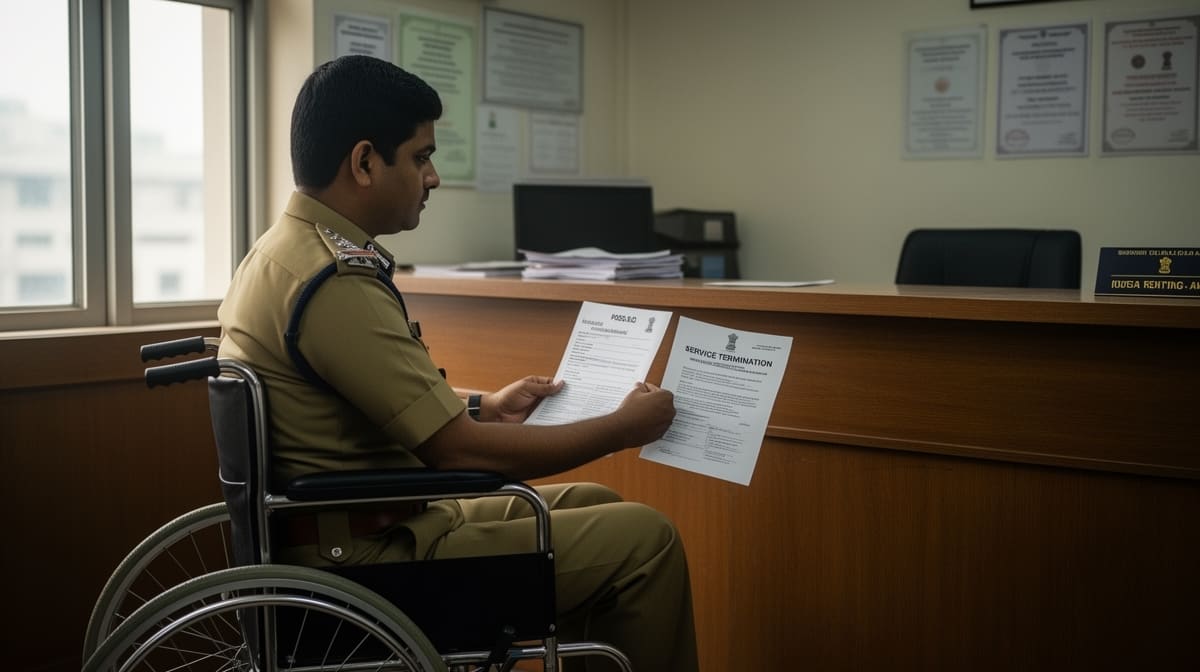
The Madras High Court has delivered a pivotal clarification on how compensation for permanent disability must be calculated in motor accident claims, rejecting the mechanical application of medical disability percentages to economic loss. This judgment reinforces that tribunals must conduct a nuanced, fact-specific assessment of how injuries affect an individual’s earning capacity, not merely rely on medical certificates.
Background & Facts
The Dispute
The claimant, M. Sridhar, sustained multiple fractures - including left zygoma, left maxilla, left ulnar styloid, and traumatic epididymitis - after his motorcycle collided with a bus operated by the Tamil Nadu State Transport Corporation on 14 January 2017. He filed a claim for Rs. 15 lakh in compensation, alleging the bus driver’s sudden braking caused the accident. The Corporation countered that the claimant was riding rashly and collided with the stationary bus.
Procedural History
- 14 January 2017: Accident occurred on Maduravoyal-Tambaram Bypass.
- 2017: Claim petition filed before Motor Accident Claims Tribunal (MACT), Chennai.
- 15 April 2024: MACT awarded Rs. 14.8 lakh after deducting 20% for contributory negligence.
- 2025: Both parties appealed to the Madras High Court - claimant seeking enhancement, Corporation seeking dismissal.
Relief Sought
The claimant sought enhancement of compensation, arguing the MACT erred in fixing only 30% functional disability (despite a 41% Medical Board assessment) and by excluding non-basic salary components. The Corporation sought to reverse the 80:20 negligence apportionment and challenge the multiplier-based loss of earning capacity calculation.
The Legal Issue
The central question was whether the percentage of permanent physical disability, as certified by a Medical Board, can be automatically equated to the percentage of loss of earning capacity for the purpose of calculating compensation under the Motor Vehicles Act, 1988.
Arguments Presented
For the Petitioner
The claimant’s counsel relied on Rajkumar v. Ajay Kumar (2011) 1 SCC 343 to argue that the Tribunal must assess the actual impact of disability on earning capacity, not mechanically adopt the medical percentage. They contended that the 41% disability, confirmed by a constituted Medical Board, directly impaired his ability to perform as a Team Leader, warranting a higher loss of earning capacity. They further argued that gross income - including allowances - should be considered for salary calculation.
For the Respondent
The Transport Corporation argued that the Tribunal correctly applied the 30% functional disability, as the injuries were surgically stabilized and did not prevent the claimant from continuing employment. They contended that the claimant’s income was overstated by including non-salary components and that the 80% liability assigned to the bus driver was disproportionate to the evidence, which showed the claimant’s rash riding.
The Court's Analysis
The Court undertook a detailed review of the Supreme Court’s ruling in Rajkumar v. Ajay Kumar, emphasizing that permanent disability and loss of earning capacity are distinct legal concepts. The Court held that while the Medical Board’s 41% assessment was credible, the Tribunal was justified in fixing functional disability at 30% based on surgical stabilization and recovery.
"The percentage of permanent disability with reference to whole body of a person, cannot be assumed to be percentage of loss of earning capacity. To put it differently, percentage of loss of earning capacity is not same as percentage of permanent disability."
The Court further clarified that the Tribunal must evaluate three factors: (1) the nature of the claimant’s pre-accident occupation, (2) the functional limitations imposed by the injury, and (3) whether the claimant could continue in his profession or was forced into a lesser role. Here, the claimant’s role as a Team Leader required physical mobility and coordination, which were impaired. However, the Tribunal’s use of net salary (Rs. 19,650) was upheld, as allowances like conveyance and medical were not part of regular income.
The Court found the Tribunal’s award for pain and suffering (Rs. 50,000) and loss of amenities (Rs. 10,000) inadequate given the severity of injuries and the claimant’s age (35 years). It enhanced these heads to Rs. 1,00,000 and Rs. 20,000 respectively, noting that these are non-quantifiable but essential components of just compensation.
The Verdict
The claimant prevailed in part. The Madras High Court dismissed the Transport Corporation’s appeal and partially allowed the claimant’s appeal. The Court upheld the 80:20 negligence apportionment and the loss of earning capacity calculation but enhanced the compensation by Rs. 60,000, bringing the total payable to Rs. 15,28,000 after deduction for contributory negligence.
What This Means For Similar Cases
Permanent Disability ≠ Loss of Earning Capacity
- Practitioners must now submit evidence linking medical disability to occupational impact, not merely rely on disability certificates.
- Tribunals are obligated to ask medical experts to explain how a limb-specific disability affects overall function and employment.
- A 60% hand disability may mean 100% loss of earning capacity for a carpenter but negligible loss for a software engineer.
Compensation Heads Must Be Independently Justified
- Pain and suffering and loss of amenities cannot be treated as token amounts; they must reflect the claimant’s age, profession, and injury severity.
- Awards under these heads may be reduced if loss of earning capacity is high (to avoid duplication), but not automatically.
- Courts will scrutinize whether allowances are part of regular income before excluding them from salary calculation.
Medical Evidence Requires Active Tribunal Engagement
- Tribunals must not passively accept "ready-made" disability certificates; they must verify the examining doctor’s credentials and cross-examine.
- Where doubt exists, tribunals should constitute their own Medical Board under Section 169 of the Motor Vehicles Act.
- Judges and tribunal members should maintain reference manuals on physical impairment assessment to interpret medical evidence accurately.