The Punjab and Haryana High Court has clarified that compensation in motor accident cases must reflect the actual impact of injury on the victim’s earning capacity, not merely the percentage of medical disability. This judgment establishes a critical doctrinal shift in how functional impairment is assessed, particularly for agricultural workers whose livelihood depends on physical mobility.
Background & Facts
The Dispute
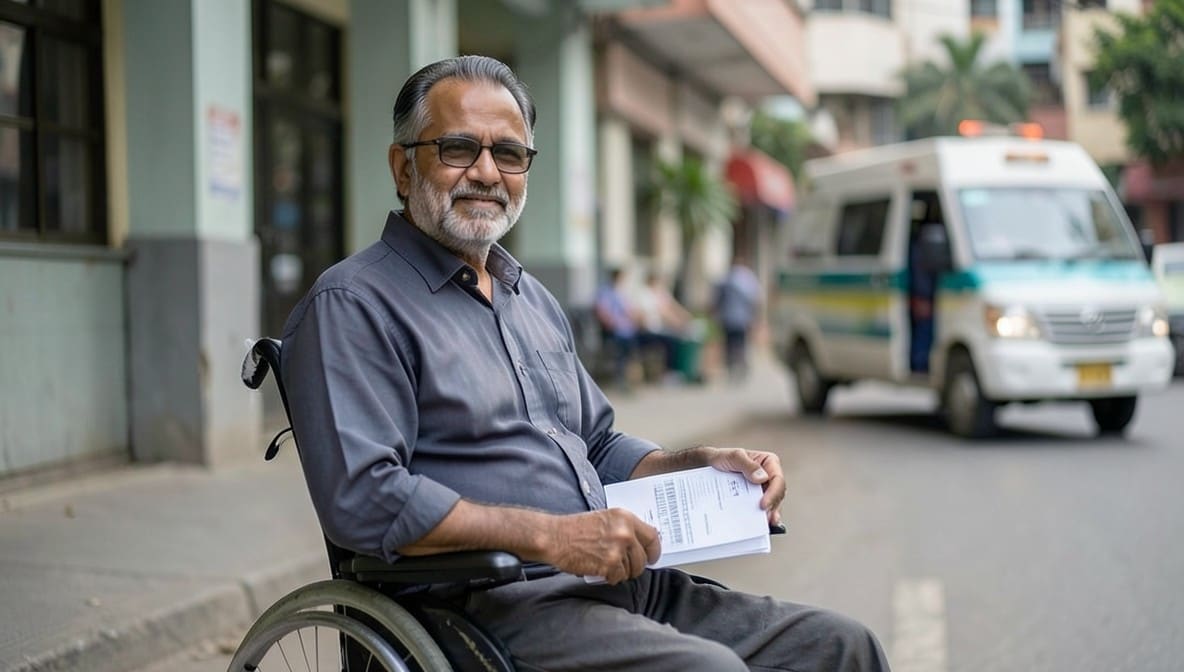
The appellant, Surinder Singh, was involved in a motor vehicle accident on 20.07.2001 near Community Health Centre, Assandh, when the vehicle driven by respondent No.1, bearing registration No. HR-46-0896, collided with his motorcycle. The accident occurred due to rash and negligent driving on the wrong side of the road. The appellant sustained grievous injuries, including compound fractures of the right femur, right hand, and right great toe. He was admitted to Karan Hospital, Karnal, from 20.07.2001 to 04.08.2001 and underwent multiple surgeries, including a second operation on 31.07.2001 due to post-operative infection.
Key Facts
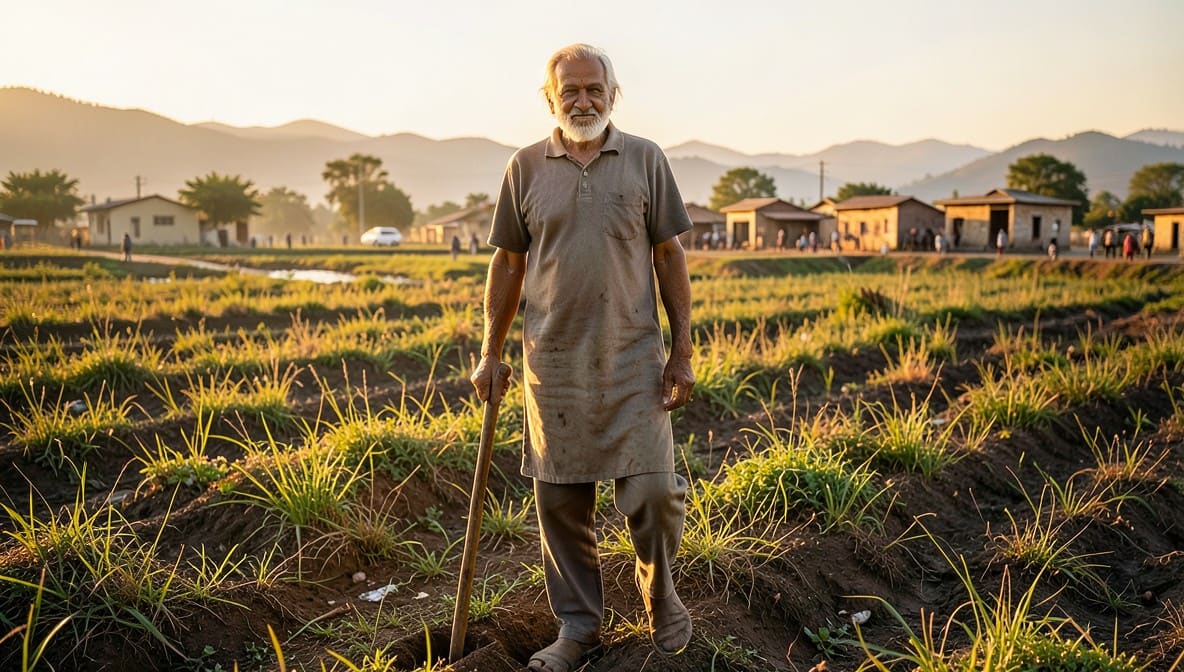
- The appellant was an agriculturist aged approximately 53 years at the time of the accident.
- He was engaged in continuous physical agricultural work requiring standing, walking, squatting, and lifting.
- Medical evidence (Ex.P3) by PW-3 Dr. Rakesh Girdhar established a 10% permanent disability in the right lower limb, translating to 5% disability of the whole body due to stiffness and restricted movement of the right knee joint.
- The appellant filed a claim petition under Section 166 of the Motor Vehicles Act, 1988 against the driver, owner, and insurer.
- The driver did not contest the proceedings and was proceeded against ex parte.
- The Motor Accident Claims Tribunal, Karnal, awarded compensation of ₹77,900/- on 30.07.2003.
Procedural History
- 20.07.2001: Date of accident.
- 20.07.2001 to 04.08.2001: Hospitalization period.
- 31.07.2001: Second surgery due to infection.
- Date unspecified: Claim petition filed before Motor Accident Claims Tribunal, Karnal.
- 30.07.2003: Tribunal awarded ₹77,900/- compensation.
- 06.05.2026: Appeal heard and reserved.
- 07.05.2026: Judgment pronounced.
The Parties' Positions
For the Appellant
The appellant contended that the Tribunal’s assessment of compensation was inadequate. His counsel argued that the 5% medical disability grossly underrepresented the functional impact on his ability to perform agricultural labor, which requires sustained physical exertion. He sought enhancement of compensation to reflect a 20% functional disability and higher income estimation.
For the Respondent (Insurance Company)
The Insurance Company contended that the Tribunal’s award was fair and reasonable, and that the medical disability percentage of 5% was correctly applied. It argued against any upward revision of income or disability assessment.
Relief Sought
The appellant sought enhancement of compensation to account for:
- Higher functional disability (20%)
- Revised monthly income of ₹3,000/-
- Addition of 10% future prospects
- Increased compensation under heads of medical expenses, pain and suffering, and loss of income during treatment
- Interest on the enhanced amount from the date of filing the claim petition
The Legal Issue
The central question was whether compensation for permanent disability in a motor accident case should be based solely on the percentage of medical disability, or whether the functional impact on the victim’s earning capacity - particularly in relation to their occupation - must be the decisive factor.
Arguments Presented
For the Appellant
Counsel for the appellant relied on the principle that medical disability and functional disability are distinct concepts. He cited the nature of agricultural work - requiring prolonged standing, walking, squatting, and lifting - to argue that even a 5% medical disability in the lower limb could severely impair earning capacity. He urged the Court to assess functional disability at 20% and reassess income at ₹3,000/- per month, with 10% addition for future prospects.
For the Respondent
The Insurance Company argued that the Tribunal had correctly applied the medical evidence and that the appellant had not produced any vocational assessment or expert testimony to substantiate a higher functional disability. It maintained that the award of ₹77,900/- was within the bounds of judicial discretion and should not be disturbed.
The Court's Analysis
The Court observed that while the Tribunal correctly identified the cause of the accident and the liability of the driver, its assessment of compensation failed to account for the functional impact of the injury on the appellant’s livelihood. The Court emphasized that the Supreme Court has consistently held that compensation must reflect the real loss of earning capacity, not just the anatomical impairment.
"Functional disability may, in a given case, differ from medical disability depending upon the avocation of the injured and the nature of work being performed by him."
The Court noted that the appellant, an agriculturist, was 53 years old at the time of the accident and had been engaged in physically demanding work. The stiffness and restricted movement in the right lower limb would inevitably affect his ability to stand for long hours, walk in uneven terrain, and lift weights - essential tasks in farming. However, the Court rejected the appellant’s claim of 20% functional disability as excessive in the absence of vocational evidence or expert testimony.
The Court reassessed the monthly income at ₹3,000/- (₹36,000/- annually), noting that this was a reasonable estimate for an agriculturist in 2001. Applying the Supreme Court’s precedent on future prospects, the Court added 10% to account for inflation and career progression, bringing the annual income to ₹39,600/-. With a 10% functional disability, the annual loss of earning capacity was ₹3,960/-. Using the multiplier of 11 for the age group of 50 - 60 years, the compensation for future loss of earning capacity was calculated at ₹43,560/-. The Court also upheld the Tribunal’s award of ₹30,000/- for medical expenses, ₹40,000/- for pain and suffering, ₹25,000/- for transportation and attendant charges, and ₹9,000/- for loss of income during treatment.
The Verdict
The appeal was partly allowed. The Court enhanced the compensation by ₹69,660/-, bringing the total payable to ₹70,000/- over and above the ₹77,900/- already awarded by the Tribunal. The enhanced amount shall carry interest at 7.5% per annum from the date of filing the claim petition until actual realization, payable jointly and severally by the respondents. The Insurance Company retains its right of recovery against the owner of the offending vehicle as per the Tribunal’s original award.
What This Means For Similar Cases
Functional Disability Must Be Occupation-Specific
- Practitioners must now present evidence linking the nature of the victim’s occupation to the functional impact of the injury, not just medical reports.
- For agricultural workers, even minor joint stiffness may justify higher functional disability assessments.
- Medical disability percentages alone are insufficient; courts must evaluate real-world work constraints.
Income Estimation Must Reflect Local Economic Realities
- Monthly income for rural claimants should be based on local wage patterns, not arbitrary low figures.
- A monthly income of ₹3,000/- for a 53-year-old agriculturist in 2001 was deemed reasonable, setting a benchmark for similar cases.
- Future prospects of 10% are now clearly applicable even in injury cases involving older claimants.
Multiplier and Interest Rates Are Predictable
- The multiplier of 11 for claimants aged 50 - 60 remains the standard.
- Interest at 7.5% from the date of filing is now a settled norm in Punjab and Haryana for motor accident claims.
- Insurance companies cannot evade liability by challenging the multiplier or interest rate unless there is a clear legal error.