The Punjab and Haryana High Court has clarified that electricity boards cannot impose supplementary charges on consumers based on ad hoc billing when meters are found defective. This ruling reinforces statutory safeguards for consumers and mandates procedural compliance before any recovery can be attempted.
Background & Facts
The Dispute
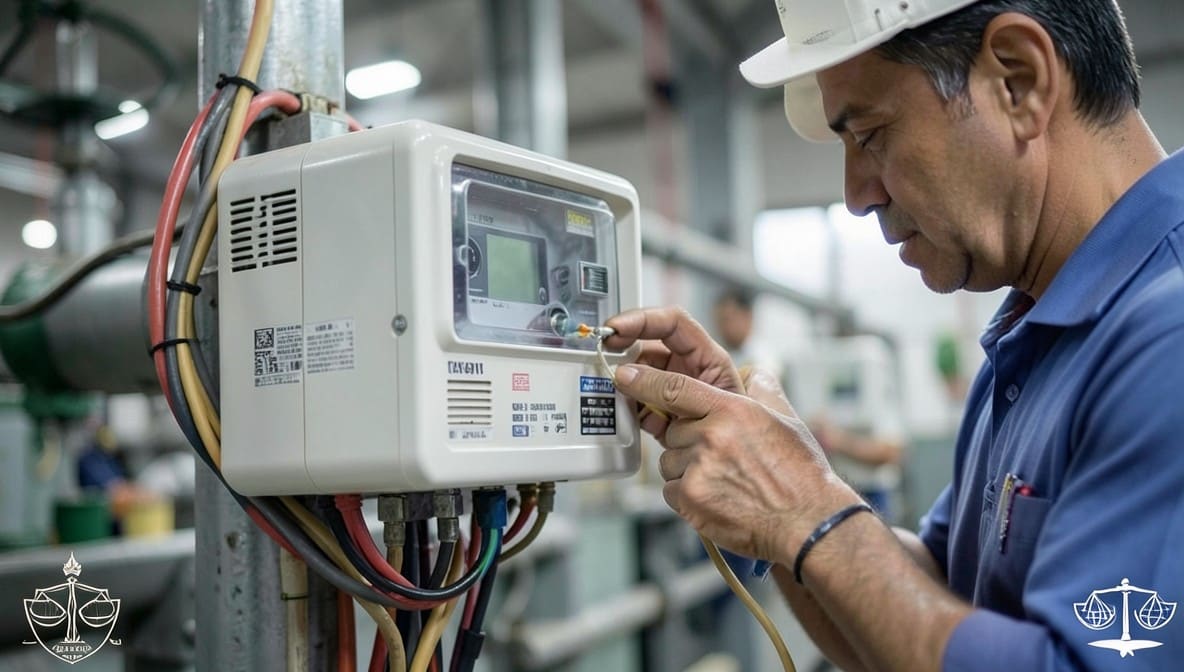
Hari Singh, the respondent, operated a cotton ginning and spinning factory with a contracted demand of 300 KVA and an HT-type meter installed in November 1989. He discovered the meter was malfunctioning and notified the Punjab State Electricity Board on 9 November 1989 and again on 21 November 1989. Despite these notices, the Board issued a bill for November 1989 based on consumption figures from November 1988. Singh paid under protest and filed a suit for declaration and permanent injunction, challenging the legality of the bill.
Procedural History
- November 1989: Respondent notified the Board of meter defect via Ex. P-1 and Ex. P-2
- February 1990: Mobile Meter Testing Squad inspected the meter and confirmed KWH counter was stationary; KVAH meter was 3.14% fast and MDI was 3.04% fast
- July 1992: Trial Court partially allowed the suit, restraining recovery of the disputed bill
- May 1994: First Appellate Court upheld the Trial Court’s findings
- 2026: Second appeal filed by the Electricity Board before the High Court
Relief Sought
The respondent sought a declaration that the ad hoc billing was illegal and a permanent injunction against further recovery attempts until the dispute was resolved by a competent authority under the Indian Electricity Act, 1910.
The Legal Issue
The central question was whether Section 26 of the Indian Electricity Act, 1910 permits an electricity board to issue supplementary bills based on estimated consumption when a meter is found defective, without first referring the dispute to an Electrical Inspector.
Arguments Presented
For the Appellant
The Electricity Board argued that its sales manual and circular No. 11/1990 authorized ad hoc billing when one component of a meter fails, allowing calculation of consumption through load capacity and historical usage. Counsel contended that the Trial Court and First Appellate Court erred in disregarding these internal regulations, which were binding on consumers.
For the Respondent
No representation was made on behalf of the respondent. The Court proceeded on the basis of admitted facts and statutory provisions.
The Court's Analysis
The Court examined Section 26(6) of the Indian Electricity Act, 1910, which mandates that any dispute regarding the correctness of a meter must be referred to an Electrical Inspector. The provision explicitly states that only the Inspector may estimate energy supplied during the period of defect, and such estimation is limited to a maximum of six months. Crucially, the Act bars the electricity board from making any such estimation independently.
"Where the meter has, in the opinion of such Inspector ceased to be correct, such Inspector shall estimate the amount of energy supplied to the consumer... but save as aforesaid, the register of the meter shall, in the absence of fraud, be conclusive proof of such amount or quantity."
The Court relied on the binding precedent in Madhya Pradesh Electricity Board v. Smt. Basantibai (1988) 1 SCC 23, which held that electricity boards lack the authority to issue supplementary bills pending the Inspector’s determination. The Court further affirmed the applicability of M/s Tej Alloys Limited v. Punjab State Electricity Board (2019) PLR 655, which had previously applied this principle in Punjab.
The Board’s reliance on its internal circulars was rejected as ultra vires the statutory framework. The Court emphasized that statutory provisions override administrative manuals, and procedural compliance under Section 26 is non-negotiable. The Board’s conduct - issuing bills, threatening disconnection, and recovering amounts without referral - violated the consumer’s statutory rights.
The Verdict
The respondent won. The High Court held that an electricity board cannot issue ad hoc or supplementary bills for defective meters without first referring the dispute to an Electrical Inspector under Section 26 of the Indian Electricity Act, 1910. The judgments of the lower courts were upheld, with a clarification that no demand can be raised until the statutory process is exhausted.
What This Means For Similar Cases
Ad Hoc Billing Is Statutorily Prohibited
- Practitioners must challenge any supplementary bill issued by an electricity board without prior referral to an Electrical Inspector
- Internal circulars or sales manuals cannot override Section 26 of the Indian Electricity Act, 1910
- Consumers can seek injunctions against disconnection or recovery based on such bills
Statutory Process Is Mandatory, Not Discretionary
- The obligation to refer disputes to an Electrical Inspector is mandatory, not optional
- Failure to comply renders any billing action void ab initio
- Courts will not entertain challenges to bills issued in violation of this procedure
Burden of Proof Shifts to the Board
- Once a consumer establishes a meter defect and notifies the board, the burden shifts to the board to prove it followed Section 26
- Oral assertions of compliance are insufficient; documentary proof of referral is required
- Consumers should preserve all notices and inspection reports as critical evidence