A landmark ruling by the Madras High Court has reaffirmed that administrative authorities cannot issue notices that pre-determine liability under the guise of a show cause notice. The judgment underscores that procedural fairness is not a formality but a constitutional imperative, especially when fundamental rights to property and livelihood are at stake.
Background & Facts
The Dispute
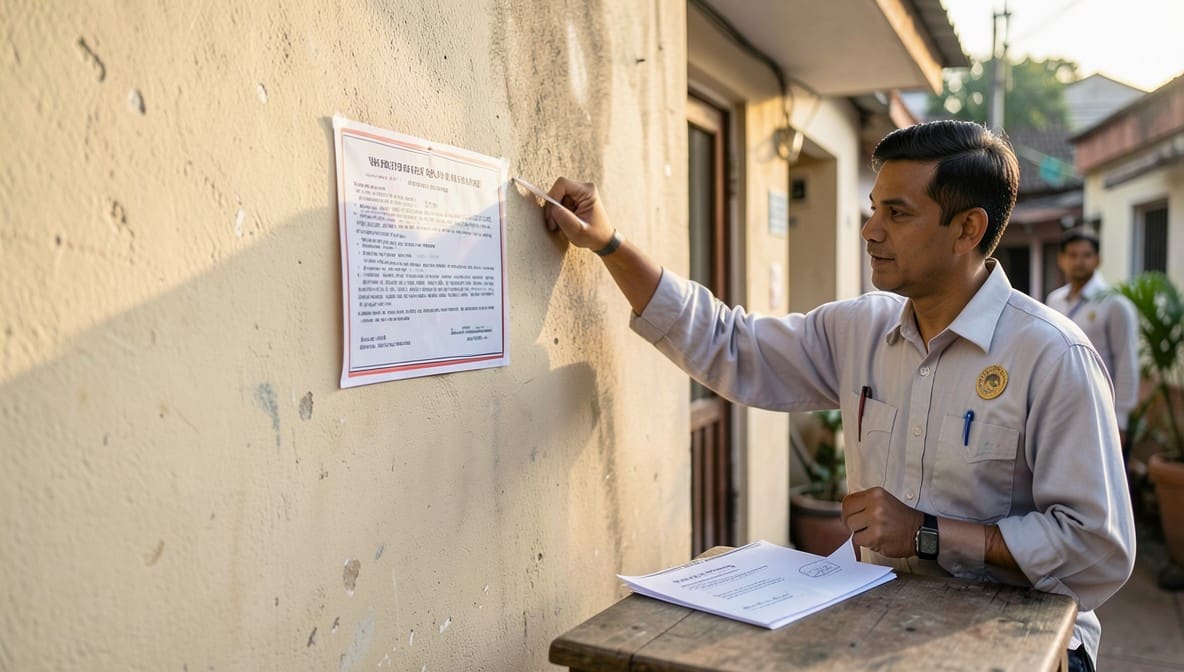
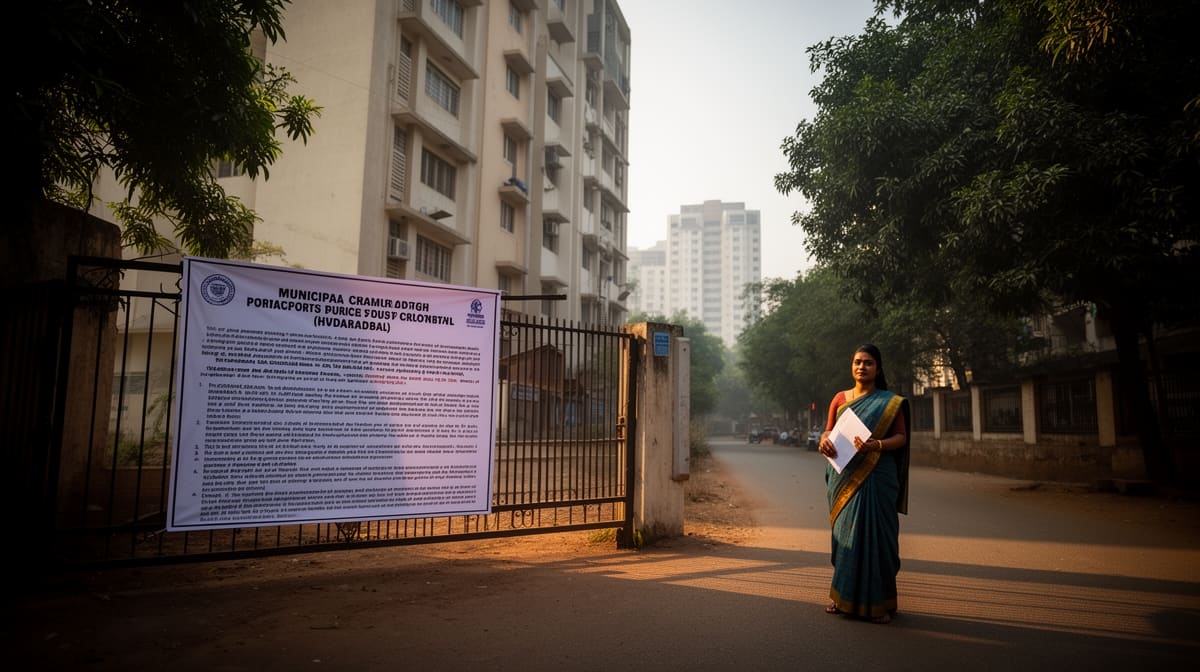
The petitioner, R. Jaya, wife of R. Raj, challenged a notice issued by the Greater Chennai Corporation on 15.09.2025 directing the removal of a temple structure alleged to be encroaching on public road land. The notice was issued following a field inspection ordered by the Revenue Commissioner, who concluded that the temple was built on municipal land. The petitioner, who had no direct ownership but was a custodian of the temple, contended that the notice violated prior judicial directions and statutory safeguards.
Procedural History
- 2024: W.P.No.33832 of 2024 filed by G. Babu (respondent 5) challenging encroachment allegations against the same temple.
- 19.11.2024: Madras High Court directed the Divisional Monitoring Committee to conduct an inspection and afford adequate opportunity to alleged encroachers before any action.
- 11.06.2025: Revenue Commissioner submitted report recommending removal.
- 15.09.2025: Greater Chennai Corporation issued the impugned notice directing removal within seven days, threatening action without further notice.
- 17.07.2025: Petitioner submitted representation to authorities, which remained unaddressed.
- 19.02.2026: Writ petition filed under Article 226 challenging the notice.
Relief Sought
The petitioner sought quashing of the impugned notice and directed the respondents to conduct a fresh inquiry in compliance with the earlier court order and statutory mandates under Section 128 of the Tamil Nadu Urban Local Bodies Act, 1998.
The Legal Issue
The central question was whether a notice that explicitly directs removal within seven days, while threatening action without further notice, can be classified as a valid show cause notice under Section 128 of the Tamil Nadu Urban Local Bodies Act, 1998, or whether it constitutes a pre-judged decision violating the principles of natural justice.
Arguments Presented
For the Petitioner
The petitioner’s counsel argued that the notice was not a show cause notice but a final order disguised as procedural. It referenced the court’s earlier direction in W.P.No.33832 of 2024, which mandated opportunity to be heard before any removal. The notice failed to invite submissions, did not provide the inspection report, and pre-decided liability by stating the temple "is intended to be removed." Reliance was placed on Siemens Limited v. State of Maharashtra and Mohinder Singh Gill v. Chief Election Commissioner to establish that pre-judgment nullifies procedural fairness.
For the Respondent
The Corporation’s counsel contended that the notice was merely a preliminary step under Section 128(1)(b), and that the seven-day timeline was procedural, not final. They argued that the notice was issued in compliance with the Revenue Commissioner’s report and that the court’s earlier order was merely advisory. They further claimed that the temple’s location on public land was undisputed and that delay in removal would prejudice public interest.
The Court's Analysis
The Court conducted a rigorous textual and contextual analysis of the impugned notice and the statutory framework. It held that the notice’s language - "you should remove the aforesaid encroachment within 7 days" and "will take action to remove... without any notice" - was not an invitation to respond but a declaration of intent. The Court emphasized that natural justice is not a technicality but a constitutional requirement when civil consequences follow.
"It appears that when the action was called in question in the Court, it is sought to be defended by treating the order as notice. That cannot be allowed."
The Court distinguished the notice from a genuine show cause notice by highlighting the absence of any reference to the petitioner’s right to submit representations, the failure to enclose the inspection report, and the explicit threat of action without further notice. It further noted that Section 128(1)(b) mandates a show cause notice returnable within fifteen days and requires the Commissioner to consider representations before passing final orders. The notice’s seven-day deadline and omission of the proviso rendered it legally invalid.
The Court also held that the notice directly contravened its own earlier direction in W.P.No.33832 of 2024, which explicitly preserved the rights of alleged encroachers and mandated an opportunity to be heard. The authorities’ failure to comply with a judicial directive constituted contempt of court’s authority.
The Court reaffirmed the principle from Mohinder Singh Gill that any order with civil consequences must comply with natural justice, and that exceptions carved in Aligarh Muslim University v. Mansoor Ali Khan do not apply here, as no emergency or public safety exigency was pleaded.
The Verdict
The petitioner succeeded. The Madras High Court set aside the impugned notice dated 15.09.2025 as violative of Section 128 of the Tamil Nadu Urban Local Bodies Act, 1998 and the principles of natural justice. The Court directed the Greater Chennai Corporation to initiate fresh proceedings by issuing a proper show cause notice, providing the inspection report, and affording a reasonable opportunity to the petitioner to respond before any further action.
What This Means For Similar Cases
Show Cause Notices Cannot Be Pre-Judged
- Practitioners must challenge notices that use directive language (e.g., "you must remove", "will be removed") as evidence of pre-judgment.
- Authorities cannot circumvent natural justice by labeling a final order as a "show cause notice."
- Courts will examine the tenor and substance, not the label, of the notice.
Statutory Procedural Safeguards Are Non-Negotiable
- Section 128(1)(b) requires a minimum 15-day window for representation and mandatory consideration of submissions.
- Failure to provide the inspection report or to allow reply renders the notice void ab initio.
- Even in cases of alleged encroachment on public land, procedural compliance is mandatory.
Judicial Directions Bind Administrative Action
- Administrative bodies must strictly adhere to court directions issued in pending litigation.
- Disregarding a court’s specific mandate to afford opportunity constitutes contempt of court’s authority.
- Fresh proceedings must be initiated afresh; re-issuing the same notice with minor changes is impermissible.