The Calcutta High Court, sitting at the Port Blair circuit bench, allowed a criminal revision filed by a contractor, holding that liability under Section 106(1) of the Bharatiya Nyaya Sanhita, 2023 demands a direct nexus between the accused’s act and the victim’s death. The judgment clarifies the scope of negligent homicide for contractors not present at the accident site.
Background & Facts
The Dispute
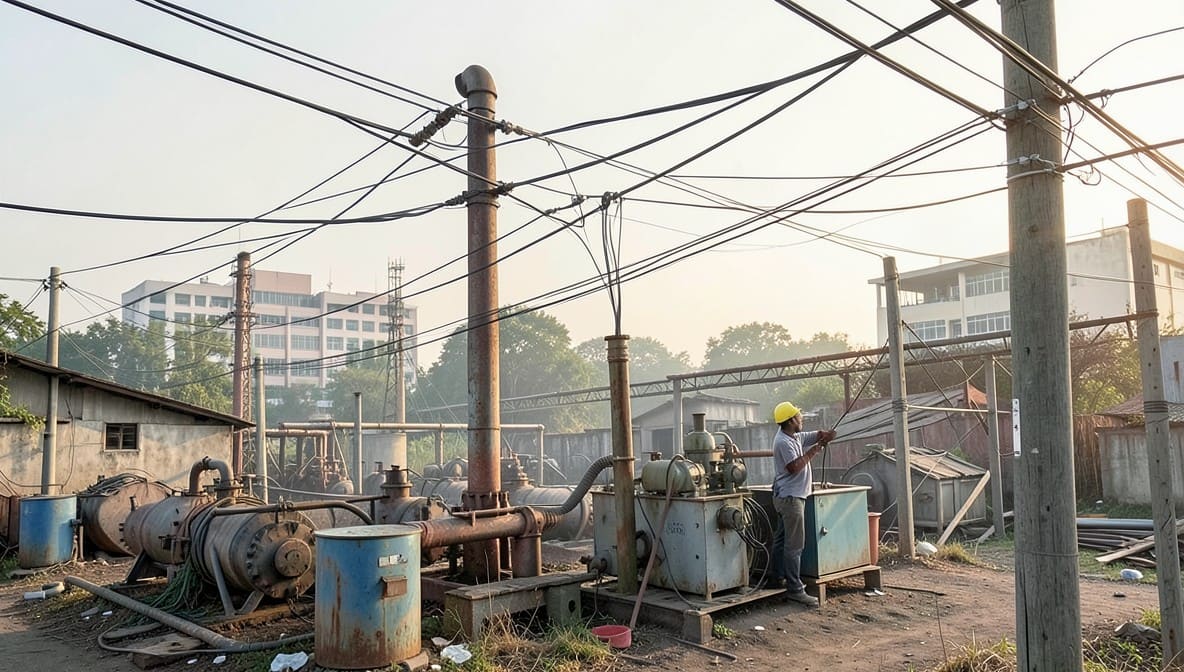
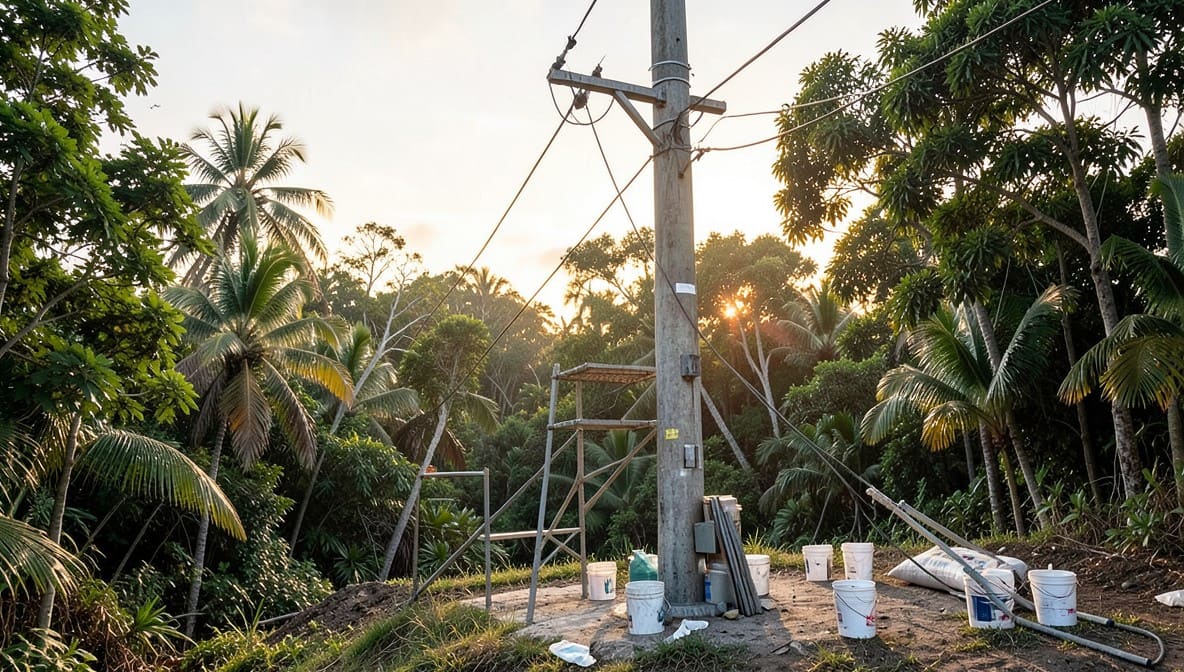
The petitioner, Shri B. Veeraiah, a contractor, was implicated in a criminal case for the death of employee Samar Mondal, who was engaged to paint an electrical pole-transformer structure. The prosecution alleged that the petitioner failed to provide safety equipment and training, thereby causing the death.
Key Facts
- 09.04.2025: FIR No. 14/2025 was lodged by SHO, PS Campbell Bay, alleging offence under Section 106(1) BNS.
- 12 September 2024: Work on the pole-painting project commenced.
- 13.03.2025: Victim Samar Mondal began work on the site.
- 02.04.2025: Victim suffered fatal electric shock and burn injuries.
- 09 May 2025: Letter from EE Garrison Engineer indicated the supervisor was present at the first pole structure but left before work started.
- 19 May 2025: Assistant Engineer (Ele) issued safety protocol letter outlining three safety responsibilities, assigning provision of safety kits to the contractor.
- Petitioner’s claim: He was not present at the site on the day of the accident and the work was not under his direct supervision.
- State’s claim: As the contractor, he had a duty to provide safety equipment and supervise the work, making him liable under Section 106(1).
Procedural History
- 25 August 2026: Criminal Revision Application No. CRR/37/2026 filed by petitioner under Section 528 of the Bharatiya Nagarik Suraksha Sanhita, 2023, seeking quash of FIR and charge sheet.
- 25 August 2026: Hearing before Hon’ble Justice Biswaroop Chowdhury.
- 02 September 2026: Judgment delivered, allowing the revision and quashing the FIR.
The Parties' Positions
- Petitioner: Asserted non-presence at the accident site, cited the May 9, 2025 letter showing supervisor’s presence, and argued that the alleged omission did not constitute a rash or negligent act under Section 106(1).
- State: Contended that the contractor’s statutory duty to provide safety gear made him liable, irrespective of physical presence, and that Section 106(1) was applicable.
Relief Sought
The petitioner prayed for quash of FIR No. 14/2025, dismissal of the charge sheet, and discharge from the criminal proceeding pending before the Judicial Magistrate First Class, Campbell Bay.
The Legal Issue
Whether a contractor who was not physically present at the site of a fatal accident can be held liable under Section 106(1) of the Bharatiya Nyaya Sanhita, 2023, which punishes death caused by a rash or negligent act, when the alleged negligence relates only to the non-provision of safety equipment.
Arguments Presented
For the Petitioner
- The petitioner was absent from the site on 02.04.2025; therefore, no direct act or omission on his part can be linked to the death.
- The May 9, 2025 letter from the Garrison Engineer demonstrates that supervision was delegated to a supervisor who left before work began.
- Section 106(1) penalises a rash or negligent act, not mere omission; the petitioner’s alleged failure to supply safety kits does not satisfy the statutory requirement of a direct causal link.
- Reliance on precedents such as Yuvraj Laxmilal Kanther v. State of Maharashtra and I.B. Bhalla v. State which held that absence of a proximate cause defeats liability under analogous provisions.
For the Respondent
- The contractor, by virtue of the contract, bore the statutory duty to provide personal protective equipment and ensure safety protocols, making omission punishable under Section 106(1).
- The State argued that the provision of safety kits is an essential element of the contractor’s duty, and failure thereof constitutes a negligent act.
- Cited Shri Pankaj Kumar Dhingra v. State to argue that “causes death” requires a direct nexus, which the State claimed existed through the contractor’s failure.
The Court's Analysis
The Court began by examining the language of Section 106(1) BNS, noting that it penalises a rash or negligent act that directly causes death. The provision, unlike a mere omission, demands a positive act or omission that is the proximate cause of the fatality.
"Thus, the safety protocols comprises 3 parts. The first two part is the responsibility of the person who climbs and the supervisor. The third part of providing safety kits is the responsibility of contractor."
The Court then surveyed the cited authorities. In Yuvraj Laxmilal Kanther, the Supreme Court emphasized that liability under a negligent homicide provision requires a direct causal link between the accused’s conduct and the death. Similarly, I.B. Bhalla held that mere contravention of rules without a proximate causal relationship does not satisfy the element of rashness.
Applying these principles, the Court observed that the petitioner was not on the site on 02.04.2025, and the work was supervised by a separate engineer who had already left when the accident occurred. The evidence, including the May 9, 2025 letter and the Assistant Engineer’s safety protocol, showed no material linking the petitioner’s alleged omission to the victim’s death. The Court stressed that the statutory duty to provide safety equipment, while important, does not automatically translate into a rash or negligent act unless the omission is shown to be the direct cause of death.
The Court further distinguished the present case from M/S Divis Infratech Builders where the absence of any person from the company at the accident site led to dismissal of liability under Section 304A IPC, the predecessor of Section 106 BNS. The reasoning was that without a causa causans, the prosecution cannot sustain a charge under the negligent homicide provision.
Consequently, the Court concluded that the prosecution failed to establish the essential element of direct nexus required under Section 106(1). The charge sheet therefore did not meet the statutory threshold, and the petition for revision was upheld.
The Verdict
The High Court allowed the criminal revision, quashed FIR No. 14/2025 dated 09.04.2025, and discharged Shri B. Veeraiah from the criminal case pending before the Judicial Magistrate First Class, Campbell Bay. No costs were awarded.
What This Means For Similar Cases
Direct Causal Link Is Essential
- Practitioners must demonstrate that the accused’s act or omission was the proximate cause of death to invoke Section 106(1) BNS.
- Mere contractual duty to provide safety equipment, without proof of direct causation, will not satisfy the statutory requirement.
Presence or Supervision Matters
- Liability hinges on the accused’s physical presence or direct supervisory control at the time of the incident.
- Evidence such as supervisory letters or site logs can be decisive in establishing (or negating) presence.
Reliance on Precedent
- Courts will continue to apply the Yuvraj and I.B. Bhalla standards, requiring a clear causa causans.
- Counsel should anticipate the need to produce forensic or expert testimony linking the alleged negligence to the fatality.