The Chhattisgarh High Court has reaffirmed that criminal liability under Section 106 of the Bharatiya Nyaya Sanhita, 2023, cannot be fastened on a corporate director solely on the basis of designation, absent any specific allegation of negligence or omission directly linked to the fatal incident. This ruling underscores the necessity of a prima facie causal nexus between the accused’s conduct and the death, rejecting blanket imputation of liability in workplace accidents.
Background & Facts
The Dispute
The petitioner, Kunti Gupta, aged 73, is a Director of the Jai Mata Di Damar Plant in Surguja, Chhattisgarh. She was named as an accused in FIR No. 185 of 2025, registered at Police Station Lundra, following the electrocution death of Madan Yadav on 22.06.2025. The prosecution alleges that while installing a halogen light, Yadav came into contact with an overhead 11 KV live wire due to unsafe working conditions, resulting in his death. The petitioner was arrayed as an accused under Section 106(1) of the Bharatiya Nyaya Sanhita, 2023, for causing death by negligence.
Key Facts
- The deceased, Madan Yadav, was a worker called to the Damar Plant by the watchman, Sushil Uike, on 22.06.2025 at approximately 04:00 PM to install a halogen light.
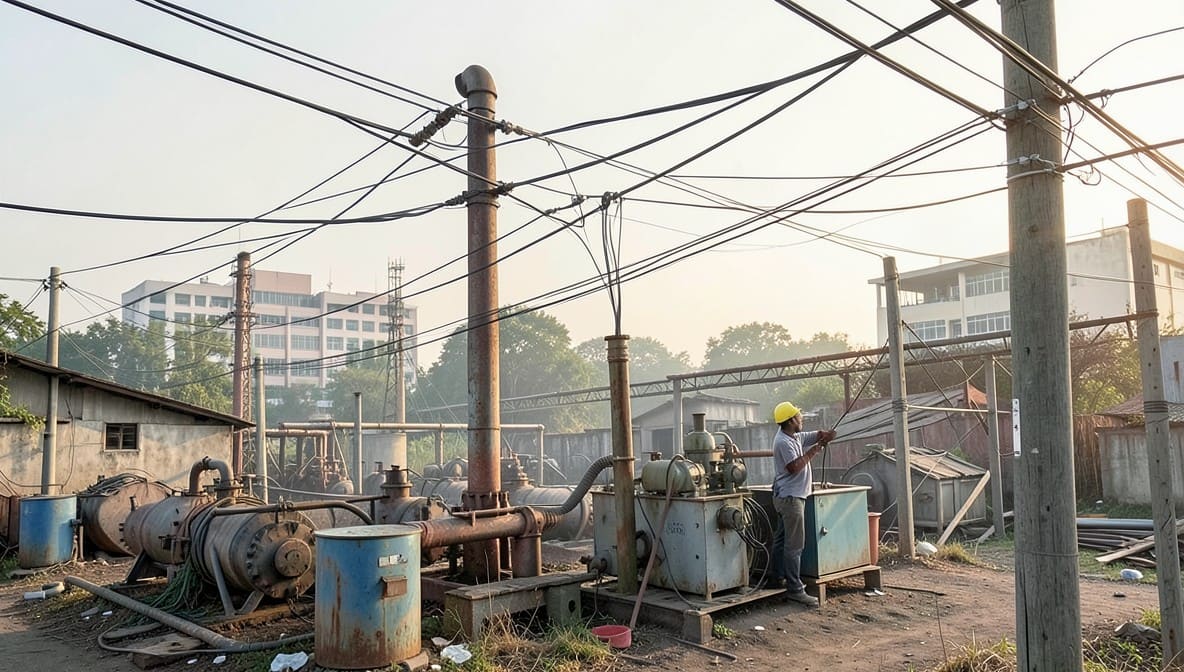
- While digging a pit to fix an iron peg, the peg contacted an overhead 11 KV live electric wire, causing fatal electrocution.
- Yadav was rushed to Mission Hospital, Ambikapur, where he was declared dead by the attending physician.
- An unnumbered Merg was initially registered at Police Outpost Holy Cross and later transferred to Police Station Lundra as Merg No. 67/2025 under Section 194 of the Bharatiya Nagarik Suraksha Sanhita, 2023 (BNSS).
- The petitioner was not present at the site during the incident and was not alleged to have instructed, supervised, or even been aware of the work being undertaken.
- No specific act or omission attributable to the petitioner was identified in the FIR or charge-sheet.
- The charge-sheet relied on general allegations of negligence in workplace safety, without specifying the petitioner’s role.
- Evidence collected included witness statements, spot inspection reports, inquest proceedings, seizure memos, and official communication from the Electricity Department.
- Seizure of electronic records was conducted under Section 105 of BNSS, videographed, and hash values preserved.
- Both accused persons, including the petitioner, were arrested and later released on bail as the offence is bailable.
Procedural History
- 22.06.2025: Incident occurred at Jai Mata Di Damar Plant, Surguja.
- 23.06.2025: Unnumbered Merg registered at Police Outpost Holy Cross.
- 25.06.2025: Merg transferred to Police Station Lundra and registered as Merg No. 67/2025.
- 05.07.2025: FIR No. 185 of 2025 registered under Section 106(1) BNS against Sushil Uike and Kunti Gupta.
- 15.09.2025: Investigation completed; charge-sheet filed before the Judicial Magistrate First Class, Surguja.
- 10.10.2025: Petitioner filed anticipatory bail application, granted by the Magistrate.
- 28.03.2026: Petitioner filed CRMP No. 1228 of 2026 before the Chhattisgarh High Court seeking quashing of FIR and charge-sheet.
- 04.05.2026: Hearing before the Division Bench of the Chhattisgarh High Court.
The Parties' Positions
For the Petitioner
- Argued that the incident was a pure accident with no element of rashness or negligence attributable to her.
- Emphasized that she had no knowledge of, or involvement in, the work being carried out by the watchman.
- Contended that her designation as Director alone cannot constitute a basis for criminal liability.
- Relied on State of Haryana v. Bhajan Lal to argue that the allegations, even if accepted at face value, do not disclose an offence.
- Asserted that the FIR and charge-sheet are vague, omnibus, and lack specific averments linking her to the incident.
For the Respondent/State
- Maintained that the investigation revealed sufficient material indicating systemic negligence in workplace safety.
- Submitted that the charge-sheet, supported by witness statements, spot inspection, and electricity department records, prima facie establishes culpability.
- Argued that the petitioner, as Director, bore responsibility for ensuring safe working conditions.
- Stated that the matter requires full trial to evaluate evidence, and quashing at this stage would prejudice the prosecution.
Relief Sought
The petitioner sought quashing of FIR No. 185 of 2025 and the charge-sheet in Criminal Case No. 8635 of 2025, and discharge from all proceedings under Section 106(1) BNS.
The Legal Issue
Can a corporate director be prosecuted under Section 106(1) of the Bharatiya Nyaya Sanhita, 2023, for causing death by negligence solely on the basis of her designation, without any specific allegation of personal involvement, knowledge, or omission contributing to the fatal incident?
Arguments Presented
For the Petitioner
The petitioner’s counsel contended that Section 106(1) BNS requires proof of a rash or negligent act directly attributable to the accused. He argued that the prosecution’s case itself admits the deceased was acting at the instance of the watchman, with no evidence that the petitioner had any role in authorizing, supervising, or even being aware of the activity. He cited State of Haryana v. Bhajan Lal to assert that where allegations, even if accepted as true, do not prima facie constitute an offence, the Court must intervene to prevent abuse of process. He emphasized that the charge-sheet contains no specific averment of duty, breach, or causation linking the petitioner to the incident, rendering the prosecution legally unsustainable.
For the Respondent/State
The State countered that the petitioner, as Director, held overall responsibility for the plant’s operations and safety compliance. It submitted that the investigation uncovered multiple lapses - proximity of work to live wires, absence of safety barriers, and failure to de-energize the line - all of which reflect systemic negligence. The State argued that the petitioner’s position inherently carries legal responsibility under occupational safety norms, and that the charge-sheet, supported by documentary and testimonial evidence, establishes a prima facie case. It further contended that the Court must not conduct a mini-trial at the quashing stage and that the defence of lack of knowledge is a matter for trial.
The Court's Analysis
The Court began by recalling the well-settled principle that the jurisdiction under Article 226 of the Constitution or Section 528 of the BNSS to quash criminal proceedings is extraordinary and must be exercised sparingly. The Court emphasized that at this stage, it is not empowered to evaluate evidence, weigh witness credibility, or adjudicate on the truth of allegations. The sole test is whether the allegations, taken at face value, disclose a prima facie offence.
"The test is confined to the existence of a prima facie case. At this stage, the Court is not expected to undertake a meticulous appreciation of evidence or to adjudicate upon the correctness or otherwise of the allegations."
The Court examined the FIR and charge-sheet and found that while the incident was clearly accidental, the prosecution had alleged a failure to ensure basic safety measures at the workplace. The presence of an overhead 11 KV wire, the proximity of work to it, and the absence of precautions were noted as relevant circumstances. The Court held that these facts, even if not conclusively proven, are sufficient to raise a prima facie inference of negligence attributable to those in charge of the premises.
The Court rejected the petitioner’s argument that her designation alone cannot attract liability. It clarified that while mere designation is insufficient, the law does not require the prosecution to plead the exact act of omission at the FIR stage. The question of whether the petitioner was in charge of operations, whether she had knowledge of the work, and whether she failed in her duty to ensure safety are matters for trial. The Court observed:
"The plea that the petitioner has been falsely implicated on account of her designation... is also not sufficient to warrant quashing at this stage. The question as to whether the petitioner was in charge of, or responsible for, the conduct of operations at the relevant time... are matters requiring evidence and cannot be conclusively adjudicated in proceedings under Article 226."
The Court further distinguished Bhajan Lal by holding that the allegations were neither absurd nor inherently improbable. The presence of a live wire, the nature of the work, and the resulting death were not fanciful. The charge-sheet contained sufficient material to proceed, including witness statements and official records from the Electricity Department.
The Court also noted that seizure procedures under Section 105 BNSS were properly followed, with electronic evidence preserved via hash values, reinforcing the integrity of the investigation.
The Verdict
The petition was dismissed. The Chhattisgarh High Court held that a prima facie case under Section 106(1) BNS is made out against the petitioner, and the matter must proceed to trial. The Court clarified that its observations are confined to the quashing stage and shall not influence the trial court’s evaluation of evidence. No relief was granted to the petitioner.
What This Means For Similar Cases
Designation Is Not a Proxy for Liability
- Practitioners must distinguish between corporate responsibility and individual criminal liability under Section 106 BNS.
- Mere directorship or managerial position cannot be the sole basis for invoking criminal liability - specific allegations of omission or negligence must be pleaded.
- Defence counsel should challenge vague, omnibus allegations in FIRs at the earliest stage, citing Bhajan Lal.
Prima Facie Nexus Must Be Plausible, Not Proven
- Prosecution need not establish direct causation at the FIR stage; a plausible link between the accused’s role and the unsafe condition suffices.
- Evidence such as absence of safety protocols, proximity to hazards, and failure to de-energize lines can form the basis of a prima facie case.
- Courts will not quash proceedings merely because the accused claims lack of knowledge - this is a defence for trial.
Procedural Integrity Matters
- Proper documentation of evidence, including videography and hash values under Section 105 BNSS, strengthens the prosecution’s case and preempts challenges to admissibility.
- Defence counsel should scrutinize the chain of custody and authenticity of electronic evidence even at the quashing stage.