The Central Excise and Service Tax Appellate Tribunal has clarified a long-standing ambiguity in the classification of Ayurvedic Patent and Proprietary (P&P) medicines under the Central Excise Tariff, holding that the presence of permitted excipients does not reclassify such products as cosmetics. This decision reinforces the primacy of therapeutic intent and active ingredients over incidental cosmetic claims in tariff classification.
Background & Facts
The Dispute
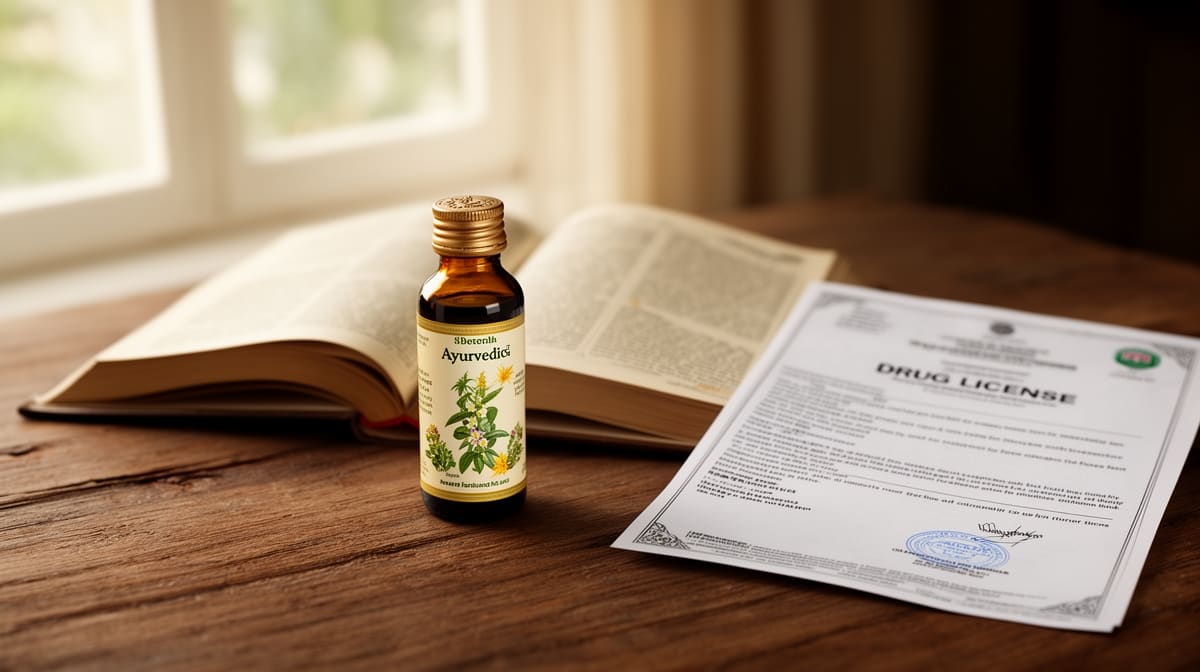
The appellant, M/s Shahnaz Ayurvedics, manufactures 18 Ayurvedic products including Shabase, Shanaz Forever Root Marrow Base, Sharose, Shacomplex, and others. The Revenue classified these as cosmetics under Chapter 33 and 34 of the Central Excise Tariff, demanding excise duty and imposing penalties. The appellant contended that these are Patent and Proprietary Ayurvedic medicines classifiable under Chapter 30, as they are formulated exclusively from ingredients listed in authoritative Ayurvedic texts and are intended for the treatment of specific ailments recognized in Ayurveda.
Key Facts
- The appellant has been manufacturing these products since 2004 from its Dehradun unit, registered with Central Excise on 17.06.2004.
- From 2004 to 16.07.2014, the unit benefited from area-based exemption under Notification No. 50/2003-CE dated 10.06.2003.
- On 08.09.2014, the appellant informed the Range Officer of its product classification as P&P Ayurvedic medicines.
- On 19.11.2014, the Range Officer directed the appellant to classify the goods as cosmetics and pay duty from 25.07.2014.
- Show Cause Notices (SCNs) were issued on 04.08.2015 and 09.05.2016 for the period 25.07.2014 to 29.02.2016, followed by another SCN on 03.08.2017 for 01.03.2016 to 31.01.2017.
- The Commissioner issued Order-in-Original dated 29.12.2016, classifying the goods as cosmetics and demanding duty and penalty.
- The Joint Commissioner upheld this classification in Order dated 31.10.2023, which was affirmed by the Commissioner (Appeals) on 30.01.2025.
- The appellant holds valid manufacturing licenses under the Indian System of Medicine (ISM) for all 18 products.
- The appellant submitted a detailed technical table identifying the active ingredients of each product, their source in authoritative Ayurvedic texts (e.g., Charaka Samhita, Sushruta Samhita), and their medicinal properties.
- The products’ labels explicitly state therapeutic claims such as "treats acne," "reduces wrinkles," "improves skin tone," and "alleviates scalp disorders."
- The excipients used include starch, lactose, sodium lauryl sulphate, and liquid paraffin - common in pharmaceutical formulations.
Procedural History
- 17.06.2004: Appellant registered with Central Excise for manufacturing P&P Ayurvedic medicines and cosmetics.
- 10.06.2003: Area-based exemption Notification No. 50/2003-CE issued (valid until 16.07.2014).
- 08.09.2014: Appellant notified Range Officer of product classification.
- 19.11.2014: Range Officer directed classification as cosmetics.
- 04.08.2015: SCN issued for period 25.07.2014 to 30.04.2015.
- 09.05.2016: SCN issued for period 01.05.2015 to 29.02.2016.
- 29.12.2016: Commissioner’s Order-in-Original (OIO) classifying goods as cosmetics.
- 03.08.2017: Follow-up SCN issued for period 01.03.2016 to 31.01.2017.
- 31.10.2023: Joint Commissioner’s Order upholding classification.
- 30.01.2025: Commissioner (Appeals) upheld Joint Commissioner’s order.
- 17.12.2025: Hearing before CESTAT.
- 13.03.2026: Final Order passed.
The Parties' Positions
Appellant: Argued that the products are Ayurvedic P&P medicines under Chapter 30, as they are formulated exclusively from ingredients listed in authoritative Ayurvedic texts, carry therapeutic claims, and are manufactured under ISM license. Excipients are necessary for formulation and do not alter essential character.
Respondent: Contended that the presence of non-Ayurvedic excipients and marketing as beauty products (e.g., sold in beauty parlours, emphasis on fairness and glow) renders them cosmetics under Chapter 33. Relied on Note 1(d) to Chapter 30 excluding preparations of Chapter 33 even if they have therapeutic properties.
Relief Sought
The appellant sought:
- Setting aside of the impugned orders dated 29.12.2016 and 30.01.2025.
- Reclassification of all 18 products under Chapter 30.
- Cancellation of excise duty demand, interest, and penalties.
- Consequential relief including refund of amounts paid under protest.
The Legal Issue
The central question was whether Chapter 30 of the Central Excise Tariff covers Patent and Proprietary Ayurvedic medicines that contain permitted excipients such as starch, lactose, and sodium lauryl sulphate, or whether such products must be classified as cosmetics under Chapter 33 due to the presence of these non-active ingredients.
Arguments Presented
For the Appellant
The appellant relied on:
- The Drugs and Cosmetics Act, 1945, specifically Section 3(a) and 3(h), which define Ayurvedic P&P medicines as formulations containing only ingredients listed in authoritative Ayurvedic texts - not excluding excipients.
- The Supreme Court’s decision in Puma Ayurvedic Herbal (P) Ltd. v. Commissioner of C.Ex., Nagpur, which held that the term "subsidiary" in Note 2 to Chapter 33 implies that primary therapeutic intent prevails over incidental cosmetic benefit.
- The fact that all products are manufactured under ISM license and their labels clearly state medicinal claims.
- The analogy to allopathic medicines: a 500mg paracetamol tablet contains 1-2g of excipients, yet is classified as a medicine, not as talc or binder.
- Historical precedent: The same products were classified as Ayurvedic medicines in 1989 and upheld by Allahabad High Court and Supreme Court in 2004.
For the Respondent
The Revenue argued:
- Note 1(d) to Chapter 30 excludes preparations of Chapter 33 even if they have therapeutic properties.
- The products are marketed for fairness, anti-wrinkle effects, and skin glow - cosmetic benefits.
- The presence of chemicals like sodium lauryl sulphate disqualifies them as pure Ayurvedic medicines.
- Sale in beauty parlours and to general retailers indicates consumer perception as cosmetics.
- The appellant’s own classification list in 1994 included both cosmetics and Ayurvedic medicines, suggesting ambiguity.
The Court's Analysis
The Tribunal conducted a detailed review of the technical submissions, the statutory definitions under the Drugs and Cosmetics Act, and the relevant Chapter Notes of the Central Excise Tariff. It rejected the Revenue’s narrow interpretation of Section 3(h) of the Drugs and Cosmetics Act, which defines P&P Ayurvedic medicines as containing "only such ingredients mentioned in the formulae." The Court held that reading "only" to exclude all excipients would lead to absurdity, as no pharmaceutical formulation - Ayurvedic or allopathic - can exist without excipients.
"If the expression 'only such ingredients' in Section 3(h)(i) is read to mean that it cannot have any other non-active ingredient also, it will result in absurd conclusions. For instance, many Ayurvedic tablets and capsules and syrups manufactured by companies are sold as such in the market. These contain, evidently, not only the active ingredients but also other materials required to make them into the formulation."
The Tribunal emphasized that the essential character of a product is determined by its active ingredients and intended use, not by the bulk or weight of excipients. It drew a parallel with allopathic medicines: "An overwhelming portion of any injection will be distilled water and overwhelming portion of any ointment will be petroleum jelly or Vaseline but these do not give them their essential character."
Regarding Note 1(d) to Chapter 30, the Court relied on Puma Ayurvedic Herbal, which clarified that the exclusion applies only when the primary purpose is cosmetic. The Tribunal found that the labels of the disputed products explicitly reference treatment of ailments such as acne, dandruff, and skin disorders - indicating primary therapeutic intent. The mention of "fairness" or "glow" was deemed incidental to the medicinal purpose, not the primary objective.
The Court also noted that the Revenue failed to produce any test report or scientific evidence to disprove the medicinal properties claimed by the appellant. The mere fact that excipients are used in cosmetics does not mean their presence in Ayurvedic formulations invalidates the classification.
The Verdict
The appellant succeeded. The Tribunal set aside the impugned orders dated 29.12.2016 and 30.01.2025. All 18 disputed products are reclassified under Chapter 30 as Patent and Proprietary Ayurvedic medicines. The demand for excise duty, interest, and penalties is cancelled. The appellant is entitled to consequential relief, including refund of any amounts paid under protest, with interest at the rate of 6% per annum from the date of payment until realization.
What This Means For Similar Cases
Classification Turns on Therapeutic Intent, Not Marketing
- Practitioners must focus on the primary purpose of the product as stated on labels, packaging, and promotional material.
- Marketing as "beauty" or "grooming" does not override explicit therapeutic claims if the formulation is Ayurvedic and licensed under ISM.
- Revenue authorities cannot reclassify based on retail channels (e.g., sale in beauty parlours) without scientific evidence of non-medicinal use.
Excipients Are Permissible in Ayurvedic P&P Medicines
- The presence of common pharmaceutical excipients - starch, lactose, sodium lauryl sulphate, liquid paraffin - does not disqualify a product from Chapter 30.
- The Tribunal’s analogy to allopathic tablets reinforces that essential character is determined by active ingredients, not bulk components.
- Manufacturers must maintain documentation linking excipients to formulation necessity and ISM compliance.
Note 1(d) Does Not Automatically Exclude Ayurvedic Medicines
-
Note 1(d) excludes cosmetics with therapeutic properties - not Ayurvedic medicines with incidental cosmetic benefits.
-
The burden is on the Revenue to prove that the therapeutic effect is subsidiary, not primary.
-
This judgment aligns with Puma Ayurvedic Herbal and establishes a clear test: if the product is intended to treat a disease or disorder, and is manufactured under ISM, it belongs in Chapter 30.
-
Always retain copies of authoritative Ayurvedic texts cited in formulation.
-
Ensure labels clearly state medicinal claims, not just cosmetic benefits.
-
Maintain ISM license and classification history for historical continuity.
-
Challenge classification orders that rely solely on marketing or excipient presence without scientific analysis.